

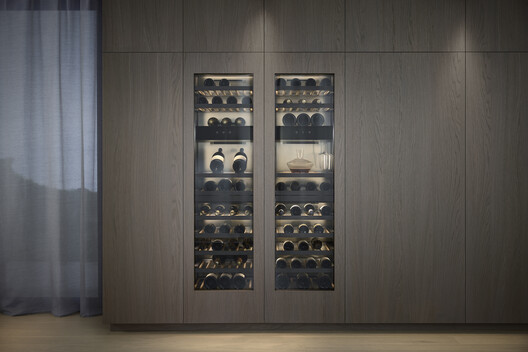
The kitchen has evolved from a functional space into a shared environment and the heart of many households. Serving as the setting for daily rituals in countless families—and even collective practices in urban life—food brings people together, making the design of spaces that respond to these needs essential to everyday living. Beyond the various kitchen layouts, aesthetics, and configurations, the integration of appliances and equipment plays a key role supporting storage, preservation, and daily use that cooking demands. From innovative technologies to advanced materials, these elements shape contemporary kitchen spaces that bring together customs and cultures from diverse backgrounds.
The kitchen as a workspace became an object of experimentation optimizing its processes following the Industrial Revolution. In the early twentieth century, women—whose relationship to kitchen work dates back to the Middle Ages—began studying ways to improve these spaces. In 1922, Christine Frederick Mary Pattison examined kitchen circulation, analyzing movement patterns in relation to furniture layouts, while architect Margarete Schütte-Lihotzky developed the concept of the Frankfurt Kitchen in 1926. The integrated kitchen emerged from these efforts and, regardless of its organization or style, has since become an essential part of daily life for countless users.
With the arrival of the power grid, kitchens began to incorporate appliances and tools designed to save time and simplify everyday tasks. They evolved into fully integrated spaces within the home, connecting with dining rooms, living areas, circulation zones, and even outdoor spaces. During the Cold War in the United States, household appliances became powerful symbols of the American middle-class lifestyle.
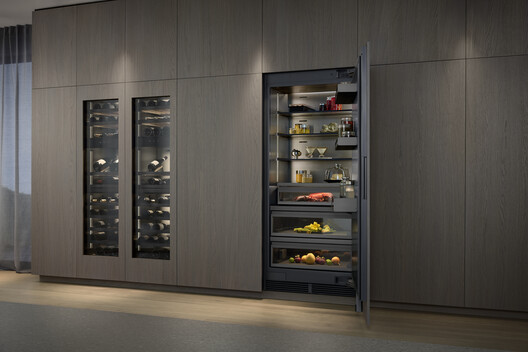
Offering a modular approach to contemporary kitchen architecture, Gaggenau's Vario Cooling Expressive series continues to evolve with the introduction of 11 new refrigeration models. Viewing refrigeration as an integral component of functional kitchen and interior design, the new models include refrigerators, freezers, refrigerator-freezers, and wine climate cabinets. Each appliance is designed to be installed either individually or alongside other units.
Through their proportions and detailing, these appliances are conceived as architectural elements within the space. Their modularity and handleless integration allow them to resemble custom cabinetry, offering extensive configuration possibilities while creating visual continuity within a harmonious composition. As industrial designer Mikkel Brandt Bugge explains: "We approached every detail with purpose—from the alignment of each shelf to the tone of the interior lighting. Our goal was to create a calm, coherent experience where function and materiality work quietly together. The flexibility of the system allows for truly personal configurations, whether through individual appliances or through the creation of a dedicated cooling ensemble."
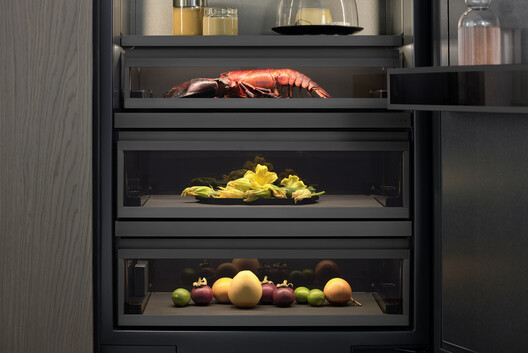
From their handleless doors to their smooth surfaces and meticulously designed interiors, every detail contributes to integrating the appliances into the kitchen's overall concept. The material palette combines dark brushed stainless steel, solid anthracite aluminum, and glass. Every interior surface, aluminum-framed glass shelf, and drawer reflects a purposeful material strategy. Adjustable plinths starting at just 5 cm allow cabinetry finishes to be customized, creating modern interiors tailored to the needs of their users.
The warm white, glare-free LED lighting gradually activates in response to use. Its adaptive capabilities allow surrounding compartments to dim, highlighting each action when a drawer is opened. Light intensity automatically adjusts to the ambient brightness of the home, while the appliance emphasizes the selected compartment through its touchscreen interface.
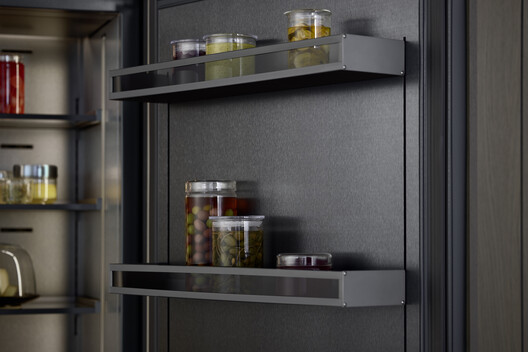
In terms of performance, a preservation system maintains stable temperature and humidity levels. While the refrigerator-freezer models include integrated climate chambers, all appliances are compatible with the Gaggenau Home Connect app, enabling remote access and monitoring. Clear, intuitive interfaces and specialized programs optimize conditions for different food categories, while animated quick-start guides simplify maintenance and daily operation.
Just as the kitchen serves as the heart of many homes, the preservation system is the heart of the Vario Cooling Expressive series. Designed to protect ingredients from freezing damage and oxidation, it features up to two fully extendable drawers with humidity control and soft-close functionality. Specialized cooling programs, an ethylene absorber, and air filtration systems help extend freshness and preserve ingredients for longer periods.
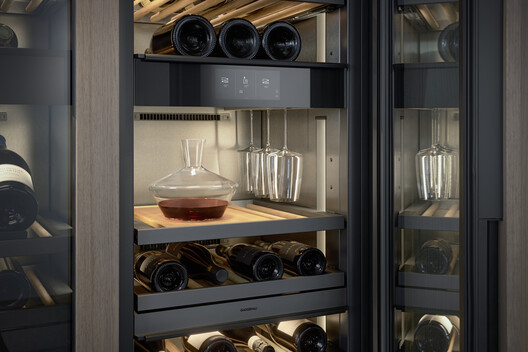
Continuing its focus on everyday rituals, Gaggenau's Vario Expressive wine climate cabinets align storage performance with the visual language of the kitchen, transforming wine preservation into an exercise in precision. Specialized sensors and automatic tempering programs ensure that each bottle reaches its ideal serving temperature. Lighting options allow every bottle to be showcased, whether through one of three preset settings or a customized configuration via Gaggenau Home Connect. Flexible presentation layouts and a dedicated display area provide storage for up to 110 bottles. The dark brushed stainless-steel interior evokes timeless elegance, while oak shelves and trays reflect craftsmanship and winemaking tradition.
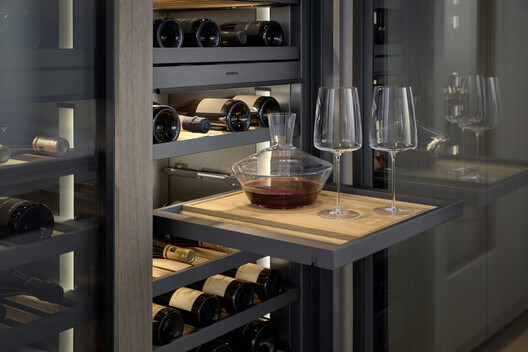
Independent climate zones ensure precise temperature stability, while automatic tempering programs calibrate each bottle's serving temperature based on the number of bottles stored, bottle size, and wine type. UV protection safeguards the integrity of every vintage, soft-close shelves improve accessibility, and activated charcoal filters maintain optimal air quality throughout all zones.
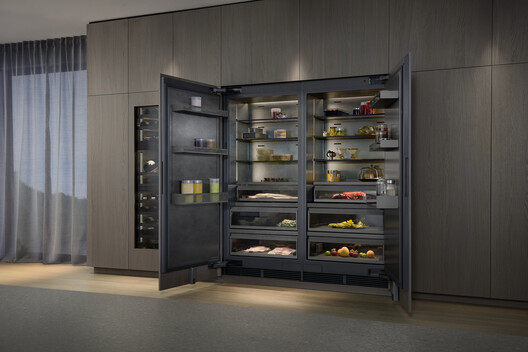
Like the other appliances in the Vario Cooling Expressive series, the wine climate cabinets can be installed individually or combined with refrigerator-freezers, refrigerators, and freezers to create a modular cooling system. This flexibility allows architects to design kitchens and interiors with greater freedom, achieving both visual harmony and functional continuity.
During Milan Design Week 2026, Gaggenau unveiled its installation "Presence." Located within the glass pavilion of the gardens at Villa Necchi Campiglio, the installation is conceived as a carefully choreographed spatial sequence. Inspired from Italian modernism and classical antiquity, it organizes the appliances through a sequence of volumes, reflective surfaces, controlled lighting, and calibrated sightlines to shape the visitor experience. In collaboration with Munich-based architecture studio 1zu33 and realized by Conduk, the installation invites architects and designers to engage with the brand's latest appliances. Rather than being displayed as isolated objects, the appliances are integrated into the architecture itself and experienced through their placement, materials, and proportions.
As kitchens become more connected to living and dining areas, the compact kitchen has become fully integrated into social spaces in the twenty-first century. Beyond changing lifestyles, sharing a meal or a glass of wine remains a defining habit across many contemporary contexts. Integrating the kitchen into the home requires an understanding of everything from patterns of movement to the arrangement of furniture and appliances that support users' needs. Just as Gaggenau designs its products around the rituals of everyday life, contemporary design seeks to understand human behavior creating flexible environments that harmonize with the ways people live.


