

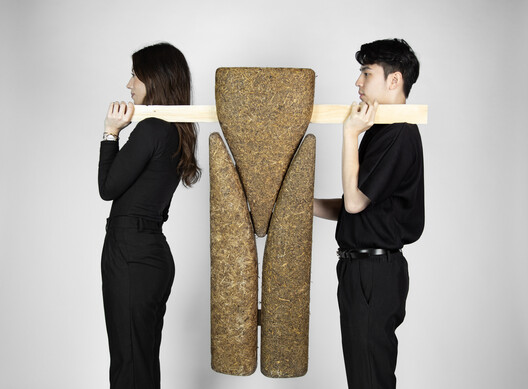
From acoustic and thermal cladding systems to masonry units and textiles made from agricultural waste, experimentation with bio-based materials continues to drive sustainable solutions for the construction industry. Faced with the urgent need to rethink how we conceive of and interact with the materials that shape the built environment, professionals, researchers, and educators are addressing different design scales and project phases, recognizing the importance of reducing carbon emissions and the industry's environmental impact. In partnership with Barcelona-based Bagaceira Project, the Sugarcrete® acoustic and thermal panel prototype, developed by the University of East London (UEL), demonstrates how low-carbon design can transform agricultural waste into high-performance building materials.
In contemporary architecture, concrete, aluminum, and steel remain among the most widely used materials, despite their substantial environmental footprint. Derived from scarce nonrenewable resources, these materials contribute to ecological damage throughout their life cycle—from resource-intensive and polluting manufacturing processes to disposal in landfills, where they continue to release contaminants into the soil. Working with bio-based alternatives offers opportunities not only to rethink construction techniques but also to introduce new aesthetics and functionalities.
Although bio-based materials exhibit certain technical and physical limitations related to moisture absorption, durability, maintenance, and degradation, designs that incorporate these construction materials sometimes combine digital technologies and automation to address the environmentally destructive cycles associated with conventional building practices. This approach, which brings together technology, ecology, and innovation, continues to explore material experimentation as a means of transforming the way architecture is conceived and built today.


