

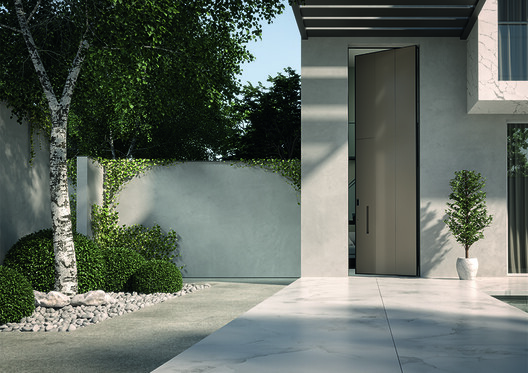
What transforms a space of living into a home? Beyond ownership or shelter, a home is tied to a quieter sense of certainty: the feeling that one can retreat, rest, and momentarily step away from the world's unpredictability. Homes are where routines accumulate, memories settle into spaces and objects, and where personal identity takes physical form through occupation and everyday rituals. Yet this sense of belonging depends on another condition that often goes unnoticed until disrupted: security. To feel "at home" implies a condition of comfort and stability. When domestic environments fail to provide this, spaces designed for rest become sources of unease, subtly affecting routines and well-being.
Architecture has always mediated the relationship between openness and protection through thresholds, walls, courtyards, setbacks, vestibules, enclosed gardens, gates, and carefully controlled entry sequences. The feeling of security, in this sense, is not defined only by locks or surveillance systems. It emerges through layers of spatial decisions and overlapping systems that work together quietly, rather than through a singular protective gesture. Reinforced entry points work alongside cameras and alarms; motion-sensitive lighting complements spatial visibility; digital systems enable remote access management.
Changing Expectations Around the Entrance Door
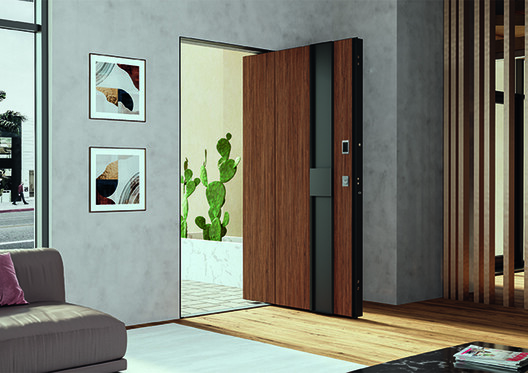
Still, the entrance remains central. It is often the first architectural encounter with the home and, at the same time, one of its primary points of protection. Doors such as those developed by Porte Blindate treat this threshold as an architectural component that integrates security, material expression, and domestic comfort into a single system. The most successful forms of security rarely dominate attention. Instead, they remain embedded in the architecture itself, functioning in the background without creating a defensive atmosphere.
The entrance door now carries demands that extend beyond durability. Where heavy doors and visible barriers once conveyed protection, contemporary homes often seek openness: larger glazed surfaces, stronger visual continuity with landscapes, and more fluid connections between the inside and the outside. The expectation that entrances maintain continuity between the facade and the interior has transformed how security is approached architecturally.
Size, Materiality, Transparency, and Architectural Continuity
What, then, makes a door secure? Security depends on the interaction between multiple technical layers: structural resistance, controlled access, thermal performance, acoustic insulation, and environmental durability. A secure entrance must resist intrusion while continuing to function in everyday life.
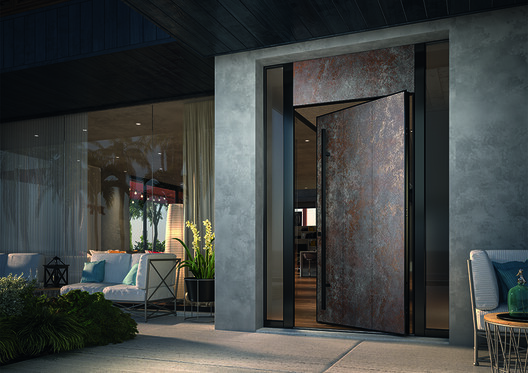
Large-format entrance systems offer one example of how these demands converge. Designed for large-scale architectural applications, pivot doors such as Porte Blindate's Di.Big reach up to 400 cm in height and 180 cm in width, while maintaining Class 4 anti-intrusion resistance certification. Their role extends beyond enclosure, allowing entrances to participate more actively in a project's architectural identity.
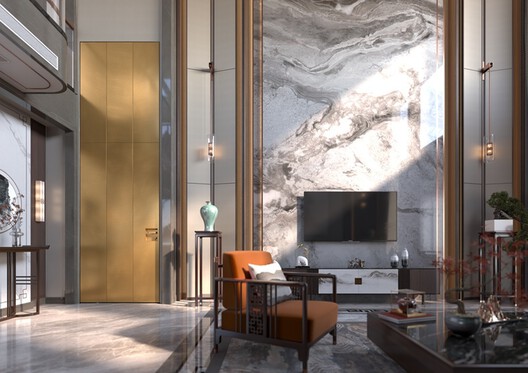
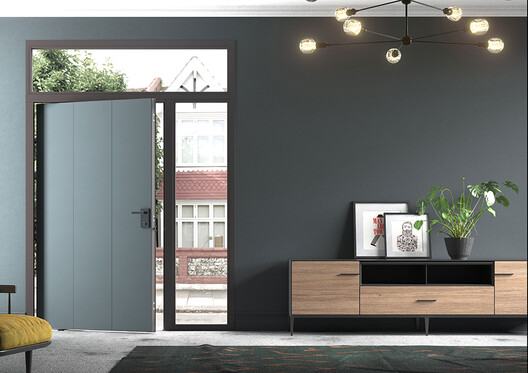
Materiality further shapes how security is perceived. Large vertical segments in lacquered MDF, PVC, or wood can visually extend surrounding facades, while recessed external handles and concealed detailing reduce visual interruption. The entrance becomes less a fortified insertion and more a clean continuation of the surrounding architecture, adapting to both classic and contemporary environments. Additional configurations, such as glazed sidelights and top windows, introduce transparency and natural light while maintaining the same construction principles used in security doors. The result challenges the assumption that protection must appear heavy or visually closed.
Technical Layers Behind a Secure Entrance
What distinguishes systems of this kind is not only their size and materiality but also the integration of technical performance into architectural expression. High thermal and acoustic performance, two weatherstrip bars for the top and bottom, and a water-resistant bottom seal can support environmental comfort, while recessed detailing and concealed components can preserve visual continuity. Pre-configured subframes can also simplify installation by accommodating hinges without additional masonry intervention.
Modern entrance systems operate across both physical and digital environments. Access can be managed via fingerprint recognition, numeric keypads, smartphone applications, or traditional European cylinder keys, which remain functional during power outages. Yet the ambition of these technologies is often flexibility, allowing access to adapt to different ways of living while remaining visually discreet.
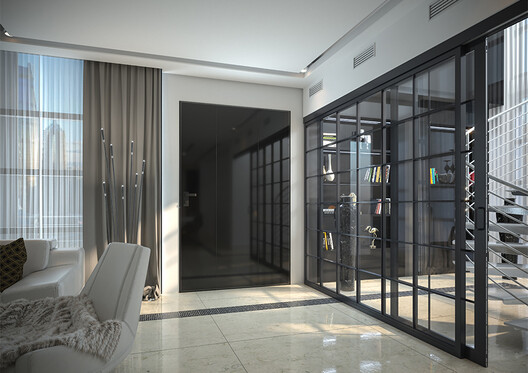
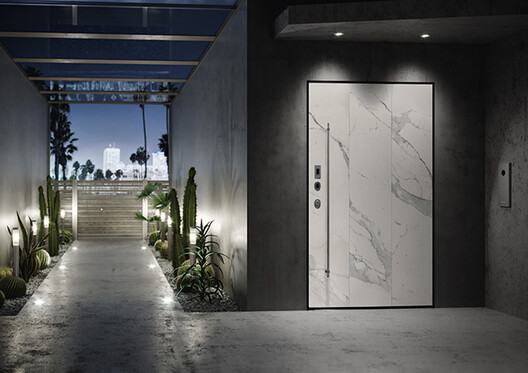
The entrance door, such as those from Porte Blindate, sits at the intersection of openness and retreat, visibility and privacy: a technical element, but also a spatial threshold that shapes how life begins and ends each day. As homes absorb new expectations—from digital access to environmental performance—the role of the entrance expands with them. The most successful entrances may be those that protect without dominating, allowing architecture to remain open while still offering the reassurance of refuge.



