

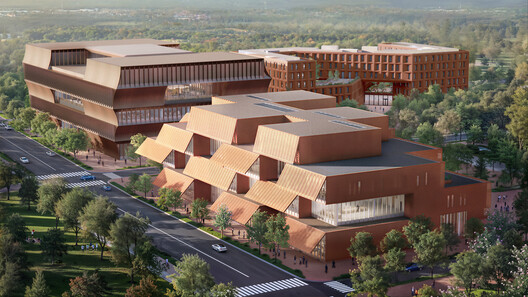
BIG–Bjarke Ingels Group was selected to design the campus of a new STEM university in Arkansas, United States, on a site located near Bentonville's downtown, formerly home to Walmart's headquarters. The project comprises three buildings occupying two city blocks and was designed in collaboration with Polk Stanley Wilcox Architects, who will serve as the Architect of Record. The campus comprises around 422,000 square feet (nearly 39,200 square meters), including green spaces, public squares, an academic building, a makerspace, and a student residence. While the project was recently unveiled, the university intends to welcome its first class of students in 2029.
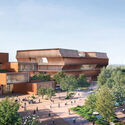
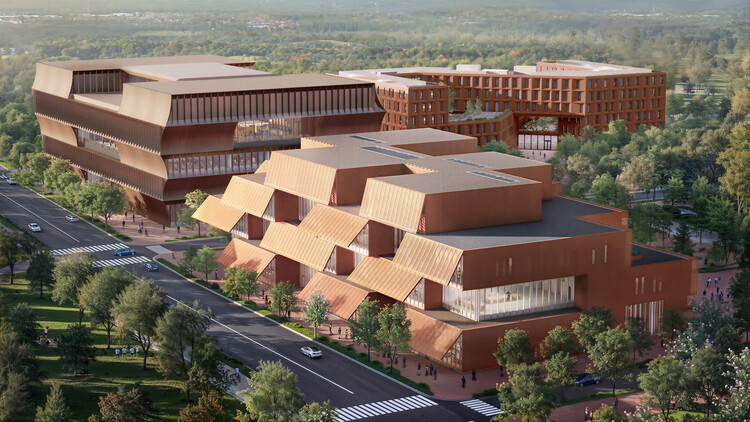
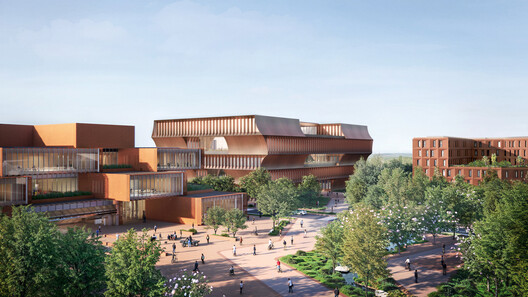
Situated between Bentonville's downtown square to the northeast and Gateway Park to the southwest, the campus is organized around a historic rail line that ran diagonally through the city. The landscape design relates to Bentonville's urban parks, renaturalizing the site with outdoor gathering spaces inspired by the surrounding Ozark region landscape. According to BIG, the masterplan's objective is to "break down the boundaries between campus and community through a lively new integrated neighborhood for faculty and citizens alike," the hope being that the "integration of the campus into the community will make higher education as accessible as possible, academically as well as socially."
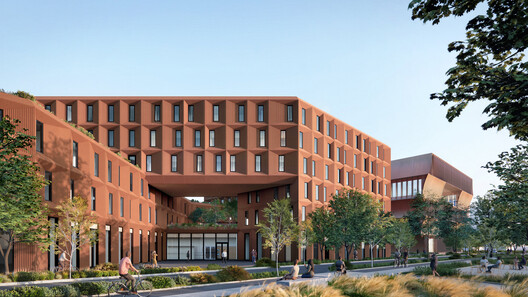
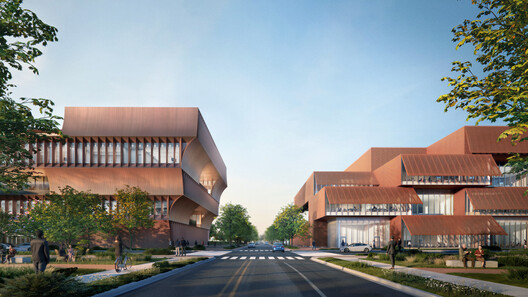
For the new STEM university in Bentonville, we've designed a campus that supports the full student experience. Each of the three buildings – the residence hall, academic building, and makerspace – fosters a different element of campus life, from study and collaboration to experimentation and innovation. Just as the buildings connect the different aspects of the collegiate experience, they also naturally connect the campus to downtown Bentonville through warm, natural materials suited to the Ozark region: weathered steel for the industrial makerspace, copper that will age gracefully over time for the refined academic building, and red-hued cement panels for the residence hall. – Thomas Christoffersen, BIG
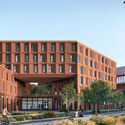
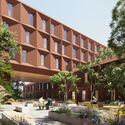
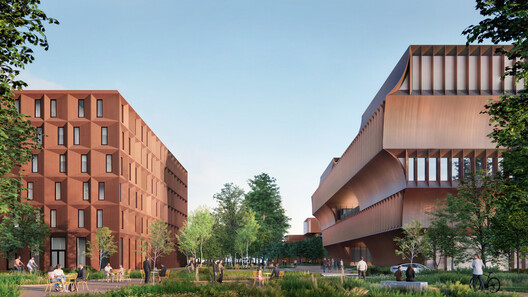
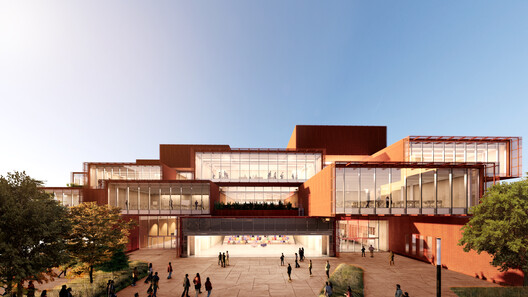
The three buildings are distinct but share earthy tones and similar facade treatments. The 130,614-sq-ft makerspace (12,000 sqm) is designed as a series of stacked vitrines housing workshops, labs, common areas, and a flexible forum. Interior activities remain visible from the street, showcasing a dynamic work and research space. The 147,525-sq-ft academic building (13,700 sqm) houses classrooms, lab facilities, faculty spaces, and offices, with an open central atrium. The design evokes Ozark vernacular architecture, with a dogtrot breezeway and stacking inspired by the log houses historically found throughout Northwest Arkansas. The 400-bed student residential building, with dining and shared amenities, is organized as a figure eight, carving out two elevated courtyards with views to the outdoors.
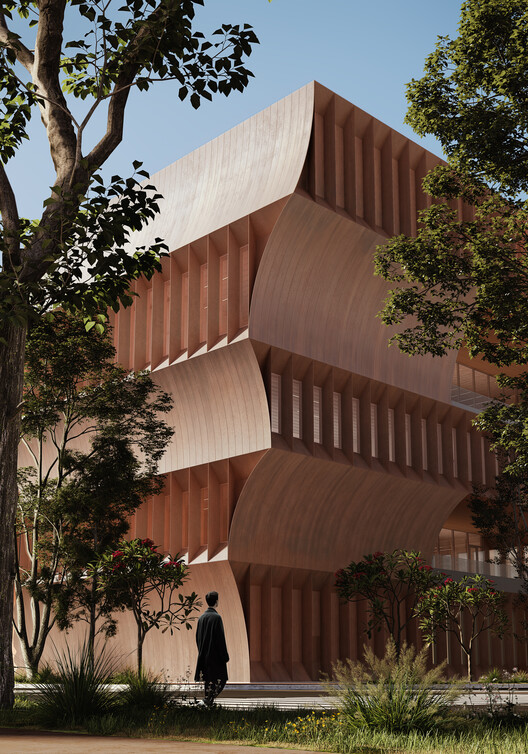
The makerspace is clad in Corten steel, expected to patina over time under Northwest Arkansas's climate, nodding to the region's industrial heritage. Stacked, offset, and interlocking volumes shape diverse interior spaces, while industrial-inspired vitrines and weathering steel mesh awnings mitigate solar heat gain. The academic building is conceived as a stack of bars that alternate directions on every floor, with porous spaces between them creating visual connections across floors. Its curved metal facade alludes to the interlocking carved timber elements of log houses common to Northwest Arkansas. The student residence building is organized as a figure eight, carving out two terraces on the fourth floor along with two separate elevated courtyards perched atop a dining hall and shared amenity spaces.
BIG recently revealed images of its EVE Music Hall, currently under construction in Čepin, eastern Croatia. Designed in collaboration with SIRRAH projekt and Theatre Projects, the venue is expected to host concerts, conferences, exhibitions, and cultural activities. In other recent news, the Practice for Architecture and Urbanism (PAU), in collaboration with HNTB and HOK, was recently announced as the selected design team for the redevelopment of New York City's Penn Station, while Herzog & de Meuron was selected to revitalize the Palace of Congresses building, an urban landmark built during the People's Socialist Republic of Albania in Tirana.


