

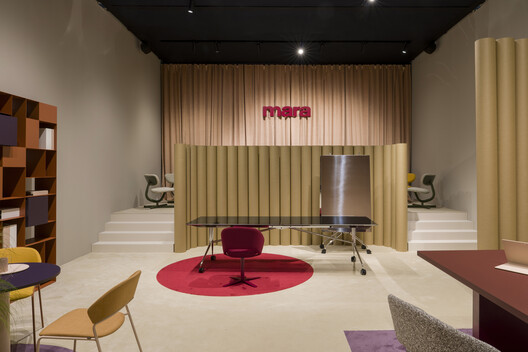
At Salone del Mobile 2026, MARA presented its latest collection within a fair-stand concept designed by Italian architect and designer Ferruccio Laviani. Conceived as a micro-abstraction of an arena, the installation placed visitors at the center of an ascending spatial composition, where the brand's newest products were displayed across stepped tiers.
The setting was inspired by the idea of the Greek theatre as a place of encounter, exchange, and collective observation. The stand proposed a kind of architectural landscape in which visitors could sit, move through the space, observe the objects from different angles, and engage with the brand in a more direct and experiential way.
The idea is a little bit like a Greek theatre. The people were sitting there, discussing things. I mean, I don't want to be Plato or something like that, but I wanted to achieve a place like that, one that's not just for objects, but for people: meeting, looking around, discussing, exchanging opinions. - Ferruccio Laviani
This approach reflects Laviani's broader understanding of exhibition design as a spatial and social experience. For him, a fair stand should create a temporary environment capable of drawing visitors into a different atmosphere, allowing them to understand the identity of a brand through space, materiality, and use.
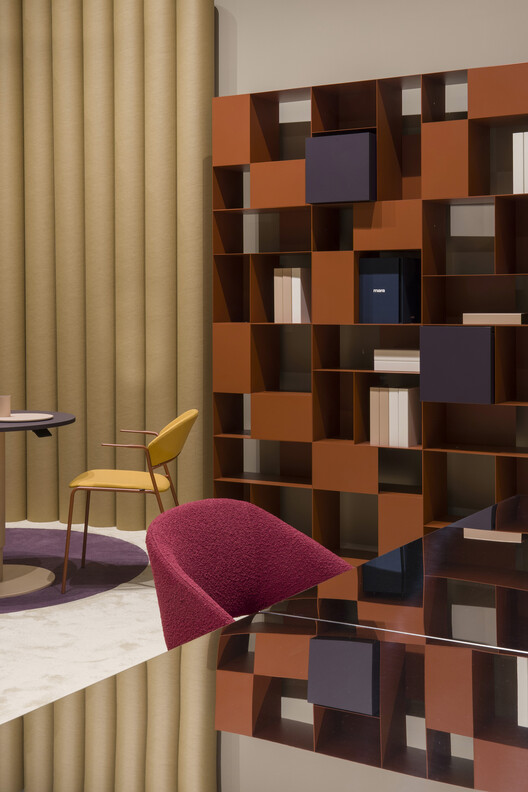
"I want visitors to a fair stand to have a certain experience, to be involved in a special landscape that is a different reality from outside," he says. "It's about creating a place that is lived by them, so they truly discover the brand, in this case MARA, and discover the products and the collection. A place that's not just graphically or photographically designed, but also that delivers a memorable atmosphere."
Laviani's relationship with MARA is also connected to the company's origins in the province of Brescia, a region with personal significance for the designer. "When they first called me, I was interested to get to know them because they're from the Brescia province," he says. "It was the province of my father. The Bresciani are always a very particular typology of people: very tough, very strong, very hardworking. They have a completely different vision from the other parts of Lombardy region."
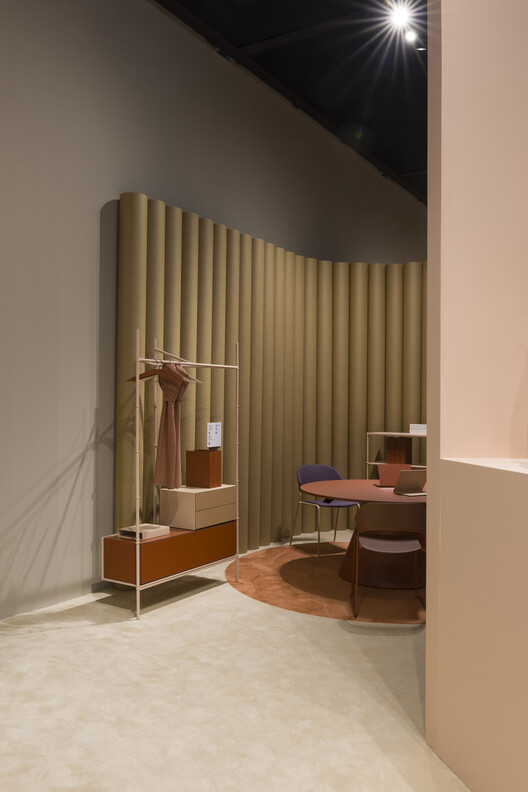
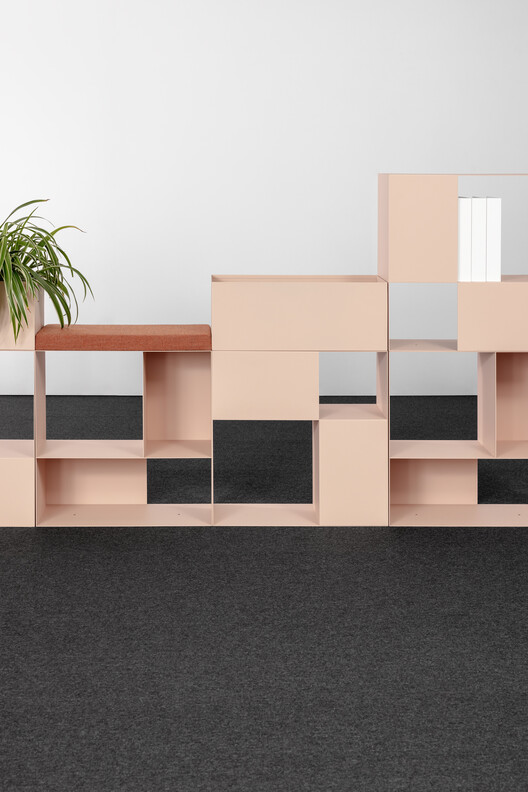
Laviani's connection to Brescia also shows in Elle, the bookcase system he designed for MARA. This year the system gained new storage elements and hanging rails, additions that feel less like accessories and more like natural extensions of something still figuring out what it can become.
"We're trying to see the whole potential we have with the structure," Laviani explains. "So, the structure remains the same, but, as a system, we try to make it evolve into something different, something new, adding new items every time that turn it into something else."
The other Milan launches moved in different directions. Aera, Marcello Ziliani's seating collection, is defined by restraint and quiet precision. Its spare lines, tapered structure, and carefully resolved details give the piece a discreet presence, allowing it to integrate naturally into offices, hospitality settings, and domestic interiors without appearing out of place in any of them.
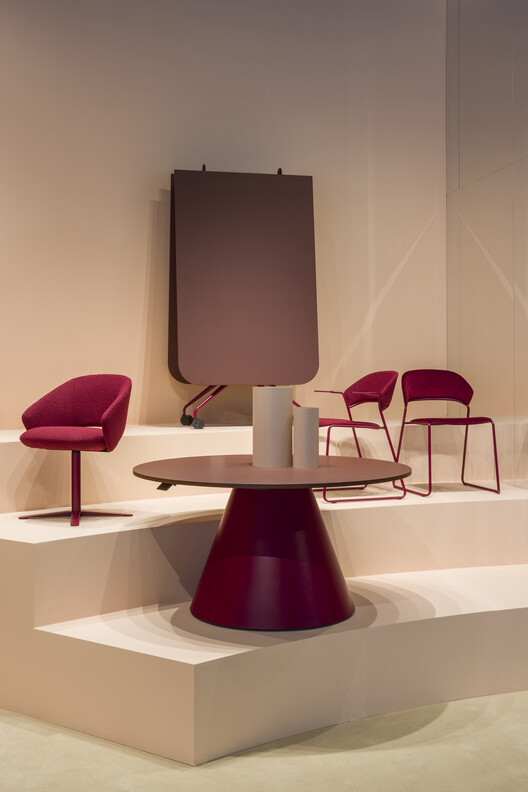
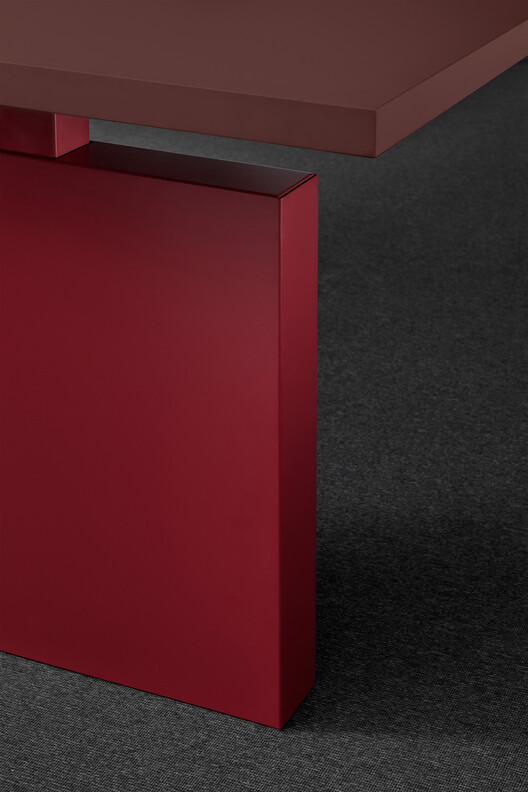
Also on show was Otto, Christophe Pillet's interpretation of the table as a meeting point between engineering and expression. The series takes MARA's technical expertise, particularly its patented height-adjustment mechanism, and gives it a more architectural presence. Defined by a graphic double-T-shaped structure, Otto balances controlled proportions with structural strength, transforming a technical solution into a formal element.
I dressed a MARA mechanism, transforming its modernity into an expression of beauty. - Christophe Pillet
A different form of adaptability also appeared in Francesco Barbi's B302 Vase, a 100% recyclable steel planter module designed for MARA's existing B302 modular bookcase. By introducing vegetation into the system, the piece expands the functional and atmospheric possibilities of the bookcase while maintaining the brand's focus on modularity and long-term use.
MARA also marked the tenth anniversary of Argo Libro, its iconic folding table, with a limited-edition series featuring a reflective polished-steel top. Originally developed for environments that require flexibility, from offices to educational spaces, the table rests on castors and can be easily moved, folded, and reconfigured. Argo Libro continues to occupy a space between furniture and infrastructure, responding not to a fixed use, but to the continual shifts in behavior, program, and need.
The products presented at Salone del Mobile 2026 highlight MARA's interest in furniture systems that adapt over time. From Laviani's architectural stand concept to the evolving Elle system, Ziliani's pared-back Aera seating, Pillet's technically expressive Otto table, Barbi's recyclable planter module, and the anniversary edition of Argo Libro, the collection points to a broader understanding of furniture as a fundamental part of contemporary interiors: flexible, precise, and designed to support changing ways of living and working.


