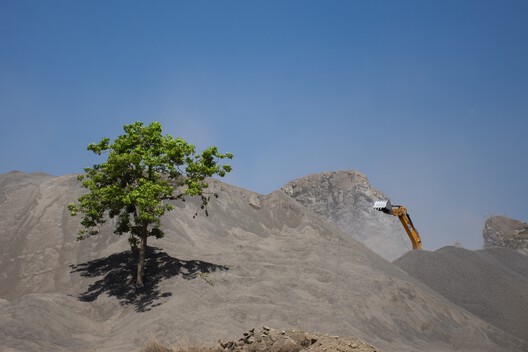
The third edition of the Sharjah Architecture Triennial (SAT03) will take place from November 14, 2026, to April 14, 2027, under the title Architecture Otherwise: Building Civic Infrastructure for Collective Futures. Curated by anthropologist and curator Vyjayanthi Rao, with Tau Tavengwa serving as Associate Curator, the exhibition will bring together 32 participants working across architecture, anthropology, urbanism, art, design, education, and community-based practices. Opening to the public on November 14, the Triennial will unfold through installations, films, archives, workshops, performances, and public programs distributed across Sharjah, positioning the city itself as a site for dialogue and engagement.
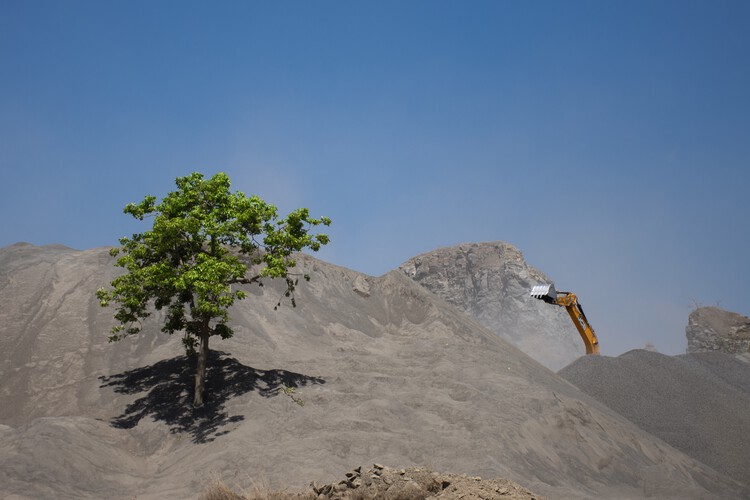
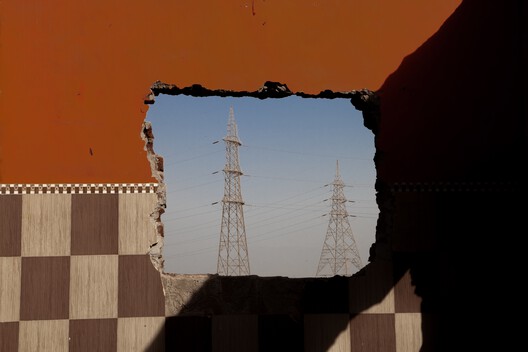
Rather than focusing on architecture solely through buildings and formal design, Architecture Otherwise considers the systems, relationships, and infrastructures that sustain collective life. The exhibition explores themes including migration, displacement, climate adaptation, food systems, public space, heritage, education, mobility, and collective memory, framing architecture as a practice embedded within everyday social and political realities. Many of the participating projects have been developed through extended research and residency programs in Sharjah, allowing contributors to engage directly with the city's layered urban context while responding to local histories and broader global challenges.
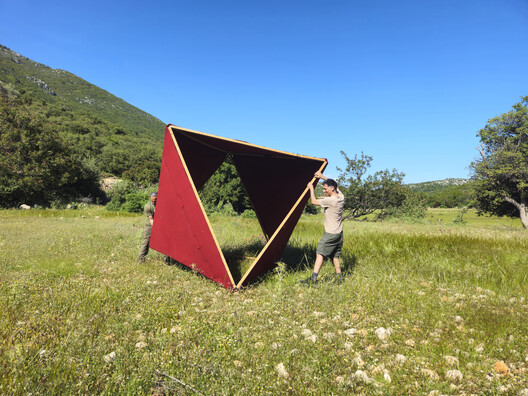
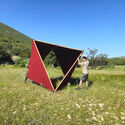
Several installations investigate architecture through mobility, adaptability, and temporary forms of occupation. Hiba Bou Akar, Mohamad Hafeda, and Nathalie Harb present shelter-like structures informed by histories of displacement in Lebanon, incorporating materials sourced from refugee settlements and wartime infrastructures. Representing Türkiye, Aslıhan Demirtaş, Ali Cindoruk, and Dilşad Aladağ introduce a new iteration of Tumblespace, a movable structure inspired by traditions of nomadism that supports temporary gathering and dialogue. Elsewhere, People's Architecture Office reimagines flatbed handcarts as flexible civic platforms for communal activities, while ABARI develops a large-scale woven bamboo structure designed to be dismantled and relocated after the exhibition. Sa'dia Rehman complements these spatial interventions with a film and artist's book examining displacement and forms of civic infrastructure that emerged following the construction of Pakistan's Tarbela Dam.
Related Article
Sharjah Architecture Triennial 2026 Announces Theme to Rethink Civic Infrastructure for Collective FuturesThe relationship between infrastructure, landscape, and urban transformation also appears throughout the exhibition. Kush Badhwar explores the ecological and social consequences of the Navi Mumbai International Airport through a film developed from the perspectives of affected communities, while Rajesh Vora and the National Institute of Design revisit six decades of change along the Sabarmati River, documenting how large-scale redevelopment has reshaped its environmental and civic role. Other participants examine community-led approaches to heritage and urban development, including Megawra Built Environment Collective in collaboration with RIWAQ, POCAA (Platform of Community Action and Architecture), and Social Design Collaborative, whose projects investigate preservation, co-creation, and migrant experiences as frameworks for imagining alternative urban futures.
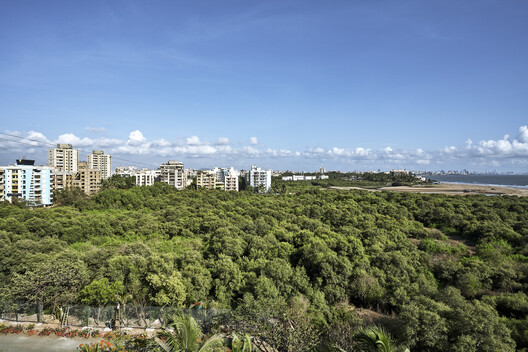
Questions of care, education, and environmental resilience inform another group of projects that position civic infrastructure beyond the physical city. Building on research first presented at the 2025 Venice Architecture Biennale, Azza Aboualam presents Assemblies, a speculative greenhouse system exploring food production and self-sufficiency in arid climates. Nashin Mahtani and the Disaster Map Foundation examine Indonesia's open-source disaster-mapping platform PetaBencana as a model for climate adaptation, while Curry J. Hackett reflects on educational institutions as civic spaces through the history of Black schooling in the United States. In parallel, Let's Build Great Things! collaborates with children in Sharjah to construct a temporary public structure, and Kevin Kimwelle / Indalo World investigates circular construction methods as collective building practices.
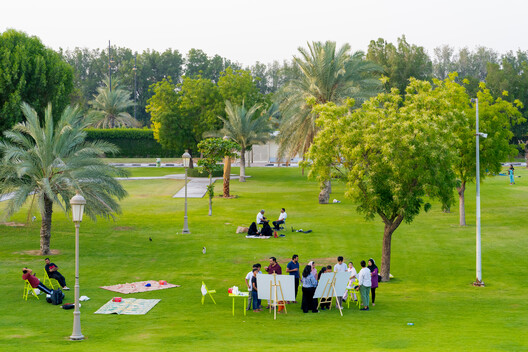
Several participants also propose alternative ways of experiencing the city through sound, storytelling, and shared cultural practices. Badriyah Alsalem draws upon traditions of celestial navigation to reinterpret civic infrastructure through environmental knowledge, while Mohamad Nahleh and Ozayr Saloojee explore the concept of "night architecture" through performances, guided walks, and storytelling. Yaminay Chaudhri and Karachi Beach Radio create an installation centered on oral histories and sound at the beach as a public landscape, while projects by Samar Halloum, Sudarshan Shetty, and Ziad Jamaleddine, Makram el Kadi, Iheb Guermazi, and Beya Othmani examine overlooked urban spaces and places of contemplation within the contemporary city.
Commenting on the exhibition, curator Vyjayanthi Rao describes Architecture Otherwise as an exploration of how cities are experienced, co-created, and transformed through everyday social and cultural practices rather than through architecture as a singular object. Across five months of exhibitions and public programming, the third Sharjah Architecture Triennial proposes architecture as a collective and evolving condition, bringing together diverse practices that examine the intersections of materiality, ecology, technology, food, sound, and civic life. Additional talks, screenings, and special programs will be announced ahead of the exhibition's opening.
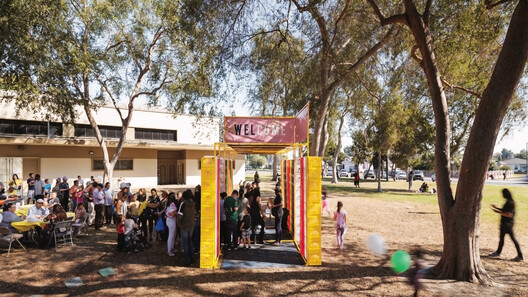
In related architecture news, several international biennials have recently announced key developments for their upcoming editions. The 15th São Paulo International Architecture Biennial (BIAsp) appointed architects Gabriela de Matos and Pedro Rossi as chief curators for its 2027 edition, which will explore the theme Architecture, Culture, and Sovereignty. Meanwhile, the Diriyah Biennale Foundation unveiled the four shortlisted studios for the 2027 AlMusalla Prize: Al-Jawad Pike, Civil Architecture, MILLIØNS, and NEW SOUTH, whose proposals will compete to design a new musalla for the third Islamic Arts Biennale in Jeddah. The Tallinn Architecture Biennale 2026 (TAB 2026) also announced the winners of its Installation Programme Competition and Vision Competition, both developed under the curatorial theme How Much?, ahead of the biennale's opening this September.