The COVID-19 pandemic has presented the world with unprecedented challenges and is impacting our daily lives by restricting our personal movements radically. It almost goes without saying that this month has continued to see extraordinary, rapid and previously unthinkable changes to public and private spaces. As the virus continues to spread, countries around the globe have ordered citizens to retreat to their homes – and stay there. Social distancing measures drastically scaled down our personal range of movement to our ‘own four walls’.
Brian May's micro concerts, goats on the streets, pizza delivery with toilet paper, Two men jam on a balcony. Above left: Brian May's micro concerts on his Instagram page. Above right: Great Orme Kashmiri goats on the streets of Llandudno, Wales. Below left: Pizza delivery with toilet paper, Rotterdam, Netherlands. Below right: Two men jam out on the guitar and flute on a balcony in Turin, Italy
When in 2009 Jacob Ross Boswell, in his article "Dystopic Verdure" in MONU #11 on "Clean Urbanism", introduced the topic of diseases, such as malaria, cholera, tuberculosis, yellow fever, and typhus etc, and how they had impacted urban landscapes and the shape of cities in the past, we were very intrigued and considered dedicating an entire issue on this topic. Particularly fascinating were his elaborations on how, by the second half of the 19th Century, urban designers and landscape architects such as Daniel Burnham, Frederick Law Olmsted, and a host of other architects, planners, and landscape architects collaborated with medical colleagues like Chicago's John Rauch in reshaping American cities: broadening streets and boulevards to allow for more sanitary air flow, moving pestilential cemeteries and dumps to the fringes of the city, carving out, reclaiming, or simply seizing land for America's first great urban parks, such as New York's Central Park. However, in the end we abandoned the idea to create an entire MONU issue on the relation between diseases and cities, since it seemed to us as something that belonged to the past only.
Photo of the Year 2020 is now open for all students of architecture
Aarhus School of Architecture proudly announces the second edition of the international competition, Photo Of The Year, which is a joint collaboration with Dreyers Foundation and Dinesen. Architecture students from all over the world are invited to participate in the international competition that celebrates architectural photography.
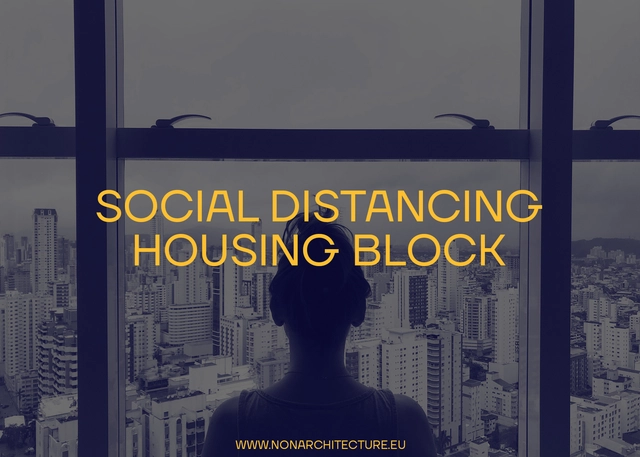
Non Architecture - SOCIAL DISTANCING - Housing Block
Our world is changing fast, while ambitions and challenges match in importance. In this context, design can play a huge role. How do we imagine the world to be? What range of possibilities we haven’t discovered yet? What’s a Non-Architecture for a World in crisis? In 2020 we started the second phase of competitions to address the issues of tomorrow.
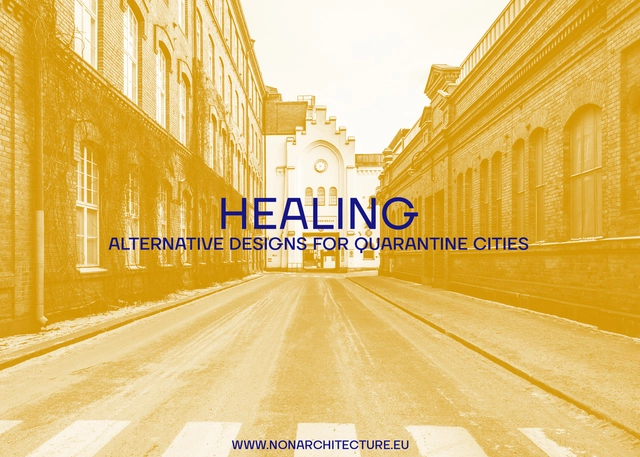
Non Architecture - HEALING - Alternative Designs for Quarantine Cities
Our world is changing fast, while ambitions and challenges match in importance. In this context, design can play a huge role. How do we imagine the world to be? What range of possibilities we haven’t discovered yet? What’s a Non-Architecture for a World in crisis? In 2020 we started the second phase of competitions to address the issues of tomorrow.
Plan of Chicago, Plate 107. Image by Nathan Rennich.
The Chicago Architectural Club (CAC) is pleased to announce the 2020 Burnham Prize Competition: Burnham 20/20. A call for entries is taking place as of April 30th, 2020 with the announcement of the winning entries in September 2020.
We invite everyone to re imagine the conventions of public toilets and encourage the best possible solutions for this serious problem scenario which plaguing our World.
The world today is experiencing unprecedented demographic growth and consequent urbanization of various places. Rapid population growth in urban areas usually gets coupled with poor planning of physical and social infrastructure along with a lack of individual and communal sanitary consciousness.
Architects, landscape architects and urban planners from around the world are invited to contribute to the Open international architectural ideas competition for landscaping of Vyzvolennia Square and the revitalization of the DASU building with adjacent territory in Mariupol, Ukraine.
Construction alone accounts for more than 30% of the world’s greenhouse gas emissions and must now be reinvented to meet the ecological, economic and societal challenges of doing better with less, reducing its environmental footprint, limit the consumption of natural resources; build more responsibly and sustainably.
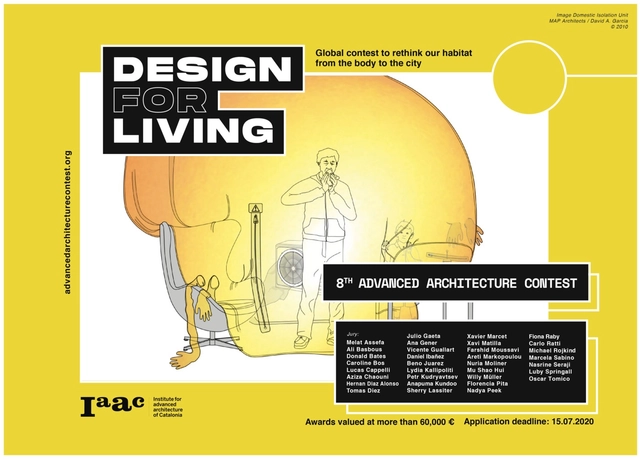
The Institute for Advanced Architecture of Catalonia (IAAC) calls its 8th Advanced Architecture Contest as a global reflection to rethink human habitats, at a time when the fight for life and climate allows us to consider how we would like to live in the coming decades.
The Intimate City hosts Dining in the Urban, a design competition that offers the opportunity to explore domestic rituals in Skopje's public realm. The brief uses the knowledge gained from domestic rituals to expose the current social and physical forms, unveiling the boundaries between the public, communal, and private within the city. Aiming to reveal social and physical latency the brief is an experiment that acknowledges form as a social commitment in order to mediate the tension in the city.
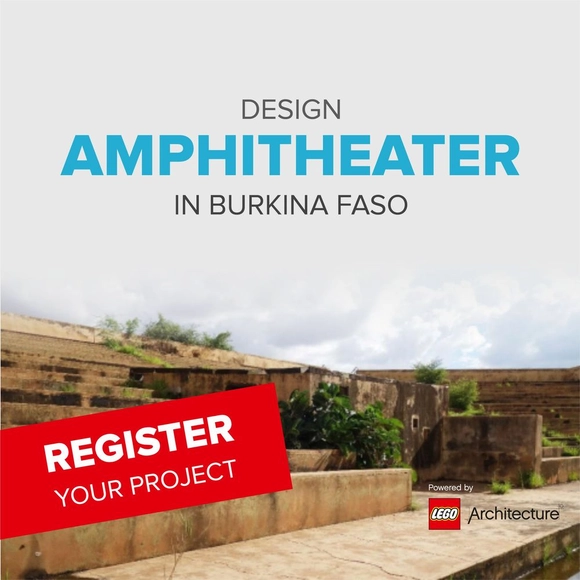
The Theatre Populaire Idea(l) is an open student competition of architectural, artistic and design ideas for the sustainable rehabilitation of deserted green amphitheater at the complex of the “Centre de Développement Chorégraphique” La Termitiere in the city center of Ouagadougou, in Burkina Faso. The emphasis is placed on innovative, respectful, courageous visions valorizing the local potentials and materials.
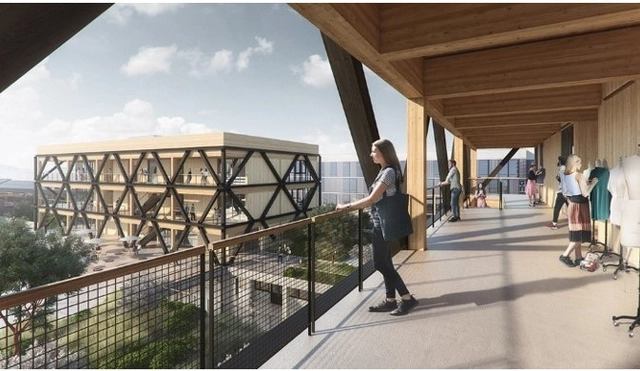
In California, the Governor’s Forest Management Task Force and the Office of Planning and Research announced the winners of their first-ever competition designed to highlight a category of engineered wood products known as mass timber. As the need for forest, wildfire, climate, and housing solutions grows, California is moving to expand the use of these innovative wood products, which have the potential to sequester carbon, drive healthy forest management, and increase affordable housing in California.
CANactions School launches the Call for Papers for CANactions Magazine Edition 02 'ЗЕМЛЯ І THE LAND'. It is meant to explore "LAND" and its inhabitants to collect and share with the world the most actual and relevant portrait of contemporary post-socialist states countryside.
The recent COVID-19 pandemic has had a significant effect on higher education institutions and in particular delivery of design and architectural education. The co-presence of educators and students and creating affordances for physical and material spatial experiences, as well as collaborative work, has long been at the heart of architectural education and its studio culture. This issue aims to capture the imminent changes that this pandemic promises and provide a platform for sharing pedagogic experiences, practices and perspectives for the future of architectural education.
Contribute to the society as architectural designers during COVID-19 isolation period.
We are launching this special ISO[NATION] competition to raise funds and to save lives during the outbreak of pandemic COVID-19. A small donation will be required to enter this competition and they will be donated towards the World Health Organization COVID-19 Solidarity Response Fund.
LOOP Design Awards launches the first edition of its prize in 2020!
LOOP is an open platform to creativity and talent, where all the designers may showcase their best projects, giving them great visibility around the world. We want to celebrate and honor diversity with remarkable projects globally.
Quelle Architecture has recently launched a participatory study open to all on the impact of the containment we are experiencing. This study would be a collection of ideas, drawings, texts, models..., making it possible to show how everyone imagines their future home or the ideal dwelling in which to live through their confinement. To do this, we propose two models that can be used: a building or a housing unit. All proposals are welcome, from the most utopian to the most realistic.
EU-wide, open architectural competition for “Campus of Religions” launched in Vienna.
A joint major project of eight religious communities in Vienna’s aspern Seestadt, one of Europe’s largest urban development areas
The ”Campus of the Religions”, an interfaith center and international model project, will play a special role in Vienna’s social life. The competition launched on April 17th aims at finding architectural solutions for the buildings for worship/religious services of the eight participating communities, for the University College of Christian Churches for Teacher Education KPH, shared and open spaces. The Campus construction site covers approx. 10,000 m² near aspern’s lakeside.
The spread of the new Coronavirus SARS-CoV-2 is forcing to change rapidly our lives, and this pandemic scenario won’t last for a little time. Gideon Lichfield in his article in the MIT Technology Review state that this situation will probably last for 18 months. Many scientists, moreover, are convinced that this is just the first of many pandemics that we will face in the next future.
The space that hosts the project is currently a 9 holes golf course. Our wish is to turn it into a verdant, fragrant garden where rosemary and thyme give golfers and non-golfers alike an opportunity to nourish their body and mind. Creating this mesmerizing atmosphere will be made possible by planting one million rosemarie and thyme bushes around the golf area.
The 47th Nisshin Kogyo Architectural Design Competition
“Play” meaning in various ways, including playing like an infant, having fun with friends, indulging in drinks or gambling, taking breaks between work and study, having the leeway to things, seeking beauty in literature and art isolated from the secular world, and giving space to machinery part connection. In any case, it is like a source to life, an act full of humanity contrary to pursuing functionality and rationality.
Impacts of design decisions are far-reaching, inescapable, and indisputable. As designers, the questions we continually ask ourselves are: how does what I make impact the world at large? What materials am I using? Who am I designing for and are my designs inclusive? How can materials be used in new, healthier, and innovative ways? That’s where you come in!









![#mOOO3 Iso[nation]: Home Office (Fundraising For Covid-19 Response Fund) - Featured Image](https://snoopy.archdaily.com/images/archdaily/media/images/5ea6/a470/b357/653a/fd00/00ca/slideshow/open-uri20200427-28383-q8brb0.jpg?1587979362&format=webp&width=640&height=580)