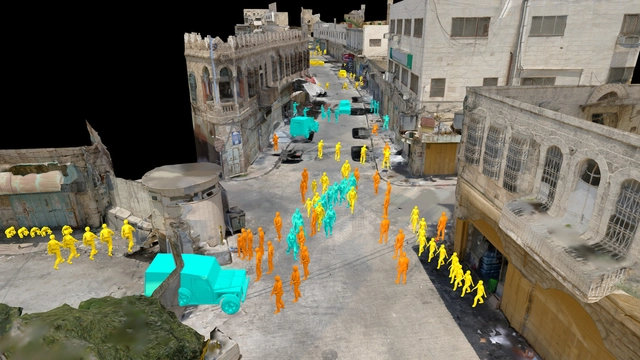
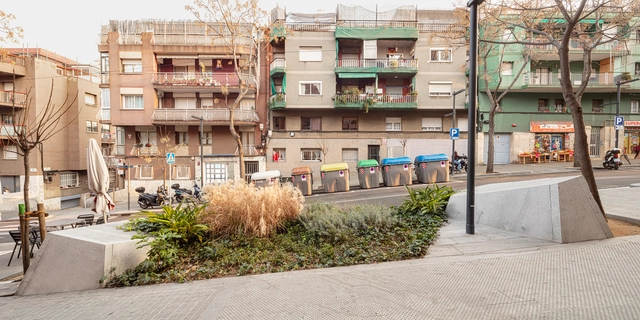
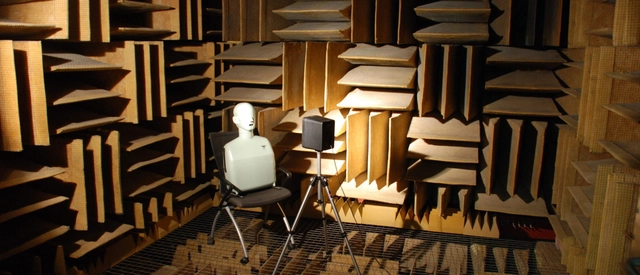
Steven J. Orfield's firm, Orfield Laboratories (OL), has spent 50 years in architectural design, research, and testing, dedicated to the premise that what matters in design is the end user, because design in the absence of user comfort, preference, and satisfaction is a failure. In this process, the firm has developed building performance standards for most commercial building types, and has now added to those standards the requirements for half of the world: people who are perceptually and cognitively disabled (PCD). The expense in doing this has been significant, but it has been one of the most important quests in Orfield's life.
https://www.archdaily.com/984212/when-it-comes-to-design-for-the-disabled-let-the-science-lead-the-processSteven J. Orfield
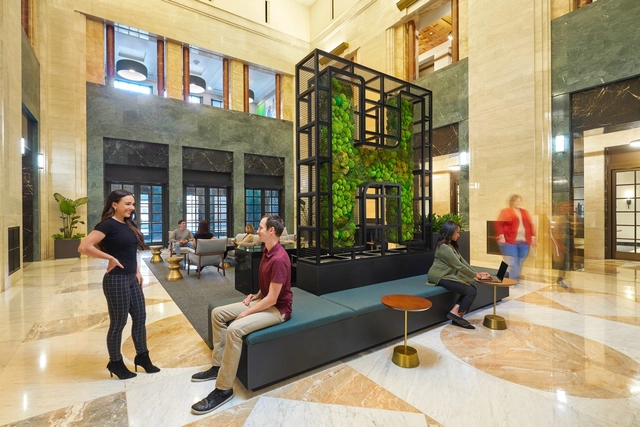
The pandemic has transformed how we work around the world. Companies have quickly rethought traditional workflows to stay connected and focus on the employee experience. Reimagining their workplaces in a holistic way, designers at Louisville-based Humana are working on new workplace models that ensure employee safety and well-being while creating greater flexibility and diverse ways to collaborate.
A few years ago, it was more common for the bicycle to be seen as an option for leisure and sport in large Brazilian cities. Currently, in the face of the climate crisis, the price of fuel, and more cyclist-friendly planning (although far from ideal), the bicycle has gained more and more prominence and has become a transport option for the population. However, we know that it is not always easy to find a place to keep it in our homes. Therefore, we present some possibilities.
Standing at 78 meters tall, the Museum of the Future (MOTF) is far from reaching Dubai’s famous skyline, which features skyscrapers like the unparalleled Burj Khalifa – the world’s tallest tower. However, with its bold shape and striking façade illuminated by more than 14,000 meters of Arabic calligraphy, it certainly succeeds in taking its place among the city’s most iconic buildings. The award-winning project by Killa Design and Buro Happold, described by many as ‘the most beautiful building in the world’, opened in February of 2022 in Dubai’s Financial District. In a total built up area of 30,000 sqm, it accommodates exhibition spaces for innovative ideologies, services, and products, as well as theater spaces, a laboratory, and a research center.
Most visitors to Mexico City spend their time exploring tranquil, idyllic neighborhoods like Roma and Condesa, filled with quaint buildings, bustling pedestrian promenades, and cosmopolitan attractions. But life in the Mexican capital finds most of the population on the disadvantaged side of a vertiginous inequality, defined by meager wages, the looming threat of violence, and a glaring lack of public infrastructure. The government’s attempts to address the latter have often stumbled; it is common practice for projects that require architectural expertise to be assigned to building contractors, who produce layouts lacking in any design sensibility. This even though Mexico City now boasts one of the world’s most fertile design scenes and has a strong legacy of renowned architects working in tandem with the government to produce exceptional public works—from the urban housing projects of Mario Pani to the monumental buildings of Pedro Ramírez Vázquez.
'You'll always find me in the kitchen at parties,' goes the old pop song from the 1980s.
But when it comes to Sven Rensinghoff, the marketing chief at premium German bathroom brand Bette, it’s mostly the bath. The first time I met him, a number of years ago, he was in the middle of a photo shoot at the ISH Frankfurt trade fair, lying in one of the manufacturer’s latest, high-end tubs. Clothes on, I should add. No water.
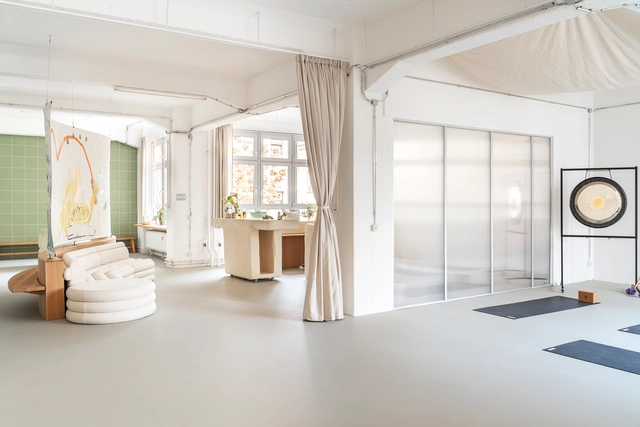
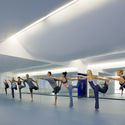
Originating in ancient India and verbally transmitted through the ages, Yoga has become a widespread and popular practice that engages the body and the spirit into reaching a stillness of the mind and a clear self-consciousness. There are varied schools of Yoga that reflect different origins and types of practices, however, they all require a combination the physical movement with mental, and spiritual awareness. The physical and mental health benefits that a regular practice can generate, despite turbulent or hard times, were recognized by the United Nations on the 21st of June 2022 Yoga day with the theme of Yoga for Humanity.
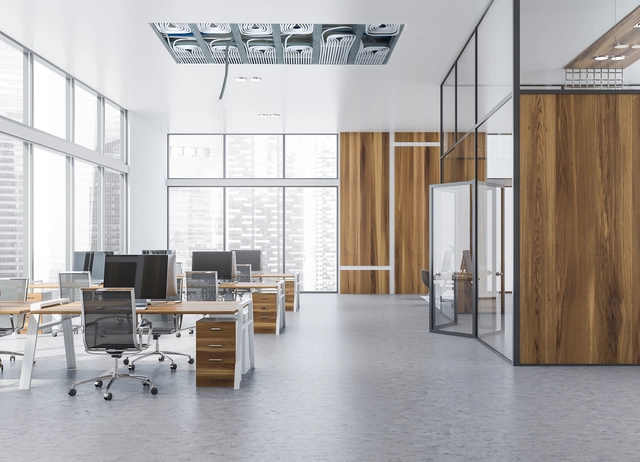
Sustainability and comfort are top priorities in any new build or renovation project these days. Green construction means taking measures to reduce emissions and achieve a high degree of energy efficiency, both during construction and in terms of subsequent building use. And well-being is a key factor in any type of building, whether a home, a hotel or an office complex; after all, the right conditions have a beneficial effect on people’s health and productivity.
One way to integrate these aspects into daily life is by using radiant cooling during summer, as it can beexceptionally energy-efficient and can ensure pleasantly comfortable temperatures.
Nature is often used as an inspirational source for architecture. Whether from its shapes, the extraction and use of its materials, or even the incorporation of physical and chemical processes in the technologies used, it is always relevant to look for relations between the built environment and the natural environment. Of the many ecosystems present on planet Earth, the oceans represent most of the surface and hold stories, mystiques, symbols and shapes that can be referenced in architecture.
At the turn of the 19th century, a British publishing house would release a book written by an English urban planner – a book with an optimistic title. The title of this book was To-morrow: A Peaceful Path to Real Reform, later reprinted as Garden Cities of To-morrow. The English urban planner in question was Ebenezer Howard – and this book would lay the foundations for what would later become known as the Garden City Movement. This movement would go on to produce green suburbs praised for their lofty aims, but it would also produce satellite communities that only catered to a privileged few.
Architecture has long been a profession in aesthetic apartheid. The profession’s favored aesthetic, Modernism, has relegated all other “styles” to marginalized insignificance in laud, teaching and publication. The last generation has seen those following an aesthetic deemed “traditional” create an entirely separate system of schools, awards and publication.
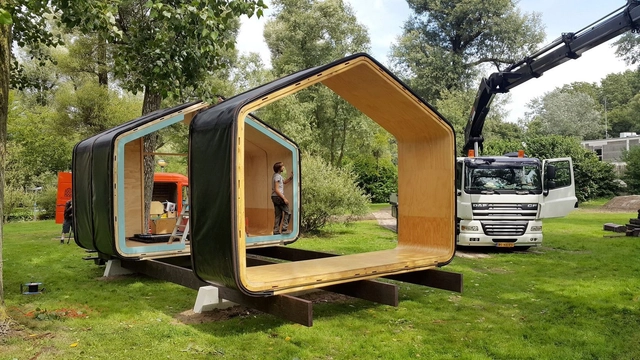
Wikkelhouse / Fiction Factory. Image Courtesy of Yvonne Witte
“Architecture does not change anything. It’s always on the side of the wealthy.” With these words, Oscar Niemeyer referred to architecture as being a privilege mostly destined to the upper class – a statement that has historically proven to be true, even as some would like to deny it. Today, only 2% of all houses around the world are designed by architects. This is largely due to the fact that, to the average consumer, architect-designed homes continue to be perceived as expensive and esoteric products available only to this select few; a luxury that many cannot fathom to afford, especially as housing prices rise. Ultimately, this makes good design inaccessible for certain segments, forcing them to settle for precarious living conditions in standardized spaces that fail to take their needs into account (that is, if they even have access to housing).
Living in an urban environment is demanding. Busy and competitive lifestyles leave people numbed from the effects of stress. Individuals in urban areas are more prone to mental health issues and demonstrate a noticeable lack of personal connection. Rosy city lights and skyscrapers are thorned with rising stress levels, posing an essential question to architects - how do spaces affect wellbeing?
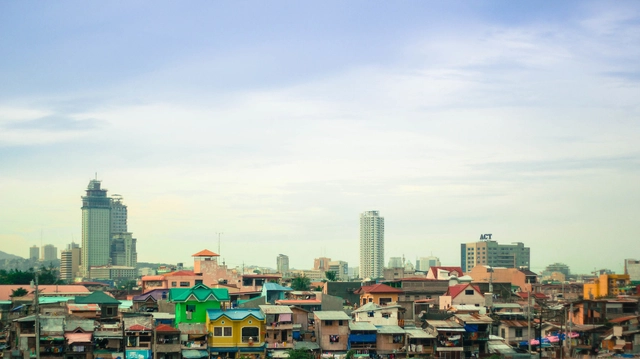
The history and culture of the Philippines are reflected in its architectural heritage, with numerous influences from other nations paving the way for the contemporary designs we see today, a mixité of cultural influences amongst Western-style buildings. Philippine architecture has grown along with the progress of the nation and its people, but memories of a glorious past are still embedded within the nation’s history.
Architecture is a privileged tool for brands that are characterized by a high-end positioning and that, beyond the quality of their own products, needs to feed an imaginary of prestige, style, and refinement. From the showrooms to the stores, fashion needs architects as much as stylists, photographers and modelers.
"in downtown New Delhi, huge curved structures sink in the ground, taking the form of a ramp. Amorphous voids mark the great twisted walls. The color red marks the structures and sets them apart from everything else."
This could describe a playground or even a skate park, but it is one of five astronomical observatories built in India between 1724 and 1738. These mazy volumes, which look more like a materialization of Escher's drawings, were conceived by the Indian prince Jai Singh as part of an ambitious project that sought to put architecture at the service of science. Their shapes make complex astronomical analysis possible, such as predicting eclipses, tracking the location of stars, and determining Earth's exact orbit around the Sun.
When we consider something edible, we understand its capacity to be eaten, consumed, or ingested independently of its taste. If our contemporary relationship to the built environment reflected this process, what would cities and constructed environments become?
There are many myths and misunderstandings around sustainability in construction. First, the belief that what is sustainable must inherently be technological, complicated or out of reach. Or that the products will necessarily be more expensive, will be made of recycled materials or will not be so aesthetically pleasing. When it comes to material specification, there is often confusion. Is steel more sustainable than bamboo? Would it be better to use a material that is said to be sustainable, but which goes through numerous industrial processes, or one with a low level of processing? The answer is not so simple, and there are various comparison mechanisms to help guide us. But this is an important consideration to make, as one of the main ways the construction industry can help reduce its carbon footprint is to select materials with the lowest general contribution to emissions and environmental impact. Natural slate, which can be used for roofing and facades, is a great example of this.
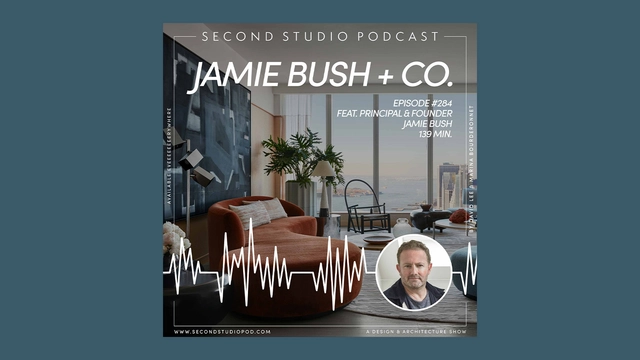
The Second Studio (formerly The Midnight Charette) is an explicit podcast about design, architecture, and the everyday. Hosted by Architects David Lee and Marina Bourderonnet, it features different creative professionals in unscripted conversations that allow for thoughtful takes and personal discussions.
A variety of subjects are covered with honesty and humor: some episodes are interviews, while others are tips for fellow designers, reviews of buildings and other projects, or casual explorations of everyday life and design. The Second Studio is also available on iTunes, Spotify, and YouTube.
This week David and Marina are joined by interior architect and designer Jaime Bush, Principal and Founder of Jamie Bush + CO. to discuss growing up with designers, photographers, and artists; studying Architecture abroad in Venice; transitioning into Interior Architecture; the disconnect between Architects and Interior Designers; how to differentiate between Interior Design and Architecture; fee structures; and more.
https://www.archdaily.com/983873/the-second-studio-podcast-interview-with-jamie-bushThe Second Studio Podcast
Social responsibility and the desire to improve society has long been influenced by the built environment. Looking at city centers, architecture has contributed to the improvement of the urban fabric, whether it being through planning and zoning strategies, integration of public spaces, or small interventions. In some cases however, these interventions are in fact used as tools to keep the homeless off the streets, disguised as art or conceptual designs. Several public urban policies have all implicitly prohibited the homeless and other marginalized social groups from city centers, claiming that their presence and “irregular” use of public space could compromise the reputation, security, and desirability of the city.
The origins of brutalism can be traced to the UK in the 1950s during the post-war period. However, there is no clear record of its initial boundaries or theoretical frameworks. Despite this, it is widely agreed that it sought to uphold constructive sincerity as its main value and that it had, in the execution of Le Corbusier's Marseille Housing Unit (1952), a turning point for its global diffusion (Casado, 2019). For authors such as Banham (1966) or Collins (1977), constructive sincerity in Brutalist buildings does not only refer to material or technical criteria, but also to moral, political or ethical ones. These variables, in nations such as Peru, were fundamental and built an aesthetic while trying, through and from architecture, to construct an idea of a country. This essay seeks to be an approximation to these ideas and experiences.
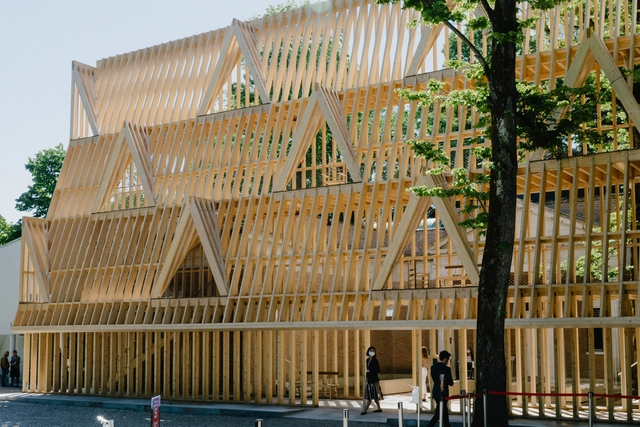
Four years ago, the Pritzker Prize–winner Tadao Ando spectacularly converted a 1920s apartment building in the Lincoln Park neighborhood of Chicago into exhibition spaces for a gallery named—in deference to its street address—Wrightwood 659. The gallery is currently staging a resourceful exhibition on wood-frame construction, the method by which more than 90% of U.S. houses are built.
Rarely has wood-framing been the subject of an architectural show. It’s too mundane a topic—or at least it seemed that way until two associate professors at the University of Illinois Chicago, Paul Andersen and Paul Preissner, conceived the American Framing exhibition for the U.S. Pavilion at the 2021 Venice Architecture Biennale. One year after Venice, the much talked-about exhibition makes its American debut at Wrightwood 659.
For varied reasons, architects have been driven away from professional practice. Sometimes, however, they continue to design buildings in other media and support. Vinicius Libardoni is an Italian-Brazilian architect and artist who migrated from Autocad to metal engraving, passing through woodcut, and has been building imaginary architectures ever since.









![[DON'T TRANSLATE] The PILARES Program Seeks to Bring Beautiful Design to Mexico City’s Neglected Neighborhoods - Featured Image](https://snoopy.archdaily.com/images/archdaily/media/images/62b4/21c2/3e4b/31ac/f100/0004/slideshow/8D5A7030-1024x682.jpg?1655972285&format=webp&width=640&height=580)

![[DON'T TRANSLATE] The PILARES Program Seeks to Bring Beautiful Design to Mexico City’s Neglected Neighborhoods - Image 1 of 4](https://images.adsttc.com/media/images/62b4/221e/3e4b/31ac/f100/0009/thumb_jpg/Untitled-7.jpg?1655972378 "© Onnis Luque")
![[DON'T TRANSLATE] The PILARES Program Seeks to Bring Beautiful Design to Mexico City’s Neglected Neighborhoods - Image 2 of 4](https://images.adsttc.com/media/images/62b4/2205/3e4b/31ac/f100/0007/thumb_jpg/Untitled-4.jpg?1655972352 "© Onnis Luque")
![[DON'T TRANSLATE] The PILARES Program Seeks to Bring Beautiful Design to Mexico City’s Neglected Neighborhoods - Image 3 of 4](https://images.adsttc.com/media/images/62b4/21c2/3e4b/3137/e400/0008/thumb_jpg/8D5A6928-682x1024.jpg?1655972285 "Variegated bricks form a series of arched windows and doors in Dellekamp Schleich’s PILARES project, DIF Quetzalcoatl, located in the south of the city, near Xochimilco.. Image © Onnis Luque")
![[DON'T TRANSLATE] The PILARES Program Seeks to Bring Beautiful Design to Mexico City’s Neglected Neighborhoods - Image 4 of 4](https://images.adsttc.com/media/images/62b4/21eb/3e4b/31ac/f100/0006/thumb_jpg/Untitled-1.jpg?1655972327 "“Even the most privileged person can find themselves in need of a place to sit, rest, and feel safe when they’re walking around the city,” notes architect Fernanda Canales. Through her PILARES project (left, in construction), Reforma, she is seeking to create democratic indoor and outdoor spaces for the local community to find solace and protection. Architect Alberto Kalach of TAX (Taller de Arquitectura X) designed La Pulga, a lofty, long-arched, two-story concrete building in the Cuauhtémoc district.. Image © Onnis Luque")
![[DON'T TRANSLATE] The PILARES Program Seeks to Bring Beautiful Design to Mexico City’s Neglected Neighborhoods - More Images](https://images.adsttc.com/media/images/62b4/21c2/3e4b/31ac/f100/0004/newsletter/8D5A7030-1024x682.jpg?1655972285)