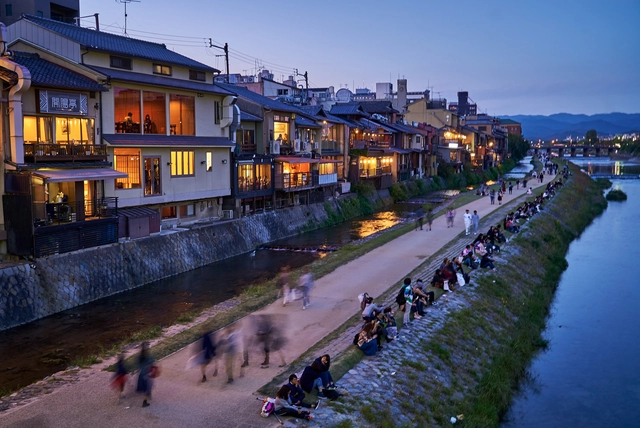
What’s so great about the oldest continuously inhabited cities in the world? Probably the fact that their societies have been evolving in one unbroken series of eras, with ever-changing values and styles that have, among other things, given rise to architectural memories of their long histories. These cities aren’t like the archeological sites we visit to see how people lived thousands of years ago; they are the exact places people lived thousands of years ago, places where people are still living today, with their rich histories buried under layers of paint and concrete instead of earth.
With ancient cities found in regions around the world, the variety of architectural treasures that can be found in these cities is vast. To give you a taste of their diversity, here is a selection of 18 of the oldest continually inhabited cities from various regions of the world, ranging from youngest to oldest, with a small snippet of their various architectural puzzles.
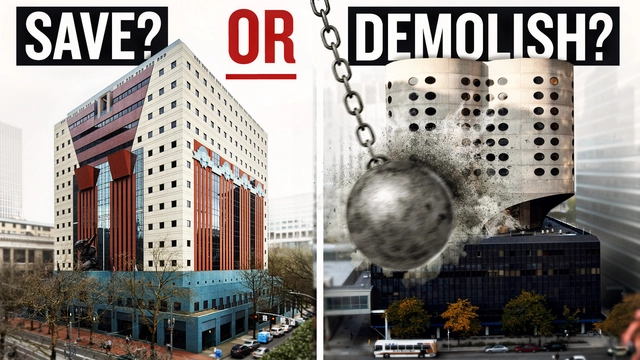
How do we decide which buildings are worth saving and which ones aren’t with regards to a building’s design significance? This video tells the story of the Portland Building by Michael Graves, a building with a tumultuous history that was ultimately saved from the wrecking ball when the city raised nearly $200 million to renovate the aging structure. This was spurred, in part, by the building’s inclusion on the National Historic Places list. But, that is only part of the story. What does it mean to be an Historic Place or Landmark because of architectural design? Does this distinction help to save it from premature demolition? The answers to these questions might surprise you.
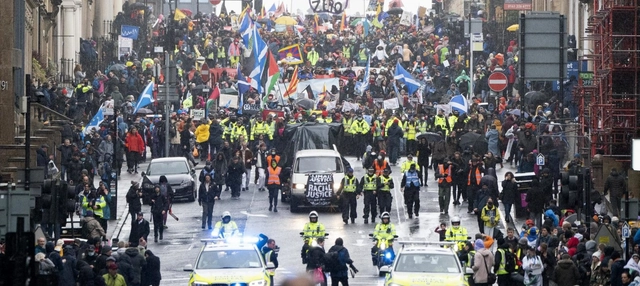
Most of the news coming out of the recently completed climate summit in Glasgow was disappointing. Previous summits had ended in similarly dispiriting ways, and COP26 was no exception. It acknowledged the severity of the problem and the urgency of the moment—the need to keep warming to under 1.5 degrees Celsius (some scientists believe it’s already too late to prevent this)—but put off making the hard commitments necessary to actually solve the problem. At the same time, this summit did feel different. There was a sense of urgency in the Glasgow streets, and the world’s attention was undeniably focused on climate change. How this focus eventually translates into action on the political front remains an open question.
But architect Edward Mazria, executive director of Architecture 2030, believes that despite the immense obstacles facing climate activists, the building sector is on the cusp of helping change the course of the planet. He sees genuine reasons for hope and renewed effort. In the wake of the seemingly grim news out of Glasgow, I spoke with him last week about the way forward, how we’ve reached an important inflection point, why energy use tied to buildings has begun to decline globally, and the steps required to fully decarbonize the built environment.
International acoustic solutions provider Autex Acoustics’ latest net-zero policy gives the green light to mega-construction projects, without giving up on sustainability.
Outback architecture embraces the outdoors. From the world-famous Sydney Opera House to aboriginal desert huts, Australian architecture rises from the elements while learning from them. In terms of vernacular shelters, barns, sheds, and verandahs often became community centers or places to congregate. These humble beginnings would transform over the following centuries as people began to build for the “Australian dream.” Whether using traditional pisé construction or fabricating wildly new forms, architects began capitalizing upon historical building methods and reinterpreting them.
Kiribati has a population of around 110,000 people and its economy is centered on fishing and agriculture. Comprised of 33 islands in the Central Pacific, its highest point is only 81 meters above sea level, which makes it potentially the first country that could disappear completely due to global warming and the consequent rise in sea levels. The climate crisis has been a hotly debated topic in recent years and terms such as carbon footprint, greenhouse effect, atmospheric aerosols, and many others, are already staples in our vocabulary. Another widely spoken term is “net zero”, or net zero emission, used as a goal for buildings in different industries and countries. Basically, it means that the energy balance is zero.
Puerto Vallarta is a city located in the state of Jalisco, in the west region of the country facing the Pacific Ocean. It consists of 1,301 km² and, together with the Bahia de Banderas municipality of the Nayarit state, makes up the Metropolitan Zone of Puerto Vallarta, making it the second most populated of both states. Many are the reasons why Puerto Vallarta is one of the most important ports in Mexico, one of them being tourism at an international level, which has resulted in the city having one of the eight international airports in the country.
At the Four Seasons restaurant in New York, designed by Philip Johnson and Mies van der Rohe in the iconic Seagram Building, a rectangular pool played the leading role in the space, highlighted by four trees planted in pots at each of the vertices. The soft noise made by the water became consecrated. In addition to giving the hall some personality, it served to absorb the sounds of conversations (often secret) among tables. Just as the way that light enters a space, or how interior landscapes are perceived, sound is one more characteristic of an environment, though it is generally overlooked by architects. This goes beyond providing it with efficient acoustics, but creating a sound atmosphere for a space. This is the concept of soundscape.
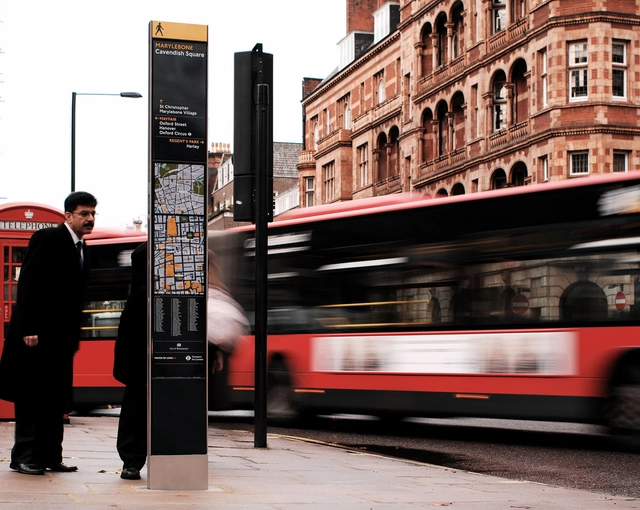
If you have ever walked around the center of London you will have seen those yellow and dark blue panels featuring maps, local attractions, and walking times dotted along the streets and near bus and tube stops. Credited with redefining city wayfinding, Legible London, as the system is called, is now seen as the benchmark for making cities accessible and legible to residents, commuters, and visitors alike. And now Seattle has launched its own version of the London system, and Madrid will do so next year. Giovanna Dunmall asks Tim Fendley, the founder and CEO of Applied, the spatial experience design practice behind all these projects, why analog is often still so superior to digital, and what makes for good wayfinding.
Although the design diversity of private homes often relies on how each project responds to the topography, context, and material availability, the most significant factor of residential architecture is users and what they require in terms of spatial needs and preferences. This user-centric approach has long been practiced, Mies van der Rohe once explained that "the architect must get to know the people who will live in the planned house. From their needs, the rest inevitably follows".
This week’s curated selection of Best Unbuilt Architecture highlights private residential projects submitted by the ArchDaily community. From a private family house nestled in the forests of Russia to a reinvention of Colombia's traditional courtyard typology, this round up of unbuilt projects showcases how architects design private spaces that combine nature, functionality, privacy, and locality. The article also includes projects from Kosovo, Spain, United States, and Serbia.
Outside of China, media facades usually appear as proud individualists vying for attention at night. In China, however, you can find large groups of media facades with a common message in numerous metropolitan areas. These media facades visually merge multiple skyscrapers into a panoramic entity. But what are the reasons that this phenomenon is unique to China? And how did it start? The Media Architecture Biennale linked culture and politics to provide an answer to the emergence of media scapes in China.
"From your eyes to my eyes" is a project that was born from the idea of involving the people who follow me in magazines and on social media in my photo reports; inviting them to send me their favorite architectural places, the ones they carry within themselves, in their eyes.
Textures play a leading role in an interior project. Metals bring integrity and sophistication. Stones and their variations in colors and designs can become focal points in spaces. Different wood types, with their fiber and knot designs, and their characteristic coloring, bring warmth and comfort. If we think about the combination of these, together with different types of surfaces and lighting, we have a universe of possibilities to try to bring pleasant sensations to the occupants of the spaces.
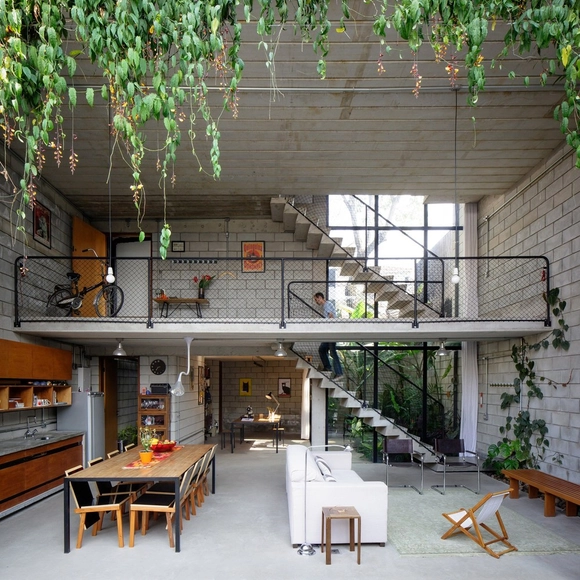
Ms. Dalva's house in Vila Matilde has certainly helped put the four architects of Terra e Tuma, Danilo Terra, Pedro Tuma, Fernanda Sakano, and Juliana Terra, on the architectural spotlight worldwide. With simple and smart solutions, this project has already received six awards, both national and international. The office based in São Paulo, Brazil, has since managed to share their experiences by presenting a new way of designing good and affordable architecture for the underprivileged social classes. However, despite the great impact of this project, the office is not limited to just one type of client and solution, as can be seen in their extensive body of work developed over almost 15 years of practice.
Between rising water levels and global migration to cities, architects and designers need to critically reimagine the relationship between coastal landscapes and public space. Cities are facing entirely new risks and environmental conditions. Resiliency, infrastructure, and ecology are increasingly common terms, reflecting the growing demand to address the spatial and formal challenges faced by cities worldwide. Rethinking boundaries and edges, designers have unique opportunities to help shape public understanding of these conditions through waterfront parks.
Known for its expertise in glass, Sovet is now exploring a rich palette of additional materials such as ceramic, metals, fabrics and woods, with which to blend its primary material. Image Courtesy of Sovet
Glass specialists Sovet’s furniture pieces blend together an expansive palette of colours, materials and textures, combining ceramics, woods and metals with a trademark smooth glass finish.
Courtesy of KARL LAGERFELD, Sierra Blanca Estates and One Atelier
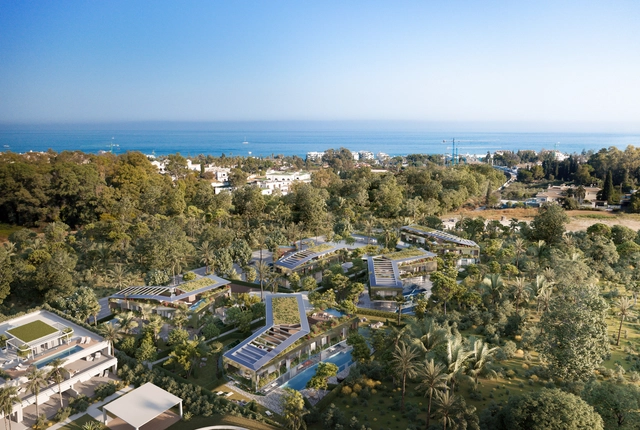
During the past couple of years, luxury and fashion brands began venturing into architecture. Some built museums, foundations, and cultural organizations while others shaped residential structures that translated their identity into space. Following this same concept, KARL LAGERFELD, along with Spanish Developer Sierra Blanca Estates and the Design and Branding Firm The One Atelier, have developed the fashion house’s first “luxury architectural project”, the Karl Lagerfeld Villas in Marbella, Spain. Designed by The One Atelier, of which Andrea Boschetti is Head of Design, the project has low carbon impact, aligned with the brand’s commitment to the Fashion Pact - a global sustainability initiative that seeks to transform the fashion industry through objectives in climate, biodiversity, and ocean protection.
Asking what is “luxury architecture” and questioning why fashion brands are expanding into architecture, ArchDaily met with Andrea Boschetti to further understand the architect and urban planner’s take on the subject.
Concrete and sustainability are two words that are often considered incompatible. Used as early as the Roman era, concrete has shaped much of our built environment, being the most widely used manufactured material in the planet thanks to its resistance, versatility, cost-effectiveness, and accessibility, among other inherent benefits. Its popular use in buildings and infrastructure forms the foundations of cities, connects communities, and will continue to play a vital role in providing solutions to the challenges of the future – especially as cities must respond to a growing global population. But with cement as its key ingredient, it also comes with several environmental costs, being responsible for at least 8% of the world’s carbon emissions in a climate-change context. However, it doesn’t necessarily have to be that way. With the rise of innovative technologies and products, there are many ways to make concrete greener.
There are several reasons why Quintana Roo —a state located in the southeastern region of Mexico— has an important cultural wealth. One of them is because of world-class tourism which has led it to have one of the eight international airports in Mexico in addition to being praised by the World Tourism Organization.
"Under The Zhengyangmen". Image Courtesy of DRAWING ARCHITECTURE STUDIO
Architecture has never been limited to building and construction; some notable architects have contributed numerous fantastic works to the domains of fashion, furniture, jewelry, and other design. The names of young Chinese architects active in the construction industry appear in numerous fields. Crossover, extension, and exploration, young Chinese architects seek to work beyond the boundary of architecture.
The Second Studio (formerly The Midnight Charette) is an explicit podcast about design, architecture, and the everyday. Hosted by Architects David Lee and Marina Bourderonnet, it features different creative professionals in unscripted conversations that allow for thoughtful takes and personal discussions.
A variety of subjects are covered with honesty and humor: some episodes are interviews, while others are tips for fellow designers, reviews of buildings and other projects, or casual explorations of everyday life and design. The Second Studio is also available on iTunes, Spotify, and YouTube.
This week David and Marina are joined by Eric Johnson, Founder and Principal of EJA Lighting Design, to discuss the role and value of the lighting designer, common lighting flaws, working with architects, lighting different types and styles of architecture, lighting technologies, key qualities of a good lighting designer, and more.
Buildings around the world are getting taller. Since the year 2000, global skyscraper construction has increased by 402%. Cities like Dubai are home to nearly 1000 high-rise buildings, and New York’s vibrant luxury real estate market has shown no signs of slowing down, with more high-rise additions slated to be added to its already towering skyline. There’s good in this – high-rises create much-needed space in already dense cities and can reduce urban sprawl in city centres, allowing for better preservation of natural areas.
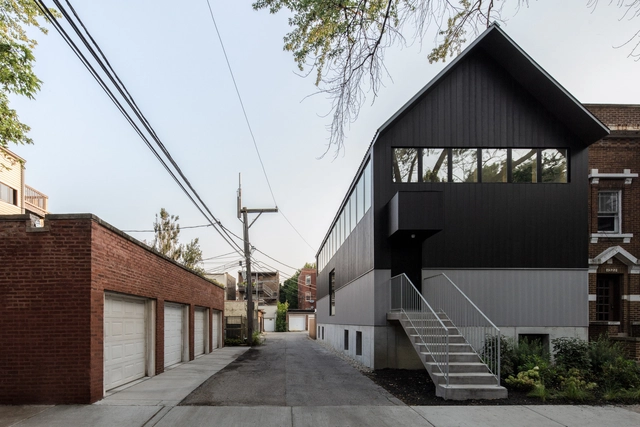
Winston Churchill once said: "We shape our buildings; thereafter they shape us." This quote almost seems written specifically for the architecture design firm Kwong von Glinow. Alison von Glinow and Lap Chi Kwong are married and partners in practice. For the last couple years, they’ve been designing and building their own live/work building in a northern neighborhood of Chicago called Edgewater. A model of the house lived in their dining room for months as they conceived of the house, making daily changes until it was constructed and they could move in. They shaped the design, now it shapes them. In this video, Kwong von Glinow takes us through this building — called the Ardmore House — and they explain how they designed it, what it’s like to live in, and how it has shaped their work since.
By definition, architecture and urban planning operate within a certain degree of indeterminacy, using present context to find viable answers for an unknown future. As a result, design is a constant search for a balance between prescribing and taking a step back to make room for alternate yet unforeseeable scenarios. Uncertainty is an inherent condition in present-day society, and recent rapid social, economic, and even environmental changes prompt a closer look at how architecture can incorporate indeterminacy. The following reviews some precedents and contemporary examples that programmatically operate with indeterminacy, highlighting several strategies for designing for uncertainty and change.








.jpg?1636500979 "Malecón Puerto Vallarta / Trama Arquitectos. Image © Alejandro Cartagena")















.jpg?1635893302 "House Between Trees / AS Arquitectura. Image © David Cervera")