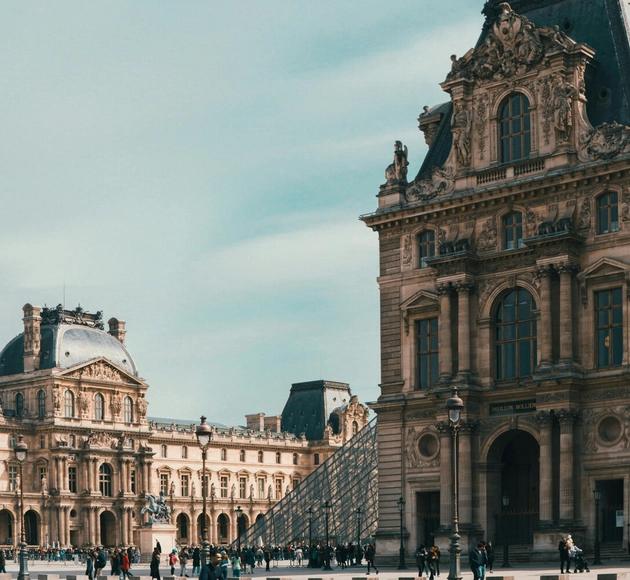
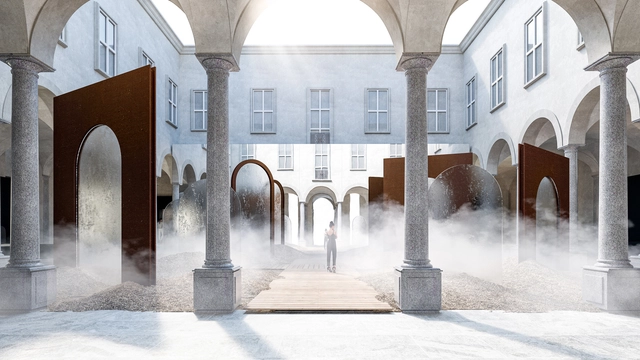
Milan Design Week has long been one of the most significant events in the global design sphere, showcasing groundbreaking concepts and visionary talent and fostering critical discourse in the design community. From the expansive trade fair Salone Del Mobile in Rho Fiera to design districts scattered across the city, Design Week brings together diverse voices, perspectives, and talent. According to Salone del Mobile's press statement, this year’s fair had 17.1% more visitors than in 2023, with a record turnout of 361,417 visitors overall.
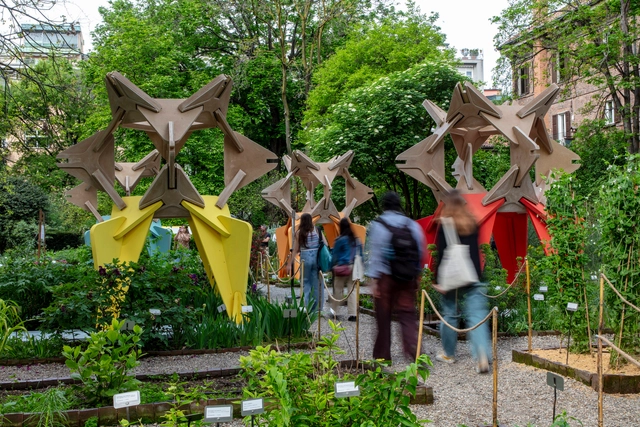
With visitors from China, Germany, Spain, Brazil, India, Turkey, Japan, and many more, the design week showcases a plethora of exhibitions, installations, talks, and panels. As the week comes to a close, running from April 15-21st, 2024, this article highlights diverse installations throughout the city relevant for architects and designers globally. Whether it is Mario Cucinella’s exploration of regeneration, Google’s display experimenting with sensory and color, or MAD architects investigating the boundaries of natural and man-made landscapes, the week was filled with fruitful collaborations that showcase the future of design.
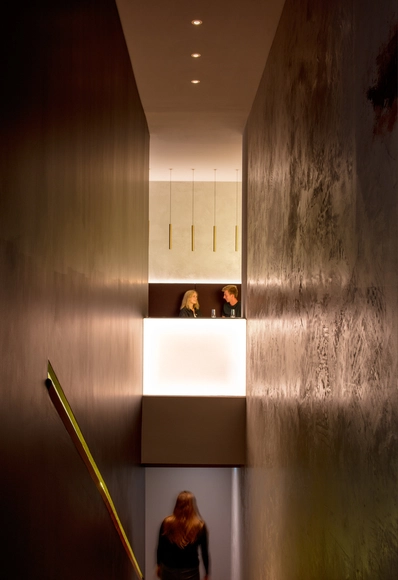
Reggiani’s Mood Pro spot lights lend themselves to clean architectural arrangements, while the luminosity they bring can be controlled to help shape atmospheres. Image Courtesy of Reggiani
We talk a lot about how the success of an interior leans on the layout of its walls, doors and windows, and maybe the shade of paint or degree of cushioning on the chairs placed inside. The truth is, it will probably live or die by the quality of its light.
It’s not news that light tends to lift the spirits, while long shady days of winter can bring a dip in mood; the power of light has always had a bearing on architecture. Talk to the British architect John Pawson for five minutes and you realize that light is perhaps his favorite material—he shapes interiors with light by controlling its entry points meticulously. But today the power of lighting goes deeper than the management of daylight in a space; growing intelligence about the precise impact of different qualities of light means we can start to mold moods with artificial illumination in our interiors to great effect.
https://www.archdaily.com/1015846/shaping-moods-reggiani-and-the-stimulating-effects-of-controlled-lightEmma Moore
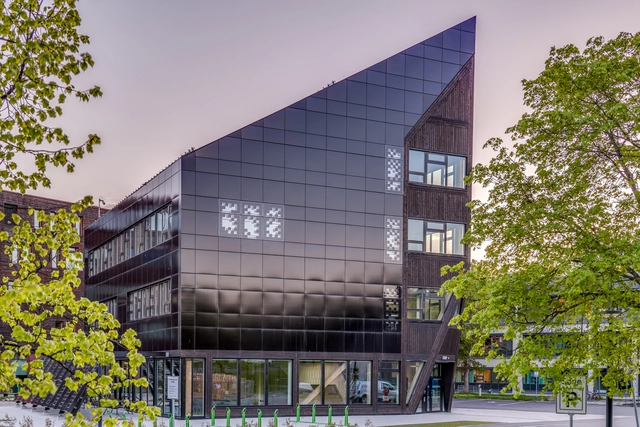
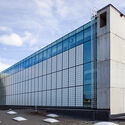
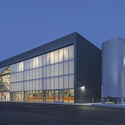
ZEB Living Lab is a research building that stands out for its pioneering initiative among zero-emission buildings, seeking to have a significant impact on the future. Located in Trondheim, Norway, it is much more than just a building; it is a tangible manifestation of the global commitment to sustainability and innovation. Conceived as an advanced research laboratory and a practical example of sustainable construction practices, it represents the point of convergence between architecture, technology and environmental awareness. Managed in collaboration between NTNU (Norwegian University of Science and Technology) and SINTEF (Scandinavian Institute of Technology), this center of scientific excellence is a platform for living experimentation, where innovative materials and solutions are developed, tested and demonstrated in direct interaction with the building occupants.
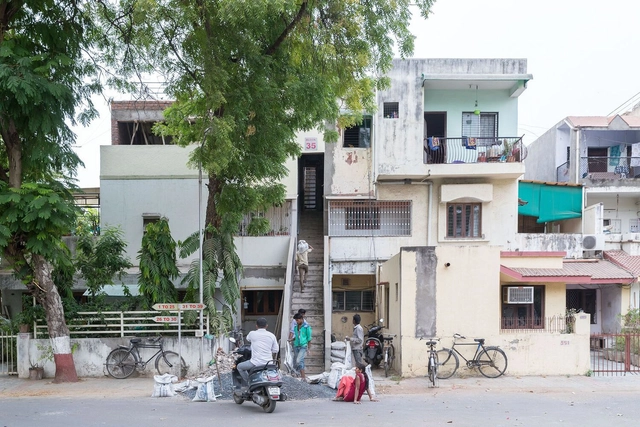
In a nation grappling with a severe housing shortage for its economically weakest sections, the concept of "low-cost housing" has surprisingly faded from public consciousness and policy discourse. A crisis impacting millions of the nation's poorest, the need for affordable housing has become even more pressing as India's population overtakes China to emerge as the most populous nation. If left unaddressed, the housing crisis may result in mass homelessness and undignified living conditions for citizens.
Among the "Five Points of New Architecture" formulated by Le Corbusier, terrace gardens figure as a way to take advantage of a building's so-called fifth facade, either as leisure areas or landscaping spaces. Thanks to technological advances in reinforced concrete in the mid-twentieth century, usable flat roofs are far from new. There are traces in Mesopotamia and vernacular architecture from Greek and Arab civilizations. However, problems that frequently arise relate to infiltration and leaks. Water is relentless in finding a place to drain, and flat roofs are exposed to this when execution and design are not carefully thought-out. In fact, as documented in several letters, this was a source of disagreement between the owner and the Swiss-French architect in the case of the influential Villa Savoye. Today, nonetheless, there are good waterproofing options on the market that provide durability, resilience, adaptability and, above all, avoid headaches and fights between builders and owners. Elevate is built on 40 years of history in the production of roofing membranes, as well as insulation and vapor barriers, and develops solutions for waterproofing flat roofs with a low inclination.
The opening scenes of the award-winning Brazilian film "City of God" (2002) portray a newly constructed housing complex situated on the outskirts of Rio de Janeiro. Subsequently, this complex evolves into a hub of poverty and violence. Despite the film being set in the 1960s, the housing development depicted was a recent construction.
This choice made no difference because, despite the 40-year difference between the depicted era in the film and the time of filming, the architectural solutions employed by housing programs in the country remained stagnant. They continued to replicate outdated models, showcasing a lack of progress in the sector.
The Second Studio (formerly The Midnight Charette) is an explicit podcast about design, architecture, and the everyday. Hosted by Architects David Lee and Marina Bourderonnet, it features different creative professionals in unscripted conversations that allow for thoughtful takes and personal discussions.
A variety of subjects are covered with honesty and humor: some episodes are interviews, while others are tips for fellow designers, reviews of buildings and other projects, or casual explorations of everyday life and design. The Second Studio is also available on iTunes, Spotify, and YouTube.
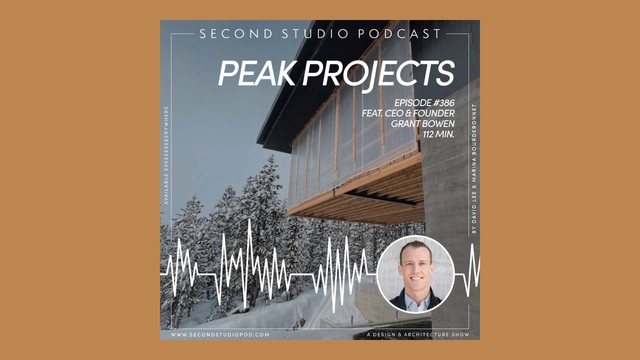
This week David and Marina of FAME Architecture & Design are joined by CEO & Founder of Peak Projects, Grant Bowen, to discuss how clients can have a successful project, Grant’s background; the role of an owner’s representative throughout design and construction; working with clients and different professionals; construction costs; fees; different project types; and more.
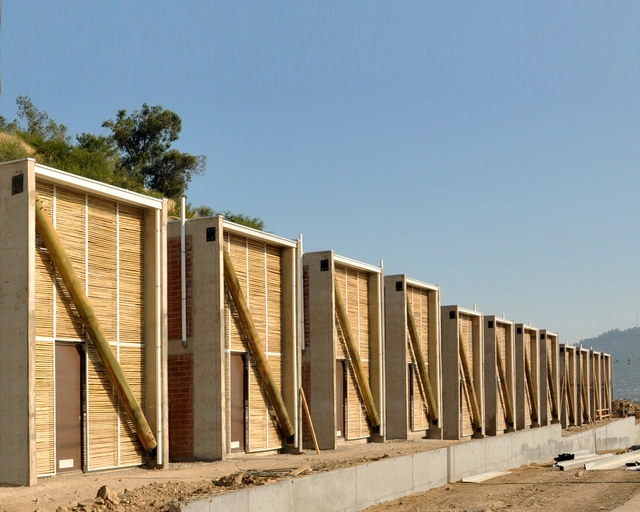
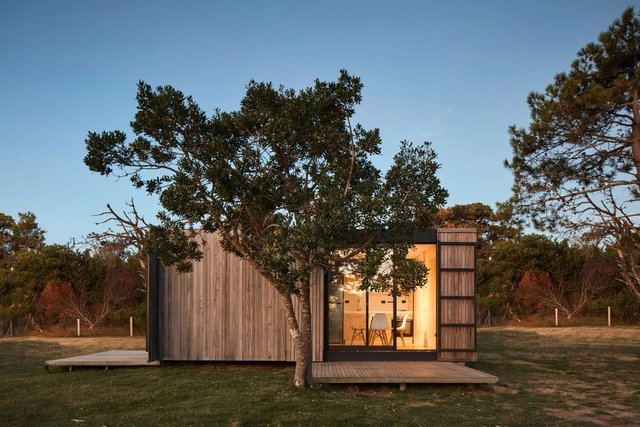
How can industrialization and environmental responsibility go hand in hand? What siting, technological, or constructive strategies can be developed without harming the surrounding landscape? The application of modular design in architecture has been in practice for years, with a history involving the pursuit of standardization and modular coordination among materials, products, and more. Over time, it has been complemented by various environmental, sustainable, ecological, and economic factors to achieve the adaptability and functionality desired by its inhabitants.
Throughout various historical civilizations and art movements, from Classical Greece and Rome to the Renaissance and the Bauhaus, the collaboration between art and architecture has been a significant societal expression. However, the 20th-century ideals of modernism and mass production resulted in the decline and near disappearance of art within buildings.
In response, many European countries have taken on the responsibility of promoting the collaboration between art and architecture. Schemes were created mandating that a percentage of the total cost of a new public building, place, or space must be spent on art. This legislation, commonly known as 'Percentage for Art', originated in France and has been explored by artists and architects over the years to create new architectural experiences.
Porta by Maxim Velcovsky. Image Courtesy of Lasvit
Through “Re/Creation,” Lasvit —a leader in hand-made glassmaking—sets up a sanctuary for creative escapism amid the hustle and bustle of Milan’s Salone Week. In the serene embrace of Palazzo Isimbardi, “Re/Creation” offers a space where minds are free to wander, inspired by the fluid grace of molten glass. The title refers to the innovative technique of fused glass, where the essence of fused glass lies in letting go. Extremely hot melted glass is allowed to relax, spread and take shape of a form designed for the glass to lie on. Its own weight and gravity take care of the rest. Similarly, a creative mind is most prolific and innovative when relaxed, free of everyday pressures and demands. This is why, at the beautiful location of Palazzo Isimbardi, Lasvit creates a haven for creatives to escape, recharge and relax.
In June 2023, the planet experienced its hottest month on record. In Iran, the heat index reached a staggering 66.7 degrees Celsius, pushing the boundaries of human endurance. This alarming trend is not an anomaly. It is a stark reminder that temperatures will continue to rise as climate change intensifies.
Scientists are linking the rise to human-induced climate change and the El Niño phenomenon. Additionally, the natural warming of Pacific Ocean waters is being further intensified by global warming.
I am by no means an expert on public-private partnerships. But for about 10 years, as the University of California Berkeley’s campus planner and then campus architect, I watched these developments play out in higher education—sometimes from a front-row seat, sometimes as a participant. During that time, this strategy, promoted with great enthusiasm and optimism, was touted as the answer to whatever problem arose. And yet the definition of a public-private partnership was slippery. The concept itself seemed to be all things for all people, depending on what was needed, who was recommending it, and what equivalents (if any) existed outside the university. The bandwagon continues to play today, making it ever more important to nail down the pros and cons of this development strategy, not only for colleges and universities, but for all public decision-making.
https://www.archdaily.com/1015830/are-for-profit-developments-consistent-with-the-values-of-a-public-universityEmily B. Marthinsen
Simone Farresin from the Italian studio Formafantasma talks about his practice, together with his partner Andrea Trimarchi, their work, and the different approaches to projects. He also tackles their participation in the MilanDesign Week, and the political role of creatives in the world.
https://www.archdaily.com/1015806/simone-farresin-from-formafantasma-talks-on-milan-design-week-and-the-responsibility-of-the-designersArchDaily Team
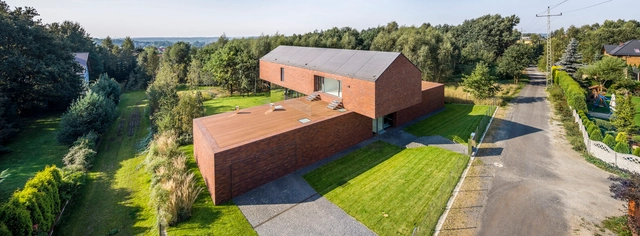
El Tume House / abarca+palma. Courtesy of abarca+palma
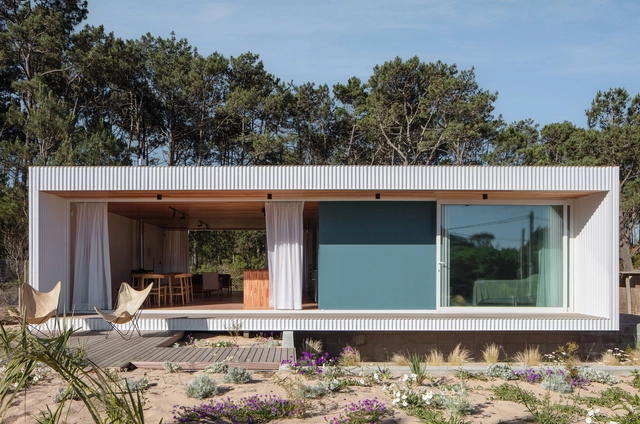
The current demands of the industry lead architects to design based on construction solutions that accelerate processes without compromising quality, while reducing waste and dependence on intensive labor. Among these options, SIP panels stand out as a modular alternative that combines thermal and acoustic insulation with speed and construction precision.
Named after their acronym, SIP panels are self-supporting elements consisting of a rigid foam core sandwiched between two structural claddings, typically OSB boards. Strong yet lightweight, these panels are manufactured under strict factory controls and transported to the construction site, facilitating the rapid assembly of floors, walls, and ceilings, while creating an airtight thermal and acoustic envelope. The thickness of the panel depends on the combined thickness of its components, and its weight typically does not exceed 20 kg per square meter.
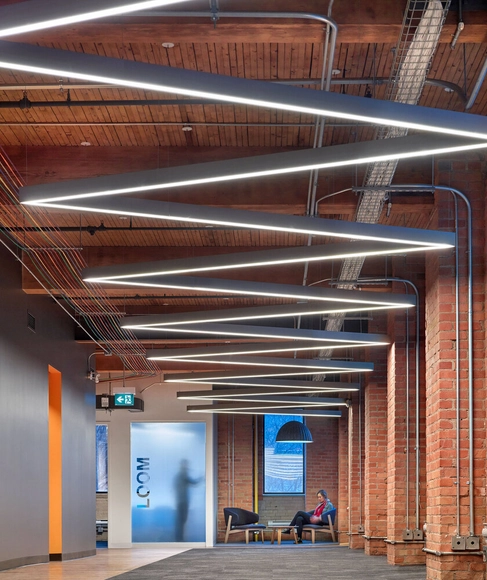
Slack Toronto Office / Dubbeldam Architecture + Design. Image Courtesy of Alcon Lighting
Lighting has evolved remarkably throughout architectural history, driven by significant technological advances. Despite these changes, its central purpose of enhancing aesthetics, functionality, and safety has remained consistent. In this evolution process, a milestone can be traced with the transition from fluorescent lighting to LED lighting, marking a turning point that has reduced costs and energy consumption. Furthermore, it has fueled creativity, thanks to the versatility of LED lighting. These new design possibilities are evident in organic lighting layouts, which mimic linear patterns of lighting arrangements on walls and ceilings, whether suspended or recessed.
In this context, as architects and designers have moved away from symmetrical, rigid, and parallel mirror patterns, Alcon Lighting has detected a trend where linear lighting highlights asymmetrical architectural features and lines. In this way, layouts that do not appear to follow a rigid design pattern are being adopted.
https://www.archdaily.com/1015184/exploring-linear-lighting-design-for-creating-luminous-pathsEnrique Tovar
While hybrid working and flexible hours represent the most obvious ways to improve work/life balance for many, because of the missed social interactions and the lack of space or functionality at unproductive home workspaces, the majority of 16-24-year-olds are the only age group who prefer to work from the office.
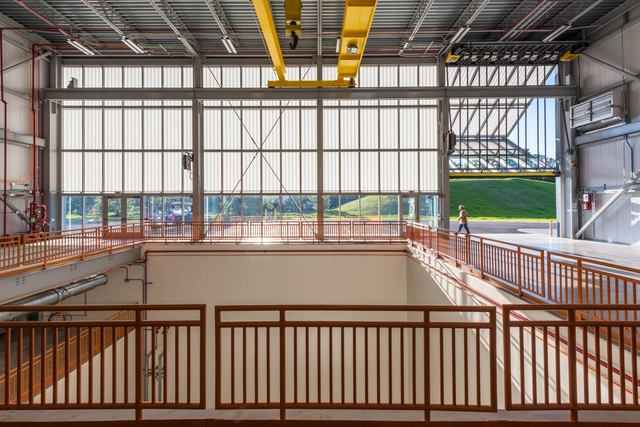
The question, "How can we control natural light in interior spaces?" is fundamental in architecture. Unregulated direct sunlight can cause discomfort such as visual strain and undesirable heat gains. Therefore, it is crucial to control its entry effectively. Some design solutions include installing shading devices, planning spatial orientation, and building forms for indirect natural light. Window treatments like films or heat-reflective glazing can also be used.
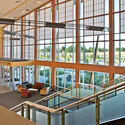
However, there are innovative strategies to control natural light more efficiently through advanced glazing panels like the Kalwall 175CW. This translucent insulated glazing unit is compatible with most third-party curtain wall systems. By manipulating the translucency of the glazed material, it's possible to influence the visual and thermal comfort of spaces. At the same time, this can enhance the architecture of modern spaces, adding substantial aesthetic and emotional value.
Art can be a catalyst for architects to see the built environment through a different lens. It provides a unique opportunity to delve into the viewpoints of trained architects who have transitioned into the visual arts and artists who explore cities and their inner workings through their personal stories.
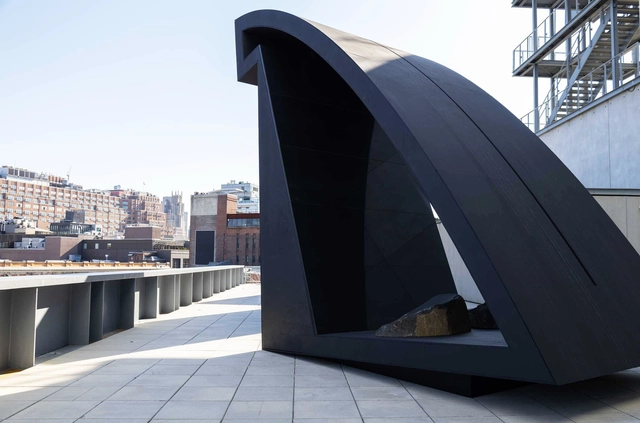
Located in New York City, the Whitney Biennial is considered the most important and longest-running survey of contemporary art in the United States. Along with the Venice Biennale, it is considered one of the world's most important recurring art exhibitions. This year's theme, "Even Better Than the Real Thing," delves into concepts of identity and bodily autonomy, amplifying the voices of those historically marginalized. This includes looking at stories that study the connection between personal narratives and growing feelings of precariousness surrounding the constructed world. These are artists from this year's Whitney Biennial touching on topics related to architecture and cities.
Ever since the Industrial Revolution and the introduction of mass production, the ownership and use of simple products and services like flush toilets with running water, electricity, heating, and cooling are seen as human rights in many areas of the world. With the majority of homes and residential projects being individually designed and built to order – therefore without the speed and cost advantages of mass production – an underperforming housing construction sector means many people – even in the world’s richest countries – are being denied one of the most basic human rights, having somewhere to call home.
The UNHCR (UN Refugee Agency) states that there were over 100 million forcibly displaced people worldwide in 2023 – a figure that has tripled over the last 10 years. For host countries, finding safe, sustainable housing solutions for those in need, both in the short- and the long-term, is an ongoing and dramatically worsening challenge.
Airbnb has undoubtedly disrupted the hospitality industry, inspiring an ecosystem of companies leveraging the sharing economy such as co-living startups. While these companies have achieved impressive financial success, they have been purported to produce problematic effects at the scale of the city. Airbnb, in particular, is alleged to have driven an increase in rental prices in cities already grappling with housing affordability challenges. Much like the case of Uber's impact on urban mobility, Airbnb's rapid growth has caused significant challenges for local governments, demanding comprehensive regulation and a re-evaluation of its functioning at the city scale.
When we think of the word "tropic," the image that typically comes to mind is an exotic space, characterized by perpetual warmth and humidity, with frequent and heavy rainfall nurturing lush vegetation. Throughout history, this tropical climate has been romanticized as a paradise and criticized for potentially fostering weakness due to its perceived clemency.
Thankfully, those judgments and associations have been relegated to the past, paving the way for theoretical and practical projects that outline the advantages and disadvantages of living in a tropical climate. These projects acknowledge the various strategies to enhance human adaptability within these distinctive climatic conditions.
In a constant search to find new ways to reduce costs and construction times, modular architecture emerges as an opportunity to implement various methods, technologies, and techniques to design livable spaces using separate repetitive elements such as modules. As Tom Hardiman, executive director of the Modular Building Institute (MBI), maintains, "Modular" is not about a construction product but rather a construction process.
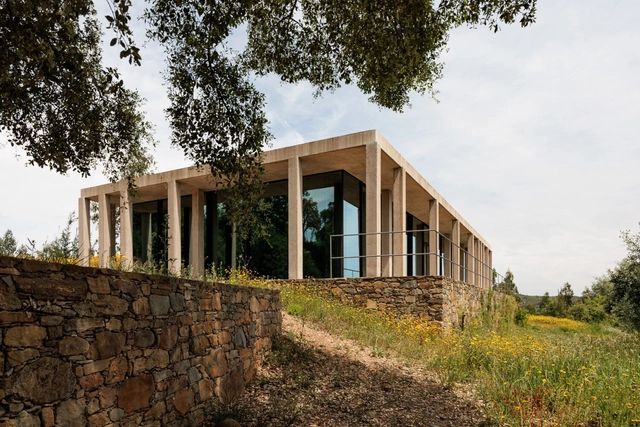
Many ancient Egyptian, Greek and Islamic religious buildings share a common feature known as hypostyle. Defined as rows of columns that support a roof, this solution has developed in different cultures in different periods of time, which can explain the variety of materials, shapes, sizes and distances between the columns that can be found around the world. Famous examples of the use of this concept are Great Hypostyle Hall (c. 1290–1224 BC), part of the Karnak Temple Complex and one of the most visited monuments of Ancient Egypt, and the Wooden Hypostyle Mosques of Medieval Anatolia (c. 13th and mid-14th centuries), World Heritage Site located in present-day Turkey.
In contemporary architecture, it is possible to see different kinds of examples of how this concept is revived. While some projects use the concept to refer to vernacular architectures that correspond to the same program and use as the proposed building, as is the case with some mosques, others rely on the abstraction of the term through an interpretation that highlights the pillars and their organization in the proposition of the space. In all of them, however, it is clear that the relationship between the hypostyle inspiration and modular architecture is very close, practically intrinsic.
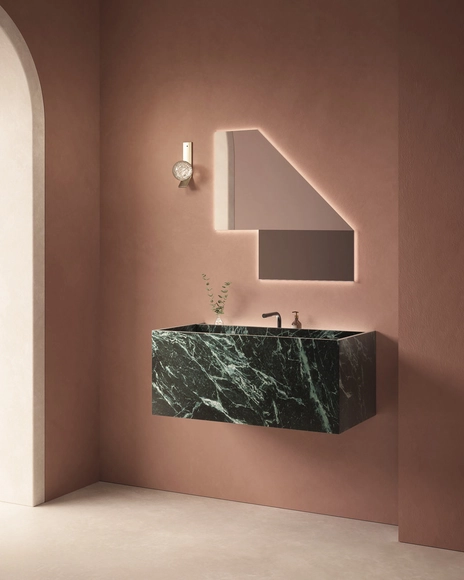
MyStreet washbasin in Verde Alpi marble _Design AL Studio. Image Cortesia de antoniolupi
Marble held profound significance in Greek and Roman architecture due to its abundance, luminous surfaces, and subtle veining. Its durability ensured structures' longevity, while its cultural symbolism of purity and divine favor made it ideal for temples, theaters, and amphitheaters. As a symbol of perfection, marble facilitated intricate craftsmanship for decorative elements, inspiring architectural marvels and exquisite art, leaving a legacy of sophistication and refinement.
Today, marble remains a symbol of excellence and refinement, prevalent in contemporary architecture and art. Its timeless beauty and durability continue to captivate clients and designers alike. In sculptures, furniture, and decorative pieces, marble's natural elegance elevates any environment. Companies like antoniolupi integrate marble into their designs, combining creativity and meticulous craftsmanship to redefine the possibilities of this natural stone in innovative projects. The Italian company—a leading designer and manufacturer of high-end products—has ventured beyond conventional boundariesin a quest for innovation, embarking on projects that redefine the possibilities of this naturalstone.