Antonia Piñeiro

BROWSE ALL FROM THIS AUTHOR HERE

“Built Environment: An Alternative Guide to Japan” Exhibition in Montréal Examines Resilient Japanese Architecture

The exhibition Built Environment: An Alternative Guide to Japan at the Université du Québec à Montréal's (UQAM) Centre de design will be on view until January 25, 2026. Curated by Shunsuke Kurakata, Satoshi Hachima, and Kenjiro Hosaka, it features a selection of 80 projects from Japan's 47 prefectures, including works by renowned Japanese architects such as 2014 Pritzker Prize laureate Shigeru Ban, Kengo Kuma, the designer of the Museum of Modern Art's renovation in New York Yoshio Taniguchi, celebrated landscape architect and sculptor Isamu Noguchi, and 2019 Pritzker Prize laureate Arata Isozaki. The selection aims to offer a renewed perspective on Japan through innovative buildings, civil engineering projects, and landscape designs. Organized in collaboration with the Japan Foundation and presented with the support of the Consulate General of Japan in Montreal, the exhibition is conceived as a traveling project exploring the resilience of Japanese architecture and infrastructure in the face of natural disasters and climate change.

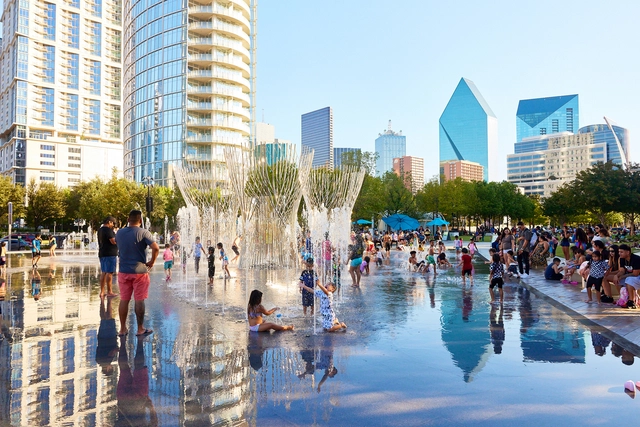
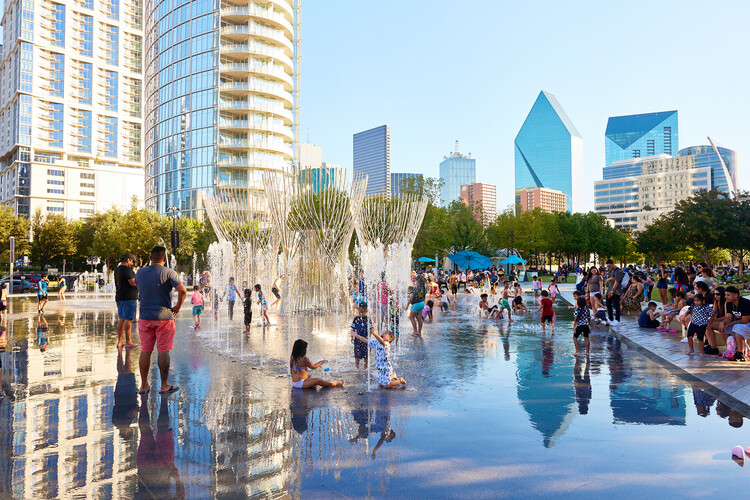
Cultural Venues, Fresh Perspectives on Public Space and One Month until the Winter Olympics: This Week’s Review

This week's news compilation brings together current discussions around public and collective space, cultural infrastructure, and long-term urban transformation across diverse geographic contexts. From shared management models redefining public space ownership in cities such as Paris and New York, to large-scale event-driven initiatives linked to Milano Cortina 2026 and the World Urban Forum in Baku, the selected projects and initiatives highlight how governance, culture, and infrastructure intersect in contemporary practice. These themes are further developed through a mix of strategic planning processes, including international test planning efforts in Northern Lviv, and built projects spanning education, culture, and temporary architecture, from a new dental teaching facility in Blantyre, Malawi, to restored and newly opened cultural venues in the United States and Taiwan, and adaptive reuse interventions showcased at the Chicago Architecture Biennial. The international examples outline an architectural landscape shaped by reuse, public engagement, and the evolving role of design in responding to social, cultural, and institutional frameworks.
Cultural Venues, Fresh Perspectives on Public Space and One Month until the Winter Olympics: This Week’s Review - Image 1 of 4Cultural Venues, Fresh Perspectives on Public Space and One Month until the Winter Olympics: This Week’s Review - Image 2 of 4Cultural Venues, Fresh Perspectives on Public Space and One Month until the Winter Olympics: This Week’s Review - Image 3 of 4Cultural Venues, Fresh Perspectives on Public Space and One Month until the Winter Olympics: This Week’s Review - Image 4 of 4Cultural Venues, Fresh Perspectives on Public Space and One Month until the Winter Olympics: This Week’s Review - More Images+ 15

The Egg Performing Arts Center Reopens Following Six-Month Restoration in Albany, New York

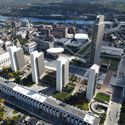
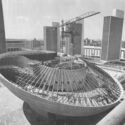
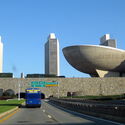
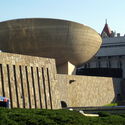
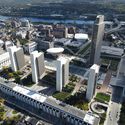
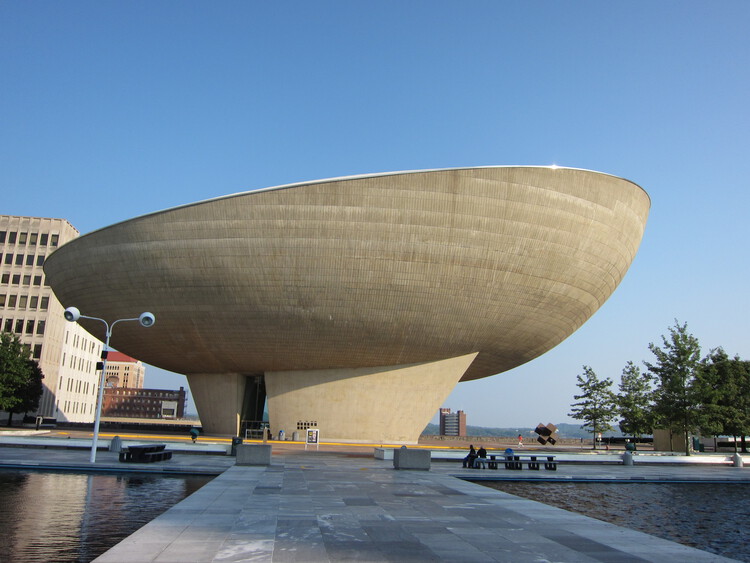
The Egg is a performing arts centre located in Albany, within New York's Empire State Plaza, designed by the North American firm Harrison & Abramovitz. Construction began in 1966 and was completed twelve years later, in 1978, with the aim of hosting a broad range of cultural events and performances for New York State residents. Drawing inspiration from Brazilian modernism, the domed, egg-like concrete structure stands out as a striking counterpoint within an otherwise rational urban ensemble. Surrounded by state government towers set in an open plaza and clad in stone, the building's exposed concrete, its seemingly suspended form, and pronounced curved geometry position it as a late example of modernist Brutalism. The venue is currently undergoing restoration and, after six months of renovations, is set to reopen on January 8, 2026, in what has been described as a "refreshed and reimagined" space.

The Egg Performing Arts Center Reopens Following Six-Month Restoration in Albany, New York - Image 1 of 4The Egg Performing Arts Center Reopens Following Six-Month Restoration in Albany, New York - Image 2 of 4The Egg Performing Arts Center Reopens Following Six-Month Restoration in Albany, New York - Image 3 of 4The Egg Performing Arts Center Reopens Following Six-Month Restoration in Albany, New York - Image 4 of 4The Egg Performing Arts Center Reopens Following Six-Month Restoration in Albany, New York - More Images

One Month to Go: Adaptive Reuse and Alpine Transport Upgrades Shape the Road to Milano Cortina 2026

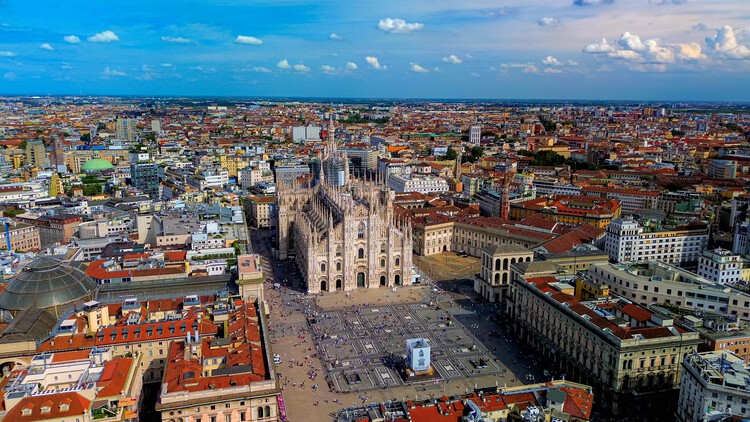
One month remains until the Opening Ceremony of the Olympic Winter Games Milano Cortina 2026, with competitions set to run from February 4 to 22, 2026. The Opening Ceremony will take place on February 6 at the Milano San Siro Olympic Stadium and will bring together approximately 2,900 athletes from around the world competing across 16 sports, with 116 gold medals to be awarded. The Olympic Winter Games return to Italy twenty years after Torino 2006 and seventy years after Cortina 1956. This edition, however, adopts a markedly different approach, proposing a shift away from the traditional high-cost, high-waste model toward adaptive reuse, renewable energy, and long-term regional development. The most geographically dispersed Winter Games in history plan to rely on 92% existing or temporary venues, build on regions with established tourism industries, avoid major environmental disruption, and implement circular design and recycling strategies, the results of which will become evident in the coming months. The Milano Cortina 2026 Winter Paralympics will follow, taking place from March 6 to 15, 2026.

One Month to Go: Adaptive Reuse and Alpine Transport Upgrades Shape the Road to Milano Cortina 2026 - Image 1 of 4One Month to Go: Adaptive Reuse and Alpine Transport Upgrades Shape the Road to Milano Cortina 2026 - Image 2 of 4One Month to Go: Adaptive Reuse and Alpine Transport Upgrades Shape the Road to Milano Cortina 2026 - Image 3 of 4One Month to Go: Adaptive Reuse and Alpine Transport Upgrades Shape the Road to Milano Cortina 2026 - Image 4 of 4One Month to Go: Adaptive Reuse and Alpine Transport Upgrades Shape the Road to Milano Cortina 2026 - More Images+ 7

Who Owns Public Space? Three Active Models of Shared Management Shaping Urban Commons in Europe and New York

Public space is often understood as belonging to no one in particular, collectively accessible yet institutionally maintained, yet a growing number of initiatives are challenging this assumption by testing shared management and distributed ownership models. In Paris, Adoptez un banc introduces a sponsorship-based approach, allowing individuals and groups to support temporarily and symbolically claim responsibility for historic public furniture without compromising its collective use. Elsewhere in the city, community gardens operating under the Main Verte framework demonstrate a self-managed model, in which public and private landowners retain ownership while delegating day-to-day control to citizen associations for food production and shared use. In New York, Common Corner represents a third pathway, based on institutional collaboration and participatory design, where public agencies, nonprofits, designers, and residents co-produce public space within a public housing context. Taken together, these three cases suggest that care, authorship, and responsibility can be distributed across citizens and institutions, producing more resilient, locally grounded urban environments.

"Build Something That Disappears": Gabriela Carrillo on Public Space Design in Louisiana Channel Interview

In this interview with Louisiana Channel, Mexican architect Gabriela Carrillo introduces us to the challenges that drive her work, particularly the projects carried out as a member of Colectivo C733, in which she currently participates alongside Carlos Facio, José Amozurrutia, Eric Valdez, and Israel Espin. Through an exploration of her definition of architecture, she offers reflections on the design of public spaces, the relationship between architecture and land art, and the role of the preexisting in the transformation of space. She defends architecture as a "powerful tool" for fostering connections between people and their environment, defining her practice as optimistic.

"Build Something That Disappears": Gabriela Carrillo on Public Space Design in Louisiana Channel Interview - Image 1 of 4"Build Something That Disappears": Gabriela Carrillo on Public Space Design in Louisiana Channel Interview - Image 2 of 4"Build Something That Disappears": Gabriela Carrillo on Public Space Design in Louisiana Channel Interview - Featured Image"Build Something That Disappears": Gabriela Carrillo on Public Space Design in Louisiana Channel Interview - Image 3 of 4Build Something That Disappears: Gabriela Carrillo on Public Space Design in Louisiana Channel Interview - More Images

SANAA’s Taichung Art Museum and Library Complex Opens as a New Public Cultural Landmark in Taiwan

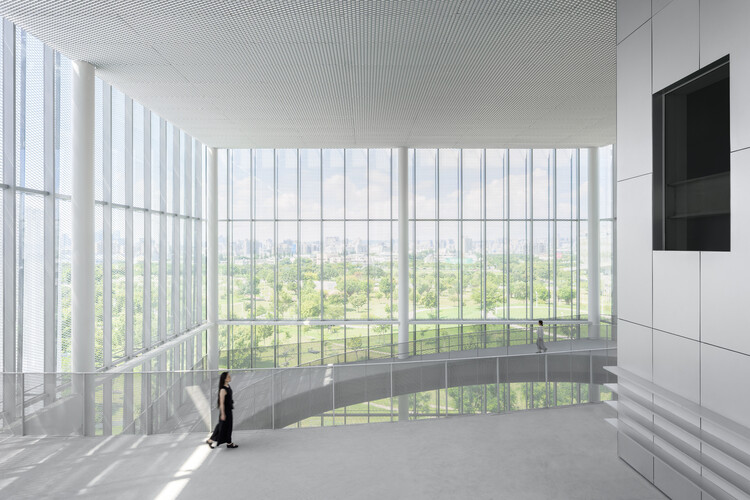
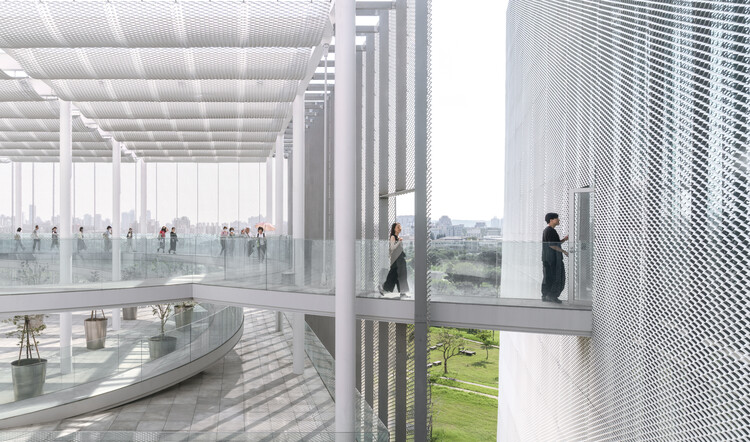
The Taichung Art Museum officially opened on December 13, 2025, with an inaugural exhibition titled A Call of All Beings: See You Tomorrow, Same Time, Same Place. The building, designed by SANAA, is part of the Taichung Green Museumbrary project, developed in collaboration with local firm Ricky Liu & Associates. Conceived as a major cultural initiative, the project combines a contemporary art museum, library resources, and public parkland. Through interactive education and outreach programmes, it aims to establish a new institutional model for Taichung, one that supports artistic exchange while positioning the city as an international cultural hub. On view through April 12, 2026, the opening exhibition explores the relationships between people and nature, the city and memory, interspecies connections, and the future, beginning with an examination of the complex's own context in central Taiwan.

SANAA’s Taichung Art Museum and Library Complex Opens as a New Public Cultural Landmark in Taiwan - Image 1 of 4SANAA’s Taichung Art Museum and Library Complex Opens as a New Public Cultural Landmark in Taiwan - Image 2 of 4SANAA’s Taichung Art Museum and Library Complex Opens as a New Public Cultural Landmark in Taiwan - Image 4 of 4SANAA’s Taichung Art Museum and Library Complex Opens as a New Public Cultural Landmark in Taiwan - Image 6 of 4SANAA’s Taichung Art Museum and Library Complex Opens as a New Public Cultural Landmark in Taiwan - More Images+ 9

Renzo Piano Building Workshop Begins Construction of the KYKLOS Cultural Center in Piraeus, Greece

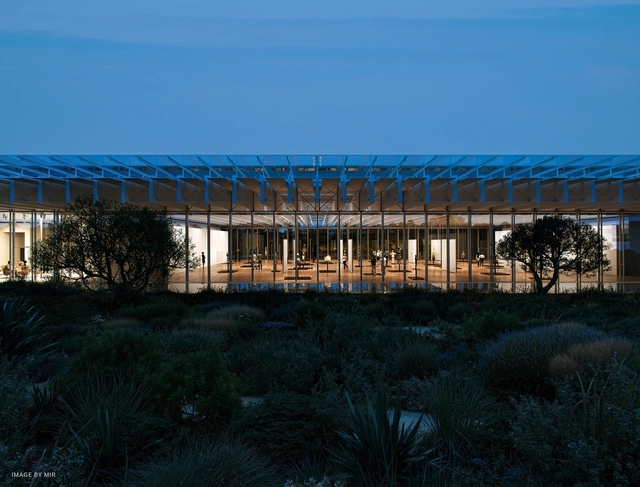
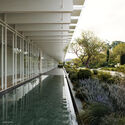
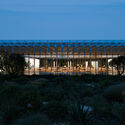
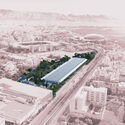
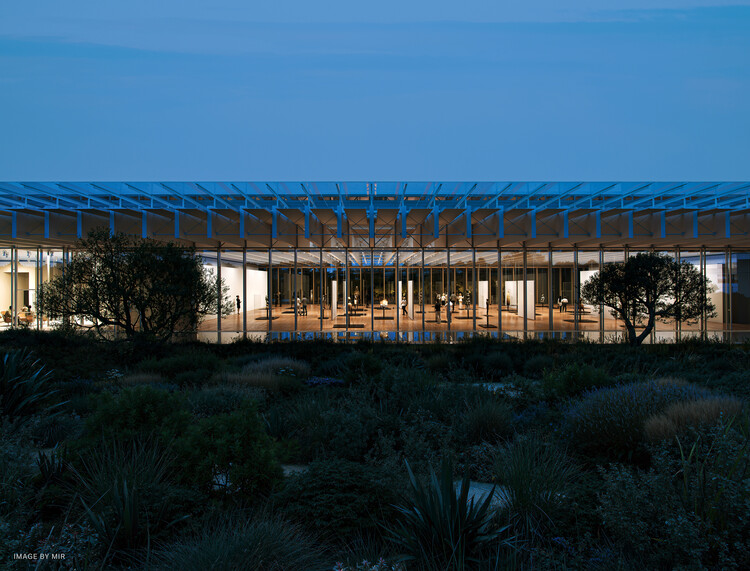
Renzo Piano Building Workshop, in collaboration with Betaplan Architects (Athens) and landscape architect Camille Muller (Paris), has broken ground on a new cultural center in Piraeus, the port of Athens. Commissioned by The Dinos and Lia Martinos Foundation (DLMF), the project seeks to establish an international hub connected to similar art centers abroad, open to the local community, students, and visitors, and contributing to the urban and cultural fabric of the Athens metropolitan area. The complex, called KYKLOS, is planned to host contemporary art collections and cultural programming with an international outlook. Initiated in 2023, the project is currently in development, with construction planned to extend through the last quarter of 2028.

Renzo Piano Building Workshop Begins Construction of the KYKLOS Cultural Center in Piraeus, Greece - Image 2 of 4Renzo Piano Building Workshop Begins Construction of the KYKLOS Cultural Center in Piraeus, Greece - Featured ImageRenzo Piano Building Workshop Begins Construction of the KYKLOS Cultural Center in Piraeus, Greece - Image 4 of 4Renzo Piano Building Workshop Begins Construction of the KYKLOS Cultural Center in Piraeus, Greece - Image 3 of 4Renzo Piano Building Workshop Begins Construction of the KYKLOS Cultural Center in Piraeus, Greece - More Images

“Coming Together” Exhibition in Washington Explores Post-Pandemic Transformations of Community and Public Spaces

The exhibition Coming Together: Reimagining America's Downtowns, held at Washington, D.C.'s National Building Museum, explores the transformations underway in the United States' downtowns and the ways communities have organized to shape alternative urban scenarios. Curated by Uwe S. Brandes, Professor at Georgetown University, and designed by Reddymade and MGMT., it is the first of three major exhibitions within the Museum's Future Cities initiative, an interdisciplinary project examining the city as a hub, catalyst, essential building block, and reflection of society. Coming Together features examples from more than 60 U.S. cities, both large and small, highlighting lessons learned and opportunities embraced in the wake of the COVID-19 pandemic as communities adapt to lasting changes in work, housing, mobility, entertainment, and recreation. The exhibition is currently open to the public and will remain on view through Fall 2026.

“Coming Together” Exhibition in Washington Explores Post-Pandemic Transformations of Community and Public Spaces - Image 1 of 4“Coming Together” Exhibition in Washington Explores Post-Pandemic Transformations of Community and Public Spaces - Image 2 of 4“Coming Together” Exhibition in Washington Explores Post-Pandemic Transformations of Community and Public Spaces - Image 3 of 4“Coming Together” Exhibition in Washington Explores Post-Pandemic Transformations of Community and Public Spaces - Image 4 of 4“Coming Together” Exhibition in Washington Explores Post-Pandemic Transformations of Community and Public Spaces - More Images+ 18

A Smart City Prototype in Japan: PLP Architecture Breaks Ground on the First Tower of Tokyo Cross Park

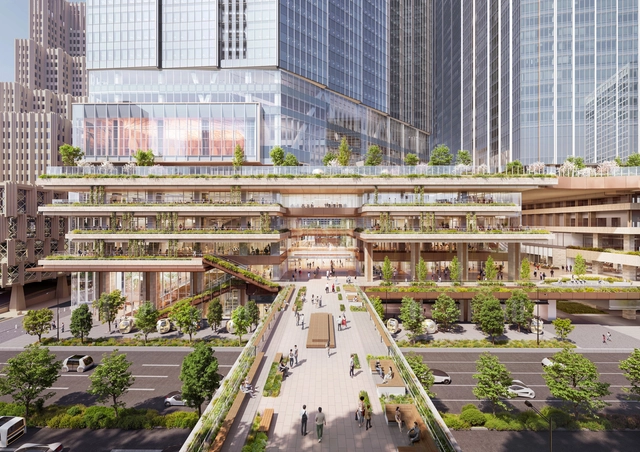
Construction has officially broken ground on Tokyo's new global headquarters for NTT, a major Japanese technology company. The project is a key component of PLP Architecture's Tokyo Cross Park masterplan, a large-scale regeneration development in the Tokyo metropolitan area, first announced in 2022. On December 5, 2025, construction began on the first stage of the scheme, one of four towers planned within the masterplan. The NTT Hibiya Tower, designed by PLP Architecture and developed by NTT Urban Development in collaboration with Tokyo Electric Power Company, is a 230-metre-tall, 361,000-square-metre mixed-use building and forms the central element of the 1.1-million-square-metre Tokyo Cross Park Vision. PLP Architecture serves as Design Architect for the tower, as well as Masterplanner and Placemaking Strategist for the wider development.

A Smart City Prototype in Japan: PLP Architecture Breaks Ground on the First Tower of Tokyo Cross Park - Image 1 of 4A Smart City Prototype in Japan: PLP Architecture Breaks Ground on the First Tower of Tokyo Cross Park - Image 2 of 4A Smart City Prototype in Japan: PLP Architecture Breaks Ground on the First Tower of Tokyo Cross Park - Image 3 of 4A Smart City Prototype in Japan: PLP Architecture Breaks Ground on the First Tower of Tokyo Cross Park - Image 4 of 4A Smart City Prototype in Japan: PLP Architecture Breaks Ground on the First Tower of Tokyo Cross Park - More Images+ 10

Paul Clemence Captures Ingenhoven Architects’ Kö-Bogen II and Its Landmark Green Facade

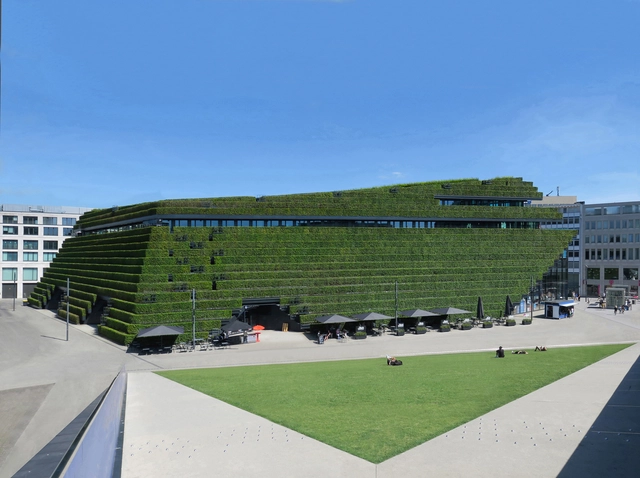
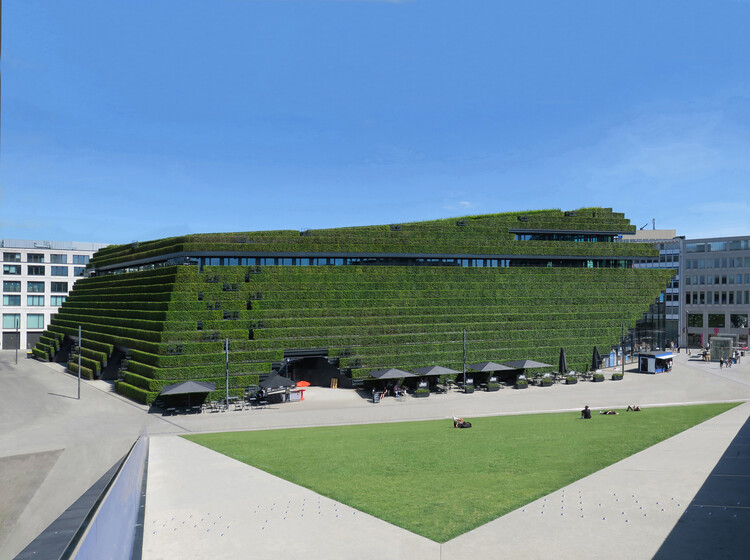
In early 2025, photographer Paul Clemence documented Kö-Bogen II, a commercial and office complex designed by ingenhoven architects in Düsseldorf, Germany. The photo series focuses on the building's signature feature: its vast green façade, considered one of the largest in Europe. Referred to as a "green heart" and an "urban mountain," the building has become a landmark in the city due to its sloping surfaces wrapped in over 30,000 hornbeam plants. For Clemence, this was an unforeseen encounter during his first visit to Düsseldorf, which he describes as an unexpected meeting with a "stunning green pyramid."

Paul Clemence Captures Ingenhoven Architects’ Kö-Bogen II and Its Landmark Green Facade - Featured ImagePaul Clemence Captures Ingenhoven Architects’ Kö-Bogen II and Its Landmark Green Facade - Image 1 of 4Paul Clemence Captures Ingenhoven Architects’ Kö-Bogen II and Its Landmark Green Facade - Image 2 of 4Paul Clemence Captures Ingenhoven Architects’ Kö-Bogen II and Its Landmark Green Facade - Image 3 of 4Paul Clemence Captures Ingenhoven Architects’ Kö-Bogen II and Its Landmark Green Facade - More Images+ 15

Zaha Hadid Architects Explores AI-Driven Design at “Architecture of Possibility” Exhibition in Shenzhen, China

"Architecture of Possibility: Zaha Hadid Architects" at the Museum of Contemporary Art and Urban Planning (MOCAUP) in Shenzhen, China, presents a comprehensive overview of the evolution of Zaha Hadid Architects' work over recent decades. On view until April 10, 2026, the exhibition is structured through chronological and thematic narratives that highlight the studio's multidisciplinary research and design methodologies. The exhibition, now open to the public, showcases the office's work in the Shenzhen area and its involvement with new Artificial Intelligence technologies. Particular emphasis is placed on the integration of artificial intelligence (AI), immersive and interactive design tools, and virtual environments, which together form an expanding digital design ecosystem.

Zaha Hadid Architects Explores AI-Driven Design at “Architecture of Possibility” Exhibition in Shenzhen, China - Image 1 of 4Zaha Hadid Architects Explores AI-Driven Design at “Architecture of Possibility” Exhibition in Shenzhen, China - Image 2 of 4Zaha Hadid Architects Explores AI-Driven Design at “Architecture of Possibility” Exhibition in Shenzhen, China - Image 3 of 4Zaha Hadid Architects Explores AI-Driven Design at “Architecture of Possibility” Exhibition in Shenzhen, China - Image 4 of 4Zaha Hadid Architects Explores AI-Driven Design at “Architecture of Possibility” Exhibition in Shenzhen, China - More Images+ 17

From Housing Policy in Europe to Large-Scale Master Planning in Mongolia: This Week’s Review

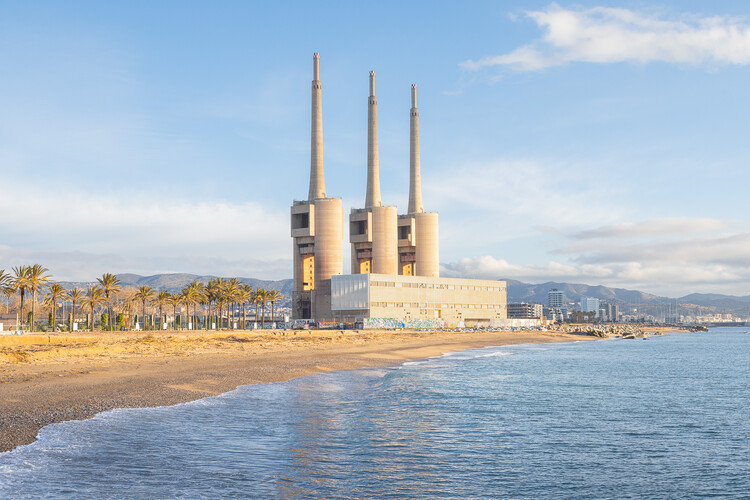
This week's review focuses on concrete responses to shared urban challenges, including housing affordability, long-term resilience, and the role of cultural and material innovation in shaping cities. The selection spans regulatory measures affecting housing markets in European cities, high-density residential and mixed-income proposals in New York, and major renewal and planning efforts in London, Barcelona, Ulaanbaatar, and Drammen. It also highlights research-driven and built projects in Chicago, Buenos Aires, Las Vegas, and Riyadh that explore circular construction, adaptive reuse, and new models for cultural and public infrastructure. Together, these worldwide projects offer a snapshot of how architecture and urban planning are addressing immediate pressures while laying the groundwork for more resilient and inclusive urban futures across diverse geographic and cultural contexts.

From Housing Policy in Europe to Large-Scale Master Planning in Mongolia: This Week’s Review - Image 1 of 4From Housing Policy in Europe to Large-Scale Master Planning in Mongolia: This Week’s Review - Image 2 of 4From Housing Policy in Europe to Large-Scale Master Planning in Mongolia: This Week’s Review - Image 3 of 4From Housing Policy in Europe to Large-Scale Master Planning in Mongolia: This Week’s Review - Image 4 of 4From Housing Policy in Europe to Large-Scale Master Planning in Mongolia: This Week’s Review - More Images+ 17

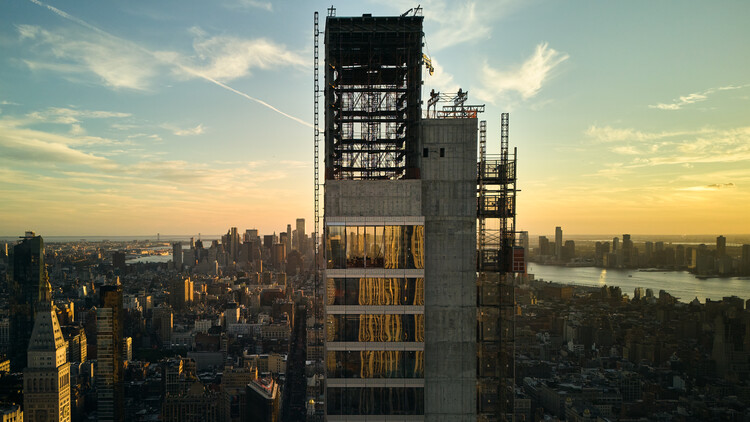
Meganom Nears Completion of 262 Fifth Avenue Residential Skyscraper in New York City

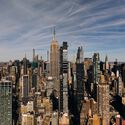
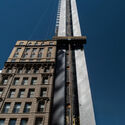
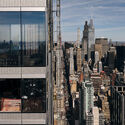
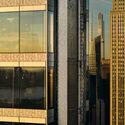
Moscow-based architecture, urban design, and research practice Meganom is nearing completion of its residential skyscraper at 262 Fifth Avenue in Manhattan, New York City. Designed for client Five Points Development, the project dates back to 2015 and brings together an international team that includes Norm Architects as interior architect, SLCE Architects as architect of record, and untitled architecture overseeing architectural supervision and project management. Rising 860 feet over 52 stories, the tower contains 26 residential units within approximately 140,000 square feet and draws conceptual inspiration from aeronautics, envisioning apartments as elevated "shelves" that frame expansive views of the city.

Meganom Nears Completion of 262 Fifth Avenue Residential Skyscraper in New York City - Image 1 of 4Meganom Nears Completion of 262 Fifth Avenue Residential Skyscraper in New York City - Image 2 of 4Meganom Nears Completion of 262 Fifth Avenue Residential Skyscraper in New York City - Image 3 of 4Meganom Nears Completion of 262 Fifth Avenue Residential Skyscraper in New York City - Image 4 of 4Meganom Nears Completion of 262 Fifth Avenue Residential Skyscraper in New York City - More Images+ 12

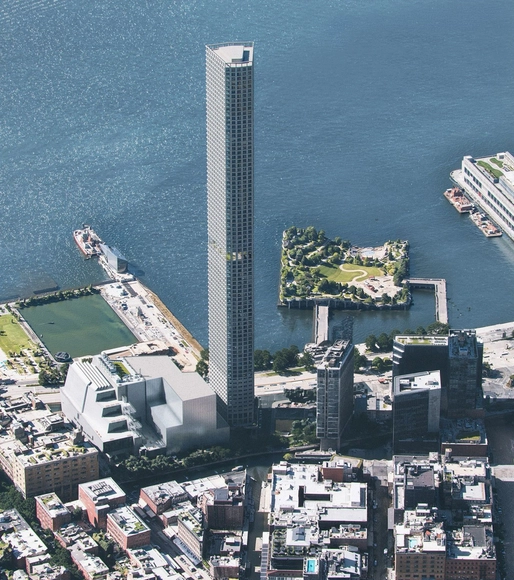
“Supertall for All”: Powerhouse Company Proposes Equitable Mixed-Income Skyscraper in New York City

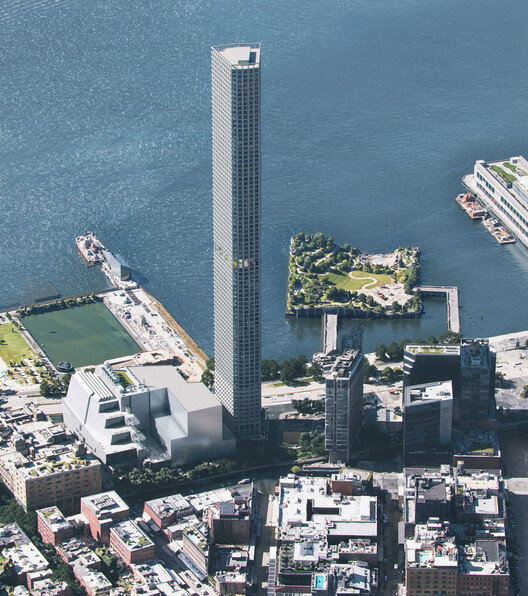
In January 2025, New York City Mayor and the New York City Economic Development Corporation (NYCEDC) announced new steps in the reimagining of Gansevoort Square, a 66,000-square-foot site located on Little West 12th Street between Washington Street and 10th Avenue in Manhattan's Meatpacking District. The redevelopment of the site aims to integrate a mix of affordable housing for New Yorkers, new retail space for residents and visitors, and opportunities to expand the Whitney Museum of American Art and the High Line. The Request for Proposals outlined a vision for up to 600 units of mixed-income housing, with a goal of 50 percent of the total units being permanently affordable, along with ground-floor commercial space. International architectural practice Powerhouse Company recently revealed its competition proposal, exceeding these demands with 1,000 rental homes in a supertall tower, half affordable and half market-rate, mixed equally throughout the building's full height.

“Supertall for All”: Powerhouse Company Proposes Equitable Mixed-Income Skyscraper in New York City - Image 1 of 4“Supertall for All”: Powerhouse Company Proposes Equitable Mixed-Income Skyscraper in New York City - Image 2 of 4“Supertall for All”: Powerhouse Company Proposes Equitable Mixed-Income Skyscraper in New York City - Image 3 of 4“Supertall for All”: Powerhouse Company Proposes Equitable Mixed-Income Skyscraper in New York City - Image 4 of 4“Supertall for All”: Powerhouse Company Proposes Equitable Mixed-Income Skyscraper in New York City - More Images+ 8

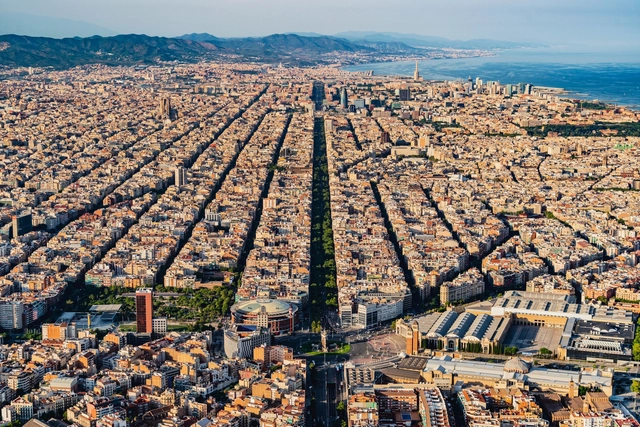
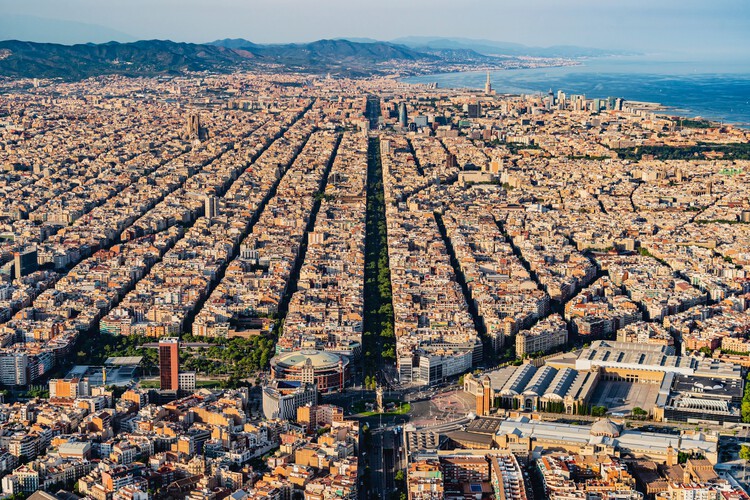
The UIA World Congress of Architects 2026 Barcelona Unveils Program and Speakers

The UIA World Congress of Architects is an international event for architectural dialogue organised by the International Union of Architects (UIA, by its French acronym), a non-governmental organisation that unites national associations of architects from over 100 countries, representing more than one million professionals. The first UIA Congress of Architects, which also marked the institution's founding, was held in Lausanne in 1948 during the post-war reconstruction period. Since then, UIA congresses have been held every three years in a different city within a member country, serving as the organisation's main recurring event. In 2026, the Congress will be held in Barcelona, and UNESCO has consequently designated the city as the World Capital of Architecture 2026. Each Congress focuses on a key topic relevant to the profession, articulated through a central theme. Recent themes include Copenhagen 2023: "Sustainable Futures. Leave no one behind." and Rio 2020–2021: "All the worlds. Just one World." The topic for 2026 is "Becoming. Architectures for a Planet in Transition," welcoming renowned figures in contemporary architectural thought and practice for a broad and critical overview of the possible futures of architecture.

The UIA World Congress of Architects 2026 Barcelona Unveils Program and Speakers - Image 1 of 4The UIA World Congress of Architects 2026 Barcelona Unveils Program and Speakers - Image 2 of 4The UIA World Congress of Architects 2026 Barcelona Unveils Program and Speakers - Image 3 of 4The UIA World Congress of Architects 2026 Barcelona Unveils Program and Speakers - Image 4 of 4The UIA World Congress of Architects 2026 Barcelona Unveils Program and Speakers - More Images+ 7

Kéré Architecture and SOM Unveil New Images of the Future Las Vegas Museum of Art

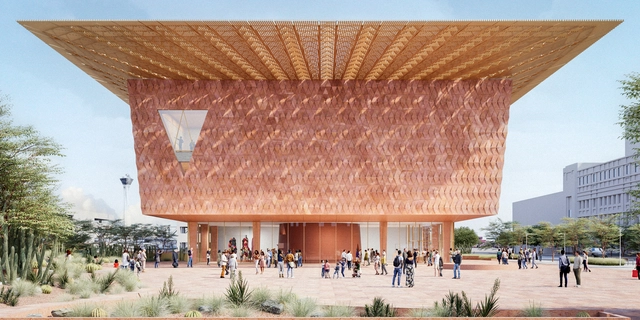
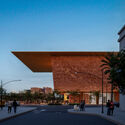
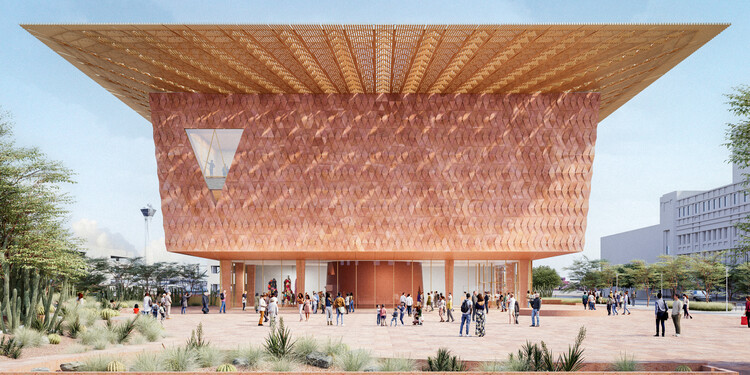
The future Las Vegas Museum of Art (LVMA) will be the city's first stand-alone museum, designed by Pritzker Prize-winning architect Francis Kéré. In fall 2024, the City of Las Vegas granted LVMA two acres of land in Symphony Park, neighboring the city's downtown arts district, as part of a public-private partnership. The project is intended to serve the city's more than 2.4 million year-round residents, including nearly 300,000 students living within a 10-mile radius of the park, as well as tens of millions of visitors from around the globe. The 60,000-square-foot building was designed by Kéré Architecture, which teamed up with Skidmore, Owings & Merrill (SOM) to provide Las Vegas with "a gathering place for community and a beacon for the cultural world," and is scheduled to open in 2029.

Kéré Architecture and SOM Unveil New Images of the Future Las Vegas Museum of Art - Image 1 of 4Kéré Architecture and SOM Unveil New Images of the Future Las Vegas Museum of Art - Image 2 of 4Kéré Architecture and SOM Unveil New Images of the Future Las Vegas Museum of Art - Image 3 of 4Kéré Architecture and SOM Unveil New Images of the Future Las Vegas Museum of Art - Image 4 of 4Kéré Architecture and SOM Unveil New Images of the Future Las Vegas Museum of Art - More Images+ 1

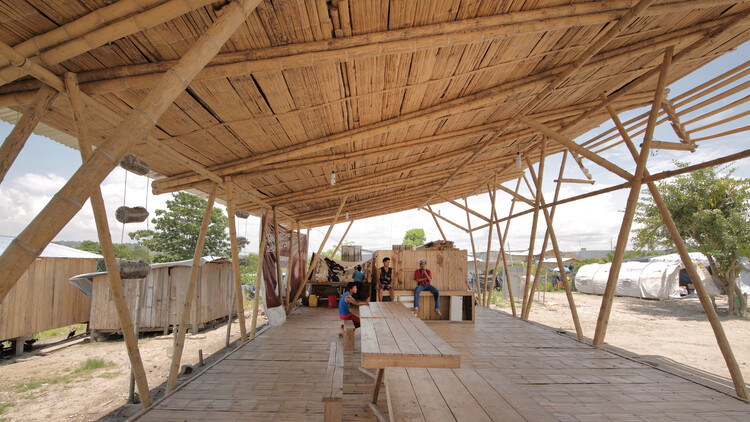
On International Migrants Day: A Look at Architectural Responses to Displacement

December 18 marks the United Nations' International Migrants Day, which aims to highlight the need for safer, fairer, and more inclusive migration systems. Proclaimed on December 4, 2000, the day seeks to recognize the multiple dimensions of migration beyond its economic and humanitarian aspects. According to the UN, mounting evidence indicates that international migration is beneficial for both countries of origin and destination. In this sense, International Migrants Day offers an opportunity to spotlight the value of the possibility to migrate and the contributions of millions of migrants worldwide to the cities and cultures in which they are integrated.

Aligned with this perspective, the UN's 2025 theme, "My Great Story: Cultures and Development," emphasizes how human mobility drives growth, enriches societies, and helps communities connect, adapt, and support one another. At the same time, International Migrants Day also acknowledges the increasingly complex environment in which migration occurs. Conflicts, climate-related disasters, and economic pressures continue to force millions of people from their homes in search of safety or opportunity. From both perspectives, it is essential to recognize the role of architecture in building integrated, multicultural communities and in responding to the conditions that lead people to migrate from their territories in the first place.

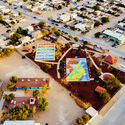
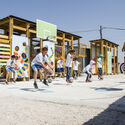
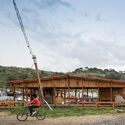
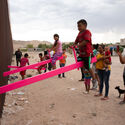
On International Migrants Day: A Look at Architectural Responses to Displacement - Image 1 of 4On International Migrants Day: A Look at Architectural Responses to Displacement - Image 2 of 4On International Migrants Day: A Look at Architectural Responses to Displacement - Image 3 of 4On International Migrants Day: A Look at Architectural Responses to Displacement - Image 4 of 4On International Migrants Day: A Look at Architectural Responses to Displacement - More Images+ 6