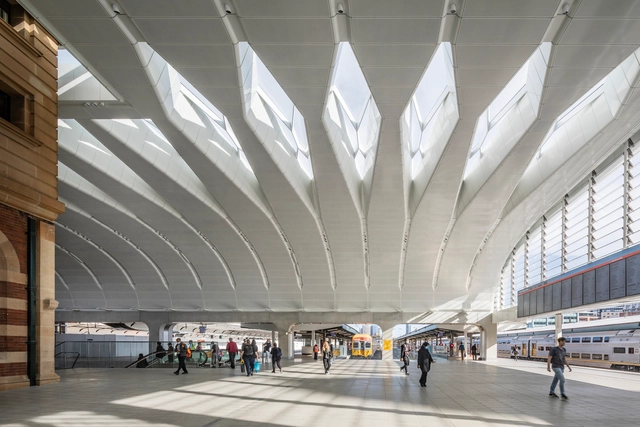
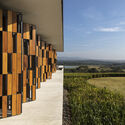
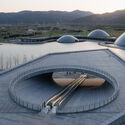
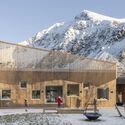
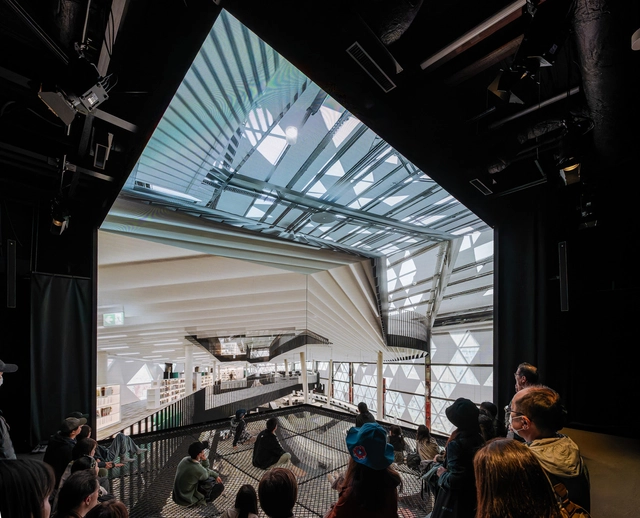
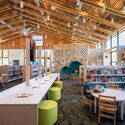
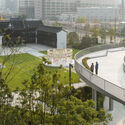
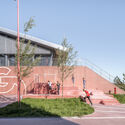
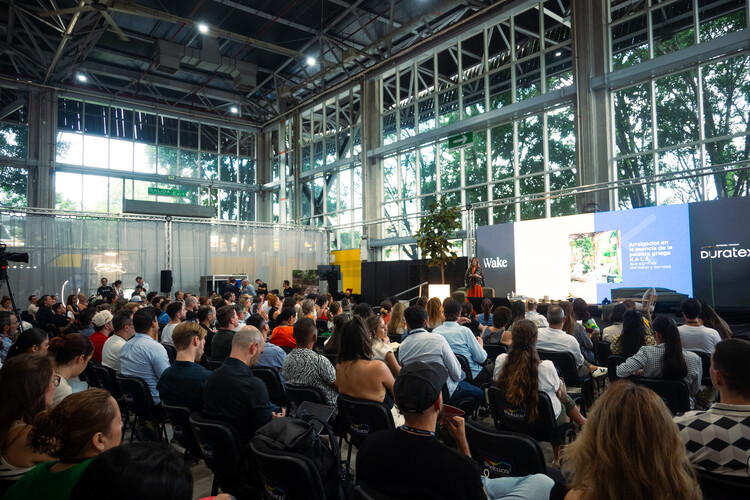
The ultimate accolades of World Building of the Year supported by GROHE, World Interior of the Year, Future Project of the Year and Landscape of the Year were announced today as hundreds of architects from across the world convened at a grand finale Gala Dinner at Miami Beach Convention Center in Florida. A host of Special Prizes, including the American Beauty Prize supported by the Royal Fine Art Commission Trust, were also announced at the closing event to celebrate the eighteenth edition of the festival. The announcement follows the final day of WAF, in which prize winners across all 43 categories have been competing for the winning titles.
https://www.archdaily.com/1036083/world-building-of-the-year-and-interior-of-the-year-revealed-at-world-architecture-festival-2025Enrique Tovar
In total, the three-day festival will see over 460 live pitches from the 2025 finalists, presented to more than 160 international judges. Today has seen shortlisted projects from around the world compete for 21 award categories within Completed Buildings, Future Projects, and Interiors. Award winners include OMA, Sordo Madaleno, Studio Arthur Casas, and NIKKEN SEKKEI.
https://www.archdaily.com/1036039/world-architecture-festival-2025-day-two-winners-announcedEnrique Tovar
In total, the three-day festival will see over 460 live pitches from the 2025 finalists in front of over 160 international judges. Today has seen shortlisted projects from around the world compete for 22 award categories within Completed Buildings, Future Projects, and Interiors. Award winners include WOW Architects, BIG-Bjarke Ingels Group, Batlleiroig, and Perkins&Will.
https://www.archdaily.com/1035985/world-architecture-festival-2025-day-one-winners-announcedEnrique Tovar
When architects are still students, a moment often marks a turning point: their first encounter with software. It's not just about learning a tool but discovering a space where ideas transcend physical models, taking shape in a digital environment and beginning a relationship many will carry throughout their careers. What happens next? Software keeps evolving, and with it, the design experience. In recent years, this evolution has accelerated—machine learning, AI, prompts, and integrated workflows have moved from the periphery to the core of design practice, becoming part of the shared language between software and users. As these tools take hold, a key question emerges: How will this reshape our experience of designing architecture in the future?
Since its inauguration this spring, Expo 2025 Osaka has captured global attention from multiple perspectives, demonstrating how architecture can function as a laboratory for exploring solutions to pressing challenges. After 55 years, Osaka is once again hosting the World Expo, with each installation organized around the sub-themes Saving Lives, Empowering Lives, and Connecting Lives. These pavilions take forms that express the identity and values of their region through distinctive architectural languages, forming the central axis of their design. Building on this foundation, some installations serve as laboratories for the future society, utilizing technology to enhance experiences both inside and outside the spaces, transforming the visit through light, sound, visuals, and movement as part of the technological innovation showcased at the event.
Series 8670 Casement Window. Image Courtesy of Western Window Systems
Windows have long held an ambivalent role in architecture, as they both define and enclose interiors while simultaneously creating a link to the outdoors. This dual function goes beyond simply meeting construction needs or providing daylight, directly influencing how occupants experience and engage with the views. The 20th century saw the introduction of materials such as steel, aluminum, and glass, which enabled different types of windows with thinner frames and expansive panes, enhancing transparency and reinforcing the visual connection with the surrounding setting.
American architects such as Frank Lloyd Wright and Philip Johnson explored these possibilities to harmonize architecture with landscape. In Fallingwater House, windows and terraces seamlessly connect the house to the waterfall and surrounding forest, whereas the Glass House's minimal framing nearly dissolves the boundary between interior and exterior, bringing the natural environment to life inside the house. Through its evolution, windows have become an element that unites space, materials, and perception, opening new pathways for exploring the relationship between architecture and its environment.
https://www.archdaily.com/1034016/framing-interiors-and-landscapes-in-aluminum-and-glass-to-master-the-viewEnrique Tovar
What is architecture? For some, its traditional role is to bring together imagination, technical knowledge, and problem-solving, allowing architects to design and construct while balancing ideas with the means to realize them. From the stone and wood of early buildings to the steel and concrete of the 20th century, each era demanded not only an understanding of form but also of the properties and potential of the materials in use. This grasp of materials has always been a core part of the creative process, though its scope was limited by the know-how and technologies available.
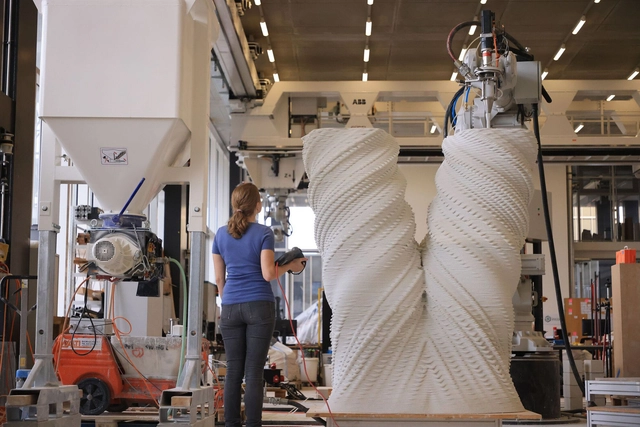
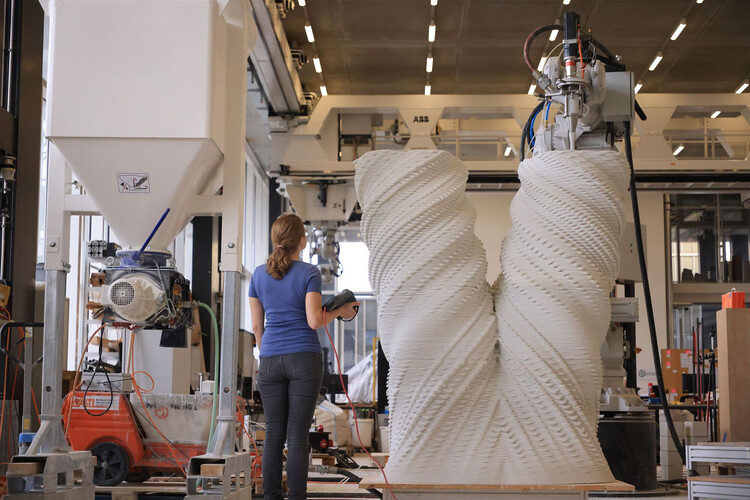
Over time, that balance has begun to shift. Architects have moved from merely using materials to actively designing them, applying scientific principles and experimenting with biological, chemical, and computational processes. This evolution has expanded the possibilities of architecture, intersecting nature, technology, and art, while pushing the role of the architect into a more experimental, science-driven dimension, where the manipulation and creation of materials becomes central to the creative act rather than merely a means to achieve forms or structures.
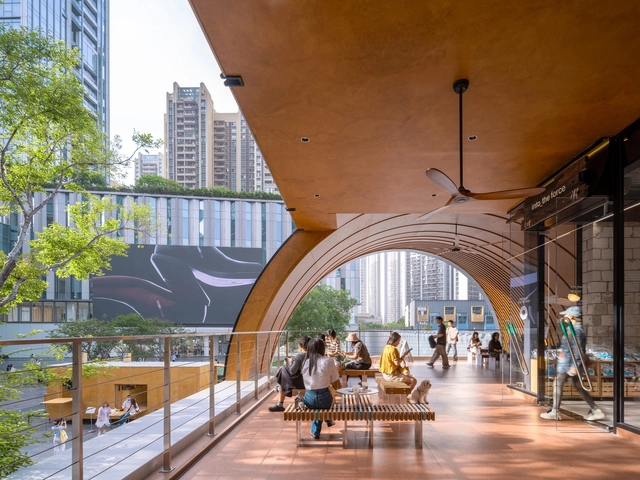
Innovation is at the core of architecture, expressed through new approaches to design, material experimentation, and, of course, ways of living. As a result, the conception of buildings and indoor spaces is constantly evolving. This evolution is especially evident in regions with a rich cultural heritage, such as Spain, where innovation reinterprets traditional ways of relating to space. This attentiveness to memory and daily life extends into interiors, where each intervention has the potential to actively reshape how people experience a space and open new possibilities for living and interaction.
The noise of overlapping conversations, the flashing lights of a billboard, hurried footsteps on the sidewalk, and the constant hammering of a nearby construction site: public spaces are sometimes experienced as environments where stimuli accumulate and often overwhelm us. Each person perceives and responds to these sensory inputs differently, and recognizing neurodiversity means understanding that some individuals require more time to adapt, slower-paced journeys, or more gradual interactions with their surroundings. These encounters raise fundamental questions about contemporary public space: how can it accommodate the diversity of ways people perceive and inhabit it? How can we envision it as a space that embraces all ways of experiencing it?
Asking questions is the first step toward challenging what we take for granted and opening up new possibilities for planning and building. These questions, valuable in themselves, gain new strength when shared and examined through different perspectives. As they intersect with the experiences of professionals and brands, they weave together viewpoints that enrich the discussion. Design fairs and events around the world have become spaces where these conversations gain momentum, fostering connections and encouraging collaborative dynamics. In this landscape, Colombia has emerged as a hub, serving as a platform that promotes architecture and design across Latin America and the Caribbean while bringing the region's voice to the global stage.
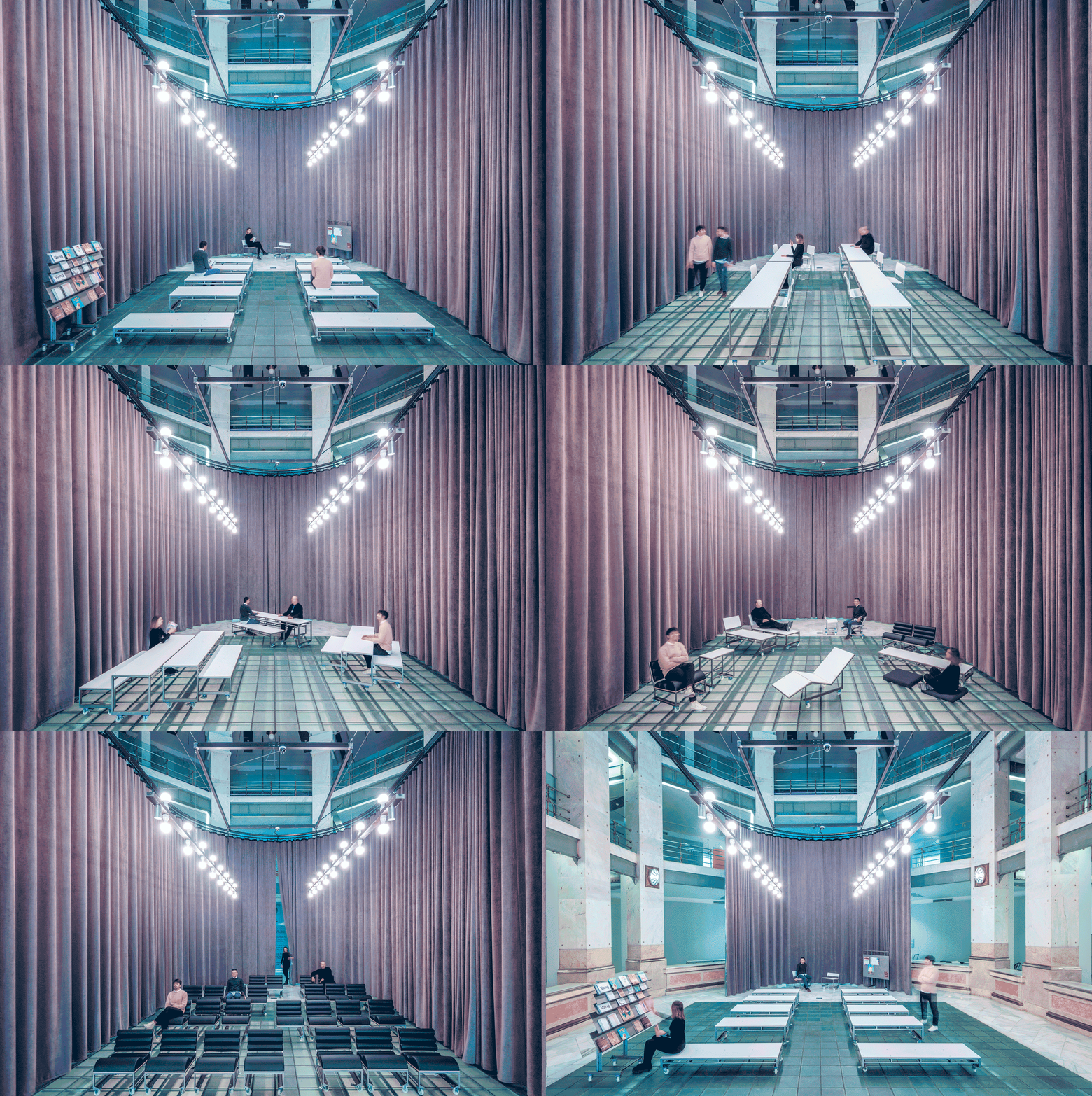
Does architecture alone define how we inhabit a space? It's becoming increasingly clear that it does not. The objects within a space—particularly furniture and other design pieces—not only serve functional purposes but actively shape the spatial and human experience. As schools, homes, and offices evolve to accommodate new ways of working, living, and socializing, furniture accompanies these transitions, prompting conversations that extend beyond functionality and engage the corporeal dimension implied in its use.
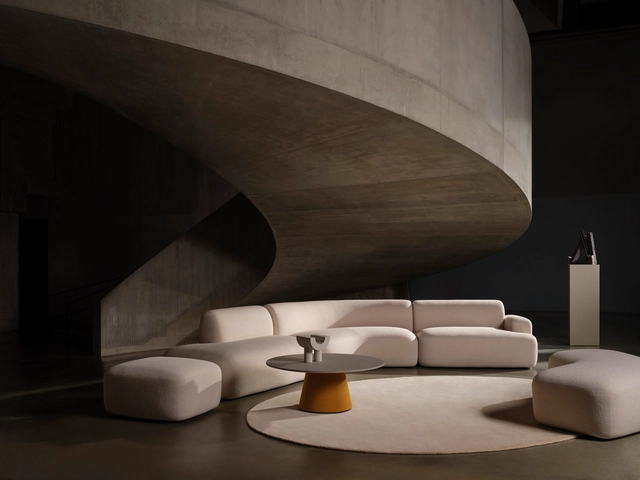
Several decades ago, British architects Alison and Peter Smithson were already exploring the relationship between the body, everyday experience, and space at an architectural scale. Since then, contemporary concepts of flexibility and comfort have expanded this framework to include other scales, such as furniture. These transformations have fostered the consolidation of modular seating systems whose flexibility and adaptability respond to diverse ways of living and relating to space. Emerging from this context are forward-thinking proposals, such as Beau's comprehensive range of seating and table units—an expansive modular seating system designed for multiple possibilities, with a significant emphasis on comfort and sensory appeal.
https://www.archdaily.com/1031877/an-expansive-modular-sofa-system-reimagining-comfort-beyond-sitting-onEnrique Tovar
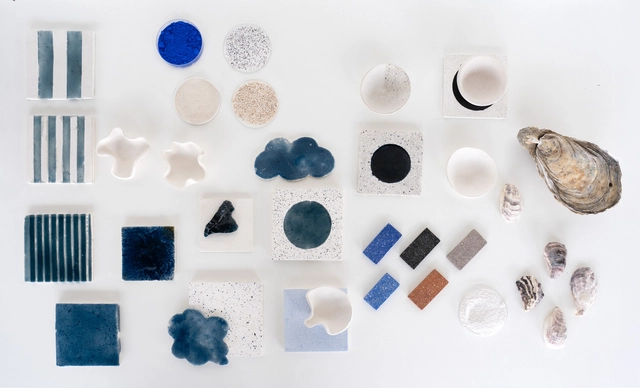
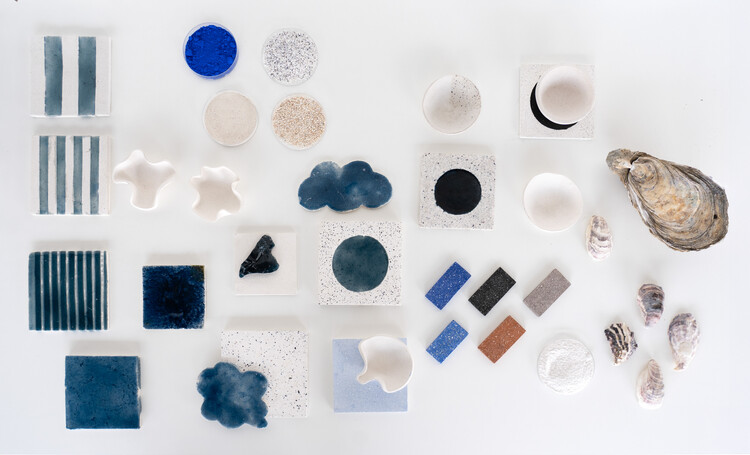
All materials come from somewhere, embedded in a chain of extraction, supply, production, and disposal that, depending on its scale, leaves more or less significant marks on the environment. In architecture, we usually approach this trajectory through the lens of materials' circularity, considering how they can re-enter production cycles rather than become waste. Yet, broadening our view to unexpected places reveals parallel systems where by-products from one industry become resources for another. This approach has found fertile ground in organic waste transformed into biomaterials, with one of the most recent examples being the work of Fahrenheit Works. Through their installation, "From the Tagus to the Tile", they repurpose oyster shells initially discarded by food systems to create a reinterpretation of Lisbon's iconic tiles.
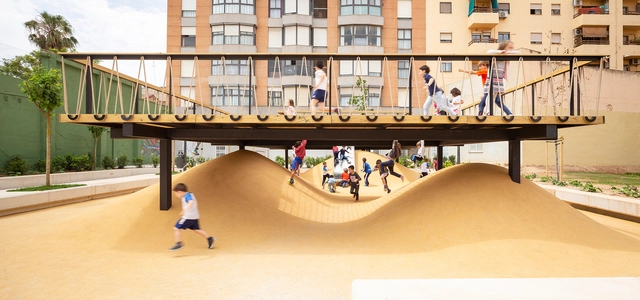
Play extends beyond its recreational dimension, unfolding as a social act that encourages children to learn, interact, be creative, and engage with their spatial context. As Johan Huizinga notes in Homo Ludens, it is a fundamental element of culture, where kids form bonds and explore ways of coexisting. When the architecture of play spaces excludes certain bodies or modes of participation, the collective experience becomes fragmented and loses part of its meaning. Designing with inclusion in mind, therefore, means recognizing that the actual value of play lies in its potential to be shared by everyone.
https://www.archdaily.com/1033205/inclusive-playgrounds-every-body-can-play-through-architectureEnrique Tovar
As climate uncertainty and ecosystem changes reshape design priorities, architecture plays an increasingly active role in these discussions, rather than merely observing. Within this perspective, the idea of making a "re" encourages a conscious step back to rethink, reconnect, and realign the relationship between buildings and their environments. This approach, central to regenerative architecture, extends beyond specific technologies or scales, encompassing everything from master plans that aim to re-naturalize cities to national pavilions that combine art and science.
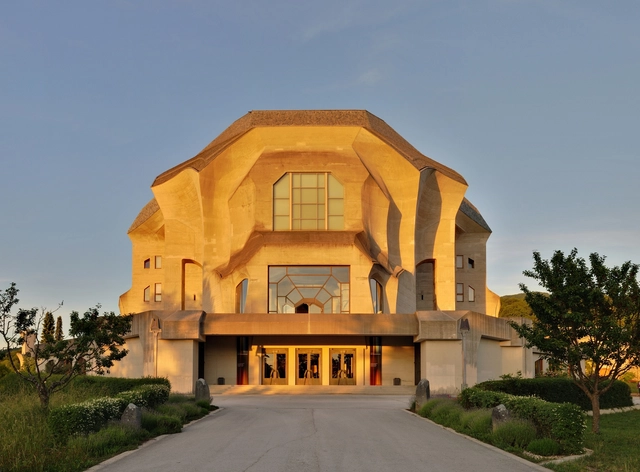
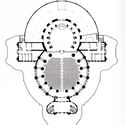
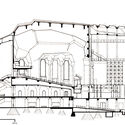
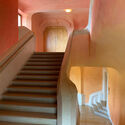
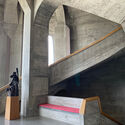
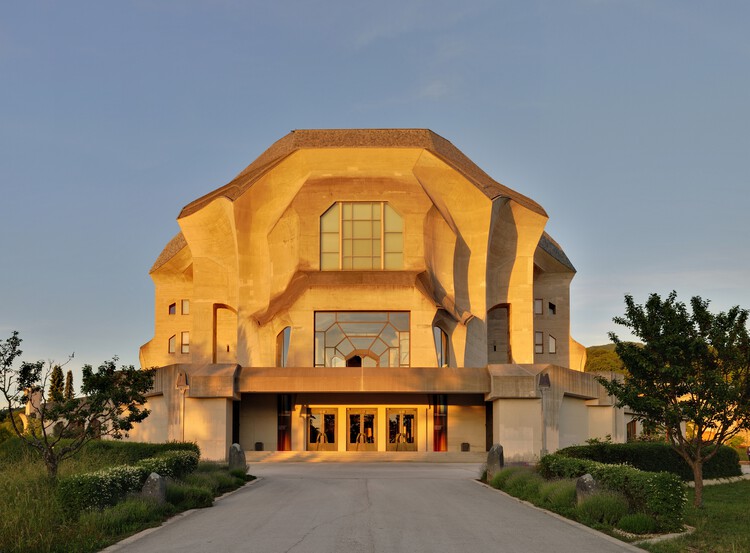
What is the way forward? On the one hand, many current discussions emphasize technology; on the other, there are approaches that, rather than being in opposition, complement one another and broaden the range of possibilities, drawing on tradition, ancestral knowledge, and a profound understanding of the environment. Among these perspectives, the work of Rudolf Steiner and the anthroposophical movement, developed in the early 20th century, offers a vision and insights that connect architecture with ecological rhythms, materials, and community life.
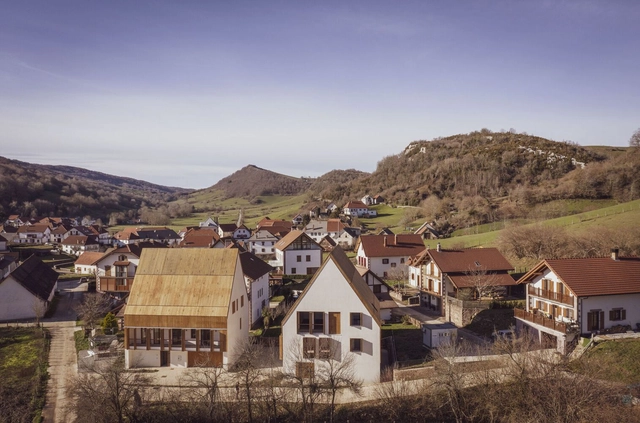
Andanzas y visiones españolas is the book in which Miguel de Unamuno collects his experiences during excursions through Spain's cities and countryside, accompanied by friends and colleagues. More than a precise geographical description, the text consists of narratives in which each region and every feature of the territory leaves a deep imprint on his thought. The literary discourse actively weaves the diversity of setting, climate, and contextualism as foundational threads, presenting the territory not only as a physical place but also as a space for reflection and contemplation. This attentive engagement with the landscape—so diverse within Spanish architecture—also resonates in the built environment, fostering in contemporary practice a sensitive adaptation to the country's varied climatic conditions, both through design strategies and material choices.
https://www.archdaily.com/1031789/context-responsive-architecture-in-spain-7-projects-highlighting-material-strategiesEnrique Tovar
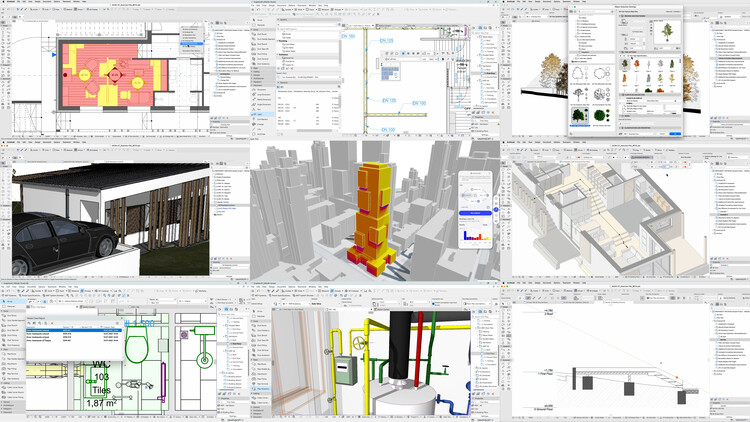
How many software tools and platforms are involved today in developing a contemporary project? From designing a single-family house to a public library, relying on just one or two programs is no longer common. Instead, multiple tools combine, overlap, and interact throughout various stages, including analysis, design, rendering, coordination, and construction. This widespread use of software in the virtual world reflects not only the technical complexity of today's practice but also a more subtle yet equally significant shift: software has become less a specific tool and more an environment that accompanies and even challenges the process.
https://www.archdaily.com/1031629/architecture-in-the-age-of-platforms-what-role-does-software-play-in-practice-todayEnrique Tovar
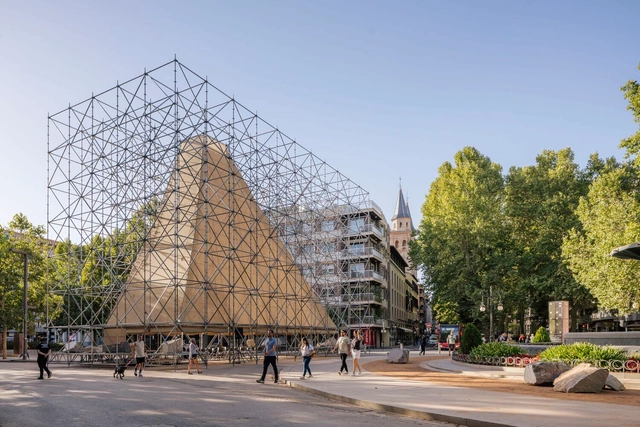
What if we imagined buildings as living systems, designed for assembly and disassembly with minimal impact? A form of open, modular, and adaptable architecture designed to evolve with its surroundings, responding to seasonal changes and on-demand needs instead of remaining static. At first glance, the idea seems paradoxical, as many buildings were constructed to last, designed to endure, resist the effects of time, and avoid demolition. Because of this, reversing or undoing could be seen as a setback. But what if that way of thinking no longer fits every scenario?
https://www.archdaily.com/1031388/built-to-not-last-how-reversible-architecture-is-redefining-the-way-we-buildEnrique Tovar
Courtesy of AIA Conference on Architecture & Design
The future of architecture isn't just being drawn—it's being coded. Since mathematician John W. Tukey coined the term "software" in 1958 in The American Mathematical Monthly, its influence has steadily expanded, from revolutionizing science and engineering to quietly transforming architecture. What was first embraced as an innovation for structural calculations and drafting has since revealed a much broader potential, becoming a creative driver in architectural narrative and practice.
While that transformation has already taken root—software now embedded in the way we design and think—it continues to evolve. At the recent AIA Conference on Architecture & Designin Boston, current innovations made it clear that we're entering a new chapter: one where software and artificial intelligence aren't just enhancing workflows but actively shaping sustainability, regulation, and decision-making. Architects and software developers now treat code with the same logic as a material—shaped not by modeling or carving, but through parameters, cycles, constant evolution, and feedback. At the same time, architects are working with AI as a co-pilot in the design process, collaborating with it to support decision-making and enhance the design.
https://www.archdaily.com/1030942/ai-and-architecture-software-at-aia25-from-code-to-concrete-in-the-digital-futureEnrique Tovar