Jonathan Yeung

Designer (Architecture and Interior), founding partner of YY Projects. Lecturer at the University of Hong Kong and the Technological and Higher Education Institute of Hong Kong. Holds a M.Arch from Harvard University and a B.A. (Arch) from UC Berkeley. Previously in Brooklyn, currently based in Hong Kong.

BROWSE ALL FROM THIS AUTHOR HERE

Hong Kong’s Adaptive Reuse Projects: A Case Study in Urban Renewal for Cities with a Colonial History

Subscriber Access | 

As major cities continue to develop, we face intriguing challenges regarding the preservation and adaptive reuse of significant buildings, sites, and artifacts. This poses a complex question that involves political history, architectural theory, and cultural significance. Adaptive reuse extends beyond architectural and spatial designs; it allows cities and communities to reflect, reevaluate, and reinterpret their history from different perspectives. However, unlike books and words, buildings may not withstand the test of time themselves and serve as firsthand evidence of the stories they tell. How should we question ourselves on what to preserve and demolish? How can communities be involved in the active restoration or adaptation of historic buildings?

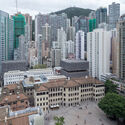
Hong Kong’s Adaptive Reuse Projects: A Case Study in Urban Renewal for Cities with a Colonial History - Image 1 of 4Hong Kong’s Adaptive Reuse Projects: A Case Study in Urban Renewal for Cities with a Colonial History - Image 2 of 4Hong Kong’s Adaptive Reuse Projects: A Case Study in Urban Renewal for Cities with a Colonial History - Image 3 of 4Hong Kong’s Adaptive Reuse Projects: A Case Study in Urban Renewal for Cities with a Colonial History - Image 4 of 4Hong Kong’s Adaptive Reuse Projects: A Case Study in Urban Renewal for Cities with a Colonial History - More Images+ 5