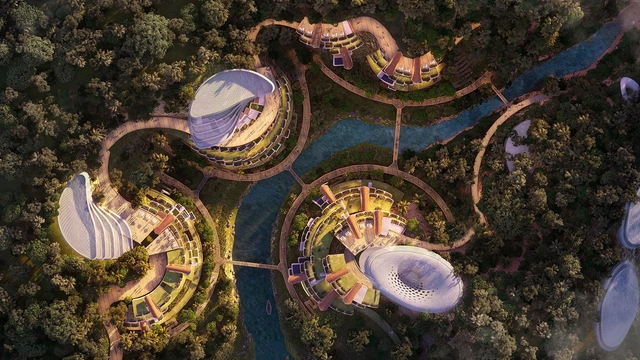
From Epic Games' Build: Architecture 2021. Image Courtesy of Zaha Hadid Architects
Epic Games operates one of the world’s largest games, Fortnite, and also develops Unreal Engine, the most advanced real-time 3D creation tool that powers Fortnite and is used in industries beyond games. Over the last few years, more professionals in architecture and related fields are using Unreal Engine to bring stunning, photorealistic worlds to life.
In an exclusive interview with ArchDaily, David Weir-McCall, Architecture Industry Marketing Manager at Epic Games, shares his insights on the use of digital technology, such as the likes of Unreal Engine, for collaboration and co-design within the field of architecture, engineering, and construction.
Architecture in its broadest sense concerns itself with the uprooting of structures that are permanent, cementing themselves within the greater cultural context and history of its humanity, however, where do we place the creation of structures that are designed with the intention to be disassembled. How much meaning and value can these structures hold, knowing they were never designed to last, but to simply take up space for a moment?
A new kind of architecture distinguished by unique regional characteristics emerged in the mid-1990s when in China, architects started practicing independently from government-run design institutes. The leading Chinese architects of this time succeeded collectively in producing a unique architectural body of work when so many buildings built around the world were no longer rooted in their place and culture.
In China Dialogues, Vladimir Belogolovsky charts a panorama of Chinese architecture through the words of its main participants, lifting the veil on a prolific new generation of designers, each sharing a highly intellectualized and conceptual understanding of architecture. Following the course of 21 interviews accompanied by over 120 photographs and drawings of beautifully executed projects uprooted throughout the country since the early 2000s, China Dialogues opens up the thinking process of the country's top architects, providing an insight into their ideas, intentions, and visions in unusually revealing and candid ways.
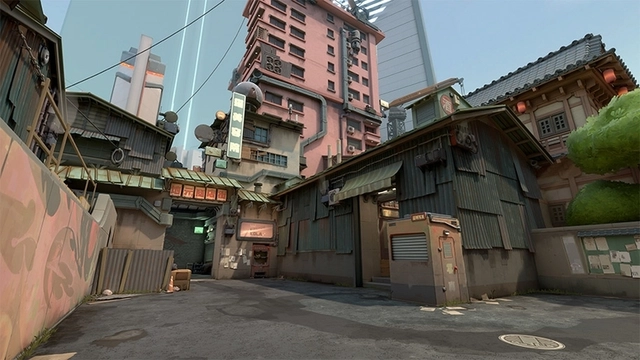
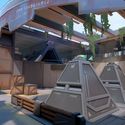
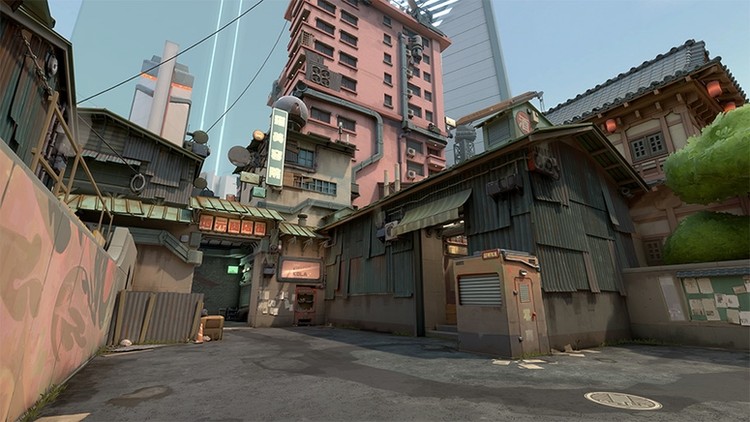
Map design and the significance of built environments continue to be inherently integral to gameplay within the realm of virtual worlds and video games, specifically in the genre of first-person shooters, and Riot Games’ VALORANT is no exception to this. Defying former expectations of its predecessors within the tactical shooter genre, Riot continually endeavors to make fundamental changes to decades of old formulas that have been implemented in practice all these years.
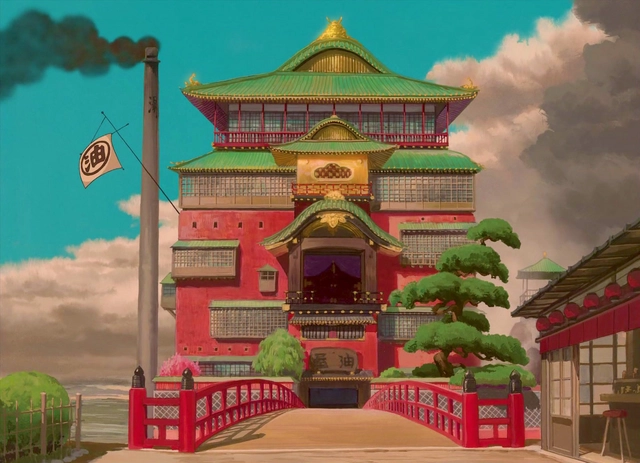
Still from 'Spirited Away' (2001). Image Courtesy of Studio Ghibli
Writers in film and animation, specifically pertaining to the genre of anime, endeavor to incorporate varied architectural backdrops to assist them in telling their stories, with influences ranging from medieval villages to futuristic metropolises. Architecture as a subject includes a wide array of elements to study, with each architectural era further inferring its context and history through its design alone. However, in film and anime, all of the contexts behind a building’s design can be condensed into a single frame, powerful enough to tell a thousand stories.
Meet 2022 Pritzker Architecture Prize winner, Francis Kéré, Burkina Faso-born black architect, in an interview about his architectural philosophy, with Louisiana Channel. As the official statement of the Pritzker Architecture Prize notes, “Through buildings that demonstrate beauty, modesty, and invention, and by the integrity of his architecture and geste, Kéré gracefully upholds the mission of this Prize”, continually “empowering and transforming communities through the process of architecture.”
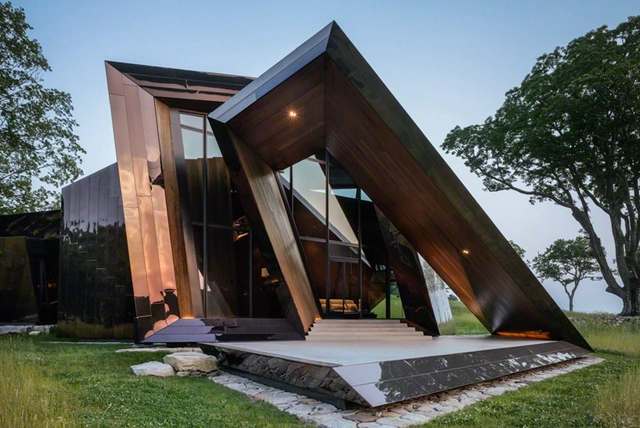
18.36.54 House, Connecticut. Image Courtesy of Nikolas Koenig
Polish-American architect, artist, professor, and set designer, Daniel Libeskind, founder of Studio Libeskind in 1989, believes that buildings are crafted with perceptible human energy, constructed with the intention to address the greater cultural context in which they are built. His commitment to expanding the scope of architecture reflects his profound interest and involvement in philosophy, art, literature, and music.
He addresses the notion of drawings being akin to a score, a piece of music that is interpreted by a like-minded community. Proportions, light, and materiality are all implicated in the drawing, and in this same way, buildings are also called to present space, atmosphere, and illuminate the practice.
The tech industry in Japan has continued to serve as a pivotal driving force in Japan, with the whole country being well known for its technological innovations in various industries. As of late, most industries and companies have begun to shift their focus to the topic of sustainable development, with the inclusion of using these very technologies to work towards zero energy goals.
The importance of the use of advanced technologies, such as the likes of virtual reality in the scene of architecture, is becoming increasingly necessary. No matter how beautiful a rendered image may be, it will always lack the capacity to fully convey the scope and feel of a project as a whole, further perpetuating the necessity to incorporate the use of these technologies at a professional practice level.
Architects who choose not to adopt the use of virtual reality technologies into their design process fall victim to being at a significant disadvantage, and the problem no longer even lies within accessibility, as VR is very much a possibility for architects of all backgrounds in the present age.
Designed by Herzog & de Meuron, Tate Modern’s Switch House was Tate Modern’s latest extension in 2016, radical in form and surface, yet intimately relative to the vast building to which it joins, which opened as London’s foremost modern art gallery in 2000. Shot recently by Bahaa Ghoussainy, the building that opened in 2016, is a model for museums in the 21st century.
“If you’re a painter, you need a canvas. If you’re a sculptor, you need marble or plaster. And if you build a house, you need a piece of land.” Welcome to the wonderful world of Not Vital, where the Swiss multi-faceted artist shows us his sculpture park, foundation, and castle in this video.
Louisiana Channel meets Not Vital in his studio in Sent, the town in Switzerland where he grew up and one of the places where he still lives. Building places to live have been with him since childhood: “My first work was more related to trying to build a house or a habitat. The first one was when I was only three years old in 1951. There was so much snow that my brother and I built a tunnel,” he says and continues: “I think that it was the first time I realized that I like to build my own habitat. Even though it was much more comfortable to live in the house, I spent the day in the tunnel. I remember the light, the smell of the snow. I just felt great.”
PARKROYAL COLLECTION Pickering, designed by WOHA and Tierra Design. Image Courtesy of WOHA
Singapore as of late is continually building its reputation as a City in Nature, with Singaporean design long having a strong consciousness to acknowledge that green spaces matter. Urban planners and architects alike have taken a conscientious decision to weave in nature throughout the city as it continues to uproot new buildings and developments, incorporating the implementation of plant life in any form, whether it be through green roofs, cascading vertical gardens, or verdant walls.
This article will explore the pioneering actions taking place in Singapore to create a more biodiverse city and nation, and how this provides a view of how other major cities can adopt similar initiatives over the next decade to provide a blueprint for the future.
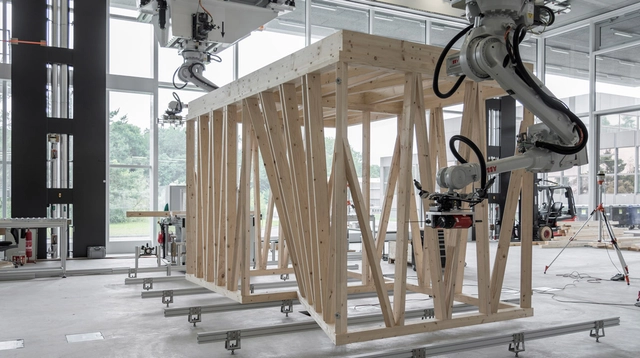
Robotic Collaboration. Image Courtesy of ETH Zurich
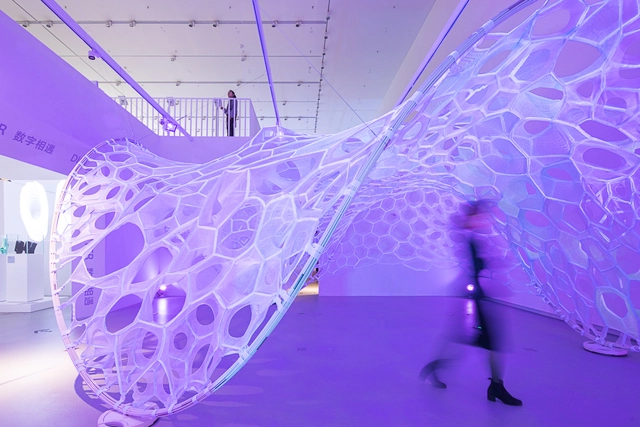
Digital spaces and fabrication technology have become as prominent as ever within the current state of our post-pandemic society, becoming increasingly more accessible and enabling quick and spontaneous acts of iteration and evolution. These technologies have resulted in the ability to mass-produce non-standard, highly differentiated building components within the same facility as their standardized counterpart, transforming how buildings and their respective components are conceived, designed, and represented, and how they are manufactured, assembled, and produced.
The beauty of digital fabrication is its ability to blend aspects of mass and artisanal production to the point where costs nearly disappear. Technology’s capacity to fabricate so simply and almost seamlessly raise the issues for its potential to significantly alter our current perception of architecture, thus producing the question: has the influence of mass production in architecture resulted in a loss of intentional design?
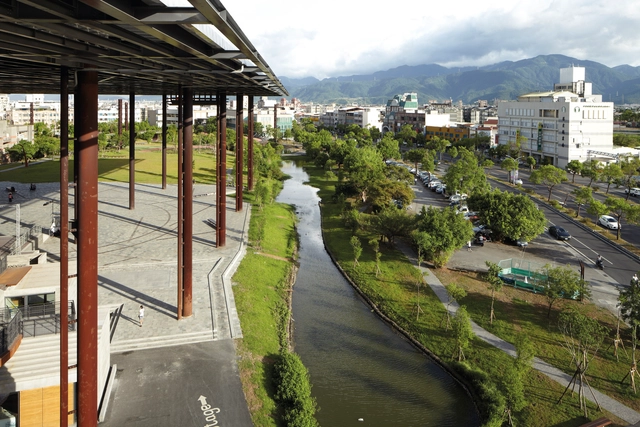
Taiwan proposes that architecture can transform a place, and to represent this idea, the work of Sheng-Yuan Huang and his practice, Fieldoffice, were chosen for the Taiwan Exhibition at La Biennale di Venezia in 2018, entitled Living with Sky, Water, and Mountain: Making Places in Yilan. Sheng-Yuan and Fieldoffice demonstrated that the notion of making places is more than building a physical space, but is equally about establishing a linkage between people, as well as people and their environment.
Alessandro Martinelli explores Sheng-Yuan and his colleagues at Fieldoffice as the avant-garde of a new architectural movement in his book, The City Beyond Architecture, which seeks to produce a new form of collective living through the lens of design and culture, touching on what the design culture of the majority of future urbanization could become. In the following, we will discuss Shen-Yuang's impact on Taiwanese architecture as he spearheaded the call to integrate and imagine public spaces that inhabited the capacity to structure a particular landscape to provide both social spaces and a sense of identity to its occupants.
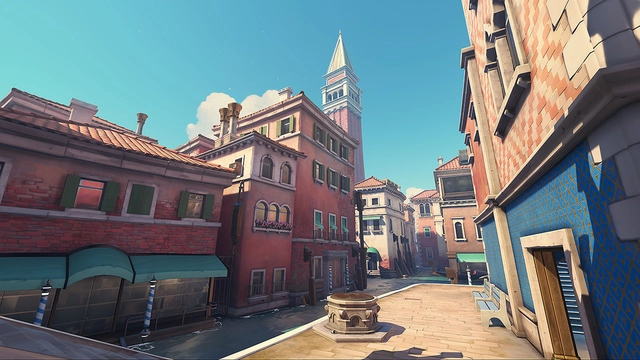
Video games and virtual worlds are jam-packed with imaginative environments to explore, time periods to peruse, and invented architectural styles to thumb through within every reality we choose to engross ourselves into. With recent advancements in technology, greater than ever are we witnessing the latest PC and console generations harboring the ability to produce life-like settings for players to roam around, get lost, and explore all the nuances the seemingly authentic reality holds.






.jpg?1650549341&format=webp&width=640&height=580)
Adam_Mork.jpg?1650549635 "MAD Architects, Harbin Opera House, Harbin, China, 2015. Image © Adam Mørk")


_schranimage.jpg?1650549533 "Studio Zhu Pei, Jingdezhen Imperial Kiln Museum, Jingdezhen, Jiangxi Province, China, 2020. Image © schranimage")
.jpg?1650549341)






.jpg?1648133923 "Burkina Institute of Technology (BIT) / Kéré Architecture. Image Courtesy of Francis Kéré")











.jpg?1645645621&format=webp&width=640&height=580)
..jpg?1644514229&format=webp&width=640&height=580)

._1.jpg?1644514203 "Oasia Hotel Downtown, designed by WOHA and STX Landscape Architects. Image Courtesy of WOHA")

.jpg?1644514319 "Kampung Admiralty, designed by Ramboll Studio Dreiseitl and WOHA. Image Courtesy of WOHA")
..jpg?1644514229)
.jpg?1643423986 "Villa Savoye, Le Corbusier, 1929. Image © Flickr User: End User")
.jpg?1643425181 "Villa Savoye, Le Corbusier, 1929. Image © Flickr User: End User")
_V%C3%ADctor_Pati%C3%B1o_George.jpg?1643424298 "Villa Stein, Le Corbusier, 1927. Image © Víctor Patiño George")