Kuba Snopek

Kuba Snopek is the BA Program Director at the Kharkiv School of Architecture. He is the author of books about architecture of the socialist era: “Belyayevo Forever” and “Day-VII Architecture.”

BROWSE ALL FROM THIS AUTHOR HERE

Hinterland From the Metropolis: Deciphering AMO’s “Countryside, The Future”

Subscriber Access | 

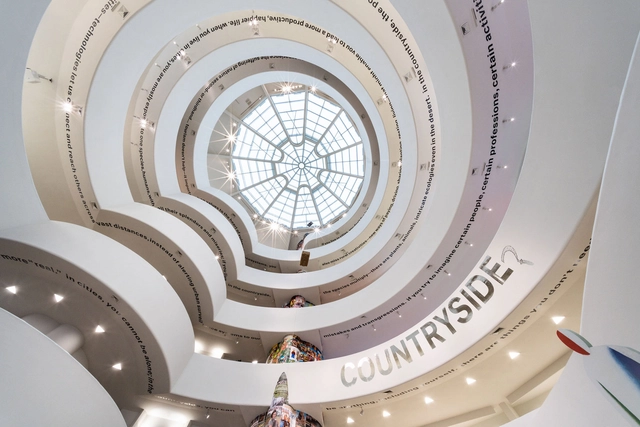
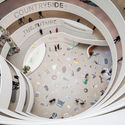
Entering the Guggenheim Museum, visitors find themselves surrounded by a feast of vivid colors and mismatched fonts. Passing the gigantic green tractor at the entrance, they move across the ground floor, littered with stickers, like a lunchbox, or a lid of a laptop. A thick pillar that pierces the internal atrium has become a garish advertising column. A bale of hay, a drone, and some other object (impossible to identify) levitate high overhead. A cardboard cutout of Joseph Stalin on robot wheels moves down the ramp, scaring off visitors. Big reflective letters say: “Countryside, The Future”.

Architect Rem Koolhaas, the founder of the Office of Metropolitan Architecture (OMA) and Samir Bantal, director of OMA’s internal think-tank AMO, created this utterly confusing environment to exhibit years of research on the space beyond the boundaries of the 21st-century city.

Hinterland From the Metropolis: Deciphering AMO’s “Countryside, The Future” - Image 1 of 4Hinterland From the Metropolis: Deciphering AMO’s “Countryside, The Future” - Image 2 of 4Hinterland From the Metropolis: Deciphering AMO’s “Countryside, The Future” - Image 3 of 4Hinterland From the Metropolis: Deciphering AMO’s “Countryside, The Future” - Image 4 of 4Hinterland From the Metropolis: Deciphering AMO’s “Countryside, The Future” - More Images+ 21

Why Moscow's Massacre of Mass Housing Is a Huge Mistake

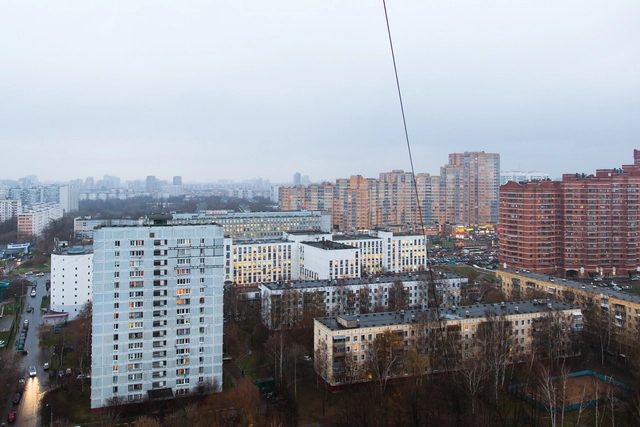
The Moscow government has just launched the biggest demolition program in the city’s history. Its goal is to get rid of 8,000 5-story residential buildings constructed in the Soviet era—it is probably the biggest program of erasure of modernist architectural heritage in world history. The main assumptions of the plan, as well as the press comments following it, show that we have forgotten what modernism was about, and what the real values of this architecture are.

A few years ago I published an essay titled Belyayevo Forever, dedicated to the preservation of generic modernist architecture. I focused on Moscow’s microrayons—vast, state-funded housing estates built in the Soviet era. In the essay, I explained the spatial and cultural values these prefabricated landscapes had. I also speculated about how one would go about preserving architecture that completely lacks uniqueness. The essay ended with a provocative statement: we should put Belyayevo—the most generic of all Soviet estates—on the UNESCO heritage list.

Why Moscow's Massacre of Mass Housing Is a Huge Mistake - Image 1 of 4Why Moscow's Massacre of Mass Housing Is a Huge Mistake - Image 2 of 4Why Moscow's Massacre of Mass Housing Is a Huge Mistake - Image 3 of 4Why Moscow's Massacre of Mass Housing Is a Huge Mistake - Image 4 of 4Why Moscow's Massacre of Mass Housing Is a Huge Mistake - More Images+ 8