Miwa Negoro

Miwa is the Projects Curator at ArchDaily, in charge of projects from practices based in Asia and Oceania.

BROWSE ALL FROM THIS AUTHOR HERE

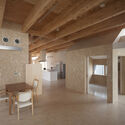
More Architecture for Less: SSdH and the Latent Potential of Existing Buildings

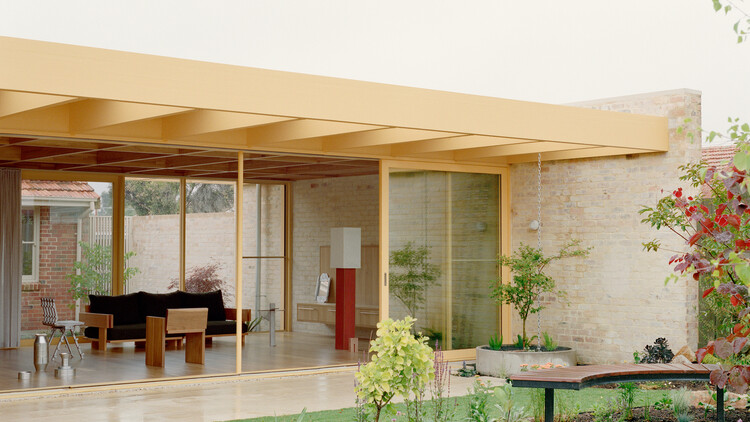
Amid growing recognition of architecture's responsibility toward environmental and planetary ecologies, contemporary practice is increasingly oriented toward working with what already exists—its material, spatial, and historical conditions. Within this shift, architecture and design aesthetics are increasingly about reshaping inherited environments. This approach underpins the work of SSdH, a Melbourne-based architecture practice founded in 2020 by Todd de Hoog, Harrison Smart, and Jean-Marie Spencer. Working across scales of renovation, extension, and adaptive insertion, the studio consistently engages existing buildings as active agents. Winner of the ArchDaily 2025 Next Practices Awards, the Australian firm foregrounds environmental responsibility, material economy, and collaborative processes grounded in site-specific conditions.

More Architecture for Less: SSdH and the Latent Potential of Existing Buildings - Image 1 of 4More Architecture for Less: SSdH and the Latent Potential of Existing Buildings - Image 2 of 4More Architecture for Less: SSdH and the Latent Potential of Existing Buildings - Image 3 of 4More Architecture for Less: SSdH and the Latent Potential of Existing Buildings - Image 4 of 4More Architecture for Less: SSdH and the Latent Potential of Existing Buildings - More Images+ 16

What Textiles and Translucency Bring to Public Space: 5 Lightweight Interventions

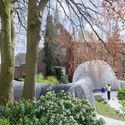
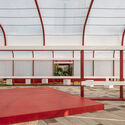
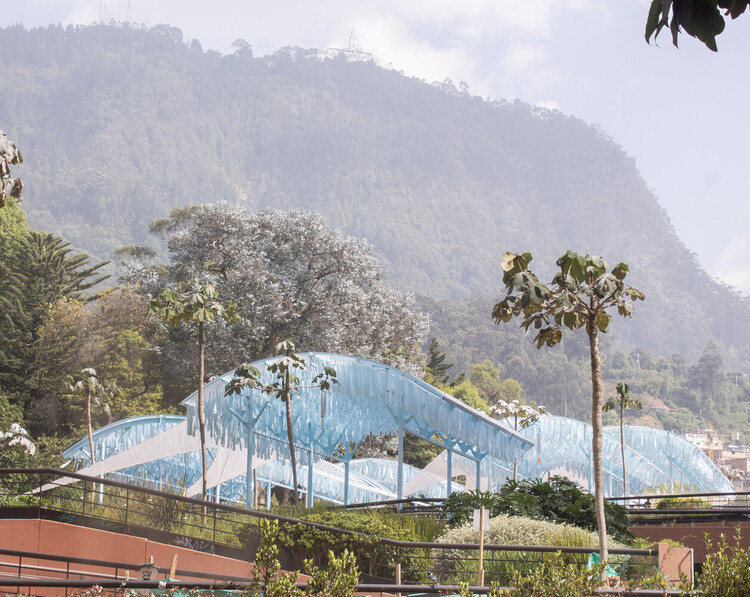
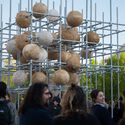
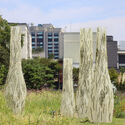
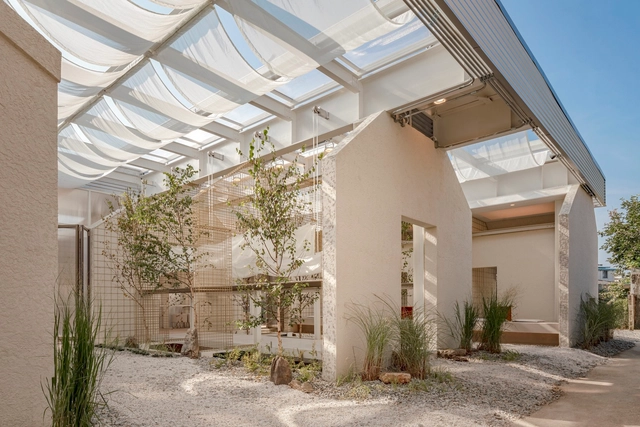
What do lightweight materials bring to public space with an ethical, ecological, and non-extractive design principle? Various textile textures offer a point of entry, being closer to the body than heavy conventional structural materials. Through its flexibility and responsiveness, it enables a form of soft enclosure rather than a fixed boundary in architectural space. Responding to minimal environmental stimuli, the fabric brings continuous movements into space. When layered or assembled, it produces gradations of density, depth, and enclosure, while recent innovative fabrication technologies extend the possibilities of its form and structural durability.

Semi-transparent materials further mediate the conditions of visual permeability and bodily experience of the space. By transmitting and filtering light, they blur clear separations between interior and exterior, solid and void, creating thresholds that are neither fully open nor fully enclosed, but constantly in negotiation. Reinterpreting structure in urban space through lightweight, translucency, and softness opens up alternative modes of spatial perception and bodily engagement.

What Textiles and Translucency Bring to Public Space: 5 Lightweight Interventions - Image 1 of 4What Textiles and Translucency Bring to Public Space: 5 Lightweight Interventions - Image 2 of 4What Textiles and Translucency Bring to Public Space: 5 Lightweight Interventions - Image 3 of 4What Textiles and Translucency Bring to Public Space: 5 Lightweight Interventions - Image 4 of 4What Textiles and Translucency Bring to Public Space: 5 Lightweight Interventions - More Images+ 15

Designing with Living Matter: 5 Installations Using Bio-Based Materials and Digital Fabrication

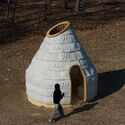
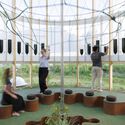
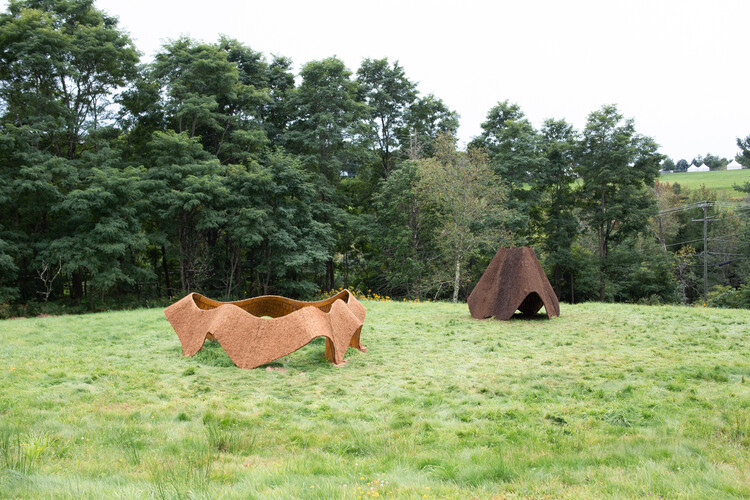
At a time of ecological emergency, architecture cannot be separated from the extractive systems on which it depends. As the technosphere expands, linking material flows, energy consumption, and digital infrastructures, design becomes increasingly entangled in these processes. How can design practice intervene in anthropocentric systems and transform the architectural process and aesthetics through an investigation of material intelligence? More broadly, how does architecture engage with the agency and intelligence of non-human entities to rebalance the environmental burden?

Designing with Living Matter: 5 Installations Using Bio-Based Materials and Digital Fabrication - Image 1 of 4Designing with Living Matter: 5 Installations Using Bio-Based Materials and Digital Fabrication - Image 2 of 4Designing with Living Matter: 5 Installations Using Bio-Based Materials and Digital Fabrication - Image 3 of 4Designing with Living Matter: 5 Installations Using Bio-Based Materials and Digital Fabrication - Image 4 of 4Designing with Living Matter: 5 Installations Using Bio-Based Materials and Digital Fabrication - More Images+ 11

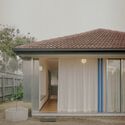
Renovation and Continuity in Japanese Architecture: The Work of 1110 Office for Architecture

In a shifting societal and environmental landscape, how can architectural design respond to transformation while meaningfully engaging with what endures? 1110 Office for Architecture, based in Osaka, Japan, approaches this question through a body of work defined by careful residential renovations and precise spatial interventions.

Named a winner of the ArchDaily 2025 Next Practices Awards, the practice represents an emerging voice in redefining architecture's role within conditions of change.

Renovation and Continuity in Japanese Architecture: The Work of 1110 Office for Architecture - Image 1 of 4Renovation and Continuity in Japanese Architecture: The Work of 1110 Office for Architecture - Image 2 of 4Renovation and Continuity in Japanese Architecture: The Work of 1110 Office for Architecture - Image 3 of 4Renovation and Continuity in Japanese Architecture: The Work of 1110 Office for Architecture - Image 4 of 4Renovation and Continuity in Japanese Architecture: The Work of 1110 Office for Architecture - More Images+ 17

Shaping Architectural Continuity: 25 Revitalization Projects Across Historic, Industrial, and Natural Sites

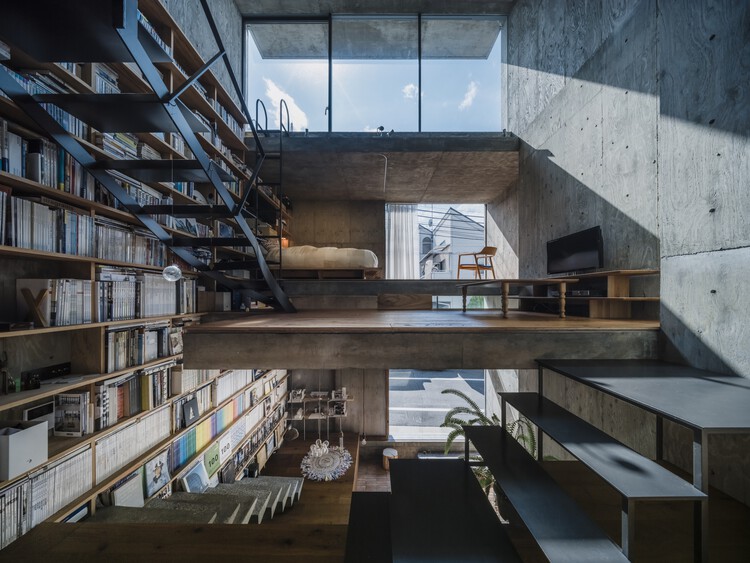
Heritage sites constitute complex spatial archives in which architecture, history, and collective memory converge. They encompass a wide spectrum of contexts—from archaeological remains, ancient and historic townscapes, UNESCO-listed landscapes, to early modern civic structures and industrial infrastructures. Yet these environments confront challenges: climate change, urban transformation, disaster, shifting social needs, and the gradual erosion of material fabric. Revitalization and restoration projects respond to these conditions by positioning architectural and spatial practice as an active mediator between preservation and the contemporary topologies.

In current practice, conservation is understood as a creative process of adaptation and reinterpretation that serves both communities and inhabitants. At the same time, monumental architecture continues to define the identity and landscape of a place for wider audiences and future generations. Architects and planners are called upon to negotiate sensitive historic contexts while introducing new programs, techniques, and spatial experiences. They exemplify diverse design approaches, including precise structural interventions, climate-responsive strategies, and meticulous material restoration, alongside the thoughtful insertion of new architectural elements. Equally important is their engagement with vernacular knowledge and materiality, which preserves the locality and cultural specificity of each site.
Shaping Architectural Continuity: 25 Revitalization Projects Across Historic, Industrial, and Natural Sites - More Images+ 21

Architecture as a Living Medium: Get to Know the Works of IGArchitects

Founded in 2020 by Masato Igarashi, IGArchitects is an architectural practice based in Tokyo and Saitama, Japan. The studio, one of the winners of the ArchDaily 2025 Next Practices Awards, explores enduring architecture through a careful yet assertive treatment of structure, scale, and materiality. Prior to establishing his own practice, Igarashi worked at the large-scale firm Shimizu Sekkei as well as the Suppose Design Office, gaining experience across projects ranging from major developments to smaller, concept-driven works. This breadth of experience continues to inform IGArchitects' current focus on residential and commercial architecture across Japan.

Architecture as a Living Medium: Get to Know the Works of IGArchitects - Image 1 of 4Architecture as a Living Medium: Get to Know the Works of IGArchitects - Image 2 of 4Architecture as a Living Medium: Get to Know the Works of IGArchitects - Image 3 of 4Architecture as a Living Medium: Get to Know the Works of IGArchitects - Image 4 of 4Architecture as a Living Medium: Get to Know the Works of IGArchitects - More Images+ 18

Design Ethos of Subtraction and Addition: 10 Adaptive Reuse Projects for Commercial and Social Spaces in Asia

While adaptive reuse has been increasingly acknowledged as a vital architectural strategy worldwide, its discourse and implementation in Asia are still expanding—driven by growing ecological awareness and a shifting understanding of architectural knowledge. Rather than accelerating a developmentalist model centered on demolition and new construction, architects today are confronted with a different approach to the built environment: treating the existing structure as a resource—an archive of materials, spatial organizations, and informal histories.

Adaptive reuse is often associated with the preservation of historic buildings and culturally significant heritage. Yet the vast field of seemingly 'less-valued' structures—abandoned houses, standard yet old dwellings, non-conforming office buildings, and overlooked urban voids—has become ground for experimentation. These sites challenge architects and designers to reconsider prevailing standards of efficiency and market-driven development, and to imagine spatial and ecological practices that avoid the continual loss of embodied material and cultural knowledge inherent in constant rebuilding.

Design Ethos of Subtraction and Addition: 10 Adaptive Reuse Projects for Commercial and Social Spaces in Asia - More Images+ 29

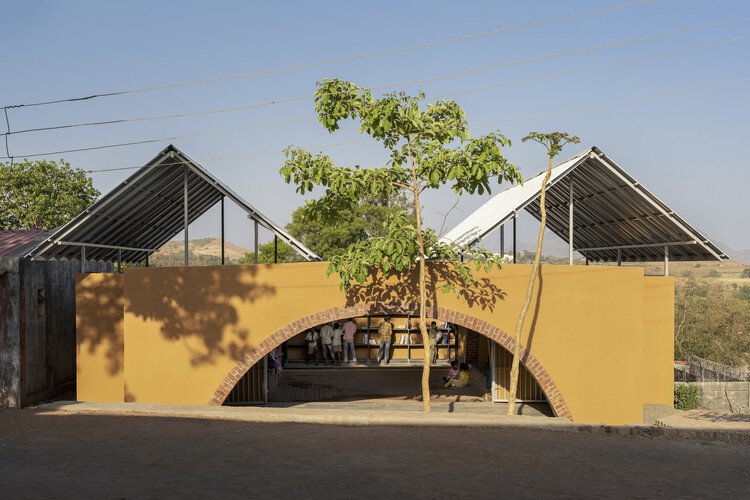
Time-Space to Read, Gather, and Care: 7 Community Libraries in Remote and Peripheral Settings

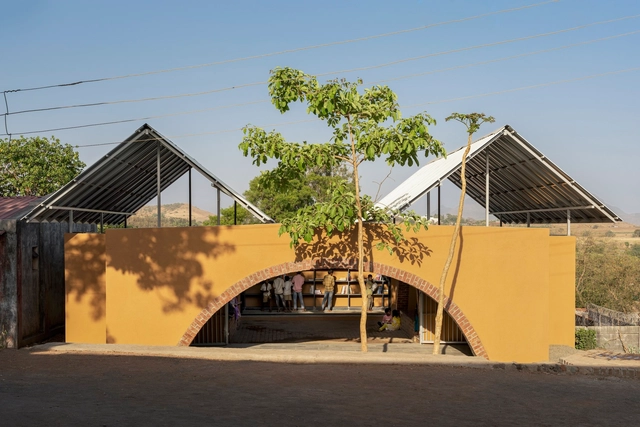
In many parts of the world, remoteness is not only defined by distance. It may describe a mountain settlement far from infrastructure or an urban and suburban neighborhood on the margins of visibility and opportunity. Across these diverse contexts, the library has been one of the most vital typologies—a space where architecture embodies the modes of accessibility, inclusivity, and community care.

Time-Space to Read, Gather, and Care: 7 Community Libraries in Remote and Peripheral Settings - More Images+ 18

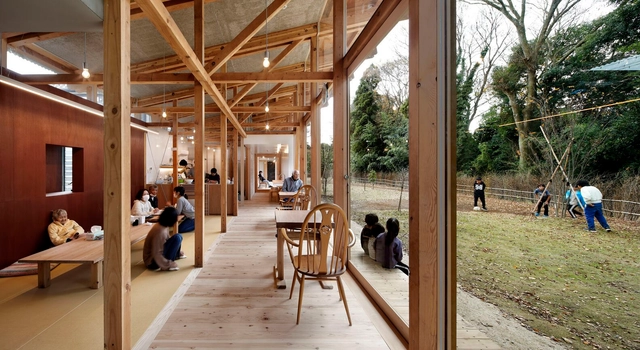
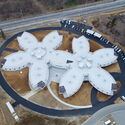
How Architecture Brings Social Interaction in Care: 9 Elderly Care Facilities in Japan

Japan, one of the places known for its high longevity, is critically facing a demographic shift. As the aging population continues to grow, so too does the demand for thoughtful, well-designed spaces that support elderly care. Traditionally, caregiving was woven into the fabric of family life, often falling on the shoulders of female members in a patriarchal society. However, as a traditional big family structure largely dissolves and the nuclear family becomes the norm, elder care increasingly relies on social welfare services and specialized facilities.

This situation presents a profound, growing architectural challenge: How can care environments not only accommodate medical and nursing needs but also foster individual dignity, comfort, and human and nonhuman interactions? The ideal design of elderly care facilities balances clinical functionality with the nuances of daily life—for the elderly themselves, for those experiencing challenges and difficulties such as dementia, for their families, and for the caregivers who support them.

How Architecture Brings Social Interaction in Care: 9 Elderly Care Facilities in Japan - Image 1 of 4How Architecture Brings Social Interaction in Care: 9 Elderly Care Facilities in Japan - Image 2 of 4How Architecture Brings Social Interaction in Care: 9 Elderly Care Facilities in Japan - Image 3 of 4How Architecture Brings Social Interaction in Care: 9 Elderly Care Facilities in Japan - Image 4 of 4How Architecture Brings Social Interaction in Care: 9 Elderly Care Facilities in Japan - More Images+ 17

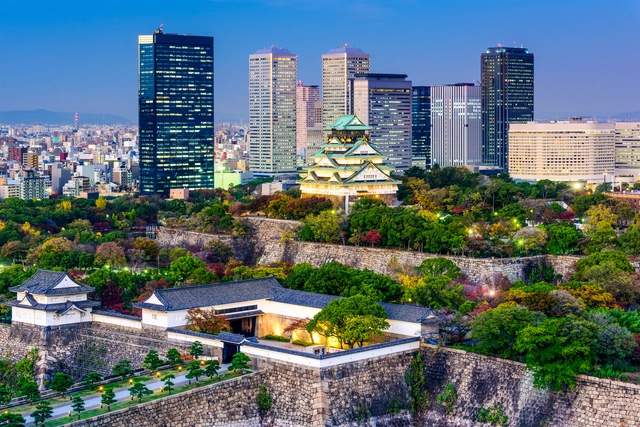
Osaka: Architectural Ambiguity Within the Urban Fabric

Subscriber Access | 

"If buildings could speak," as a filmmaker once mused, then Osaka's cityscape might sound loud, vibrant, and slightly rough around the edges—yet somehow neatly composed. Much like the city itself, the architectural landscape reflects Osaka's distinctive character: layered, dynamic, and full of messy vibrancy. With a population of 2.7 million and growing, this dense urban center continues to evolve in its idiosyncratic way.