Rebecca Ildikó Leete

ArchDaily Intern & BA Hons Architectural Studies graduate from the University of Nottingham.

BROWSE ALL FROM THIS AUTHOR HERE

Lina Ghotmeh on Stone Garden: ''It Has to Resist any Earthquake, and That’s Why it also Resisted the Explosion in the Port''

‘’We’re in a seismic area. Beirut has been buried seven times, so it has to resist any earthquake, and that’s why it also resisted the explosion in the port,’’ expresses Lina Ghotmeh in conversation with Louisiana Channel, in regards to the Stone Garden. A building constructed with resilience in mind, in a city that has been buried within rubble and rebuilt multiple times.

Lina Ghotmeh was interviewed by Marc-Christoph Wagner at her studio in Paris in November 2021. Renowned for her Humanist approach to Architecture, the Stone Garden offers a very personal relationship as the first building to be constructed in Ghotmeh’s hometown of Beirut. Positioned on the edge of the city center, it is very much a form of vernacular architecture echoing the lives of the people who reside here.

Lina Ghotmeh on Stone Garden: ''It Has to Resist any Earthquake, and That’s Why it also Resisted the Explosion in the Port'' - Image 1 of 4Lina Ghotmeh on Stone Garden: ''It Has to Resist any Earthquake, and That’s Why it also Resisted the Explosion in the Port'' - Image 2 of 4Lina Ghotmeh on Stone Garden: ''It Has to Resist any Earthquake, and That’s Why it also Resisted the Explosion in the Port'' - Image 3 of 4Lina Ghotmeh on Stone Garden: ''It Has to Resist any Earthquake, and That’s Why it also Resisted the Explosion in the Port'' - Image 4 of 4Lina Ghotmeh on Stone Garden: ''It Has to Resist any Earthquake, and That’s Why it also Resisted the Explosion in the Port'' - More Images+ 1

Architects that Transitioned into the World of Fashion Design

The term ‘Architect’ can be open to interpretation much like the reverence of an Artist. However, the universally recognized definition of the role is regarded as one who designs and plans buildings, a key member in terms of building construction. Architecture as a profession presents itself as a very diverse occupation. As an Art and Science in every sense, it offers insight into a vast range of subjects that can be applied to a range of different ventures.

Often Architecture students are offered with such a rigid path, constrained with these short-sighted ideas that an Architect must follow a particular direction to flourish in the field. When in fact it is interesting to note the vast opportunities that arise when given opportunity to diversify. Here are the Architects that have branched out and become successful fashion designers …

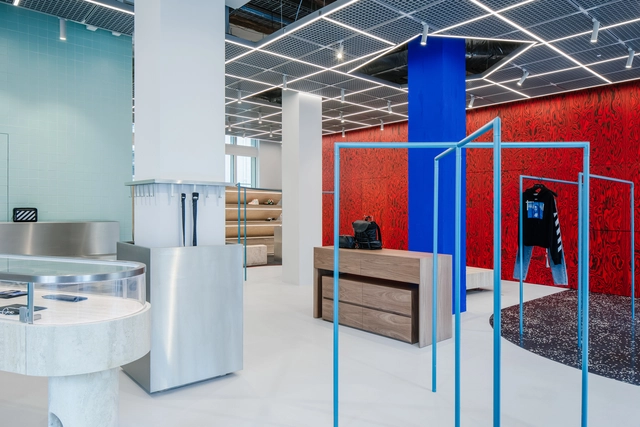
Architects that Transitioned into the World of Fashion Design  - Image 1 of 4Architects that Transitioned into the World of Fashion Design  - Image 2 of 4Architects that Transitioned into the World of Fashion Design  - Image 3 of 4Architects that Transitioned into the World of Fashion Design  - Image 4 of 4Architects that Transitioned into the World of Fashion Design  - More Images+ 6

''A Building Should Address our Own Fragility'' : In Conversation with Dorte Mandrup

''A Building that Should Address our own Fragility'' says Dorte Mandrup in conversation with Louisiana Channel, in regards to her recent work, the Ilulissat Icefjord Center, in Greenland. An exhibition house in its own right, this powerful filmography explores the surrounding environment, offering insight into the changes seen on the ice and the harmonious relationship between the structure itself and the glacial landscape.

Dorte Mandrup was interviewed by Marc-Christopher Wagner in her studio in the Spring of 2021. Regarded as Humanist, Mandrup has been heavily influenced by medicine, sculpture and ceramics, creating engaging and evocative architectural form. As part of her philanthropic work the center is set to tell a narrative of evolution, human history and the secrets of the ice.

''A Building Should Address our Own Fragility'' : In Conversation with Dorte Mandrup - More Images

''The Delight I Get Out of Doing Buildings is to Say: It Can be Built'' : In Conversation with Peter Cook

‘’The delight I get out of doing buildings is to say: Screw you, it can be built’’ says Architect Peter Cook in conversation with Louisiana Channel, where he discusses his determination to communicate ideas through vivid Architectural drawings and the skepticism he has faced in regards to his ambitious design proposals and their outlandish appearance.

Peter Cook was interviewed at his studio in January 2022 prior to his exhibition ‘City Landscapes’ at the Louisiana Museum of Modern Art, Denmark. As the first artwork displayed that has been produced by an Architect, it explores his reverence for hand-drawing as an Architect's primary medium. The work depicts innovative new ways of exploring the city and our physical space in striking and evocative texture and color.

''The Delight I Get Out of Doing Buildings is to Say: It Can be Built'' : In Conversation with Peter Cook  - Image 1 of 4''The Delight I Get Out of Doing Buildings is to Say: It Can be Built'' : In Conversation with Peter Cook  - Image 2 of 4''The Delight I Get Out of Doing Buildings is to Say: It Can be Built'' : In Conversation with Peter Cook  - Image 3 of 4''The Delight I Get Out of Doing Buildings is to Say: It Can be Built'' : In Conversation with Peter Cook  - Image 4 of 4''The Delight I Get Out of Doing Buildings is to Say: It Can be Built'' : In Conversation with Peter Cook  - More Images

What is a Digital Twin?

Subscriber Access | 

The emergence of the Digital Twin phenomenon has heralded a great change in terms of urban planning. It essentially presents the city as dynamic, in virtual form. Ensuring every element from the historic fabric, new construction, and public transit is accounted for in one three-dimensional model. Not only does it present key elements in terms of the landscape, but it also encompasses often overlooked conditions such as the presence of light throughout the day, shadows, and the presence of vegetation and trees. All of which contribute to a better preliminary process of site analysis.

Architectural Salvage: Cultural Hotspots using Adaptive Reuse

Subscriber Access | 

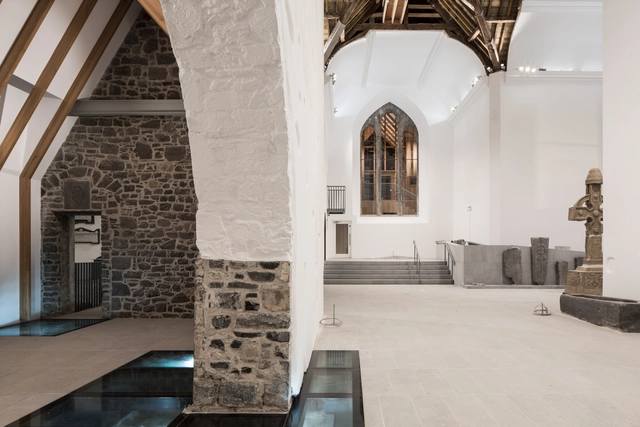
The dawn of the Anthropocene has thrown the idea of adaptive reuse into the limelight: effectively the pinnacle of urban regeneration and revitalization. It utilizes the presence of existing buildings with historic and cultural value and re-purposes them to be functional. Essentially a form of architectural salvage; a sustainable and viable means of rebuilding.

Recent events such as the pandemic has highlighted inequalities in our cityscape, the inadequate segments in a state of disuse and disrepair. Adaptive reuse can replenish these areas and create new cultural hotspots, encouraging activity and creating vibrant and healthy mixed-use environments.

Below is a diverse selection of cultural hotspots using Adaptive Reuse

Architectural Salvage: Cultural Hotspots using Adaptive Reuse  - More Images+ 10