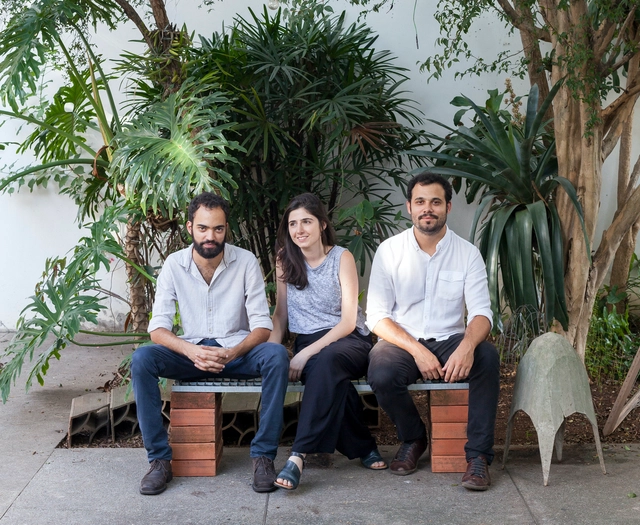
Romullo Baratto is an architect with a PhD from FAUUSP and Managing Editor of ArchDaily. He previously coordinated the editorial team of the 11th São Paulo Architecture Biennial and served as Managing Editor of ArchDaily Brasil, where he led the platform to win the FNA Award—the first time the honor was granted to a media outlet. He collaborated on the editing of the book "Concrete Jungle", published by gestalten, and has curated architecture exhibitions in Brazil, Chile, Denmark, and Italy, as well as delivered lectures and moderated debates in Spain, the United States, and Portugal. His doctoral thesis investigates the urban landscapes of São Paulo through cinema. His work spans academic research and editorial practice, communicating architecture through texts, interviews, lectures, curatorship, and photography. Follow him on Instagram @romullobf.
If you haven't gotten a chance to visit Brasília, Joana França's photographic projects offer a comprehensive interpretation of the capital of South America's most populous country. França has dedicated a significant part of her career as an architecture photographer to the pursuit of amassing an impressive archive of images of the city planned by Lúcio Costa and Oscar Niemeyer.
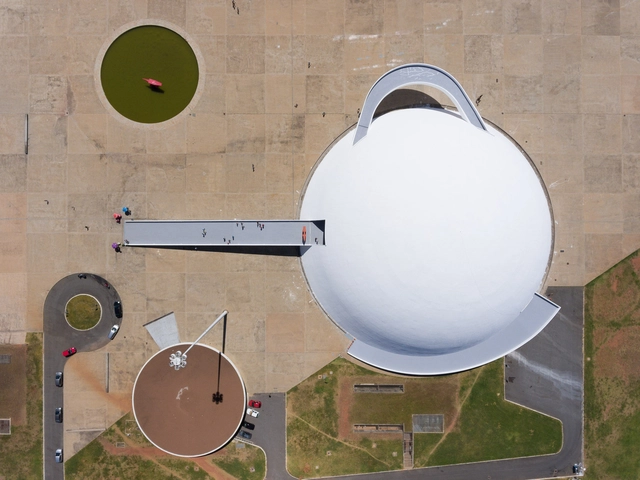
We recently published an exceptional selection França's aerial photographs of Brasília divided by scale - residential, monumental, gregarious and bucolic. These overhead views solidify what, in theory, is already evident: the city lacks human scale, or the human scale of Brasília is just vast and (perhaps) not very human at all.
"What characterizes and gives meaning to Brasilia is a game of three scales... the residential or everyday scale... the so-called monumental scale, in which man acquires a collective dimension; the urbanistic expression of a new concept of nobility... Finally the gregarious scale, in which dimensions and space are deliberately reduced and concentrated in order to create a climate conducive to grouping... We can also add another fourth scale, the bucolic scale of open areas intended for lakeside retreats or weekends in the countryside." - Lucio Costa in an interview with Jornal do Brasil, November 8, 1961.
Photographer Joana França shared with us an impressive series of aerial photographs of the national capital of Brazil, Brasilia. The photoset is divided into four sub-series each presenting a scale: residential, monumental, gregarious and bucolic.
It is a great privilege to amplify the voice of architects and other built environment professionals. It is also an enormous challenge as it requires a lot of investigation and time from our content team. However, the effort is gratifying. It puts us in contact with some of the most prominent talents in our field who have been discussing subjects such as cities, metaverse, community, environment, democracy, sustainability, building technology and interiors, to mention just a few.
Videos
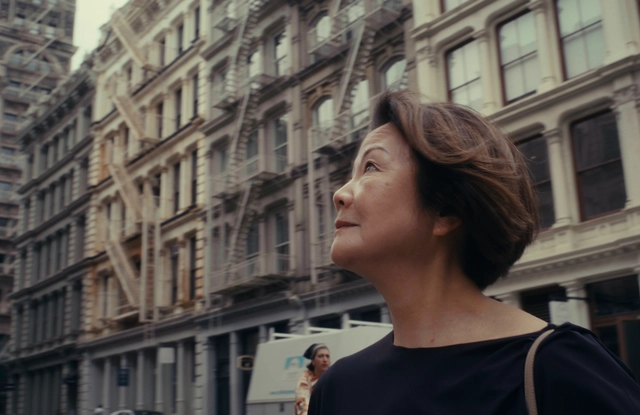
Screenshot from the movie "Women in Architecture". Image credit: Boris Noir
In architecture, context is what concerns human existence in a given place. Climate, culture, geography, and pre-existences, to name just a few. For Toshiko Mori, a Japanese architect based in the United States, context is everything that arouses curiosity about the people we design for. In almost four decades as the head of her office in New York, Mori has had the opportunity to exercise her interest in design practice and academia, managing to build her buildings in contexts as diverse as China, U.S., and Senegal.
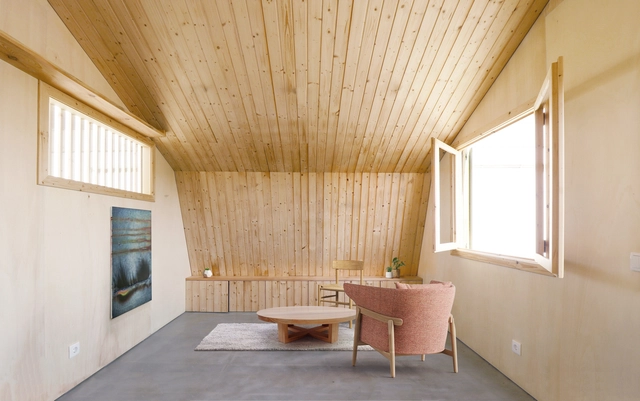
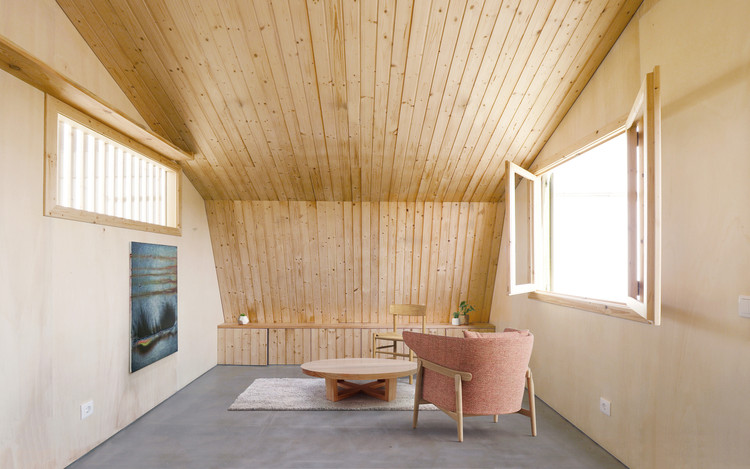
It is becoming a priority for architects to optimize projects that require increasingly smaller spaces, especially when building in urban areas where land value is often the most critical factor. This happens in countries like Portugal, for example, where urban plots are scarce and the properties available for remodeling are usually very small.
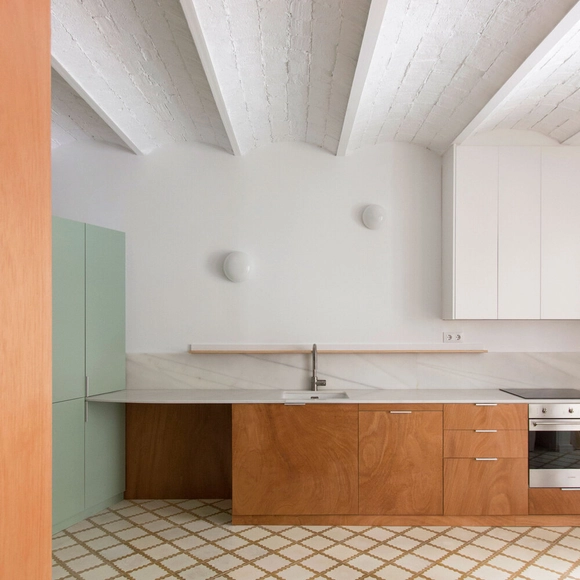
Working on a small scale offers somewhat playful flexibility. From adaptable interiors to urban installations and treehouses, one must use the imagination to solve the issues of limited space or budget. Check out the following 15 projects in Portugal —from stores to small pavilions— that show that spatial limitations do not diminish the quality of architecture.
The Lisbon Architecture Triennale announced as the winner of the fourth edition of the Début Award the São Paulo office Vão, formed by Anna Juni, Enk te Winkel and Gustavo Delonero. The office is known for a transdisciplinary practice that seeks to dilute the boundaries of the professional field in order to enhance architectural reflection. In previous editions, the award recognized the work of Bonell+Dòriga (Spain, 2019), Umwelt (Chile, 2016) and Jimenez Lai, from Bureau Spectacular (USA, 2013).
Image: achassignon via VisualHunt / CC BY-SA. Assembly with image of John Cunniff via Visual Hunt / CC BY
Jean-Luc Godard, through his films, talks about architecture almost as easily as he talks about cinema itself. In honor of the nouvelle vague icon, who passed away today at the age of 91, we revisit How Architecture Speaks Through Cinema.
There are several ways of making films. Like Jean Renoir and Robert Bresson, who make music. Like Sergei Eisenstein, who paints. Like Stroheim, who wrote sound novels in silent days. Like Alain Resnais, who sculpts. And like Socrates, Rossellini I mean, who creates philosophy. The cinema, in other words, can be everything at once, both judge and litigant. — Jean-Luc Godard [1]
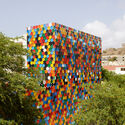
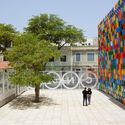
There are two ways to get to Cape Verde, by sea or sky. Either way, we are surprised by the landscape of immense rocky masses sprouting from the Atlantic’s navel before setting foot on land. Unpopulated until the middle of the 15th century, the volcanic archipelago is made up of ten islands, nine of which are currently inhabited, with unique characteristics in each one of them — some more touristy, like Sal, others more rural, like Santo Antão — and a version of Kriolu Kabuverdianu, which is not the official language (Portuguese occupies this place), but which is by far the most widely spoken.
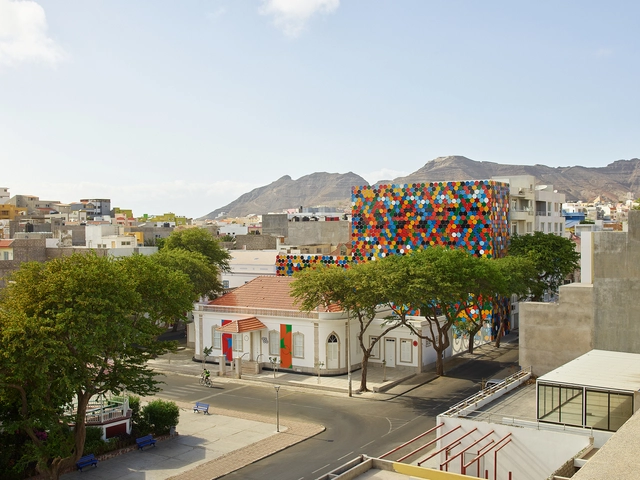
São Vicente is the second most populous island in the country and makes up the northern insular group called Sotavento, along with Santo Antão, Santa Luzia, São Nicolau, Sal and Boa Vista. Its largest city, Mindelo, has a port vocation and has historically been the point of departure and arrival for people and goods. Marked by traffic, the city is a place of passage and intense cultural exchanges. It is also home to the first museum built in the country, the National Centre for Art, Crafts and Design — CNAD.
The Lisbon Architecture Triennale has released the list of finalists for the Millennium bcp Début Award. This year, ten offices from four continents reach the final stage of this award, which celebrates and encourages the creative, intellectual and professional growth of emerging talents at a crucial and transformative stage in their careers.
The list of finalists includes Atelier Tiago Antero – ATA (Portugal), Atelier Tropical – Valerie Mavoungou (Congo), Ben-Avid (Argentina), messina | rivas (Brazil), Nana Zaalishvili (Georgia), Rohan Chavan (India), Savinova Valeria (Russia), Spatial Anatomy (Singapore), vão (Brazil) and Vertebral (Mexico). The winner of the current edition will join a select list of winners that includes Bonell+Dòriga, from Spain (2019), Umwelt, from Chile (2016) and the American Jimenez Lai, from Bureau Spectacular (2013).
Architect, researcher and teacher Marina Tabassum was elected winner of the Lisbon Triennale Millennium bcp Lifetime Achievement Award. Marina is the first person from the global south to receive the honor, joining Denise Scott-Brown from the USA (2019 winner), the French duo Lacaton & Vassal (2016), Kenneth Frampton from the UK (2013), Álvaro Siz from Portugal (2010) and Vittorio Gregotti from Italy (2007).
Few other materials can convey architectural atmosphere as well as the glass. A to-go choice for the modernists, due to its transparent nature, glass still holds a solid place within the material palette for architects around the globe. Such unique element is the subject of Archiving Flux / Stasis, a photographic exhibition by Erieta Attali hosted by the Greek Ministry of Culture in Casa Romana, Kos Island, Greece, set to open its doors in July 21st.
Agriculture and the food industry seem to have little in common with architecture, but it is precisely the overlap of these three areas that interests Ghanaian-Filipino scientist and architect Mae-ling Lokko, founder of Willow Technologies based in Accra, Ghana. Working with recycling agricultural waste and biopolymer materials, Lokko searches for ways to transform the so-called agrowaste into building materials.
For varied reasons, architects have been driven away from professional practice. Sometimes, however, they continue to design buildings in other media and support. Vinicius Libardoni is an Italian-Brazilian architect and artist who migrated from Autocad to metal engraving, passing through woodcut, and has been building imaginary architectures ever since.
Manhattan's dense landscape has just received another skyscraper, this time designed by a Portuguese Pritzker Prize Winner. At 137 meters high and with 35 floors, 611 West 56th Street, Álvaro Siza's first building in New York, was just completed, on the outside. The luxury apartment complex, which is also Siza's first work in the United States, has several facilities for its residents, such as a swimming pool, a spa, a gym, a playground for children and rooms for events.
Located amidst the vegetation, almost invisible to those who see it from the street, a jewel of modern Brazilian architecture is hidden in the São Paulo neighborhood of Jardim América. Casa Zalszupin, designed in 1960 by the Polish architect based in Brazil, Jorge Zalszupin, combines traces of local modernism with influences that the architect brought with him from Europe, notably Scandinavian architecture. In a recent photo series, Paul Clemence sought to capture through this house, "the architect's and designer's essence".
Videos
Background photograph courtesy of Charlie Hui, Viswerk. 2020
Led by architectural designers Khensani de Klerk and Solange Mbanefo, Matri-Archi is a collective based between Switzerland and South Africa that aims to bring African women together for the development of spatial education in African cities. Through design practice, writing, podcasts, and other initiatives, Matri-Archi — one of ArchDaily's Best New Practices of 2021 — focuses on the recognition and empowerment of women in the spatial field and architectural industry.
ArchDaily had the opportunity to talk to the co-directors of the collective on hegemonic space, informal architecture, technology, local idiosyncrasies, and the future of African and global cities. Read the full interview below.
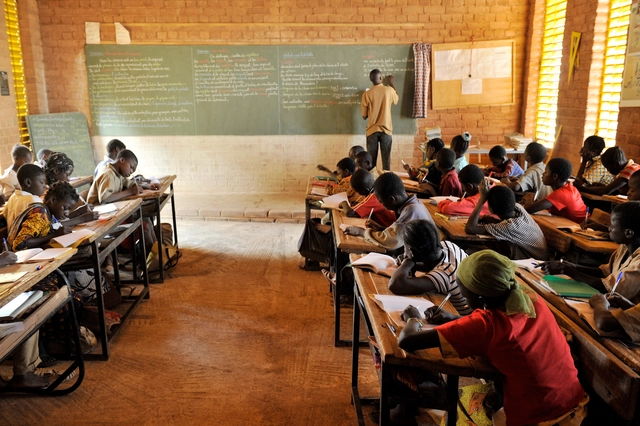
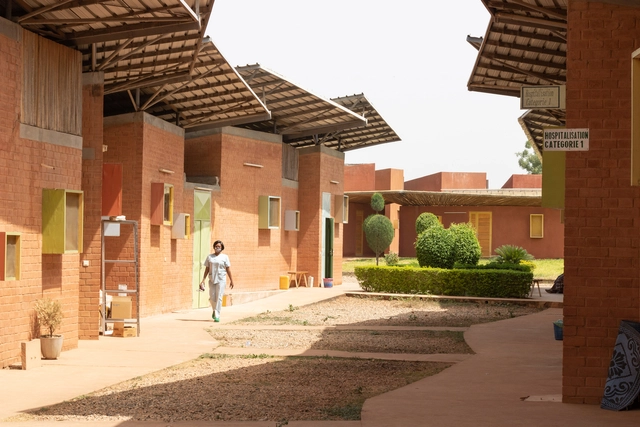
African architecture has received deserved international attention in the last decade and one of the main responsible for this is, undoubtedly, Diébédo Francis Kéré, 2022 Pritzker Prize Winner. Born in Gando, Burkina Faso, Kéré graduated in architecture at the Technische Universität Berlin, in Germany. Today, he maintains branches of his firm, Kéré Architecture, in both countries, through which he seeks to develop works in the "intersection of utopia and pragmatism", exploring the border between Western architecture and local practice.
Known for involving community in the construction process of its buildings, Kéré and his office have developed works that go beyond the conventional limits of architecture and touch on themes such as local economy, migration, culture and equity. We had the pleasure and privilege of talking with the architect about some of his projects and his broader vision on architecture. Read the full interview below.
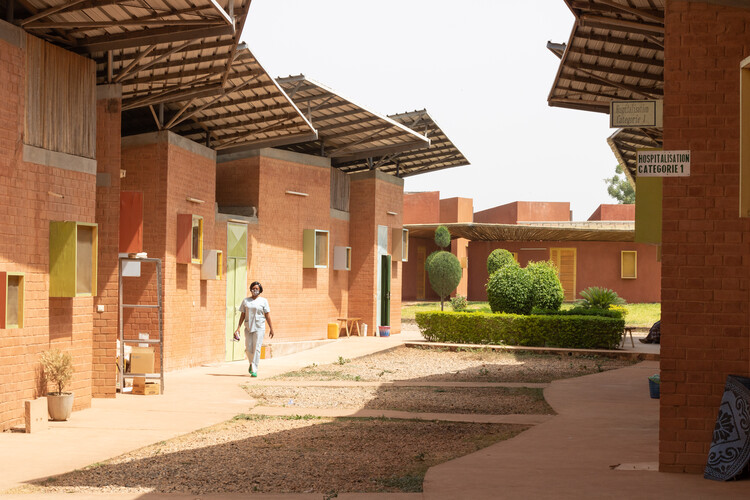
Surgical Clinic and Health Center. Cortesia de Francis Kéré
"I just wanted my community to be a part of this process," Diébédo Francis Kéré said in an ArchDaily interview published last year. It's hard to think of another phrase that so well sums up the modesty and impact caused by the newest winner of the Pritzker Prize of Architecture, whose work gained notoriety precisely for involving the inhabitants of his village in the construction of works that combine ethical commitment, environmental efficiency, and aesthetic quality.