Stephen Zacks

BROWSE ALL FROM THIS AUTHOR HERE

Steven Holl’s Architectural Archive Preserves His Firm’s Designs and the Landscape

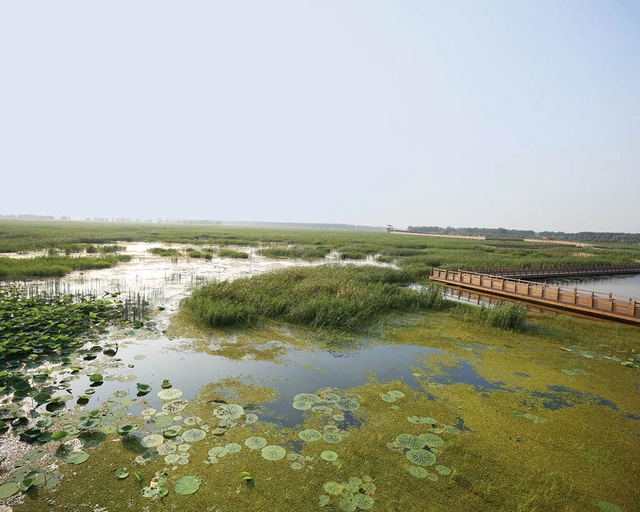
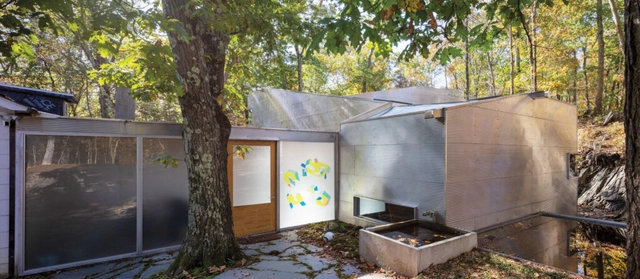
Steven Holl can often be found reading poetry and painting watercolors in a tiny cabin overlooking lotus flowers on the edge of a lake in Rhinebeck, New York. The cabin sits on a 28-acre reserve that Holl purchased in 2014 that now hosts Holl’s full-time office, and ‘T’ Space, a nonprofit arts organization offering creative exhibitions, environmental installations, and architectural residencies. Wrapping around several large trees and linking through a passageway to another existing 1959 cabin, the Steven Myron Holl Foundation’s Architectural Archive and Research Library, built in 2019, is the latest building to be carefully situated in the lush landscape.

Steven Holl’s Architectural Archive Preserves His Firm’s Designs and the Landscape - Image 1 of 4Steven Holl’s Architectural Archive Preserves His Firm’s Designs and the Landscape - Image 2 of 4Steven Holl’s Architectural Archive Preserves His Firm’s Designs and the Landscape - Image 3 of 4Steven Holl’s Architectural Archive Preserves His Firm’s Designs and the Landscape - Image 4 of 4Steven Holl’s Architectural Archive Preserves His Firm’s Designs and the Landscape - More Images+ 6

Long-Term Plans: To Build for Resilience, We’ll Need to Design With—Not Against—Nature

Moving away from its early exclusive focus on natural disasters, resilient architecture and design tackles the much tougher challenge of helping ecosystems regenerate.

Thirty years ago, as a high school student at the Cranbrook boarding school in suburban Detroit, I wrote a research-based investigative report on the environmental crisis for the student newspaper. I had been encouraged to do so by a faculty adviser, David Watson, who lived a double life as a radical environmentalist writing under the pseudonym George Bradford for the anarchist tabloid Fifth Estate. His diatribe How Deep Is Deep Ecology? questioned a recurring bit of cant from the radical environmental movement: Leaders of groups like Earth First! frequently disparaged the value of human life in favor of protecting nature.

Phil Freelon: Architect for Social Equity

Phil Freelon: Architect for Social Equity - More Images+ 12

This article was originally published on Metropolismag.com.

The renowned founder of his eponymous studio—which joined Perkins and Will in 2014—passed away July 9th, leaving a major legacy of built works, community engagement, and advocacy within architecture.

In 2016, as the three-tiered, bronze-skinned, and filigreed National Museum of African American History and Culture (NMAAHC) opened on the National Mall—a signature building of the Obama era—one of its main architects, Durham, North Carolina–based Phil Freelon, was diagnosed with the neurodegenerative disease ALS. Earlier this week, Freelon died of complications from the disease. He left behind a four-decade legacy of considered, attentive design for communities typically ignored—or worse, harmed—by processes forming the built environment.