Valentina Díaz

BROWSE ALL FROM THIS AUTHOR HERE

Reading the Territory: The Landscapes of Estudio Ome

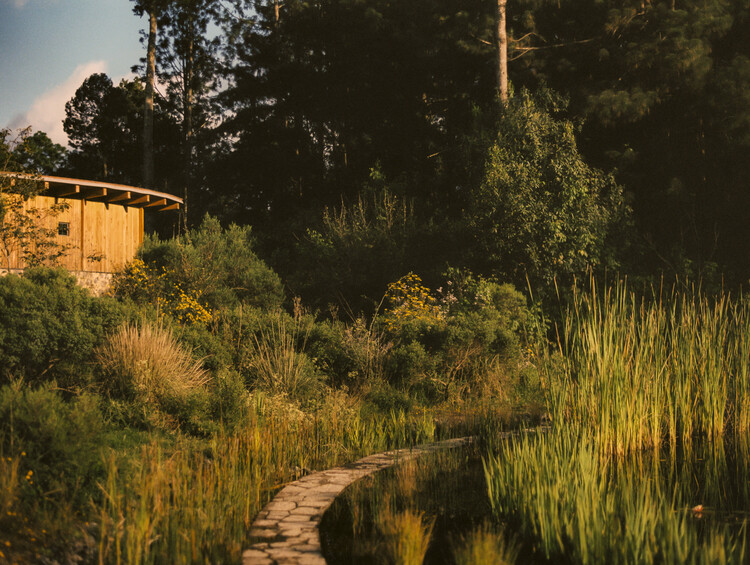
Based in Mexico City, Estudio Ome, founded by Susana Rojas Saviñón and Hortense Blanchard, is an architectural and landscape practice working across forests, volcanic terrains, urban fragments, and former industrial sites. Winner of the ArchDaily 2025 Next Practices Awards, the studio develops projects through sustained observation of ecological and territorial conditions, where design decisions arise directly from the behavior of soil, water, vegetation, and ground.

Each project begins with repeated encounters. The terrain is first approached through walking and prolonged observation, letting drainage patterns, erosion, and seasonal shifts become legible before any formal measurement occurs. These visits form the basis for interpreting both visible and subterranean layers—hydrology and historical transformations that continue to exert force on the surface.
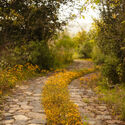
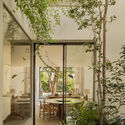
Reading the Territory: The Landscapes of Estudio Ome - Image 1 of 4Reading the Territory: The Landscapes of Estudio Ome - Image 2 of 4Reading the Territory: The Landscapes of Estudio Ome - Image 3 of 4Reading the Territory: The Landscapes of Estudio Ome - Image 4 of 4Reading the Territory: The Landscapes of Estudio Ome - More Images+ 31

The Alchemy of Mass: Peter Zumthor and the Perception of Lightness

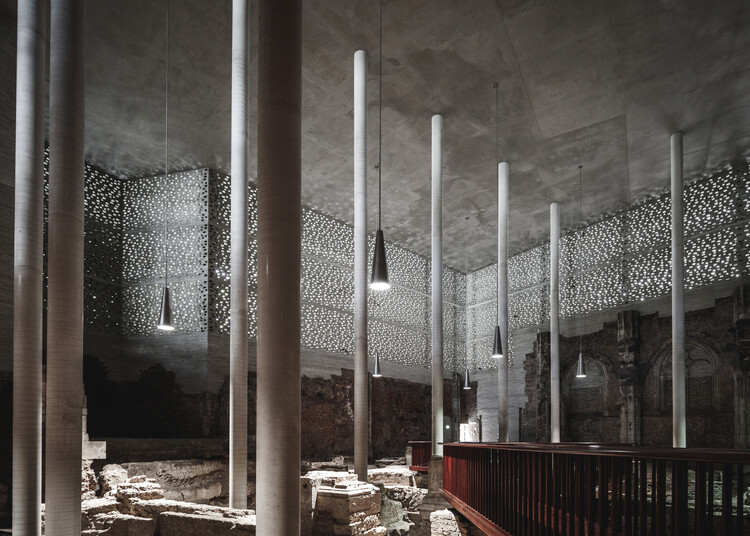
Architecture begins as an encounter with gravity. It is the ancient act of placing weight upon the earth, of persuading matter to stand, hold, and shelter. Within this fundamental condition of heaviness, however, lies a quieter possibility: density itself can generate a sense of lightness—a perceptual condition in which the body, fully convinced of matter's weight, begins to experience space as suspension.

Much of contemporary architecture has pursued lightness through reduction: thinner structures, smoother surfaces, increasingly seamless transitions between interior and exterior. Here, lightness is equated with disappearance, as if gravity could be overcome by withdrawing material presence. Yet there exists another register in which lightness is not the result of absence, but of intensification. It emerges when material presence becomes so precise, so fully asserted, that it begins to alter perception itself—when mass remains heavy, but no longer behaves as simply inert.

The Alchemy of Mass: Peter Zumthor and the Perception of Lightness - More Images+ 16

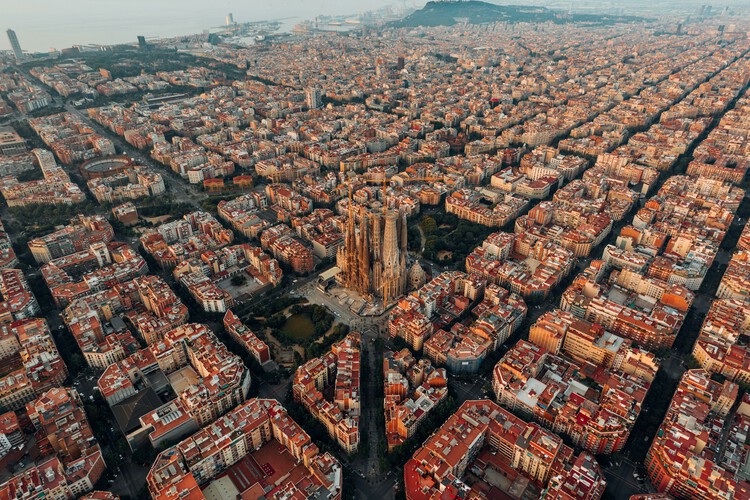
Barcelona Architecture City Guide: 30 Buildings and Places from Gaudí to Today

Subscriber Access | 

Barcelona is a city where architecture has long served as a laboratory of urban experimentation, each era leaving its mark on the city's fabric. From the dense streets of the Gothic Quarter to the ornate interiors of the Palau de la Música Catalana, the city expanded outward through Ildefons Cerdà's Eixample, a stage where Gaudí and his contemporaries challenged the rules of form, scale, and ornamentation. These experiments defined a local identity and culminated in the Sagrada Família, a vision that continues into the 21st century through the integration of advanced technology.

The city's twentieth-century transformation forged an architectural language with global influence. The principles of International Modernism are embodied in Mies van der Rohe's Barcelona Pavilion, while later developments—from Bofill's explorations in collective housing to the urban interventions of the 1992 Olympics—reshaped the skyline and the city's relationship to its waterfront. Subsequent contemporary projects continue to negotiate form, landscape, and urban scale, contributing to a layered and evolving city.

Barcelona Architecture City Guide: 30 Buildings and Places from Gaudí to Today - More Images+ 29

Smiljan Radić Clarke: Get to Know the 2026 Pritzker Winner's Work

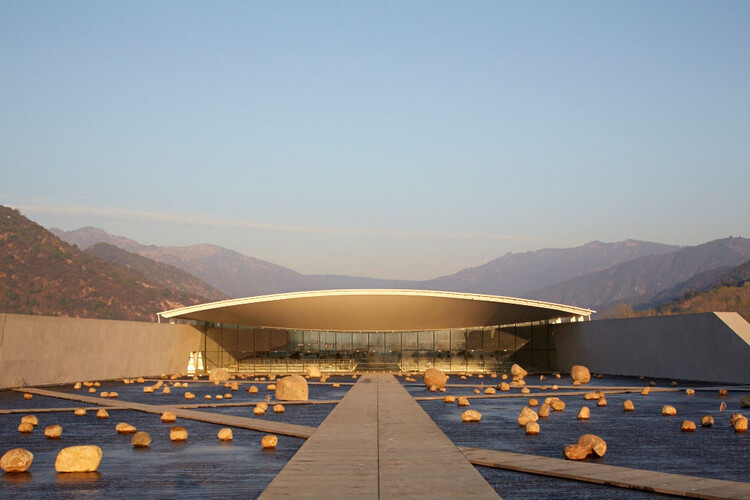
The 2026 Pritzker Price Award has been awarded this year to the Chilean architect of Croatian descent, Smiljan Radić Clarke. Born in Santiago, Chile, in 1965, his practice evokes a geography of extremes, shaped by the tectonic tension between the staggering weight of the Andes and the seismic instability of the territory. After graduating from the Pontifical Catholic University of Chile and pursuing further studies in aesthetics in Venice, Smiljan Radić Clarke established his base in Santiago. From there, he has developed one of the most singular visions in contemporary architecture. His work privileges the intensity of the moment through a fragile architecture. Within it, the building operates as a temporary and tactile refuge that places the spectator in a state of aesthetic uncertainty, oscillating between ancestral ruin and avant-garde artefact.

Smiljan Radić Clarke: Get to Know the 2026 Pritzker Winner's Work - Image 1 of 4Smiljan Radić Clarke: Get to Know the 2026 Pritzker Winner's Work - Image 2 of 4Smiljan Radić Clarke: Get to Know the 2026 Pritzker Winner's Work - Image 3 of 4Smiljan Radić Clarke: Get to Know the 2026 Pritzker Winner's Work - Image 4 of 4Smiljan Radić Clarke: Get to Know the 2026 Pritzker Winner's Work - More Images+ 59

The Centauric Heritage: Equine Scale and Mexican Monumental Architecture

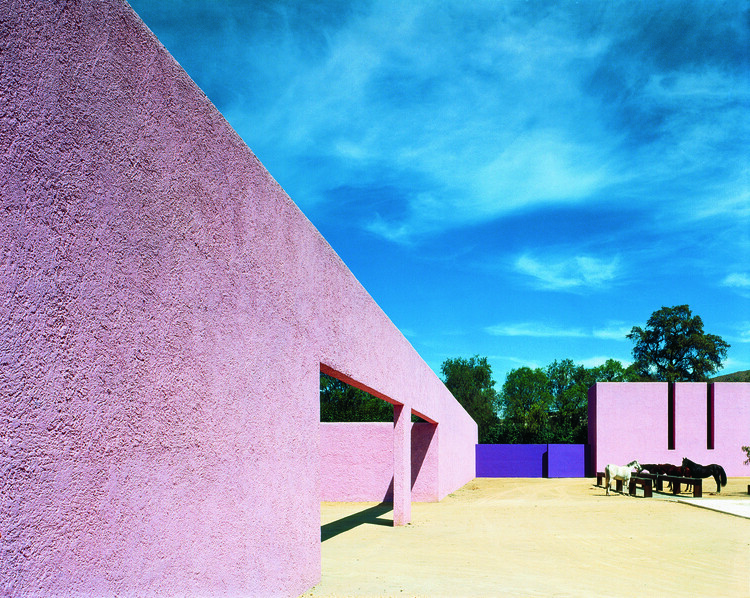
In the architectural history of the Mexican territory, the built environment has functioned not merely as a human stage, but as a biological infrastructure designed to organize proximity between species. The resulting spatial logic is not a solo performance, but a negotiated coexistence between human and animal bodies. To examine this heritage today is to shift the analytical focus away from stylistic authorship and toward a more fundamental phenomenon: the persistence of spatial practices that emerged to sustain shared forms of life.

Many of the architectural features now interpreted as cultural or aesthetic markers — oversized thresholds, expansive patios, and durable surfaces — can be understood instead as material traces of an interspecies contract. For centuries, horses, mules, and livestock were not external to architecture but essential inhabitants whose physical presence shaped scale, circulation, and material choices. Their bodies left measurable imprints in space, from the height of entrances that accommodated mounted riders to paving systems designed to withstand hooves, friction, and biological wear. Nowhere was this contract more visible than at the ground level of the colonial house.

The Centauric Heritage: Equine Scale and Mexican Monumental Architecture - Image 1 of 4The Centauric Heritage: Equine Scale and Mexican Monumental Architecture - Image 2 of 4The Centauric Heritage: Equine Scale and Mexican Monumental Architecture - Image 3 of 4The Centauric Heritage: Equine Scale and Mexican Monumental Architecture - Image 4 of 4The Centauric Heritage: Equine Scale and Mexican Monumental Architecture - More Images+ 9

Inside Contemporary Kazakhstani Architecture: Exploring the Work of NAAW

Selected as one of the winners of ArchDaily 2025 Next Practices Awards, NAAW represents a new generation of architectural studios reshaping contemporary practice in Central Asia. Founded in 2019 by Elvira Bakubayeva and Aisulu Uali, the studio operates at the intersection of research, interdisciplinary collaboration, and spatial experimentation, positioning architecture as a tool for reflection and an active agent in shaping contemporary Kazakhstani identity.

Inside Contemporary Kazakhstani Architecture: Exploring the Work of NAAW - Image 1 of 4Inside Contemporary Kazakhstani Architecture: Exploring the Work of NAAW - Image 2 of 4Inside Contemporary Kazakhstani Architecture: Exploring the Work of NAAW - Image 3 of 4Inside Contemporary Kazakhstani Architecture: Exploring the Work of NAAW - Image 4 of 4Inside Contemporary Kazakhstani Architecture: Exploring the Work of NAAW - More Images+ 15

Consciously Driven: In Conversation with VOID, the Costa Rican Studio Shaping Regenerative Architecture

Subscriber Access | 

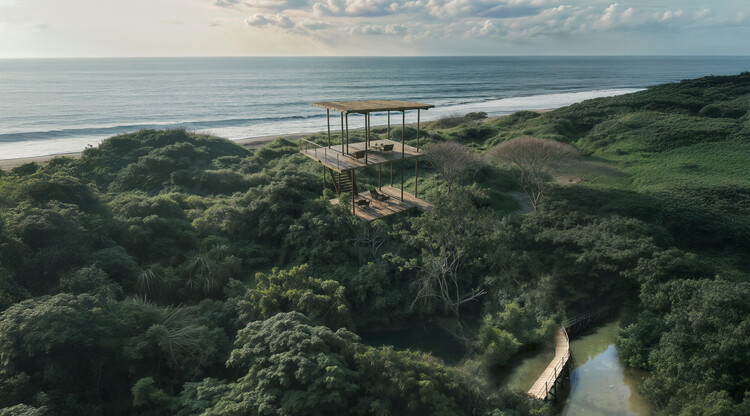
The conversation with VOID emerges within the framework of the 2025 Latin American Architecture Biennial, offering an opportunity to explore a practice that listens, cares, and accompanies. Their work unfolds as an act of mediation: through interdisciplinary research and attention to the plurality of natural and social factors, they seek to understand the many natures of a place. Since its beginning in 2012, this process has evolved, consolidating a stance that seeks to design architecture from and for the place—caring for it, healing it, and regenerating it—opening spaces where territories sustain and unfold their own adaptive processes.
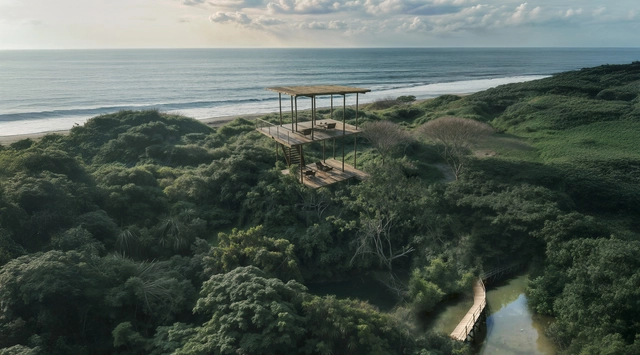
Consciously Driven: In Conversation with VOID, the Costa Rican Studio Shaping Regenerative Architecture - Image 2 of 4Consciously Driven: In Conversation with VOID, the Costa Rican Studio Shaping Regenerative Architecture - Image 3 of 4Consciously Driven: In Conversation with VOID, the Costa Rican Studio Shaping Regenerative Architecture - Image 10 of 4Consciously Driven: In Conversation with VOID, the Costa Rican Studio Shaping Regenerative Architecture - Image 1 of 4Consciously Driven: In Conversation with VOID, the Costa Rican Studio Shaping Regenerative Architecture - More Images+ 15

Highlights from BAL 2025: Latin American Architecture Biennial

Subscriber Access | 

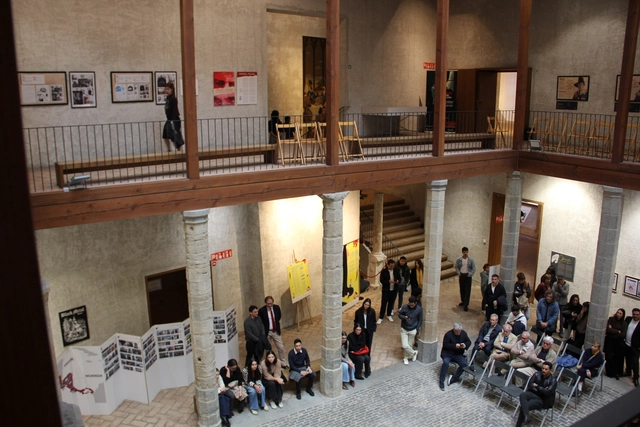
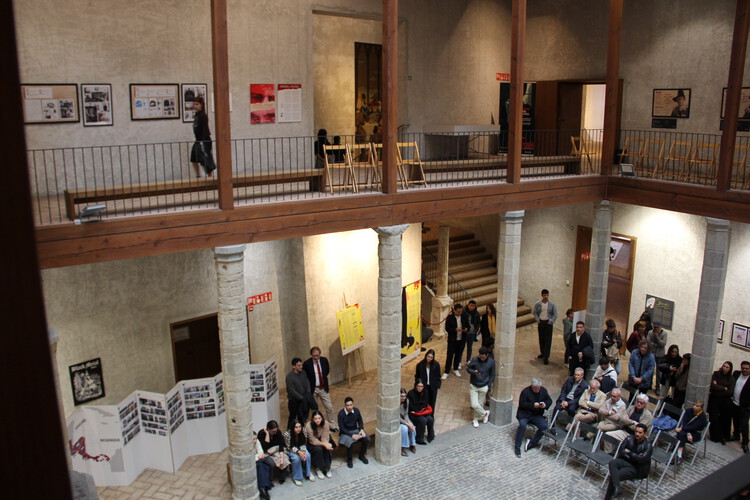
Held in Pamplona from the 23rd to the 26th of September, the 2025 Latin American Architecture Biennial (BAL) brought together emerging studios and established voices from across the continent. This year’s edition stood out for the diversity and depth of its participants: projects of striking formal and conceptual richness, developed by young yet remarkably mature offices. Together, they reflected the vitality of today’s Latin American architecture — thoughtful, inventive, and deeply aware of its context.

Highlights from BAL 2025: Latin American Architecture Biennial - Image 1 of 4Highlights from BAL 2025: Latin American Architecture Biennial - Image 2 of 4Highlights from BAL 2025: Latin American Architecture Biennial - Featured ImageHighlights from BAL 2025: Latin American Architecture Biennial - Image 3 of 4Highlights from BAL 2025: Latin American Architecture Biennial - More Images+ 30

Unconventional Playgrounds: Built from Junk, Shaped by Concrete, Freed by Play

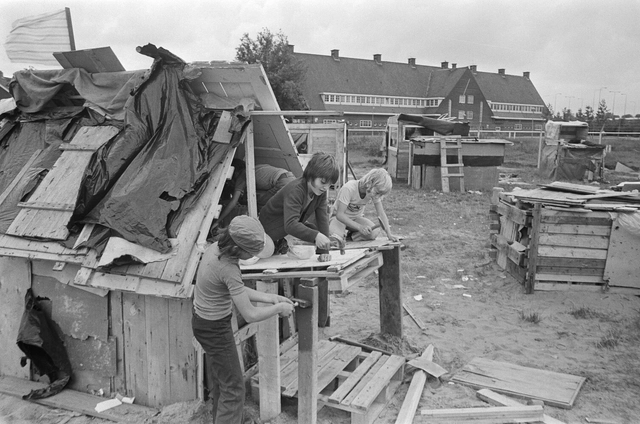
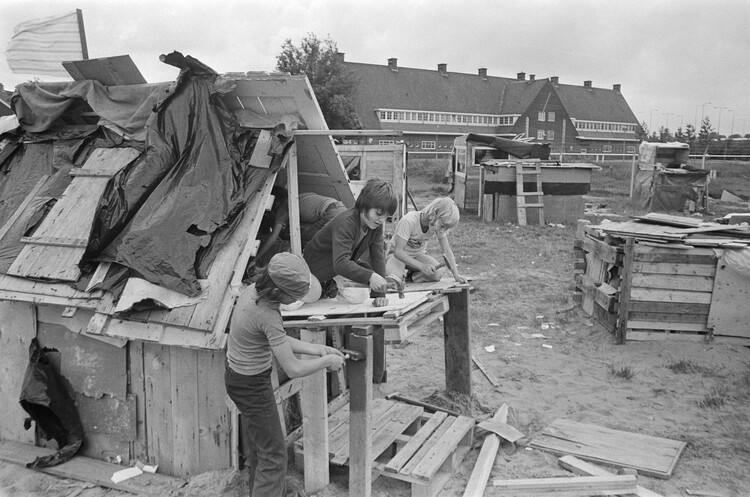
What if the best kind of play isn't the safest? For decades, cities have built playgrounds to be clean, colorful, and easy to supervise. Yet these spaces—designed more for adult peace of mind than for children's curiosity—often strip away what makes play truly transformative: risk, unpredictability, and self-direction. Rising safety standards, shrinking public space, and the commercialization of play equipment have only further narrowed the possibilities for children's independent exploration. From a junkyard in 1940s Copenhagen to the concrete landscapes of postwar Amsterdam, a handful of architects, planners, and activists have challenged the idea that play must be neat and controlled. Their unconventional playgrounds—made of loose parts, raw materials, and abstract forms—gave children the freedom to build, demolish, explore, and get dirty.
Unconventional Playgrounds: Built from Junk, Shaped by Concrete, Freed by Play - Image 1 of 4Unconventional Playgrounds: Built from Junk, Shaped by Concrete, Freed by Play - Image 2 of 4Unconventional Playgrounds: Built from Junk, Shaped by Concrete, Freed by Play - Image 3 of 4Unconventional Playgrounds: Built from Junk, Shaped by Concrete, Freed by Play - Image 4 of 4Unconventional Playgrounds: Built from Junk, Shaped by Concrete, Freed by Play - More Images+ 8

Rice Museum: Architecture Rooted in Rural Memory and Ecology

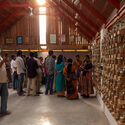
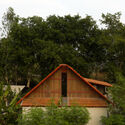
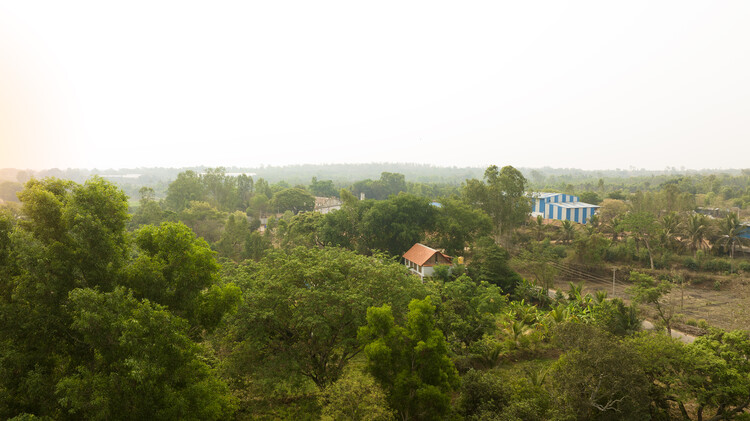
Located on a farm in southern India, the Rice Museum occupies the upper floor of Syed Ghani's home, nestled in the verdant agricultural landscape of Mandya — a region shaped by brick structures, expansive greenery, and ancestral farming knowledge. Syed Ghani, a farmer, historian, and museologist, has dedicated himself to preserving indigenous rice varieties through seed conservation, proliferation, and educational initiatives. With the support of local farmers, he has helped recover more than 1,000 native paddy (rice) varieties, safeguarding an essential part of India's agricultural heritage.

Rice Museum: Architecture Rooted in Rural Memory and Ecology - Image 1 of 4Rice Museum: Architecture Rooted in Rural Memory and Ecology - Image 2 of 4Rice Museum: Architecture Rooted in Rural Memory and Ecology - Image 3 of 4Rice Museum: Architecture Rooted in Rural Memory and Ecology - Image 4 of 4Rice Museum: Architecture Rooted in Rural Memory and Ecology - More Images+ 21

Grounded Interiors: Exploring Earth-Based Flooring Through 10 Contemporary Interiors

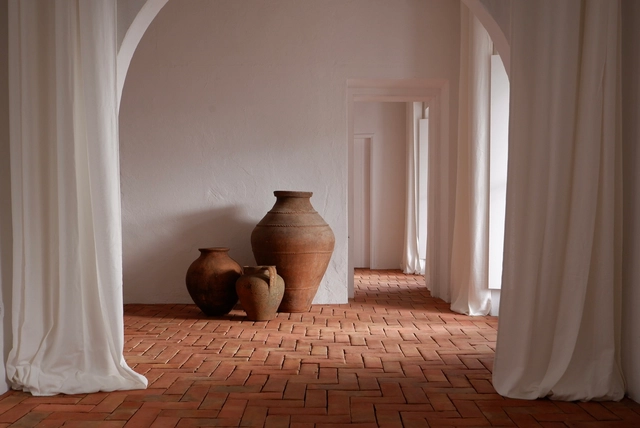
Earth-based flooring materials comprise natural elements such as clay, sand, silt, lime, and organic fibres. They offer both structural performance and sensory engagement when used in both outdoor and interior spaces. Due to their thermal properties, durability, and sustainable qualities, these materials have evolved from vernacular construction techniques into high-value architectural elements that are always being reinvented and optimized. There are several types of earthen floorings, each offering unique benefits, and they are increasingly used in interior settings.

Grounded Interiors: Exploring Earth-Based Flooring Through 10 Contemporary Interiors - More Images+ 18

From Concept to Object: Studio PRACTICE's Contribution to Korean Architecture’s New Wave

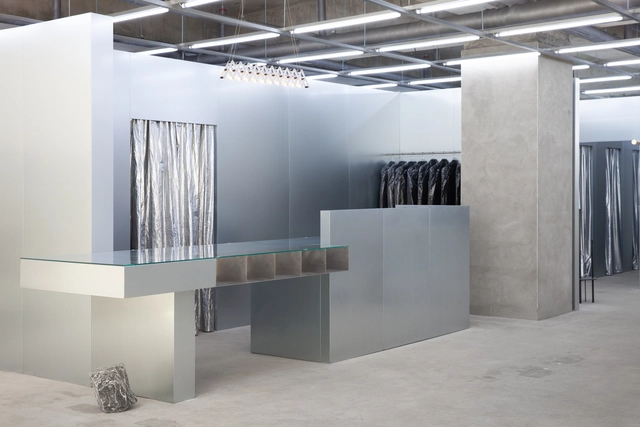
PRACTICE is a Seoul-based studio founded in 2020 by designers Sisan Lee and Sehou Ahn, and one of ArchDaily's 2024 Best New Practices. With backgrounds in architecture and interior design, they explore a wide range of creative fields, from spatial and exhibition design to custom furniture, art objects, and material experimentation, and had been highlighted last year due to their fast design approach which "matches the fast-evolving iterations at the world's bustling hub of fashion and design". The studio brings a unique depth to each project by creating custom-designed elements, furniture, and objects that reflect their diverse creative capacities. Pieces within their projects are crafted from a deep understanding of its purpose and materiality, demonstrating the studio's commitment to thoughtful, integrity-driven design.

From Concept to Object: Studio PRACTICE's Contribution to Korean Architecture’s New Wave - Image 1 of 4From Concept to Object: Studio PRACTICE's Contribution to Korean Architecture’s New Wave - Image 2 of 4From Concept to Object: Studio PRACTICE's Contribution to Korean Architecture’s New Wave - Image 3 of 4From Concept to Object: Studio PRACTICE's Contribution to Korean Architecture’s New Wave - Image 4 of 4From Concept to Object: Studio PRACTICE's Contribution to Korean Architecture’s New Wave - More Images+ 11