Vania Masalías

BROWSE ALL FROM THIS AUTHOR HERE

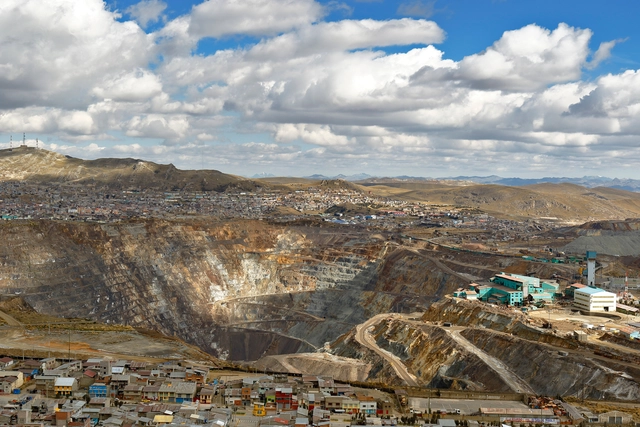
Cerro de Pasco: A City Disappearing Due to Mining

Subscriber Access | 

What happens when streets, squares and buildings start to disappear in a city?

This is the case of Cerro de Pasco, capital of the district of Chaupimarca and at the same time of the province of Pasco, located at 4380 m.a.s.l. in the highlands of the Peruvian Andes. It is in this place that the constant expansion of the "open-pit" mining method has devoured the urban fabric, resulting in permanent damage to the territory as its public spaces, heritage buildings and, consequently, its history, disappear.

Cerro de Pasco: A City Disappearing Due to Mining - Image 1 of 4Cerro de Pasco: A City Disappearing Due to Mining - Featured ImageCerro de Pasco: A City Disappearing Due to Mining - Image 2 of 4Cerro de Pasco: A City Disappearing Due to Mining - Image 3 of 4Cerro de Pasco: A City Disappearing Due to Mining - More Images+ 1

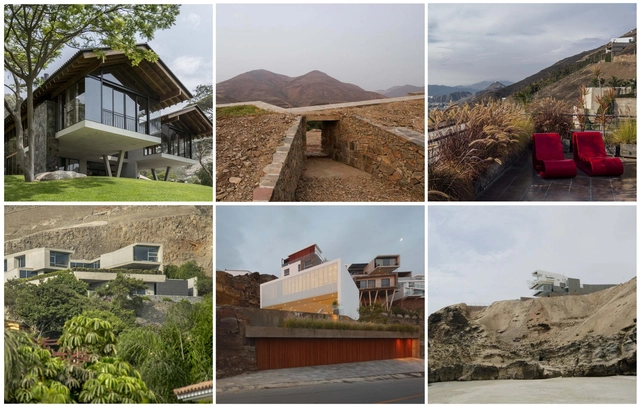
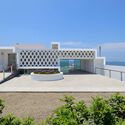
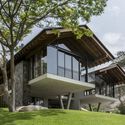
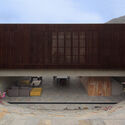
Peruvian Houses on Sloping Ground: 10 Examples in Section

Subscriber Access | 

In architecture, one of the challenges faced by professionals is the design with sloping terrain. The steep slopes make it possible to think of an architecture that faces this context, being an opportunity to work in contact with the place, the spatiality, the visuals and the different heights.

Peru in the western and central part of South America, with its multiple geographical conditions in its three large regions -coast, andean and jungle-, has an architecture that is particularly committed to its landscape. The range of varied solutions has a unique and contextual architecture. The following list shows 10 residential projects in Peru, which reveal diverse architectural approaches.

Peruvian Houses on Sloping Ground: 10 Examples in Section - Image 1 of 4Peruvian Houses on Sloping Ground: 10 Examples in Section - Image 2 of 4Peruvian Houses on Sloping Ground: 10 Examples in Section - Image 3 of 4Peruvian Houses on Sloping Ground: 10 Examples in Section - Image 4 of 4Peruvian Houses on Sloping Ground: 10 Examples in Section - More Images+ 20

From Chile to Mexico: 30 Houses on the Coast of the Pacific Ocean

Subscriber Access | 

Is there only one way to inhabit the coast? The Pacific coast, the largest ocean on earth, is a vast territory with a great diversity of temperature, winds, and topography, among others. Consequently, it has a great variety of ecosystems, ranging from the freezing point near the poles, vast deserts and forests, to the hot tropical rainforest. Such majestic diversity is no stranger to architecture, responding to the different contexts in which it is placed. As a result, there is a great variety of architectural works, all of which share in framing the views of the sea.

The following list shows 30 residential projects along the Latin American Pacific coastline, revealing the diverse architectural approaches that exist along the coast.

From Chile to Mexico: 30 Houses on the Coast of the Pacific Ocean - More Images+ 27

Living in the Amazon in the 21st Century: A Planning and Urban Design Guide for Cities in the Peruvian Lowland Rainforest

Addressing the universe of the world's largest tropical forest, the book 'Living in the Amazon in the 21st Century: A Guide to Urban Planning and Design for Cities in the Peruvian lowland rainforest', has been selected as a finalist in the category of publications at the 12th Ibero-American Biennial of Architecture and Urbanism. The issue, published in 2019 as part of the PUCP Architecture Publications, in the framework of the CASA (Self-Sustainable Amazonian Cities) project of the Climate Resilient Cities initiative of IDRC, FFLA and CDKN, focuses its research on the department of Loreto, presenting itself as "a guide for architecture and urban design, for settlements in the Amazon forest, including the social processes to be considered".

Living in the Amazon in the 21st Century: A Planning and Urban Design Guide for Cities in the Peruvian Lowland Rainforest - Image 1 of 4Living in the Amazon in the 21st Century: A Planning and Urban Design Guide for Cities in the Peruvian Lowland Rainforest - Image 2 of 4Living in the Amazon in the 21st Century: A Planning and Urban Design Guide for Cities in the Peruvian Lowland Rainforest - Image 3 of 4Living in the Amazon in the 21st Century: A Planning and Urban Design Guide for Cities in the Peruvian Lowland Rainforest - Image 4 of 4Living in the Amazon in the 21st Century: A Planning and Urban Design Guide for Cities in the Peruvian Lowland Rainforest - More Images+ 2

Luis Miró Quesada Garland: A Forerunner of Modern Architecture in Peru

Subscriber Access | 

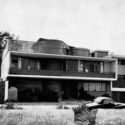
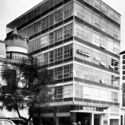
During the first decades of the twentieth century, when a traditional architectural outlook of classical languages and order still ruled, the architect Luis Miró Quesada Garland (1914-1994) was a fundamental precursor to the change of mentality that would lead Peru towards a contemporary and modern architecture.

Luis Miró Quesada Garland: A Forerunner of Modern Architecture in Peru - Image 1 of 4Luis Miró Quesada Garland: A Forerunner of Modern Architecture in Peru - Image 2 of 4Luis Miró Quesada Garland: A Forerunner of Modern Architecture in Peru - Image 3 of 4Luis Miró Quesada Garland: A Forerunner of Modern Architecture in Peru - Image 4 of 4Luis Miró Quesada Garland: A Forerunner of Modern Architecture in Peru - More Images+ 18

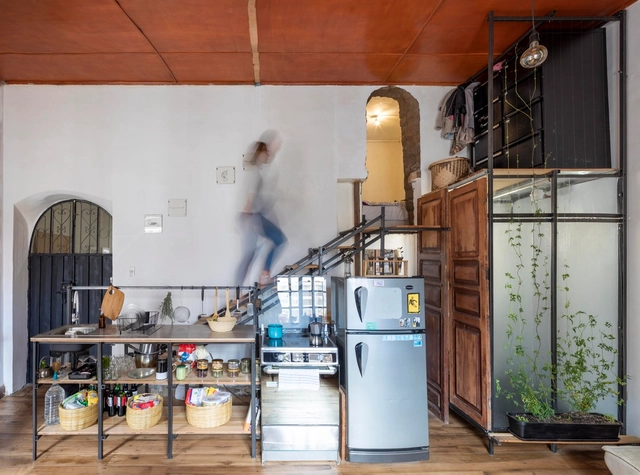
Aesthetics: The Different Uses of Color in Latin American Houses

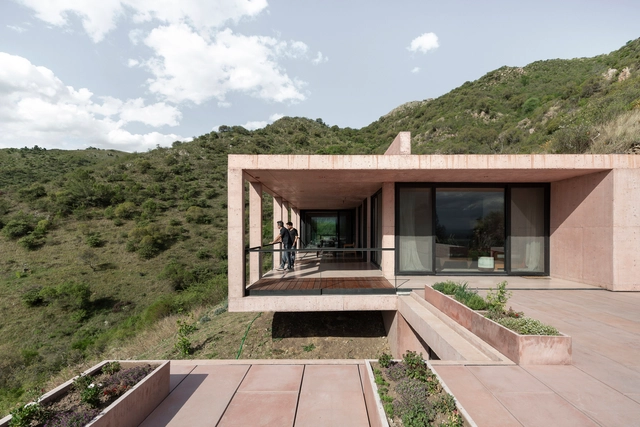
How relevant is the use of color in architecture? Throughout history, we find various scenarios where color takes centre stage in its integration with the architectural work. Nowadays this is no exception. This is because colour is a medium that can be used to provoke deep and immediate emotions and reactions in the person observing. Because of this, colour plays an important role in the architectural reading, as it has the power to clarify the components that make it up or, on the contrary, to change the perception of the work or space.

The following list shows various Latin American housing projects that have had a particular approach to color in their composition. In them, we see the conception of color as the integrator of the work, or as a means of enhancing a particular element, be it interior or exterior.

Femingas: Participatory Construction with a Gender Perspective in Ecuador

Subscriber Access | 

In the field of design and construction, the question of gender is a point of conflict: who has the possibility of building? What are the alternatives for us architecture professionals? These are the questions that Taller General (re)think about. It is from these questions that Femingas, a participatory construction conference with a gender perspective, arose. These are manifested as an alternative to the construction of "mingas", days of joint work between the members of a community to achieve a common good.

Femingas: Participatory Construction with a Gender Perspective in Ecuador - Image 1 of 4Femingas: Participatory Construction with a Gender Perspective in Ecuador - Image 2 of 4Femingas: Participatory Construction with a Gender Perspective in Ecuador - Image 3 of 4Femingas: Participatory Construction with a Gender Perspective in Ecuador - Image 4 of 4Femingas: Participatory Construction with a Gender Perspective in Ecuador - More Images+ 16

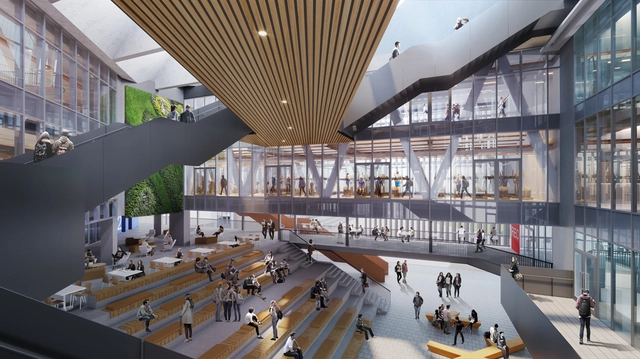
How Sasaki Is Shaping the Future of the World’s Higher Education Campuses

Subscriber Access | 

Over the past few years, educational campuses around the world have been confronted with various trends and challenges of change, such as pandemic adaptation, climate crisis, the responsibility for sustainable design and online teaching. Sasaki Architecture, with offices in Boston, Denver and Shanghai, specialises in planning educational campuses around the world. With a broad portfolio of projects at various scales of intervention, recent projects in the United States, China, Mexico and Peru stand out.

How Sasaki Is Shaping the Future of the World’s Higher Education Campuses - Image 1 of 4How Sasaki Is Shaping the Future of the World’s Higher Education Campuses - Image 2 of 4How Sasaki Is Shaping the Future of the World’s Higher Education Campuses - Image 3 of 4How Sasaki Is Shaping the Future of the World’s Higher Education Campuses - Image 4 of 4How Sasaki Is Shaping the Future of the World’s Higher Education Campuses - More Images+ 8

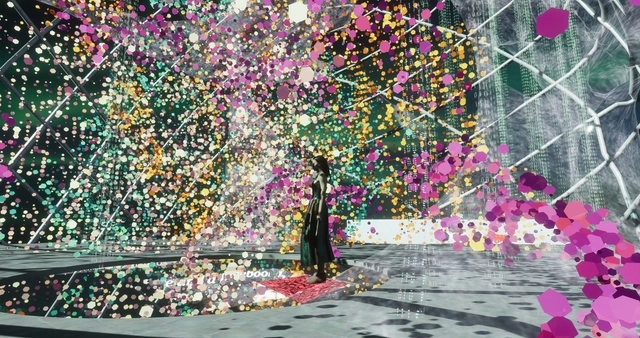
The Power of Data: Exploring Architectural Language through the Use of Artificial Intelligence

The Power of Data is an exhibition created in a virtual building, conceived by three-dimensional geometries based on various artificial intelligence algorithms. The project was created by the OLA (Online Lab of Architecture) team of research architects formed by Jennifer Durand (Peru), Daniel Escobar (Colombia), Claudia Garcia (Spain), Giovanna Pillaca (Peru) and Jose Luis Vintimilla (Ecuador).

The Power of Data: Exploring Architectural Language through the Use of Artificial Intelligence - Image 1 of 4The Power of Data: Exploring Architectural Language through the Use of Artificial Intelligence - Image 2 of 4The Power of Data: Exploring Architectural Language through the Use of Artificial Intelligence - Image 3 of 4The Power of Data: Exploring Architectural Language through the Use of Artificial Intelligence - Image 4 of 4The Power of Data: Exploring Architectural Language through the Use of Artificial Intelligence - More Images+ 11

3D Scanning Uncovers an Inca Water System Hidden beneath the Machu Picchu Jungle

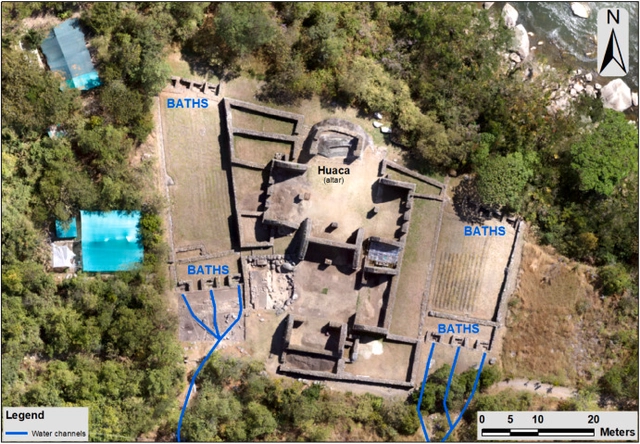
Machu Picchu, also known as "The Lost City of the Incas", located high in the Peruvian Andes (2430 m.a.s.l.) in Cuzco, is one of the most famous archaeological complexes and one of the 7 wonders of the modern world. It is here, under the dense foliage of the surrounding jungle, that a network of hidden river channels has been discovered.