Building Public Life: How Bogotá and Mexico City Addressed Urban Inequality

7:04

Subscriber Access

In many Latin American cities, peripheral neighborhoods have historically had less access to the resources that make urban life more than just livable. Housing, transportation, and public services are the usual markers of that gap. But there is another gap that is harder to quantify: the absence of places where people can gather, learn, rest, and participate in collective life. When those spaces do not exist, the city not only fails to provide a service. It fails to acknowledge a presence.

In recent decades, a growing number of projects have tried to address that absence directly. Rather than focusing only on physical infrastructure, they invest in spaces designed to support education, culture, recreation, and community, often merging several of those functions within a single building in neighborhoods where those spaces are otherwise limited.

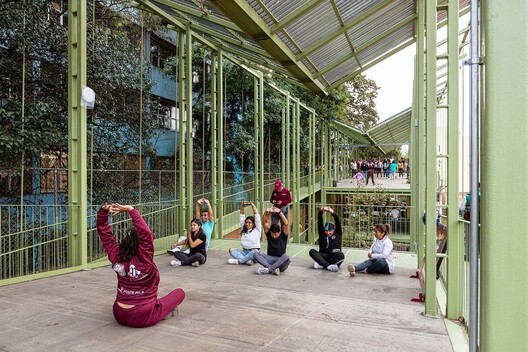
Building Public Life: How Bogotá and Mexico City Addressed Urban Inequality - Image 2 of 24Building Public Life: How Bogotá and Mexico City Addressed Urban Inequality - Image 3 of 24Building Public Life: How Bogotá and Mexico City Addressed Urban Inequality - Image 4 of 24Building Public Life: How Bogotá and Mexico City Addressed Urban Inequality - Image 1 of 24Building Public Life: How Bogotá and Mexico City Addressed Urban Inequality - More Images+ 19

Content Loader

Image gallery

See allShow less
About this author
Cite: Daniela Andino. "Building Public Life: How Bogotá and Mexico City Addressed Urban Inequality" 27 Jun 2026. ArchDaily. Accessed . <https://www.archdaily.com/1042536/building-public-life-how-bogota-and-mexico-city-addressed-urban-inequality> ISSN 0719-8884
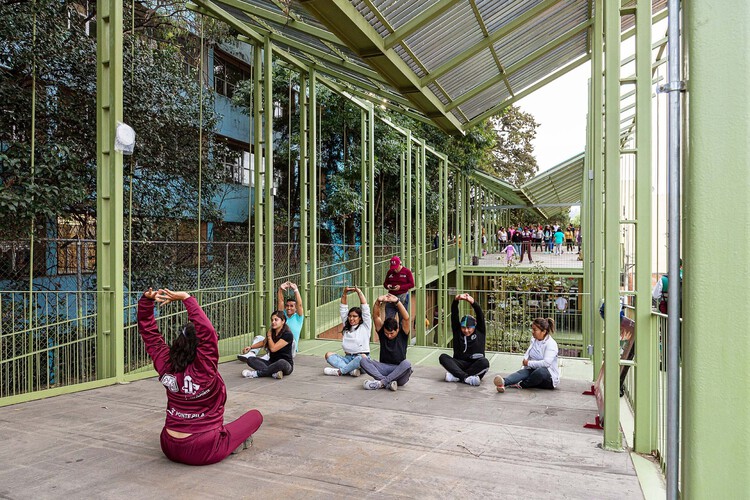
PILARES Cuicuilco Community Center / TO + +UdeB Arquitectos + AGENdA Agencia de Arquitectura . Image © Jaime Navarro

营造公共生活:波哥大与墨西哥城如何应对城市不平等

You've started following your first account!

Did you know?

You'll now receive updates based on what you follow! Personalize your stream and start following your favorite authors, offices and users.