Revitalizing Abandoned Landscape in China: Quarries as Unconventional Spatial Resources

Subscriber Access

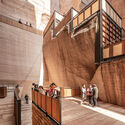
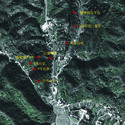
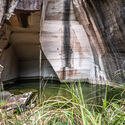
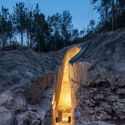
Today, reusing and adapting existing spatial resources is regarded around the world as an important contribution to sustainable development, and new challenges are thus also emerging at the margins of classic building tasks due to the changing assessments regarding whether to preserve or demolish. Xu Tiantian’s projects in the quarries of Jinyun combine aspects of landscape planning, interior design, artistic installations, and social planning with an economic revitalization of the rural area. In this way, a ruined and exploited landscape becomes a sign of departure with which a new sustainable coexistence can be linked to a narrative about the history of the location.  
Revitalizing Abandoned Landscape in China: Quarries as Unconventional Spatial Resources - Image 2 of 58Revitalizing Abandoned Landscape in China: Quarries as Unconventional Spatial Resources - Image 3 of 58Revitalizing Abandoned Landscape in China: Quarries as Unconventional Spatial Resources - Image 4 of 58Revitalizing Abandoned Landscape in China: Quarries as Unconventional Spatial Resources - Image 5 of 58Revitalizing Abandoned Landscape in China: Quarries as Unconventional Spatial Resources - More Images+ 53

Content Loader

Image gallery

See allShow less
About this author
Cite: Eduard Koegel. "Revitalizing Abandoned Landscape in China: Quarries as Unconventional Spatial Resources" 01 Jul 2022. ArchDaily. Accessed . <https://www.archdaily.com/983995/quarries-as-space-and-resource-tiantian-xu-carves-into-the-rocks-to-revitalize-abandoned-landscape-in-china> ISSN 0719-8884
8#. Image © Ziling Wang

石宕作为空间和资源,DnA 徐甜甜改造废弃景观场所的策略

You've started following your first account!

Did you know?

You'll now receive updates based on what you follow! Personalize your stream and start following your favorite authors, offices and users.