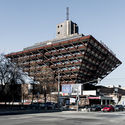
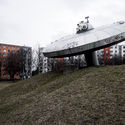
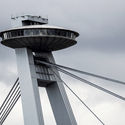
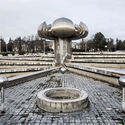
The history of Slovakia is riddled with political unrest and unwanted occupation, with the Slovak people having repeatedly been denied a voice throughout history. In the years following World War I, Slovakia was forced into the common state of Czechoslovakia; the territory was dismembered by the Nazi regime in 1938 and occupied by the Nazis for most of the Second World War, before being eventually liberated by Soviet and Romanian forces in 1945. Over the next four decades of communist rule—first by communists within Czechoslovakia itself and then later by the Soviet Union—the architecture of Slovakia came to develop into a unique form of sci-fi postmodernism that celebrated the shift in industrial influence at the time.
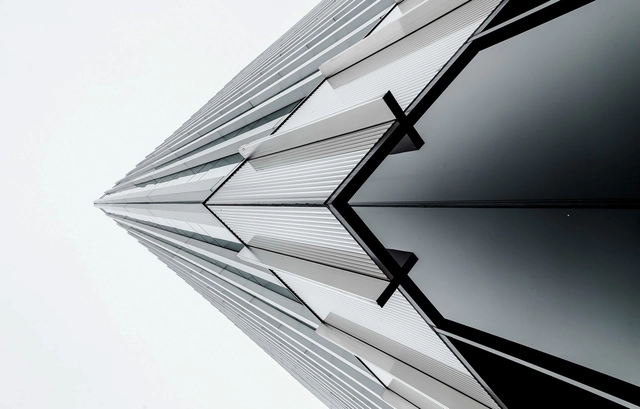
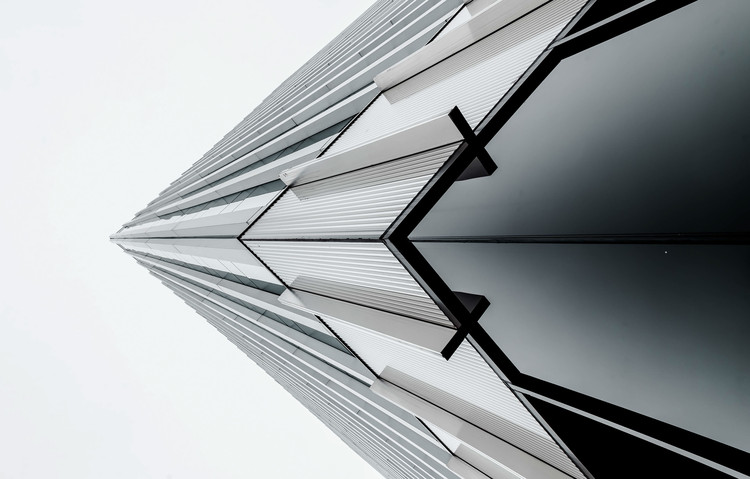
Photographer Stefano Perego has documented the Slovakian architecture from the 1960s–80s and has shared some of his photos with ArchDaily.
A great photograph is often as important as a great building—sometimes even more. From the pages of glossy magazines to the galleries of digital publications and online portfolios, high-quality photography is crucial for contemporary architects. Yet the array of camera options, equipment, accessories, and technical jargon (aperture, ISO, shutter-speed, etc.) can be dizzying, if not intimidating. So what happens when the camera in your iPhone is no longer enough?
To ensure emerging practitioners and professionals alike take the perfect shot, Eric Reinholdt summarizes at length the photography equipment used in his own practice in this two-part video from 2016. The first instalment on the architect, writer, and photographer's channel 30X40 Workshop makes it clear that his preference is a digital SLR camera. The 20+ megapixel image quality as well as range of larger aperture lenses with added versatility are crucial features for large format printing and digital publishing. Canon and Nikon are among the suggested brands as they are established with a large offering of products. And, are expected to provide additional upgrade paths as new equipment is released.
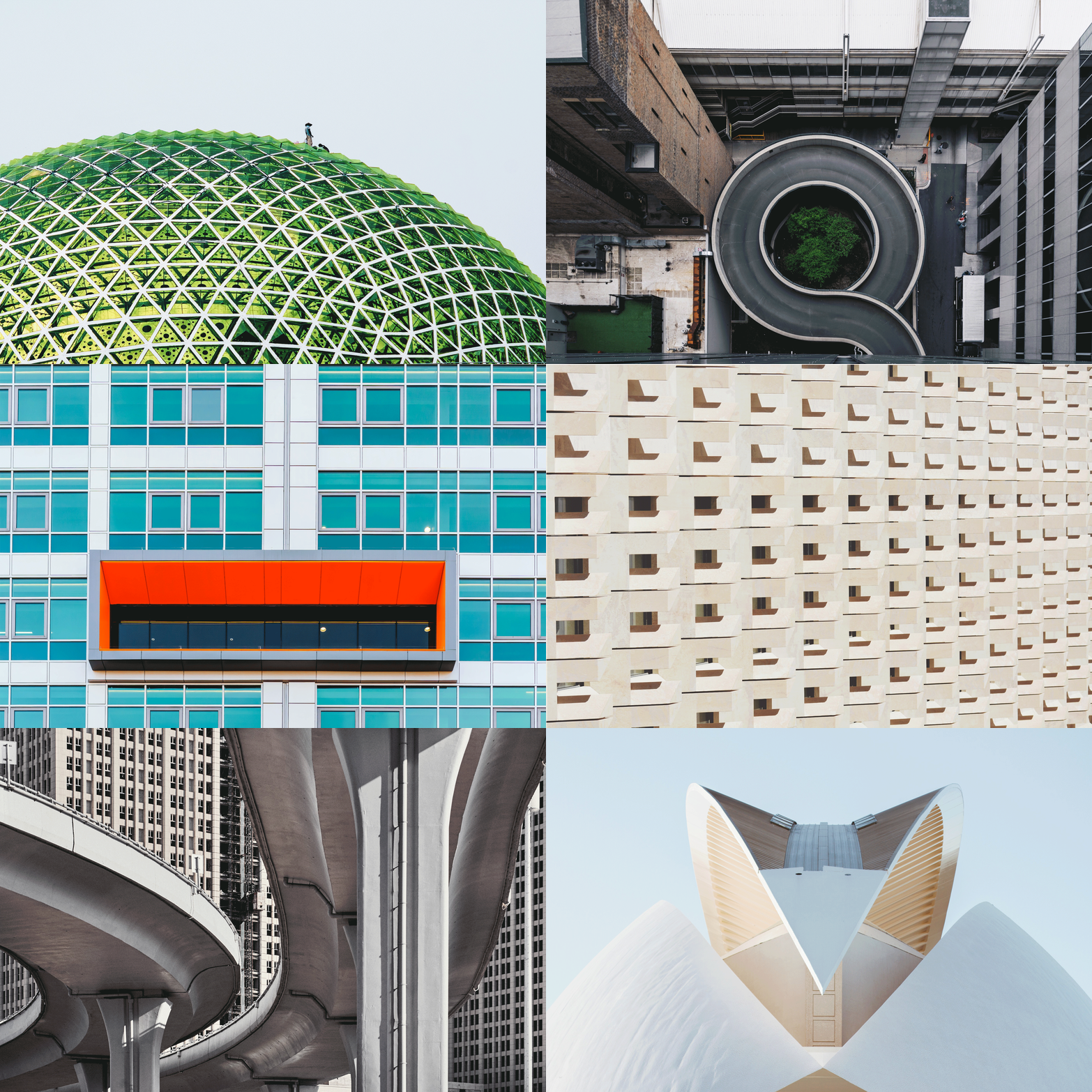
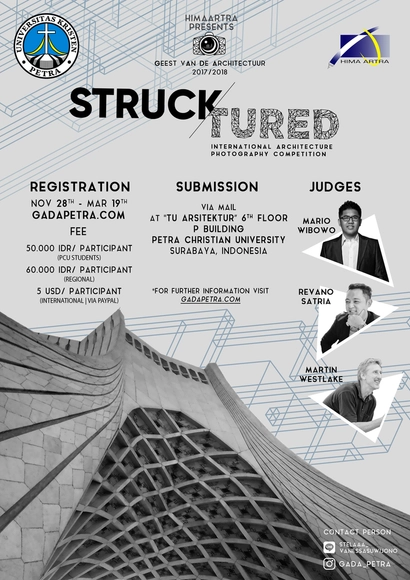
In this fast-paced era a lot of little details are missed in a matter of seconds. Just like architecture that we see everyday and everywhere, the stunning beauty of it all are tend to be overlooked.
2018 AIA National Photography Competition was founded to highlight the photographic skills of architects and AIA members, while also focusing on the beauty of architecture around the world.
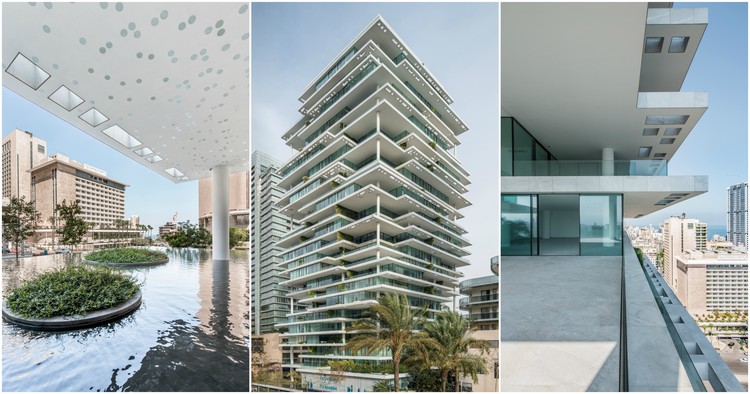
In the rapidly burgeoning city of Beirut, the post-war building boom is far from over. Much like its middle-eastern neighbors, it boasts of a plump share of designer architecture—as critic Oliver Wainwright refers to it, “a diverse shopping list”. It is here that the Beirut Terraces, a residential complex designed by Herzog & De Meuron, rises up to 119 meters, occupying a prominent place in the city’s skyline. In this collection of photographs by Bahaa Ghoussainy, one sees the Beirut Terraces from within, getting a glimpse of both the interior, as well as the multiple, unique views offered from inside the building.
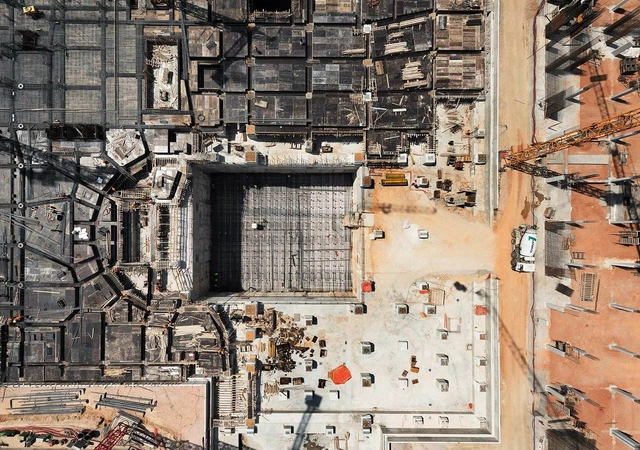
From Greek architect and photographer, Yiorgis Yerolymbos comes a book which captures the construction process of Renzo Piano’s Stavros Niarchos Foundation Cultural Centre in Athens, Greece. Yerolymbos carefully documented every moment where the superfluous Olympic parking lot became a cultural center and sloping park with waterfront views. For almost a decade, and from every angle, the photographer watched the site transform. Birds-eye imagery proved to be some of the most captivating. As photographs, they manage to possess the characteristics of an architectural drawing.
Located in the largest remaining park in Beijing’s central business district, MAD Architects’ Chaoyang Park Plaza opened earlier this to year to much deserved fanfare. With a striking black glass form inspired by traditional Chinese ink landscape paintings, the complex is an immediate standout within its context.
In this photo series, Laurian Ghinitiou captures the series of buildings, drawing attention to their relationships to those surroundings. From the bustling streetscape, to the local residents fishing in the nearby pond, to KPF’s fast-rising CITIC Tower in the distance (soon to become Beijing’s tallest tower), Ghinitiou’s photographs are a reminder that all architecture is a product of the people and buildings around it – even the most dramatic of forms.
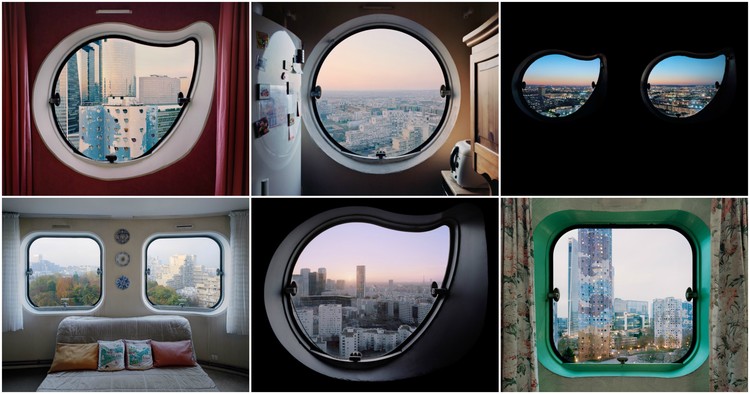
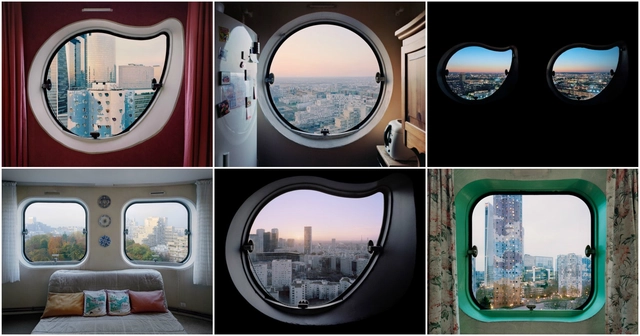
French photographer Laurent Kronental’s latest photo series, “Les Yeux des Tours” views of Paris, are framed by the quirky windows of the Tours Aillaud, and by the subtle differences in which the spaces around them are inhabited. Kronental considers the towers as some of the most spectacular of the Grands Ensembles built in the post-war economic boom in France. For him, photographing these buildings was a form of nostalgia, a way of satisfying a deep sense of childhood wonder and curiosity that fostered in him as a young boy perceiving them from the nearby business and shopping center "La Défense," questioning the lives of the people who live there.
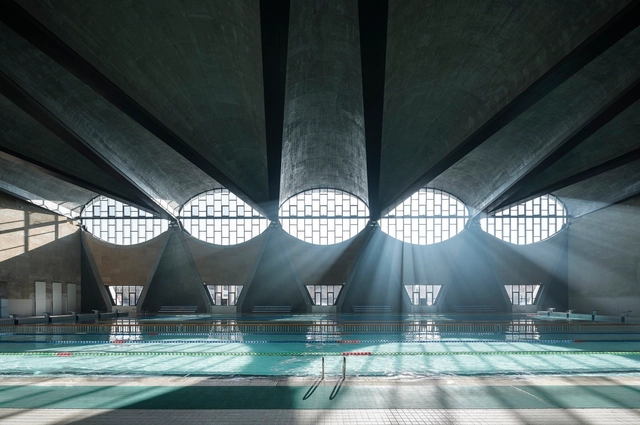
Terrence Zhang has been named the winner of the 2017 Arcaid Images Architectural Photographer of the Year Award for his "striking image" of the Swimming Pool at the New Campus of Tianjin University in China, designed Atelier Li Xinggang. Announced on the final day of the World Architecture Festival (WAF) in Berlin, the image was lauded for its ability to capture the shafts of sunlight entering through the clerestory and interacting with the water.
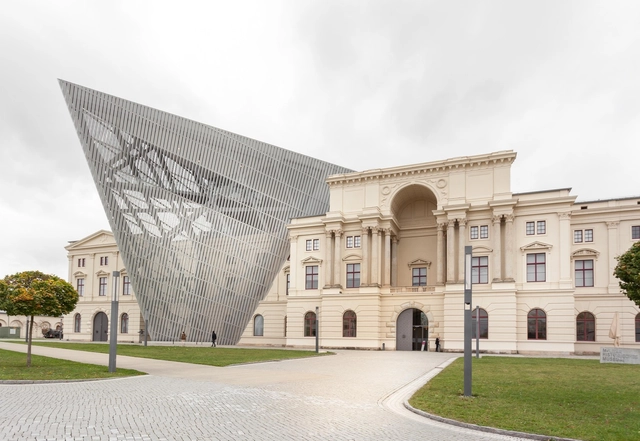
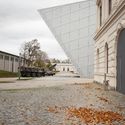
The complications of war and violence demanded a bold piece of architecture to provoke the public's understanding of the impact it had on Germany. Daniel Libeskind chooses to engage with such events in his extension to Dresden's Military History Museum, by crashing a huge steel and concrete structure through the neoclassical facade, tearing apart the symmetry of the original building. Photographer Alexandra Timpau has captured the sharp edges and harsh angles of the museum's extension that convey the pain and the stark reality of war Libeskind and the museum refer to.
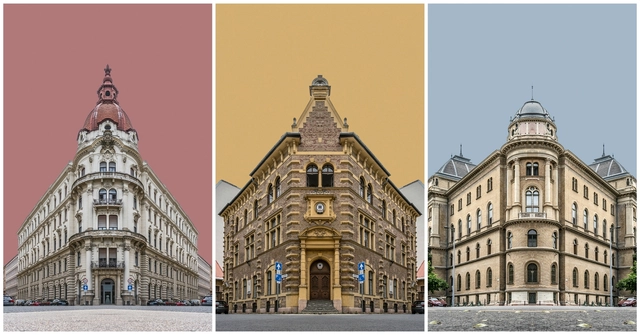
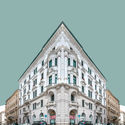
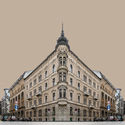
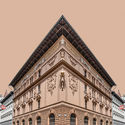
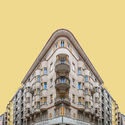
In his new series, “Corner Symmetry,” Hungarian photographer and printmaker Zsolt Hlinka captures some of his home city of Budapest’s most stunning buildings, manipulating them to make them appear as if they are perfectly symmetrical when viewed from the corner.
Overlaid on a variety of pastel-colored skies, the photographs are taken from extreme 2-point perspective, making the buildings appear to pop straight off the page. The study is a continuation of his Wes-Anderson-reminiscent series, “Urban Symmetry.”
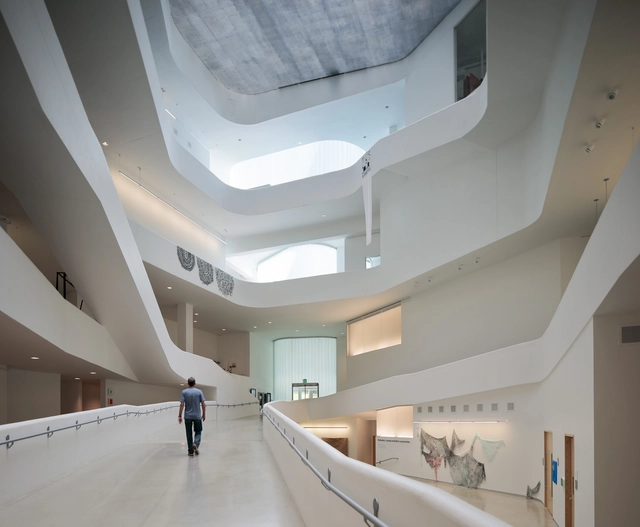
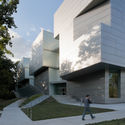
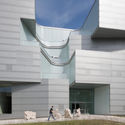
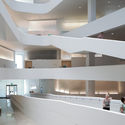
Deeply rooted in the phenomenological ideas of Maurice Merleau-Ponty, Steven Holl’s architectural philosophy is centered on human experience, materiality, and a thorough engagement with the site or context. But more than his experiments with space and material, he is best known for his mastery over what is perhaps his favorite material, or medium: natural light.
His design for the Visual Arts Building at the University of Iowa, seen here through the lens of photographer Aaron Dougherty, is one of his projects that best explores these concerns. Clad in weathering zinc and stainless steel, the four-story building houses studios, teaching spaces, galleries and faculty offices for all visual arts departments—from Ceramics, Jewelry Design and Sculpture, to Printmaking, Painting, Video Art, and 3D Design.
Arcaid Images has revealed the shortlist of 20 images in the running for the title of World’s Best Building Image in their 2017 Arcaid ImagesArchitectural PhotographyAwards. The annual award selects photographs in four categories - Exterior, Interior, Sense of Place, and Building in Use - which are judged by an esteemed panel of designers, photographers and journalists based on their atmospheric quality, composition, use of scale and more.
“More than just informing people about the existence of such places, the best photos go beyond that and entice people to learn more about the buildings, cities, and landscapes – maybe even booking a flight to see them firsthand. That feeling hit me on numerous occasions,” said jury member John Hill, Editor of the World-Architects eMagazine.
After the first series of photographs revealing Madrid's architectural geometries, Joel Filipe shared his work with us again; this time the Into the Fog series. In these photographs, Filipe presents, through a layer of mist, well-known projects featuring the skyline of the Spanish capital.
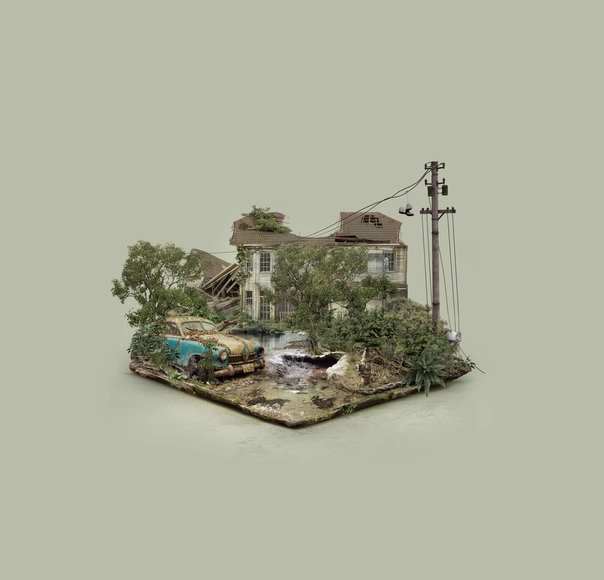
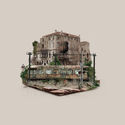
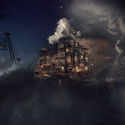
Abu Dhabi-based Brazilian designer and artist Fábio Araujo has a fascination with abandoned places – the mystery of where the man made clashes with the natural to create unique colors, textures and compositions.
These places are the subject of his series, aptly titled “Abandoned Places,” in which he uses a series of digital manipulations to create small islands floating within and contrasting with their clean, solid backgrounds.
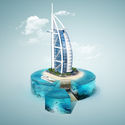
Other works by Araujo include “Favela,” where the Brazilian housing typology has been reimagined as located within the sky, and miniature models of scenes and buildings including the Burj al Arab hotel in Dubai.
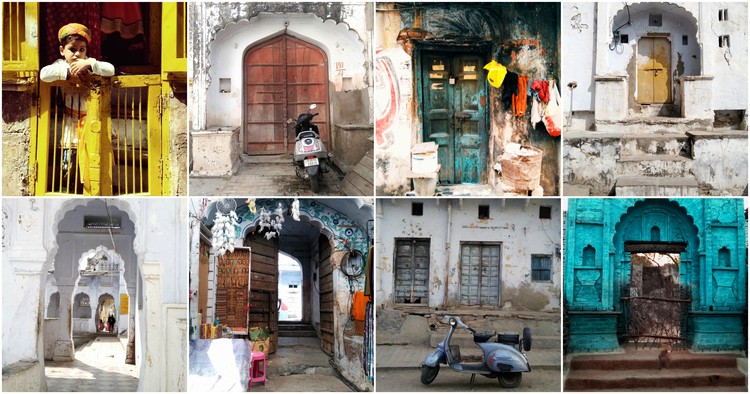
The door: despite being one of the most fundamental architectural elements, the immense significance these portals hold in architecture and culture can hardly be questioned. Historically, empires erected gigantic gateways to welcome visitors and religious shrines installed doors with ornate embellishments to ward off evil just as contemporary governments have built arches to commemorate important events.
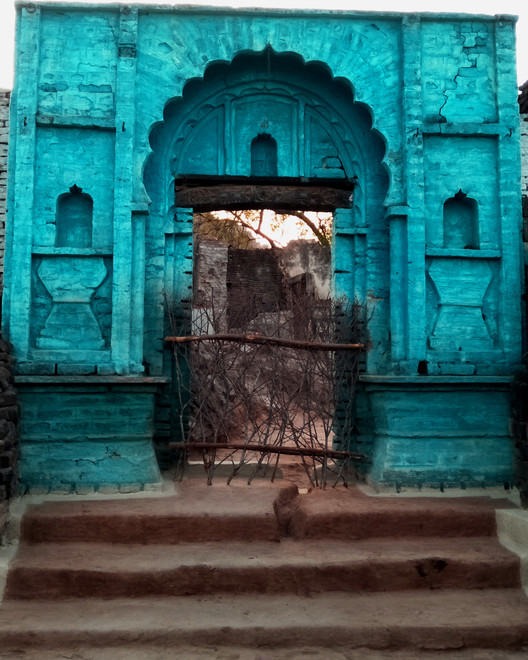
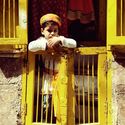
In this photo-series, however, architect Priyanshi Singhal directs her focus to doors in a humbler vein—those of homes and hole-in-the-wall shops. Armed with her camera, she travels through narrow winding streets in age-old Indian towns and villages—characterized by their mixed land-use—as she studies and documents the inherent relationship between architectural tradition, culture, and a people. A door and its chaukhat (threshold) hold deep spiritual meaning in India’s traditional vastu shastra system of architecture. Furthermore, Singhal’s work provides us a brief glimpse of the imprint that the vagaries of time, community and economy have left on India’s historical urban fabric.
Global photography community EyeEm has announced the finalists of their 2017 Photography Awards. Free and open to photographers of all skill levels and backgrounds to submit through the EyeEm web platform and app, this year’s awards received more than 590,000 submissions from users around the world across five categories: The Architect, The Great Outdoors, The Photojournalist, The Portraitist, and The Street Photographer.
The architecture category alone received over 95,000 submissions, from which 20 images were selected by a jury of photographers and editors from institutions including National Geographic and the BBC. All of the finalist images will be displayed at the 2017 EyeEm Photography Festival & Awards in Berlin from September 15-17, where each of the category winners and Photographer of the Year will be announced.
Continue on to see the 20 finalists in the architecture category.



.jpg?1515170830)
.jpg?1515171598 "© Bahaa Ghoussainy")
.jpg?1515171343 "© Bahaa Ghoussainy")
.jpg?1515170657 "© Bahaa Ghoussainy")
.jpg?1515171187 "© Bahaa Ghoussainy")
.jpg?1513011647&format=webp&width=640&height=580)
.jpg?1513011655 "Chaoyang Park Plaza / MAD Architects. Image © Laurian Ghinitoiu")
.jpg?1513011986 "Chaoyang Park Plaza / MAD Architects. Image © Laurian Ghinitoiu")
.jpg?1513011966 "Chaoyang Park Plaza / MAD Architects. Image © Laurian Ghinitoiu")
.jpg?1513011916 "Chaoyang Park Plaza / MAD Architects. Image © Laurian Ghinitoiu")
.jpg?1513011647)
.jpg?1511735650 "SAVE. Image © Laurent Kronental")
.jpg?1511735614 "SAVE. Image © Laurent Kronental")
.jpg?1511735644 "© Laurent Kronental")
.jpg?1511735634 "© Laurent Kronental")