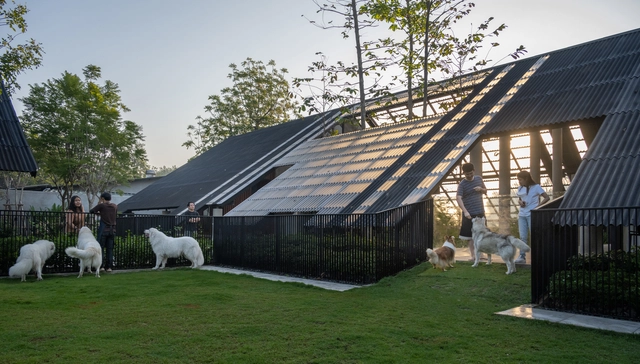
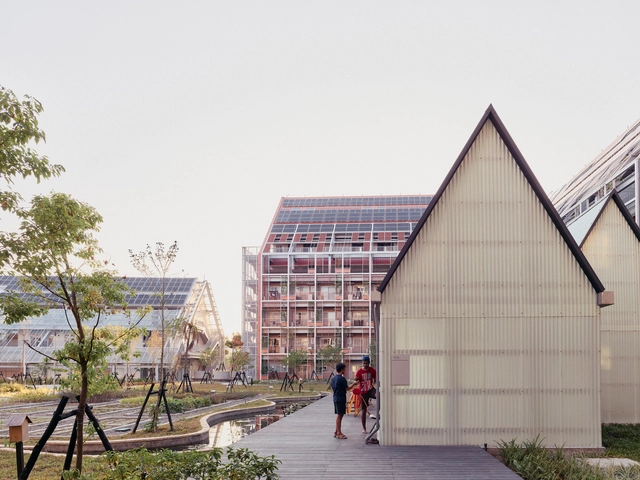
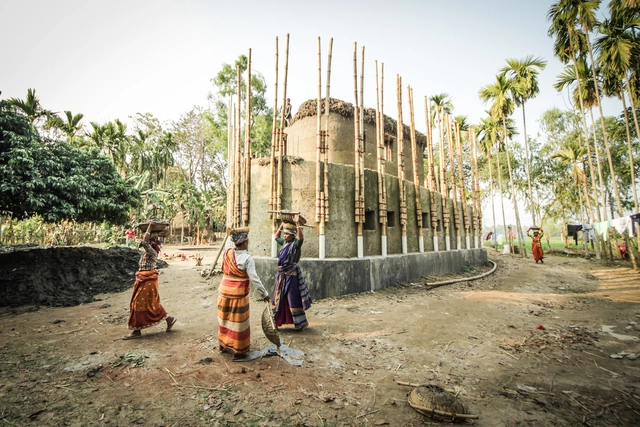
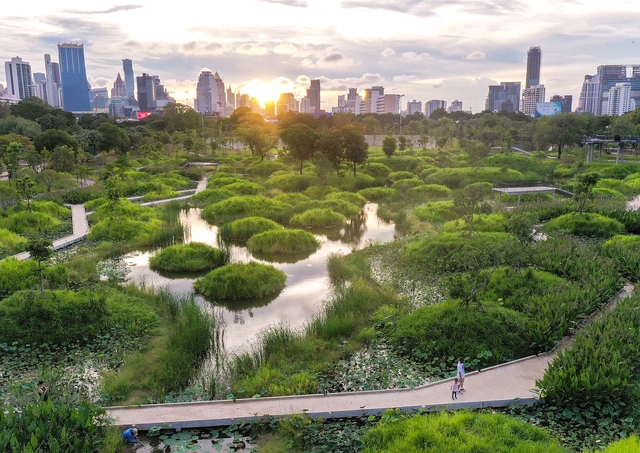
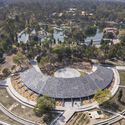
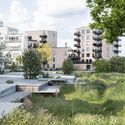
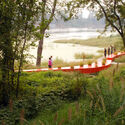
Are humans the only stewards of the built environment? For many architects and planners, spaces are designed with a focus on the needs, comfort, and health of humans. A spatial ordering, in constructed spaces and the urban fabric, designates humans as the default, singular user in this scenario. However, as much as humans have influenced the trajectory of the world, other species play a crucial role in designing, forming, and maintaining the urban landscapes of the twenty-first century.
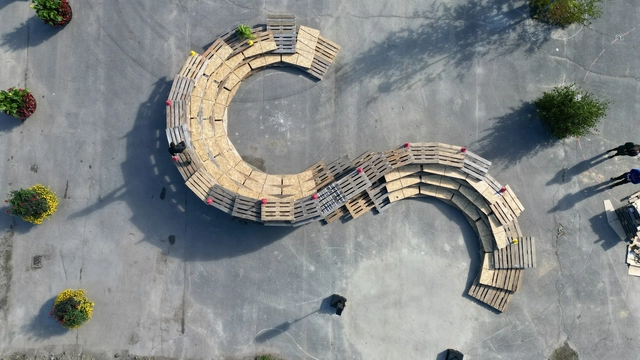
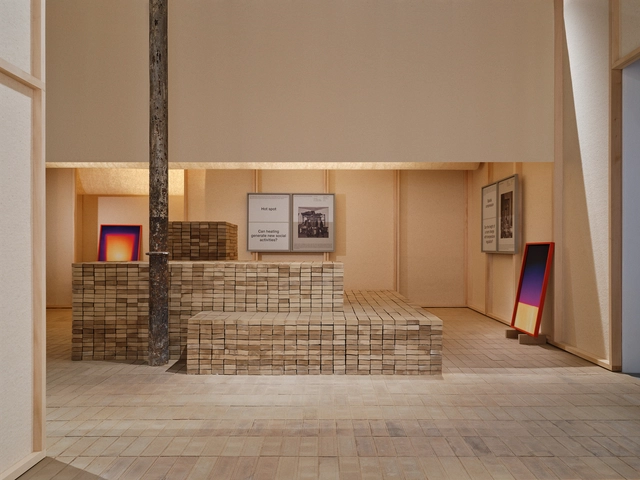
Pallet Parliament / Alejandro Haiek, Rebecca Rudolph, and Raffaele Errichiello. Umeå, Sweden 2022 Photo: Kent Brodin. Image Courtesy of Alejandro Haiek Coll
Architecture practices usually start their design process with a client, who provides a program and a site. Alejandro Haiek, founder of The Public Machinery, approaches things differently. The Public Machinery describes itself as a network of architects and designers working collectively, actively observing, imagining, and proposing public urban interventions themselves. Their proposals are at the intersection of art, architecture, and engineering and weave community engagement, ecology, and new technologies into innovative forms of social infrastructure. They secure funding through research and public grants, enabling them to create public spaces that defy expectations in both their design process and in the form their projects take.
If the past few years were a perfect occasion for reflecting and debating on well-being, digitalization, and democratization in architectural design, this 2023 has been a tremendous opportunity to delve deeper and comment on other urgent topics: The climate crisis and the natural environment have unquestionably entered the global agenda of architecture and construction, alongside circularity, energy efficiency, and decarbonization. It's time to engage in dialogue about these matters to conscientiously build for the future.
Reviewing the future of wood, water, and lighting, in each of the related topics that ArchDaily developed month by month, we posed an open question for you - our dear readers - to actively contribute with your experiences and knowledge. After reading and compiling an immense amount of received messages, from construction professionals to students and architecture enthusiasts, it's time to present you with a summary of the main perspectives. Many thanks for your opinions, and we look forward to your comments for 2024!
In 2019, as the world was on the brink of facing one of the most significant pandemics in recent history, Ailton Krenak, a Brazilian indigenous leader, environmentalist, and philosopher, published a book titled Ideas to Postpone the End of the World. This brief booklet, comprising slightly more than 80 pages, came into circulation at a critical juncture, providing both reassurance and a cautionary message to humanity during a time when it observed the rapid evolution of history.
Modernity and globalization have significantly reduced geographical distances, transformed social interactions, and accelerated the flow of information across nations, which has, in a sense, made the world more accessible to people everywhere. However, it's important to note that when we say "everyone," we refer to a vast and diverse population. Modernity and globalization had an impact on noticeable inequalities in both social and technological realms, as more advanced and privileged nations have established benchmarks and norms for leisure, culture, and consumption. As a result, certain cultures have established a dominant influence, promoting the notion that there is a "correct" way to live and build cities. This unchecked pursuit of development comes at a significant cost to the Earth's ecosystems and biomes.
Today is the premiere of the first episode of a new documentary series that explores the projects of Al Borde. Titled "Building with Living Trees", this first instalment highlights the stories behind Casa Jardín (Garden House), a single-family home located in the suburban area of Quito, Ecuador.
Designed for an ecologist named José, the residence is developed into three small independent pavilions with hybrid structures that combine living trees with various construction systems. These structures utilize a vernacular technique of living fences that has been employed in the Andes since ancient times, showcasing a genuine pursuit of coexistence between architecture and nature.
Far beyond its decorative features, landscaping brings with it biological and cultural issues that need to be addressed in projects. However, what can be seen in most public, residential, condominium, commercial and business gardens is a series of approaches that distance landscaping from all its attributes, reducing it to a decorative layer in the construction. Next, we have put together strategies to avoid the main problems of landscape design, joining aesthetics with its environmental and cultural possibilities.
Landscape architecture is having a moment. The latest proof: last week, the US Department of Homeland Security decided to accredit the field with its prestigious STEM designation. As part of the science, technology, engineering, and mathematics (STEM) educational disciplines that fall under this category, landscape architecture students can now spend an additional 24 months seeking employment and training post-graduation in the United States after an initial period of a year granted to all graduates. The title also promises more prestige, higher entry salaries, and additional career flexibility. Torey Carter-Conneen, CEO of the American Society of Landscape Architects (ASLA), calls the development a significant advancement for 'landscape architecture education and practice, and that is great for America and the global community.'
The news corresponds to a growing emphasis on landscape architecture as a pivotal practice around the globe in recent years – one that is closely connected to notions of public health, environmental design, biophilia, sustainability, and re-wilding. It also underlines the intimate relationship between technology and the discipline. Landscape proposals increasingly rely on advanced science and technology to predict how ecological interventions might alter an existing terrain and determine what measures will yield the highest benefit for both humans and nature. The contemporary ideal of wild meadows and biodiverse forests may exist free from external influence, but the path to get there requires assistance.
At the 18th International Architecture Exhibition of La Biennale di Venezia, the Pavilion of Slovenia set out to explore the theme of ecology and the paradoxical ways in which architecture relates to it. Instead of understanding it strictly through energy-efficient adaptations like heat pumps or recovery ventilation, the exhibition titled +/- 1 °C: In Search of a Well-Tempered Architecture aims to address the theme holistically. The Pavilion curators Jure Grohar, Eva Gusel, Maša Mertelj, Anja Vidic, Matic Vrabič, together with fifty European architects and creatives, researched and analyzed vernacular buildings from Europe to gain insight into the living example of intuitive adaptations.
The 18th International Architecture Exhibition of the Venice Biennale, inaugurated on May 20th, is truly embodying its theme: "The laboratory of the future". Presented by the main curator Lesley Lokko, it invited "architects and professionals from an expanded field of creative disciplines to draw examples from their contemporary practices that would pave a path for the audience to move forward, imagining for themselves what the future may hold."
The Chilean pavilion, curated by Gonzalo Carrasco, and Alejandro Beals, as well as Loreto Lyon (Beals Lyon Arquitectos), was centered on "Moving Ecologies." The exhibition presented the current challenges regarding ecological repair and restoration, focusing on the study of soil recovery processes using endemic seeds.
https://www.archdaily.com/en/1003230/moving-ecologies-the-future-will-not-only-be-built-but-also-sown-and-plantedArchDaily Team
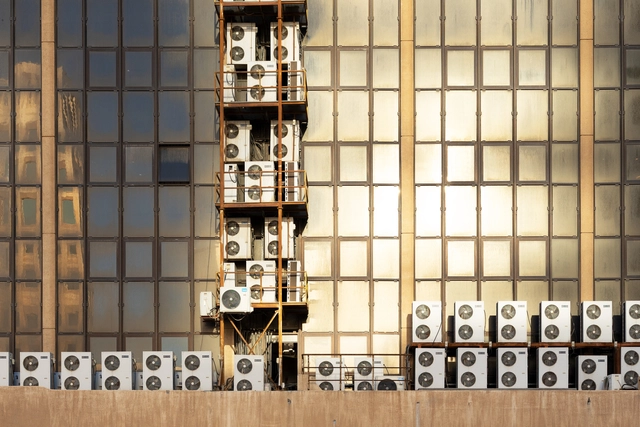
The Kingdom of Bahrain announced its participation at the 18th International Architecture Exhibition of La Biennale di Venezia with a pavilion exhibition titled “Sweating Assets.” Curated by architects Latifa Alkhayat and Maryam Aljomairi, the exhibition highlights the relationship between the extreme heat and humidity that characterizes Bahrain and the inherent need for comfort. The curators aim to show how the necessary cooling infrastructure can be maximized through adaptive means and resource management while reducing its negative impact on the environment.
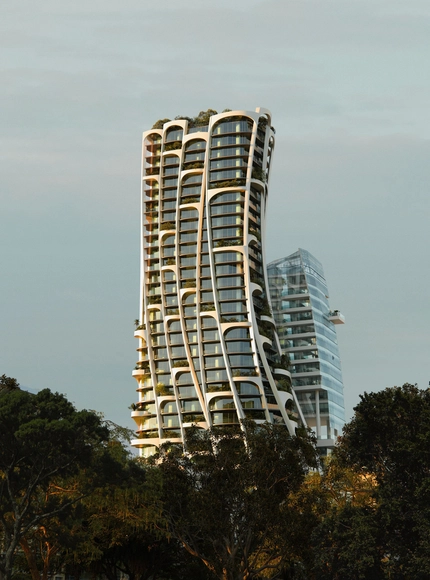
The architecture firm MAD Architects, based in Beijing, China, has presented the design of its first project in South America, the mixed-use "Qondesa" tower in Quito, Ecuador, which will soon become the tallest building in the city.
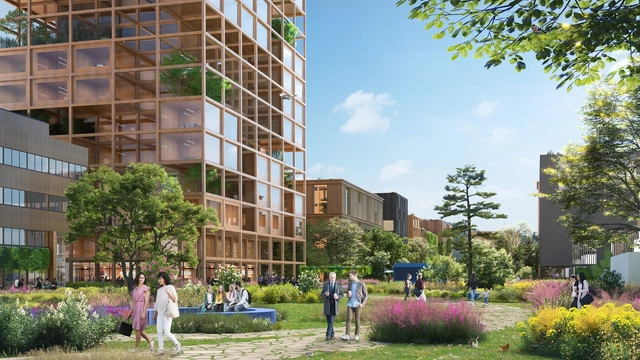
MVRDV has revealed the master plan to expand the Noviotech Campus, a giant in Health & High Tech Innovation, in Nijmegen, east of the Netherlands. The concept combines the campus's already scattered buildings, adds new structures where there are gaps, and integrates the site within the city, putting ecology first. The municipality of Nijmegen, Kadans Science Partner, and NXP Semiconductors will collaborate with Noviotech Campus and MVRDV in the following months to develop and refine the master plan.
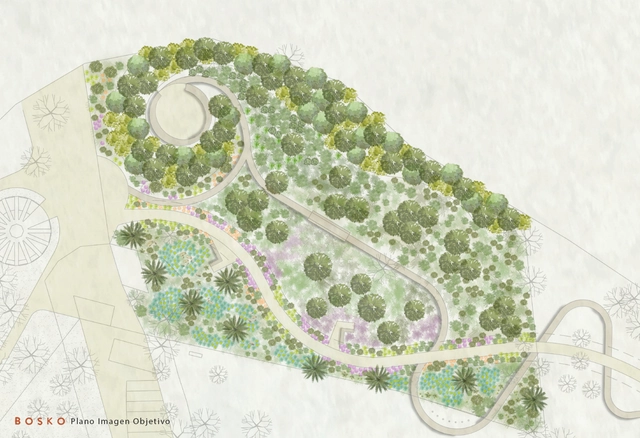
Jardín Nativo Adriana Hoffmann, Museo Interactivo Mirador (MIM) en Santiago de Chile. Image Cortesía de Bosko
During the 19th century, efforts to improve the quality of urban life focused on creating gardens and parks, marking the beginning of the evolution of landscaping as a modern discipline. However, despite remarkable examples worldwide, excessive structure and artificiality in urban parks have gone against the motivations that gave rise to them. In many cases, their design has resulted in decontextualized and inefficient public spaces that are highly demanding on resources and far from being truly sustainable.
The strict use of geometry and the imposition of species that are difficult to adapt and care for are gradually giving way to a more organic approach to landscaping, tailored to local ecosystems and more efficient in its development and conservation. Native forests embody all these positive aspects. They not only ecologically restore degraded areas but also improve air quality and retain rainwater, creating biodiverse green spaces that deeply connect people with nature. We spoke with Magdalena Valdés, founder and director of Bosko, who explains why native forests are the right path towards conscious and truly ecological landscaping.
The philosopher and sociologist Henri Lefebvre coined the notion of "production of space" in 1974, breaking with the vision of space as a container or scenario of objects and social relations, to move towards space understood as a process. From this vision based on the Marxist tradition, space is a product and a producer of social relations and processes.
World Wetlands Day is celebrated every February 2nd to raise awareness of wetlands. This day also marks the anniversary of the Wetlands Convention, adopted as an international treaty in 1971. Its enactment is because nearly 90% of the world's wetlands have been degraded since 1700, decimated three times faster than the forests. However, they are essential ecosystems that contribute to biodiversity, climate mitigation and adaptation, freshwater availability, world economies, and much more.
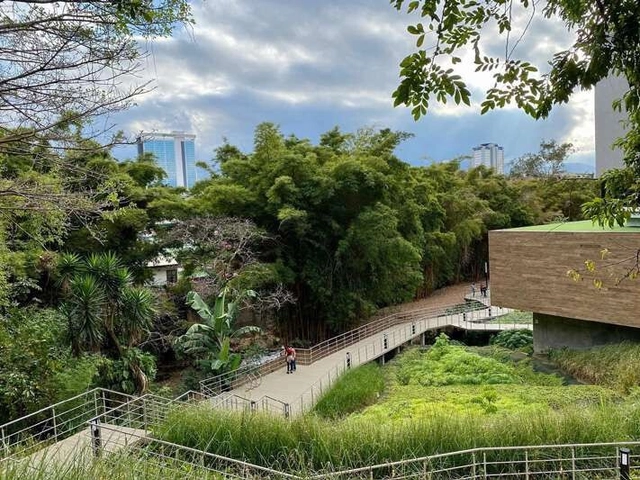
Rutas Naturbanas (San José, Costa Rica. 2015 – 2020). Fundación Rutas Naturbanas - Federico Cartín. Image Courtesy of Jeannette Sordi
Green corridors, or biodiversity corridors, are large portions of land that receive coordinated actions to protect biological diversity. According to Brazil’s National System of Nature Conservation Units, they strengthen and connect protected areas, encouraging low-impact use by implementing a more comprehensive, decentralized and participatory conservation alternative.
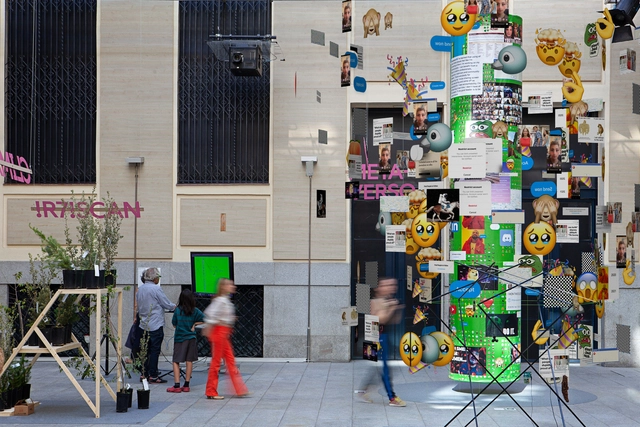
Looking to reformulate the relationship between humans, territories, and globalization, “Ecologies for Other Architectures” gathered for two days in Madrid emerging international architects to propose narratives on urban environments and their undergoing changes. Curated by Itinerant Office within the network of New Generations, the event featured 7 scenarios, 7 models, 7 narratives on nature, technology, bodies, material transformation, soil, participation, and (no) humans. The event employed recycled material and a fast-mounting strategy to guarantee zero impact.