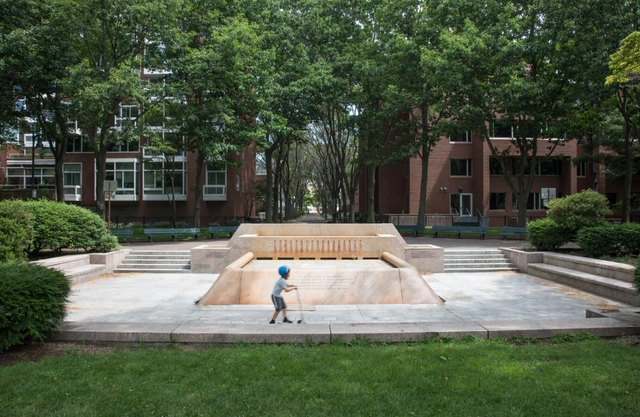
Spurred by disasters like Hurricane Katrina and Superstorm Sandy, cities across the United States have, over the past 15 years, learned to “live with water.” After more than a century of filling wetlands, damming rivers, and diverting streams and stormwater flows into concrete channels, public officials, influenced by a coterie of landscape architects and planners, have embraced the opposite strategy, investing in open space networks that use dynamic natural systems to slow, store, and absorb floodwaters.
https://www.archdaily.com/950604/its-time-for-designers-to-embrace-fire-as-the-ecological-and-cultural-force-that-it-isTimothy A. Schuler
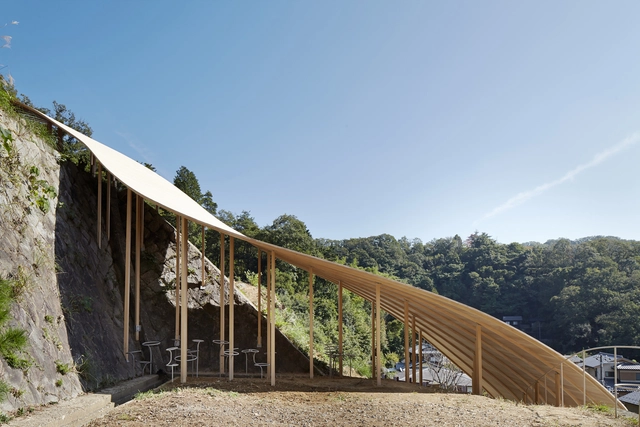
Building in nature constitutes a contradiction, as architecture enables immersive access to the landscape, while at the same time, natural landmarks are being slowly engulfed by tourists. The human presence in natural landscapes is an interplay of scales, a juxtaposition of archetypal shelters against the vast sceneries, as well as a negotiation between access to the landscape and environmental conservation. Exploring a variety of attitudes and formal strategies, the following takes a look at what could be learned from the experiences and design philosophies of several architects and practices that have perfected ways of addressing architecture in the landscape.
Over two days, approximately 500 online participants together set the agenda, formed and dissolved discussion groups, and shared knowledge and resources. With the assistance of an “open space” facilitator, this is how Cut|Fill, a virtual "unconference” on landscape architecture, unfolded.
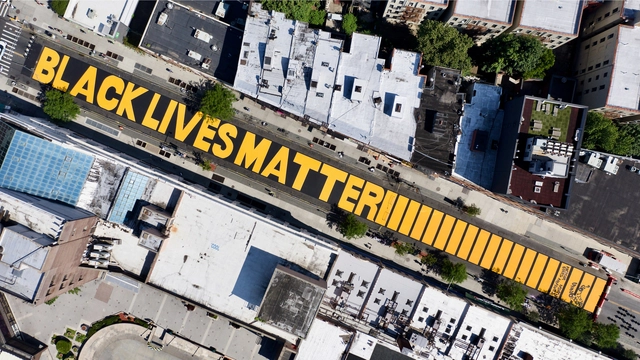
Organized by the Urban Studio and Ink Landscape Architects, Cut|Fill was meant to “raise questions we all want to discuss,” explained Andrew Sargeant, ASLA, a founder of Urban Studio. One of those important questions: “how can landscape architects design with empathy and end dismissive behavior towards people of color?”
https://www.archdaily.com/949104/landscape-architects-of-color-on-how-to-combat-erasureJared Green
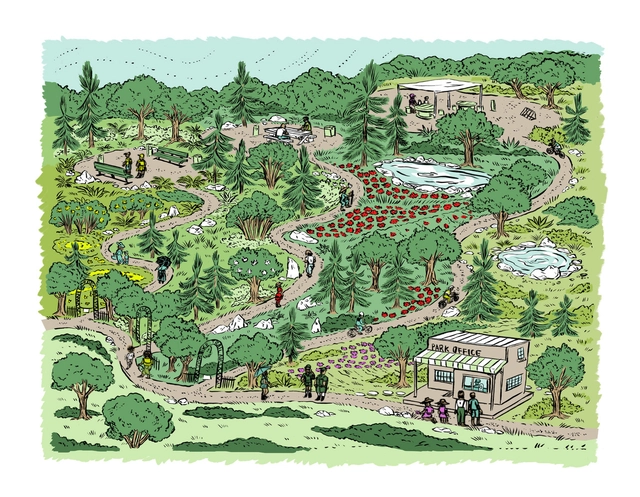
A re-wilded park. Illustration by Sarah Welch. Image Courtesy of SWA Group
As the pandemic has worn on, the American public has adopted parks and neighborhood streets as safe spaces. This will not be a short-lived phenomenon –bikes have been repaired, running shoes purchased, and puppies adopted. People are growing accustomed to spending time in the outdoors to exercise, spend time with family, enjoy nature –and take that growing puppy for walks.
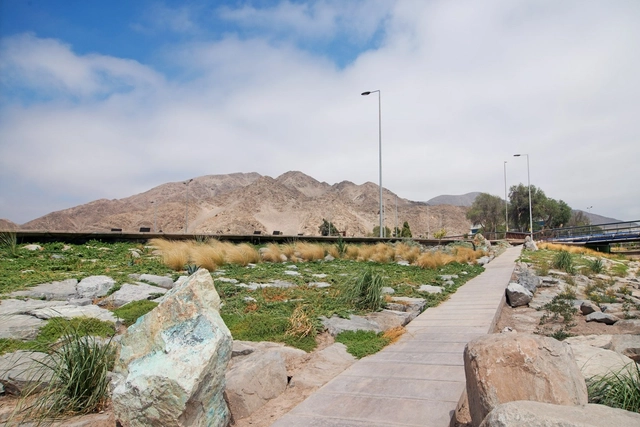
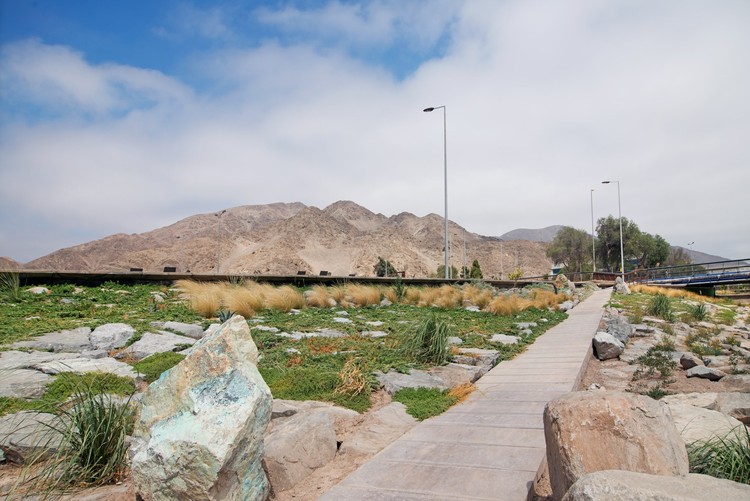
Does it make sense to design green parks in desert cities such as Casablanca, Dubai, or Lima? Ostensibly it does because they contribute freshness and greenness to the urban environment. In exchange, however, they disrupt native local ecosystems, incur high maintenance bills, and begin a constant struggle to ensure water availability.
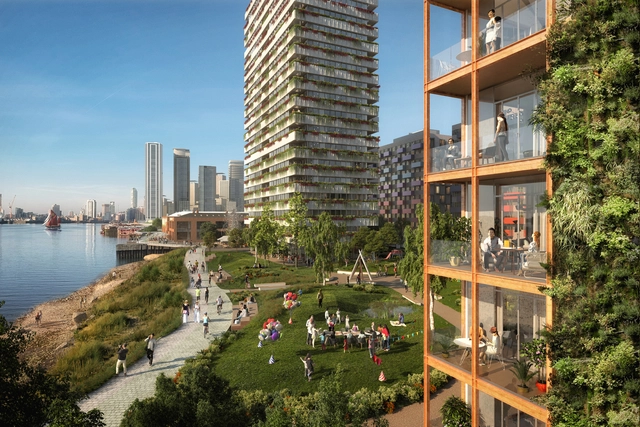
Regeneration specialist U+I submitted plans for Morden Wharf in June 2020, comprising 1,500 new homes, employment spaces, and a landscaped park along 275m of the River Thames. Located on Greenwich Peninsula in London, the mixed-use scheme designed by OMA includes more than six acres of the high-quality public realm, 12 high quality, and tenure-blind residential buildings, as well as commercial, retail, and community spaces.
The Cultural Landscape Foundation (TCLF) has released its 2020 edition of Landslide, an annual in-depth report produced by the Washington, D.C.-based nonprofit that profiles—and raises awareness of—a geographically diverse number of at-risk American parks, gardens, horticultural features, working landscapes, and “and other places that collectively embody our shared landscape heritage.”
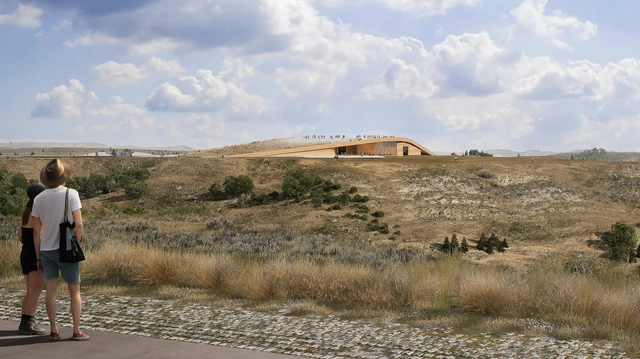
Snøhetta was selected as the winner of the Theodore Roosevelt Presidential Library Competition. Selected from three shortlisted proposals in the last step of the contest, including Studio Gang and Henning Larsen, the winning project “is informed by the President’s personal reflections on the landscape, his commitment to environmental stewardship, and the periods of quiet introspection and civic engagement that marked his life”.
Successful landscaping is more than just an innate desire to always be in touch with nature. Designing the landscape of public spaces, gardens, or even indoors is an ever-growing concern due to how the arrangement of elements in space can impact not only spatial but also psychological perceptions, contributing to improved comfort and quality for visitors.
https://www.archdaily.com/947833/landscape-design-drawings-references-and-conceptsEquipe ArchDaily Brasil
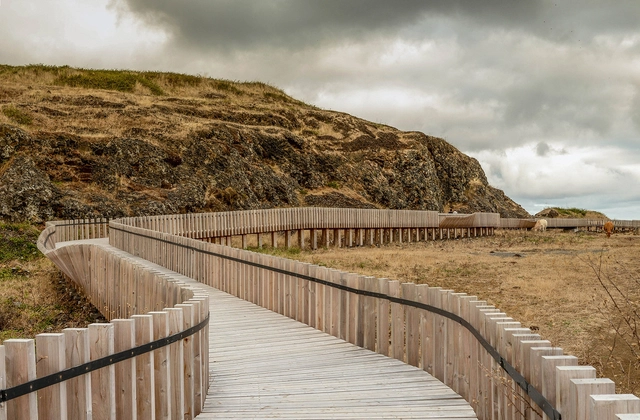
Modern Portuguese architecture has a renowned tradition of exploring the virtues of the landscape, either by integrating or emphasizing the natural elements to create new landscapes that result from the overlapping of culture and nature. Some fine examples are the Boa Nova Tea House and the Leça da Palmeira Tide Pools, both designed by Álvaro Siza, reacting to the rocky seascape where they lie, each in its own way.
However, it is not just Modern Architecture that is concerned with the landscape. In Portugal, contemporary works have been revealing exciting examples of the possibilities of approaching the natural environment, exploring its potential without compromising its integrity. To illustrate this, we have gathered 12 contemporary projects that use different resources to explore the relationship between natural and built.
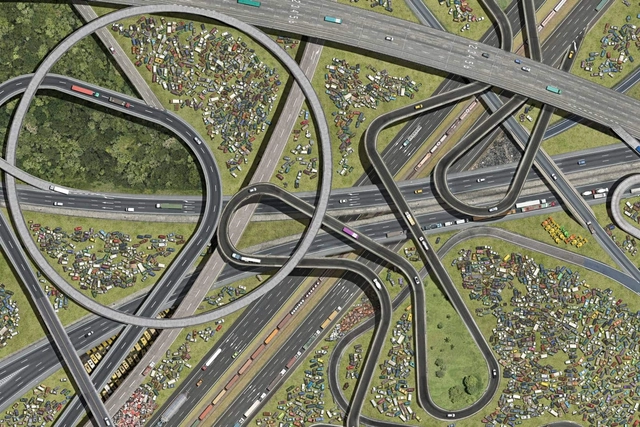
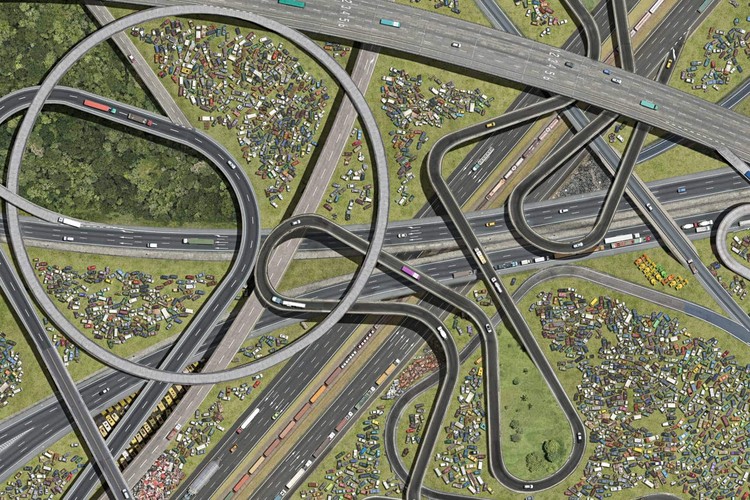
Collectives, is a series of aerial imageries by Brazilian photographer and artist Cássio Campos Vasconcellos, made from articulated photos captured during helicopter flights. On-going for almost 5 years, the project consists of large-format works portraying chaotic urban landscapes and exploring “jam-packed situations typical of our civilization”. Aiming to showcase the impact of human activity on the world, the collection of images is a visual investigation of our consumer society.
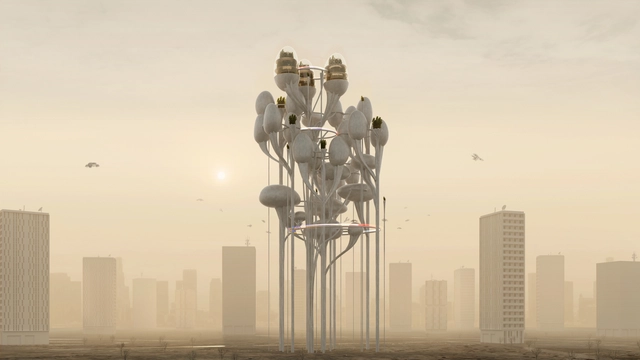
Force Majeure - Futura. Image Courtesy of Jeanne Schultz Design Studio
Putting together competition entries from all around the world, this week’s curated feature for Best Unbuilt Architecture showcases inspiring approaches and concepts. Submitted by our readers, the selection highlights uncommon proposals, part of international contests. While some are winning projects, others received honorable mentions.
Serie imagines stacked timber pavilion-like offices, Schlaich Bergermann Partner, LAVA, and Latz + Partner design new pedestrian and cycle bridge over the Neckar River in Heidelberg, Germany and Aidia Studio create an Oculus in the Emirati desert. Other competition entries include a landscaped avenue by ZXD Architects in Hangzhou, a community school in Egypt by Hand Over, a winning pavilion for the Singapore’s Archifest 2020 by ADDP Architects and OWIU Design Studio; and a Baha’i House of Worship by SpaceMatters in India.
"Landscaping is the only artistic expression that includes all five human senses," says Benedito Abbud in his book Creating Landscapes – a guide to Working in Landscape Architecture. While architecture works mainly with sight and touch, landscaping also embraces smell, hearing and taste, "which provides a rich sensorial experience, by combining the most diverse and full perception experiences. The more a garden can sharpen all the senses, the better it fulfills its role."
The Midnight Charette is an explicit podcast about design, architecture, and the everyday. Hosted by architectural designers David Lee and Marina Bourderonnet, it features a variety of creative professionals in unscripted conversations that allow for thoughtful takes and personal discussions. A wide array of subjects are covered with honesty and humor: some episodes provide useful tips for designers, while others are project reviews, interviews, or explorations of everyday life and design. The Midnight Charette is also available on iTunes, Spotify, and YouTube.
This week David and Marina are joined by James Lord, Landscape Architect & Founder of Surfacedesign, to discuss the homogeneity of our streets and public spaces, his transition from architecture to landscape architecture, stories about Pierre Koenig and saving endangered frogs, the most common struggle Landscape Architects face in projects, storytelling in design, and much more. Enjoy!
https://www.archdaily.com/945758/james-lord-on-storytelling-in-design-and-the-homogeneity-of-the-public-spacesThe Second Studio Podcast


.jpg?1603313837&format=webp&width=640&height=580)


.jpg?1603313837)