1. ArchDaily
  2. natural resources

natural resources: The Latest Architecture and News

Could Salt Be a Material of the Future? Innovating with Crystallized Salt Panels

Subscriber Access | 

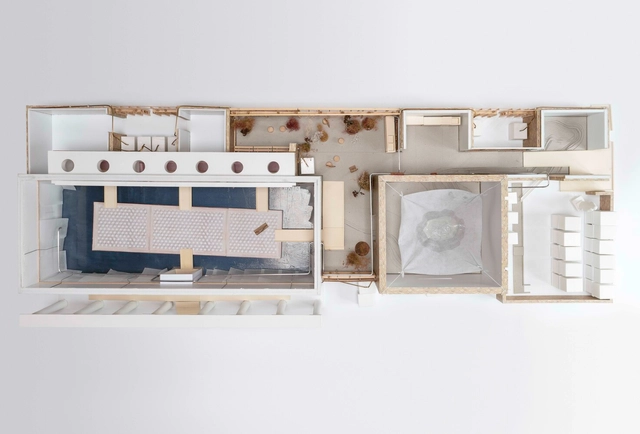
Sodium chloride, most commonly known as salt, is everywhere. Ancient in its uses and abundant in nature, it preserves local ecosystems, de-ices roads, is vital in a variety of industrial processes, and is likely sitting on your kitchen table as a seasoning for your meals. Today, it is attributed relatively little value –considering it used to be as worthy as gold–, and unlike other nature-derived alternatives such as algae or mycelium, there doesn’t seem to be enough research and interest around all of its physical, mechanical or aesthetic properties. And yet it is a material with infinite, extraordinary potential. Apart from its life-supporting qualities, salt is affordable, easily available, antibacterial, resistant to fire, can store humidity and heat, and is great at reflecting and diffusing light.

Could Salt Be a Material of the Future? Innovating with Crystallized Salt Panels - Image 1 of 4Could Salt Be a Material of the Future? Innovating with Crystallized Salt Panels - Image 2 of 4Could Salt Be a Material of the Future? Innovating with Crystallized Salt Panels - Image 3 of 4Could Salt Be a Material of the Future? Innovating with Crystallized Salt Panels - Image 4 of 4Could Salt Be a Material of the Future? Innovating with Crystallized Salt Panels - More Images+ 16

Tallinn Architecture Biennale Announces Programme and Participants for Its 6th Edition

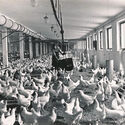
Tallinn Architecture Biennale (TAB 2022) announced the programme for its 6th edition that brings forward circularity in architecture. Under the theme "Edible; Or, The Architecture of Metabolism", this year's edition explores "architectural strategies for local production and self-sufficiency" and highlights ways of reusing waste resulting from urban environments. Curated by Lydia Kallipoliti and Areti Markopoulou, in collaboration with local advisor Ivan Sergejev and assistant curator Sonia Sobrino Ralston, TAB 2022 reflects on the possibilities that natural metabolical processes can bring to cities and buildings when transferred to the domain of architecture.

Tallinn Architecture Biennale Announces Programme and Participants for Its 6th Edition - Image 1 of 4Tallinn Architecture Biennale Announces Programme and Participants for Its 6th Edition - Image 2 of 4Tallinn Architecture Biennale Announces Programme and Participants for Its 6th Edition - Image 3 of 4Tallinn Architecture Biennale Announces Programme and Participants for Its 6th Edition - Image 4 of 4Tallinn Architecture Biennale Announces Programme and Participants for Its 6th Edition - More Images+ 5

A Cyclic Water System Connects Visitors, Senses and Surroundings at the Danish Pavilion in Venice Architectural Biennale 2021

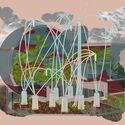
For the 17th international architecture exhibition – la biennale di Venezia 2021, Denmark is creating a water cyclic system that connects people with each other and with nature. The national pavilion, titled “Con-nect-ed-ness”, is curated by Marianne Krogh and Lundgaard & Tranberg Architects, and will be on display from May 22nd to November 21st, 2021.

A Cyclic Water System Connects Visitors, Senses and Surroundings at the Danish Pavilion in Venice Architectural Biennale 2021 - Image 1 of 4A Cyclic Water System Connects Visitors, Senses and Surroundings at the Danish Pavilion in Venice Architectural Biennale 2021 - Image 2 of 4A Cyclic Water System Connects Visitors, Senses and Surroundings at the Danish Pavilion in Venice Architectural Biennale 2021 - Image 3 of 4A Cyclic Water System Connects Visitors, Senses and Surroundings at the Danish Pavilion in Venice Architectural Biennale 2021 - Image 4 of 4A Cyclic Water System Connects Visitors, Senses and Surroundings at the Danish Pavilion in Venice Architectural Biennale 2021 - More Images+ 5

S.Misagh Architecture & Planning Creates an Edgy Alternative to Antiquated Classrooms

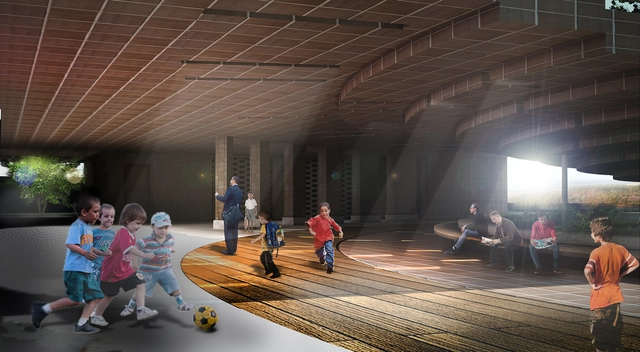
How do you make school fun and sustainable in the age of technology? S.Misagh Architecture and Planning's design for an Iranian village school creates an edgy alternative to the antiquated classroom. The firm's three principle concepts for their Deh-e Now Village School — identity, knowledge, and the natural environment— allow students an array of opportunities for interactive engagement with their surroundings.

S.Misagh Architecture & Planning Creates an Edgy Alternative to Antiquated Classrooms - GardenS.Misagh Architecture & Planning Creates an Edgy Alternative to Antiquated Classrooms - LightingS.Misagh Architecture & Planning Creates an Edgy Alternative to Antiquated Classrooms - FacadeS.Misagh Architecture & Planning Creates an Edgy Alternative to Antiquated Classrooms - Garden, Facade, BenchS.Misagh Architecture & Planning Creates an Edgy Alternative to Antiquated Classrooms - More Images+ 4