The American Institute of Architects (AIA) and the American Institute of Architecture Students (AIAS) have committed themselves to pushing a bill that would provide U.S. architecture graduates student loan relief in exchange for community service, an offer already granted to lawyers and doctors. The bipartisan legislation, known as the National Design Services Act (NDSA), was introduced today in an effort to free young professionals from the crushing cost of education (architecture being one of the disciplines with the highest loan balances) and aspire them to contribute their design service to the betterment of their communities. Learn more, here, and sign the petition in support of NDSA.
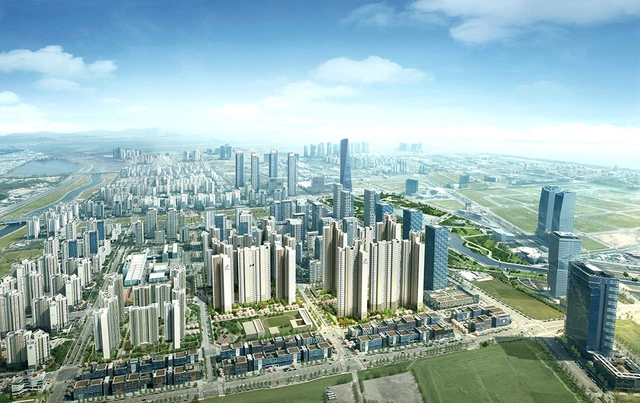
The New City of Songdo in South Korea. Image Courtesy of Cisco
Originally published by Metropolis Magazine as "Big Data, Big Questions", this article by Alex Marshall examines what is arguably the most important aspect of smart city design: not how they will be created, but who will create them. He finds that, though an apparently new phenomenon, smart cities are just like their forebears in that they are built primarily by political will, not microprocessors.
Not long ago, I bought a beetle-shaped piece of silicone and metal that slips into my pocket and keeps track of how much I walk. Called a Fitbit One, it’s essentially a glorified pedometer. The device’s shell is jammed with hard- and software that lets it talk to my computer and iPhone. It sends me attaboys! on its tiny screen and, most importantly, the gadget talks with my spouse’s Fitbit, which allows us to compete with each other.
The Fitbit is not on anyone’s list of smart-city phenomena, but I would argue for including it, because it’s changing my relationship with the streets I walk in New York City. It also illustrates the pervasiveness of smart technology, and its limitations. For all its coolness—and it is cool—my device is doing something digitally that had already been done well mechanically, and at a lower price. A lot of the smart-cities technology is like this—it’s changing how we do things, but often not what we do.
Read on for more about the changes brought about - or not brought about - by smart cities after the break
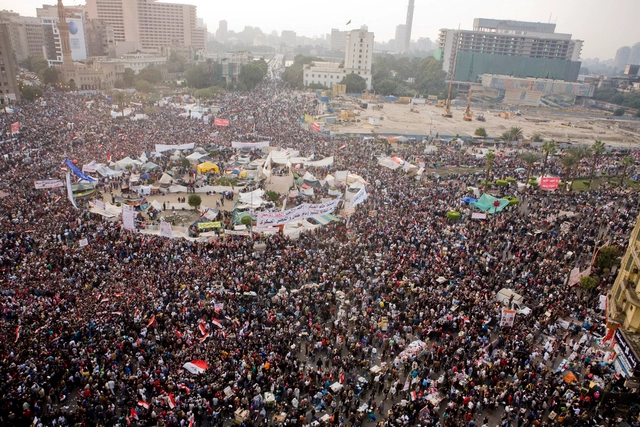
Tahrir Square during the Egyptian revolution of 2011. Image
In this tongue-in-cheek "Dictator's Guide to Urban Planning", the Atlantic explores the various ways that public spaces, and cities as a whole, have been used to suppress uprisings and bolster the control of authoritarian governments. Covering everything from Baron Haussmann's 19th Century Paris to the recent revolution in the Ukraine, the article reveals the fundamental relationship between public space and democracy. You can read the full article here.
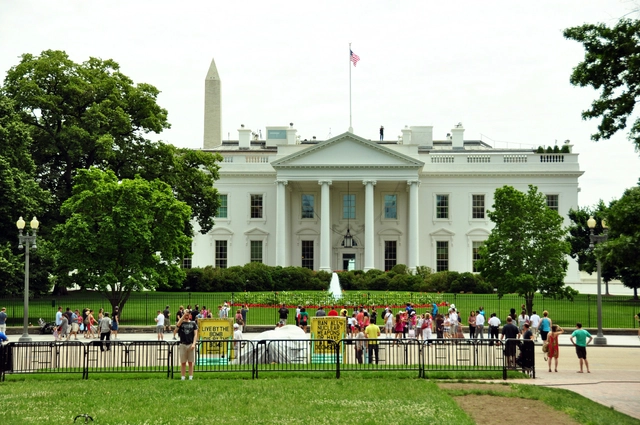
A public petition that the design of new Federal building projects be awarded by open architectural competition has been submitted to the White House’s “We The People” website for consideration by the Obama Administration. The appeal proposes to give young architects greater access to the building market and needs 100,000 votes by March 24th to qualify for a response from the Oval Office. Sign the petition here!
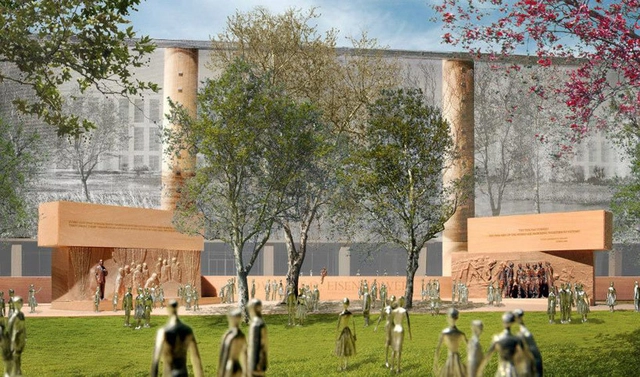
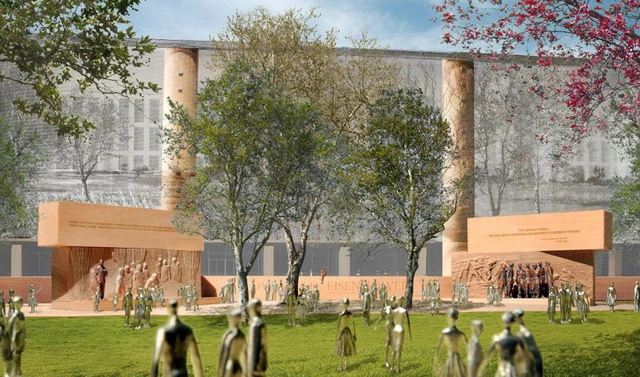
Congress budget cuts have officially stalled Frank Gehry’s controversial Eisenhower Memorial, according to a recent report, rejecting $49 million in construction funds and cutting the Eisenhower Memorial Commission’s annual budget in half. Unless the commission is able to raise a substantial amount of private funds, as well as win support from the Eisenhower family (which is doubtful), Gehry’s “grandiose” memorial is unlikely to ever break ground. Despite this, the commission’s director is optimistic, stating that the FDR Memorial took nearly 45 years to get built. You can read more about the controversy here.
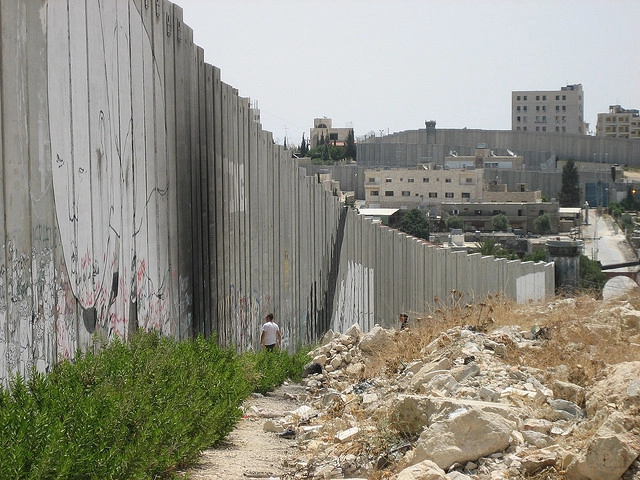
In response to the death of former Israeli Prime Minister Ariel Sharon last week, Eyal Weizman has written an interesting investigation into how the controversial politician used architecture and urban planning as a tool in the ongoing Israeli-Palestinian conflict, deploying settlements like military tactics rather than simply as housing strategy. The piece is an insightful examination of how power and even violence can be manifest in design, as evidenced by Sharon's "architecture of occupation". You can read the full article here.
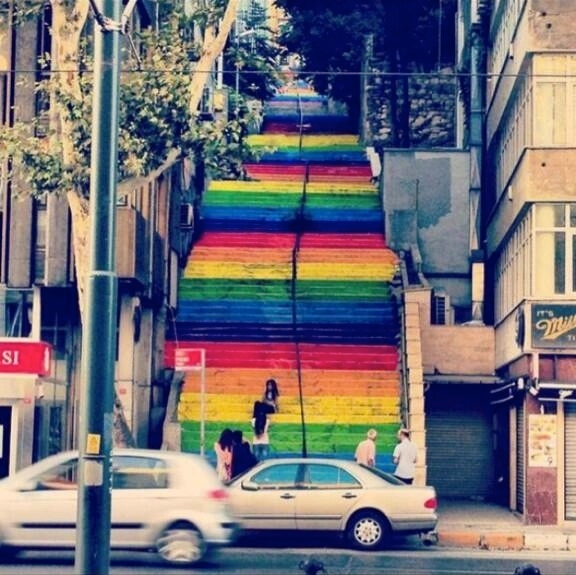
Last June we covered some of the anti-government protests that were taking Turkey by storm - but the Turks are still making headlines! Last week, one Istanbul resident decided to paint a derelict public stair only to find it hastily covered up by government workers. In an act of “guerilla beautification” and silent protest, people across Turkey have once again taken to the streets to paint their stairs and public walkways in rainbow colors. For the full story, check out this article on The Lede by Robert Mackey.
Dharavi - Asia’s largest slum of one million with an average density of 18,000 residents per acre - is amidst a heated debate between its people, the government and private investors as it sits on some of India’s hottest real estate in Mumbai. While the government is grappling for solutions on how to successfully dismantle the low-rise slum and relocate its residents to a high-rise podium style typology, the investor’s profit-driven approach has placed residents on the defense, “rendering Dharavi a perfect storm of contested urbanism," as architect, urban designer and author William Hunter describes.
In an effort to protect Turkey’s historic skylines from uncontrolled urbanization, the Turkish Parliament has passed an amendment that would grant zoning authority to the Ministry of Environment and Urbanization as well as set up an aesthetic architectural commission.
The Southbank Centre and Feilden Clegg Bradley have taken their designs back to the drawing board, deciding to delay their planning application in order to resolve the mounting issues surrounding the proposal.
The designs to update the brutalist cultural centre have divided people from the start; however, the tide of opinion seems to have definitively shifted away from the design due to a sustained campaign by skateboarders (who make use of the undercroft) and now criticism from the neighboring National Theatre and the UK design council CABE.
Read more about the controversy surrounding the Southbank Centre after the break...
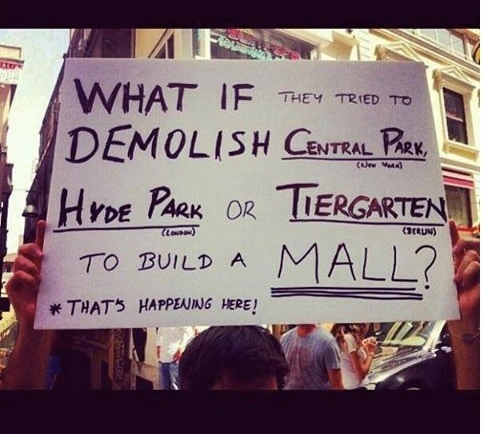
The efforts of thousands who occupied Gezi Park, and those who joined them in solidarity via social media from around the world, have paid off. According to Reuters, a Turkish court has ruled against the Prime Minister Tayyip Erdogan-backed development in which proposed to redesign Istanbul’s iconic Taksim Square and replace one of the populated city’s few public parks with a mall.
In a few weeks the Senate will likely vote on an amendment that would remove the 2030 sustainability targets for federal buildings that many architects and US citizens fought to put into motion six years ago. The AIA has requested for your help to prevent this and coordinate visits with Senators while they are back home during the Independence holiday recess next week. Please visit the AIA website here to see how you can help protect federal sustainability targets.
Architecture emerges with every "occupy" movement or protest. From whatever meager resources at hand, occupiers create structures to fulfill very specific purposes - from makeshift tents for sleeping, to instant podiums for speaking, or perhaps even a swing to kill the time. Unfortunately, these architectures are, by their very nature, fleeting: often disappearing instantly the moment the occupation ends.
However, thanks to a non-profit in Istanbul, the temporary structures that dotted Taksim Square a few weeks ago have been preserved for posterity. Herkes İçin Mimarlık, or "Architecture for All," is devoted to offering architectural solutions to social problems facing Turkey today and promoting a participatory design process in architecture. They've created a tumblr called #occupygezi architecture where you can see all the temporary structures of Taksim Square in both photographs and detailed drawings. Check them out, after the break.
Despite harsh criticism and a lingering threat from the House to scrap funding and start anew, the Eisenhower Memorial Commission has unanimously approved Frank Gehry’s design for the Dwight D. Eisenhower Memorial in Washington DC. The $110 million project, nearly fourteen years in the making, has undergone numerous revisions in the past couple years in search of a compromise between the commission and its opposition, namely the Eisenhower family.
Though the odds started to lean in the opposition’s favor, the commission is pressing forward with their plans and Gehry is expected to present his design to the U.S. Commission of Fine Arts next month and the National Capital Planning Commission in early fall for review and approval.
Perot Museum of Nature and Science designed by the 2013 Gold Medal Award Winner: Thom Mayne of Morphosis
In the wake of Pritzker’s refusal to retroactively acknowledge Denise Scott Brown’s role in Robert Venturi’s 1991 Pritzker Prize, the American Institute of Architects (AIA) Board of Directors have voted to expand the prestigious Gold Medal award’s criteria to include either an individual or two individuals working together in a collaborative partnership. In order to be considered, partners must have created a singular body of distinguished architectural work.
A preliminary document reveals that, if passed, The Law of Professional Services (LSP) will modify labor regulations in order to allow engineers, or really any one "competent" in construction, to take on the work of architects:
“Exclusivity is eliminated. Architects or engineers with competency in construction will be able to design and direct projects, including residential, cultural, academic or religious buildings. [...] If a professional is competent enough to execute one building’s construction, it is understood that he/she will also be capable of executing other kinds of buildings, regardless of its intended use.”
Unsurprisingly, Spanish architects have risen up against the law, mobilizing both physical protests as well as social media campaigns. Even Pritzker-Prize winner Rafael Moneo has offered his opinion on the matter...Hear what Moneo has to say, after the break...
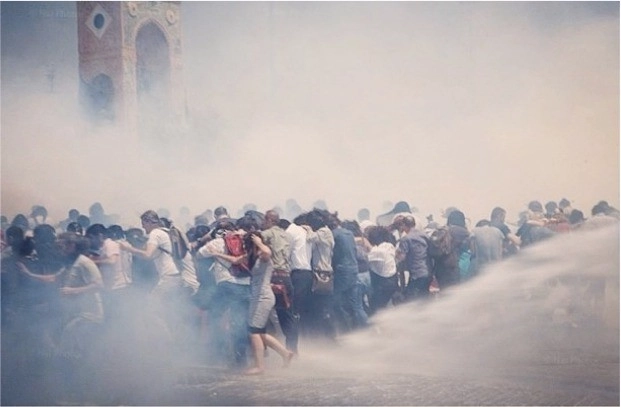
Over the last two weeks, the world has witnessed history unfold in a small park in the heart of Istanbul, Taksim Square. What started out as a peaceful protest to save Gezi Park and its trees from destruction has turned into a country-wide (and, to some degree, worldwide) movement that rejects the ever-increasing autocratic tendencies of Prime Minister Recep Tayyip Erdogan.
The urban policies and projects that PM Erdogan and his government have been loutishly implementing in Istanbul offer only a few examples of the way this government has manifested its undemocratic attitudes. In that regard, it would be misleading to consider the protest over Taksim and Gezi Park as an isolated incident. Instead, development over Istanbul’s quintessential square constitutes the last straw in a series of neo-liberal policies, themselves the result of a century of history, that have shaped Istanbul over the course of the last decade.
After four years of high-brow debate, the demise of the controversial Hirshhorn ‘Bubble’ has been confirmed. The decision, made by Smithsonian Secretary G. Wayne Clough and Undersecretary Richard Kurin, comes shortly after the Hirshhorn board’s split vote resulted in the resignation of director Richard Koshalek - the man behind the ‘Bubble’.