"Open House" is artist Matthew Mazzotta's latest invention: a compact, faded pink house that unfolds into a ten-piece outdoor theater that seats nearly 100 people. Facing a raised earthen stage, it's a public space made from the remnants of a privately owned blighted property. Reversing the loss of public space that the city of York, Alabama has experienced, Open House has transformed a wasted ruin of a house into an outdoor theatre open to various community events.
public space: The Latest Architecture and News
The "Open House": From House to Theater in 90 Minutes
https://www.archdaily.com/418296/open-house-matthew-mazzottaBarbara Porada
How Virtual Public Squares Are Changing the Nature of Political Protest
"Most social movements become social moments when they appear in a public square," says Seyla Benhabib, a professor of Political Science at Yale University, in the video above. "These are informal spaces of deliberation and communication."
Occupy Wall Street, which took over New York's Zuccotti Park, is just one example of this phenomenon. As we've reported, the social movements that spread through Turkey like wildfire took physical form in Istanbul's historic Taksim Square and Gezi Park. Only a few days ago, protests took similar shape in the streets of Sao Paulo, Brazil, as citizens protested a raise in bus fares as well as many other social issues. There are countless other examples throughout history of people utilizing public space as a vehicle for self expression and social change, but what's different about today's social movements is that they also occupy cyberspace - heavily.
A few days ago, Google+ released the short video above about these digital spaces, what they call the "virtual public square". Of course, the physical places that people use to express themselves are certainly no less important; however, it is interesting to consider the vital role social media and virtual communication now play in the unraveling of political events.
More after the break.
https://www.archdaily.com/391277/google-and-virtual-public-squaresBarbara Porada
Ten Ways to Transform Cities through Placemaking & Public Spaces
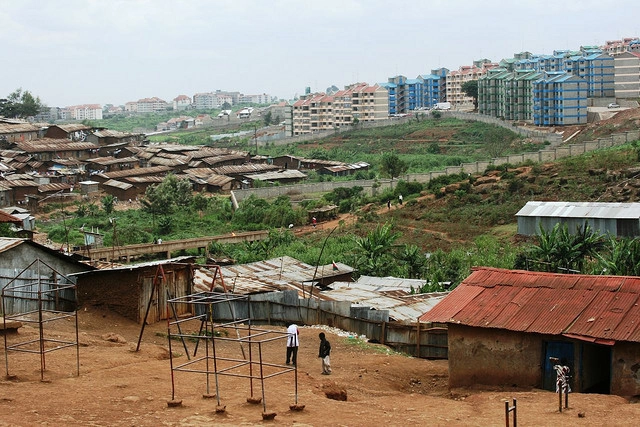
In 2011, UN-HABITAT and Project for Public Spaces (PPS) signed a 5-year cooperative agreement to aspire to raise international awareness of the importance of public space in cities, to foster a lively exchange of ideas among partners and to educate a new generation of planners, designers, community activists and other civic leaders about the benefits of what they call the "Placemaking methodology." Their partnership is helping to advance the development of cities where people of all income groups, social classes and ages can live safely, happily and in economic security and in order to reach these ambitious goals, the duo recently released 10 informative steps that cities and communities can take to improve the quality of their public spaces.
To find out what these steps are, read on!
https://www.archdaily.com/362988/ten-ways-to-transform-cities-through-placemaking-and-public-spacesBarbara Porada
Cities Without Ground: A Guide to Hong Kong's Elevated Walkways

As a city, Hong Kong doesn't have it easy; impossibly dense and smothered by unsympathetic hilly terrain, the gymnastics that it performs to survive has lead to the growth of unique urban spaces. Cities Without Ground deconstructs the unfathomable spaghetti of pedestrian bridges, tunnels and walkways, which make up pedestrian Hong Kong. The book, created by motley trio of architects and academics: Jonathan Solomon, Ciara Wong and Adam Frampton, graphically dissects this labyrinth in a series of snappy axonometric drawings of 32 various routes through the city.
Read more about the story of Hong Kong's pedestrian maze after the break...
https://www.archdaily.com/352543/cities-without-ground-a-hong-kong-guidebookNicky Rackard
How to Design Safer Cities

Can a good public space influence social behavior and make a city more secure?
In 1969, Philip Zimbardo, professor at the University of Stanford, performed a social psychological experiment. He placed an unlicensed car with a lifted hood in a neglected street in The Bronx, New York, and another similar car in a wealthy neighborhood of Palo Alto, California. The car in The Bronx was attacked in less than ten minutes, its apparent state of abandonment enabling the looting. The car in Palo Alto, however, remained untouched for more than a week.
Zimbardo then took his experiment one step further and broke a window of the car in Palo Alto. Almost immediately, passersby began to take things out of the car and within a few hours, the car had been completely dismantled. In both cases, many of the looters did not appear to be dangerous people. This experiment lead Harvard Professors George Kelling and James Wilson to develop the Broken Windows Theory in 1982: “If a broken window is left without repair, people will come to the conclusion that no one cares about it and that there is no one watching it. Then more windows will be broken and the lack of control will spread from the buildings to the streets, sending a signal that anything goes and that there is no authority.”
Read more about designing safer cities after the break...
https://www.archdaily.com/334077/how-to-design-safer-citiesBarbara Porada