

-
Architects: pinktruder
- Area: 144 m²
- Year: 2015
-
Manufacturers: ALPESA
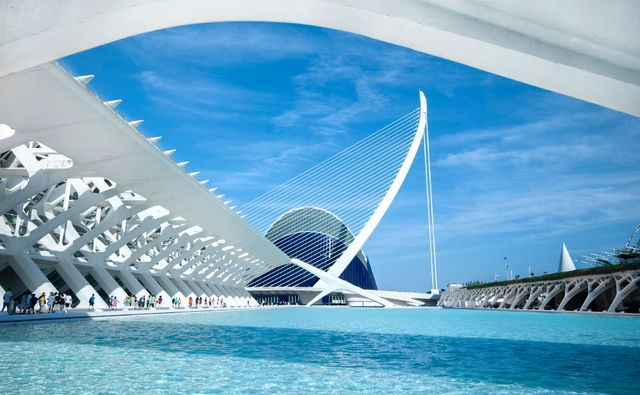
Santiago Calatrava's City of Arts and Sciences has taken a starring role in Tomorrowland, Disney's latest blockbuster. Located in the former riverbed of the Turia in Valencia, Spain, the City of Arts and Sciences comprises a cinema (L'Hemisfèric), a landscaped walk and sculpture garden (L'Umbracle), the Príncipe Felipe Science Museum, the largest aquarium in Europe (L'Oceanográfico), and the renowned Palau de les Arts Reina Sofia. The complex was constructed in stages commencing in July 1996, and opened to the public in October 2005. Unique and strikingly futuristic, the iconic group of buildings caught the eye of Tomorrowland producer Jeffrey Chernov, who spoke effusively of the building at a recent press conference for the film.
"Calatrava's architecture is just phenomenal and inventive and exciting. It's very skeletal, like you're looking at the vertebrae of a dinosaur or prehistoric fish," said Chernov. "You walk into that place and you never want to leave. That's the vibe we wanted for Tomorrowland."

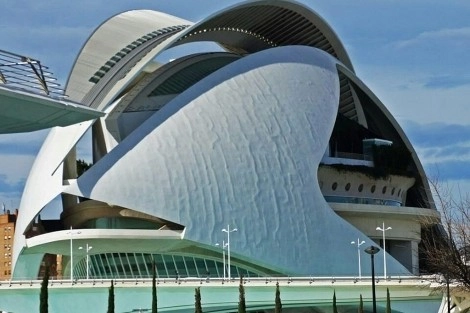
Will the peeling shell of Santiago Calatrava’s Palau de les Arts in Valencia be saved by an innovative, new paint? Calatrava's $455.6 million project, which surpassed its budget four times over, has sprouted many defects over the years, but none more damning than its peeling facade - a defect that spurred the city of Valencia to sue Calatrava's office. However, Spanish paint manufacturer Graphenano has proposed an innovative solution: Graphenstone, a mixture of limestone powder and the allotrope graphene, which should just prevent further deterioration. Whether the solution could also relieve some courtroom tension, remains to be seen. Read more on Inhabitat and The Architect's Newspaper.
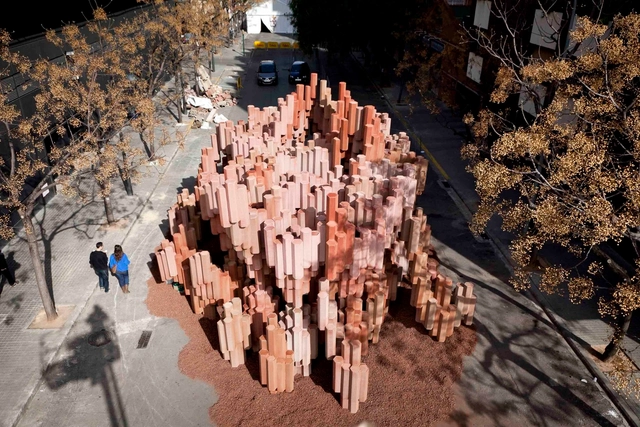
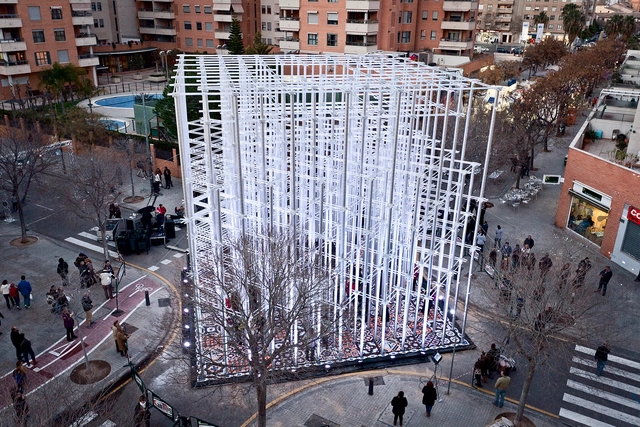
Built for the annual traditional festival called “Fallas” held in Valencia in March, the corrugated cardboard temporary pavilion was made out with 3.000 purposefully made corrugated hexagonal boxes as the only structural material. The main challenge for the project by architect Miguel Arraiz and sculptor David Moreno was the wind and the rain, because the structure should be at the urban space during at least 5 days. More images and architects’ description after the break.