Dedicated to advancing education by conducting research regarding architecture and design within the urban environment, Calgary’s Design Talks Institute (d.talks) has launched a ‘Call for Ideas’ to ‘improve the human aspect of mobility’ as part of the d.talks ‘2018 Movement’ program. The 2018 Movement Call for Ideas seeks ideas on the human connection to place. Using the new Green Line Light Rail Transit (LRT) project in Calgary as a platform for new ideas, the call aims to rethink the present and future of transportation.
Blank Space is thrilled to announce the 2019 Fairy Tales competition in partnership with ArchDaily, Archinect, Bustler, and the AIAS. The winners will be selected by a jury that includes Tatiana Bilbao, Mark Foster Gage, Jürgen Mayer and Moshe Safdie.
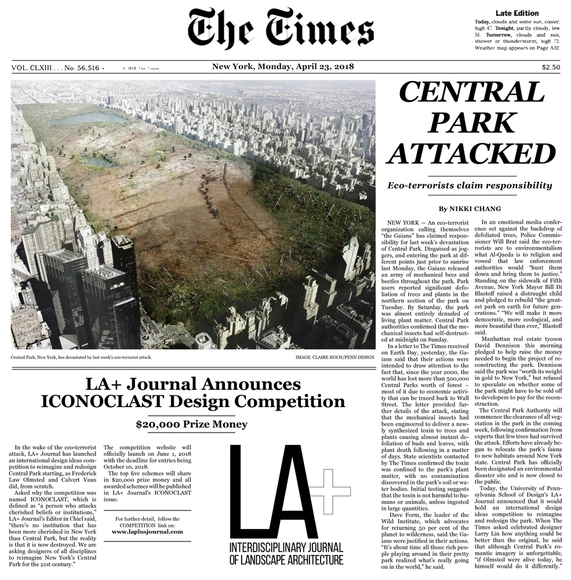
LA+ ICONOCLAST challenges designers to reimagine and redesign New York's Central Park for the 21st century following a fictional eco-terrorist attack that devastates the park. LA+ invites submissions from architects, landscape architects, planners, artists, and designers from anywhere in the world. This is an ideas competition - no professional qualifications are required to enter.
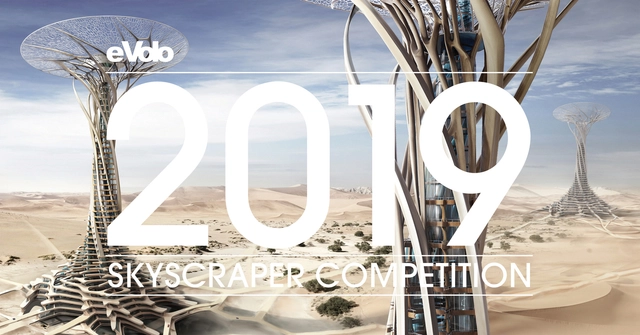
eVolo Magazine is pleased to invite architects, students, engineers, designers, and artists from around the globe to take part in the 2019 Skyscraper Competition. Established in 2006, the annual Skyscraper Competition is one of the world’s most prestigious awards for high-rise architecture. It recognizes outstanding ideas that redefine skyscraper design through the implementation of novel technologies, materials, programs, aesthetics, and spatial organizations along with studies on globalization, flexibility, adaptability, and the digital revolution. It is a forum that examines the relationship between the skyscraper and the natural world, the skyscraper and the community, and the skyscraper and the city.
Aquatecture 2018, a competition that challenges to explore innovative designs on water for our aquatic future Come join the movement and define the next big thing on Water!!
Water – an element in nature that life is constantly surrounded by; an element that has given birth to life on Earth and continues to support it. Although we made our shift to land, our bond with water still remains significant as ever; it is an element that is a basic necessity for our survival. The life on Earth is today plagued by adverse climate changes, global warming, the increasing toxic emissions, rising population, and scarce land resources. With various countries, such as Holland , fighting rising water levels for decades and with the current trends, it is now time to brace ourselves against the unseen future and design solutions to cope with the ever-changing community on Planet Earth. Today, the discourse of ‘smart cities’ has overtaken every conversation discussing the future of architecture. It is a glaring question as to how are we going to address the equation between the contrasting aspects of ecological crises and technological advancement for building our futures. Covering 71% of the Earth, it is now time to look at the water again as a harbinger of life in the near future; a place where human life can again thrive in its original glory. Creating living spaces on water will soon become a need to survive as a “What happens in the Arctic, does not stay in the Arctic” Extract - Greenpeace report on melting ice in Arctic paradigms of nature.
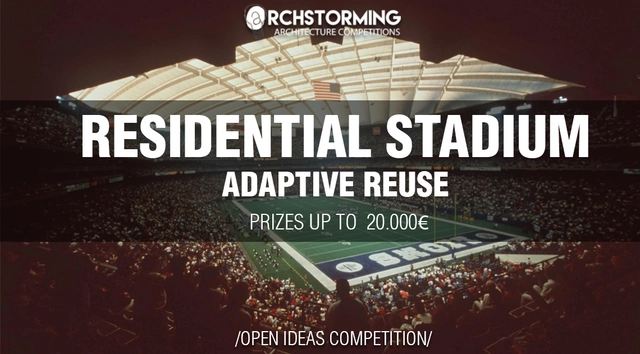
The 2018 Soccer World Cup ended a few weeks ago. With it ends an intense month that not only affects the sports world but has direct repercussions on the economy, tourism, and urban planning of the host country. On this occasion, Russia was chosen to host the event. A total of twelve stadiums in eleven Russian cities have been built and renovated for the FIFA World Cup. But have you ever thought about what happens when Olympic arenas, World Cup stadiums, or other costly sporting venues close at the end of the colorful events for which they were designed? Many go on to host local sports clubs. Others, though, become proverbial ‘white elephants,’ scraping by as glorified parking lots, dirt tracks for stock-car racing and even, as in the case of Montreal’s spectacular Olympic Stadium, as a swine-flu vaccination center. In "Residential Stadium: Adaptive Reuse," Archstorming will analyze how architecture can provide solutions in stadium designs, so they can always be reused after the event has finished.
Tamayouz Excellence Award launched the “Baghdad Design Centre,” an international architectural competition to transform the current unused site of the Old Governorate Building into the Baghdad Design Centre in the city's Cultural District; Al-Rusafa. This year’s competition has been under the spotlight as stakeholders and the architectural community in the country urged the local authorities to halt implementation of their own scheme for the site and wait for the results and recommendations of the competition.
INTRODUCTION Waste is a global issue common to all urban areas. The world now creates more than a billion tons of garbage a year, which it incinerates, buries, exports, and recycles. As major cities expand so must their ability to reverse wasteful tendencies and begin living more efficiently and sustainably.
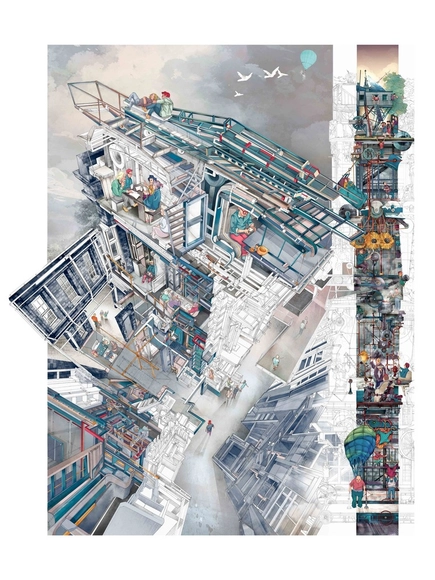
Memento Mori: A Peckham Hospice Care Home by architecture student Jerome Xin Hao Ng (UK), winner of the 2017 Architecture Drawing Prize.
In partnership with Make Architects and Sir John Soane’s Museum, the World Architecture Festival (WAF) has announced the call for entries for the second edition of The Architecture Drawing Prize. Launched in 2017, the prize is conceived to celebrate and showcase the significance of drawing as a tool in capturing and communicating architectural ideas.
The Architecture Drawing Prize embraces the creative use of digital tools and digitally-produced renderings, while recognising the enduring importance of hand drawing. The organisers invite entries of all types and forms: from technical or construction drawings to cutaway or perspective views – and anything in between. Drawings may, by varying degrees, be entirely speculative or relate to real projects.
1. Abstract: Food is one of the most fundamental elements of human existence. Looking back, the way we produce, store and consume food has evolved greatly. Humans have thrived because our ancestors learnt how to gather, produce and consume food, all with their bare hands. And mankind has sustained due to these crucial elements of knowledge passed through generations. With industrialization came mass production, and with mass production came an influx of consumers - who started paying instead. Skills and crafts related to agriculture and food production are now mostly obsolete in the urbane environment. Mass consumerism through supermarkets and even online mediums is slowly changing how we perceive, acquire and consume food. This has raised issues like overconsumption, poor quality, high wastage and an over-dependence on manufacturing agencies. In the long run our perception of fresh foods/fruits will be completely eroded by advertisements and fancy packaging, which can have irreversible impacts on health, and hence, the human evolution cycle. The time to intervene is now. As a designer how can you bring farming to the cities where people can see, participate or celebrate cultivation - and understand what they eat, much better? Where not only awareness related to food is available, but as a community we become more responsible for our actions. How can you change the image of cities as the ones that only consume, to ones that contribute too? Or make farming so easy for people using technologies of today that makes it easy for people to grow it in their homes? Urban meal mine1(n), is a place where people can generate/learn/contribute to grow food for their city. This is usually located in the heart of the city where skilled labour + abundant transport + short distance logistics + faster production technologies can break even revenue over the high cost land it occupies. Learn more on http://unfuse.uni.xyz 2. Site: The site for this intervention is the New Covent Market located in the Nine Elms District, London opposite to historic Battersea power station. The site is close to the river Thames and is a part of Nine Elms regeneration plan. It consists of a 4 decade old market structure which houses a wide variety of wholeseller’s of foods, fruits, vegetables and flowers. The site is surrounded by residential and commercial developments of various scales, and is expected to invite people from around the city. It also has two brand new tube stations proposed in attempt to rejuvenate transport links to the Nine Elms district. 3. Eligibility The competition is open to all students and professionals (Worldwide). Minimum eligible age for participation is 18 years. This competition is open for both students and professionals. Team size is maximum of 4 members per team. All disciplines are eligible. Team: Teams with all student participants (with valid id’s required) will be categorized under student teams. Teams with even one professional participant will be categorized under professional team. 4. Submission A maximum 6 – A3 sheets in digital format (JPEG) (120ppi). Minimum requisites in the sheets (For a complete submission): Site plan (Compulsory), Key conceptual sections x 2 (Minimum), 3D views x 3 (Minimum / Should include 1 aerial view), Elevation x 1 Cover image of size 1500 x 600 px or larger in aspect ratio 1 : 2.5. Floor plans, images, sketches (if any) can be added to support the entry in the form of additional images. 5. Prizes A total of 4000$ worth rewards to be won. Winner: 1500$ in cash + Trophy + Certificate + Publication Runner up: 550$ in cash + Trophy + Certificate + Publication People's Choice (Students): 500$ - Trophy + Certificate + Publication People's Choice (Professionals): 500$ - Trophy + Certificate + Publication Honorable Mention (Students x 4): Medal + E - certificate + Bi-Annual Digest of Unfuse + Publication Online presentation: 30 Shortlisted Entries - E- certificate - Entries promoted through partner websites.
The Union of Moscow architects invites professionals to the participation in The Open Architectural and Town-planning Competition “The Activation of the Kazan City Urban Functions in the Water Area of the Volga Bend”. Kazan is a large city in the Volga region with a picturesque landscape and a rich variety of coastal zones. The embankment in a complex with a river facade forms the river gate to the city. However, inefficient use in combination with various unfavourable factors leads to the isolation of the coastal zones from the city itself and turns them – instead of being potential points of attraction – into desolate spaces with an unfavourable environment. The Locomotive Peninsula was formed as a result of land flooding by the waters of the artificial Kuibyshev Reservoir in 1957. To protect the city, the dams were built. A pedestrian embankment was arranged together with the places for a mass recreation of the population. Over the years, the territory has fallen into decay and lost its attractiveness because of the isolation produced by railways. Today its use is limited. The Competition is arranged to get a conceptual, structural and functional spatial organisation of the territory in the water area of the Volga bend. The new spaces should include a developed recreational component and be rich of public, tourist and cultural-sports functions. The Competition is held within the framework of the International Festival “Eco-Shore”. The Festival is a unique international annual project devoted to the innovative ideas of the urban, architecture and design development of coastal areas. Founder and Organiser: Union of Moscow architects (Russia) Location: Kazan City (Russia) Registration deadline: August 17, 2018 Projects submission deadline: September 21, 2018 Registration fee: 80 euro
The call for ideas considers water landscapes, specifically rivers, as mediators in the formation of a harmonic and dynamic balance between cities and nature. a river restoration approach (considering fluvial geomorphology) should be adopted in order to “re-enliven the river” and as a lens from which to reinforce and understand natural systems for design adaptation. The competition focuses on the Andalién river, the settlements it crosses and proposed growth areas in zones of risk and ecological value. The competition seeks urbanism proposals, across scales (from bay to river basin and back to one of 3 strategic sites) which challenge business-as-usual and fundamentally reorient the concrete interplay between Concepción and the Andalién river. In short the competition is looking forward to receive urbanistic answers to the de specific dialogue that natural systems and city undertake/are engaging in Concepción. In Chile, as in the rest of the world, urban rivers have been severely modified, due to dynamic morphological and sedimentation processes coupled with reckless urbanization and exploitation of the land. These disturbances create natural hazards derived from, amongst others, positioning human settlements in floodplains and consequently, on the fluvial territory. in a context of climate change, the consequences of these conflicts will become predictably more severe. bold, new ideas for the recovery of the Andalién river will serve as a model for other rivers in Chile and elsewhere.
The call for ideas considers water landscapes, specifically rivers, as mediators in the formation of a harmonic and dynamic balance between cities and nature. a river restoration approach (considering fluvial geomorphology) should be adopted in order to “re-enliven the river” and as a lens from which to reinforce and understand natural systems for design adaptation.
In order to celebrate the centenary of the end of the First World War in a creative and innovative way, the Collectif Rosati organizes an international idea competition for the creation of a 1918's armistice memorial.
The 8th edition of the Jacques Rougerie Foundation's International Competition in Architecture will conitnue this year, once again, to encourage creation, audacity and the capability to imagine visions of anticipation of a world to come, while respecting the percepts of sustainable development turned towards ocean and space.
Registration for the architecture ESSAY competition Competition Name is now open! Submission and registration deadline: August 25
In the search for solutions to the global housing crisis, Bee Breeders are calling for essay submissions to explore the problem further. Winning entries will be included in the first issue of their print publication ARCHHIVE, which will focus on affordable housing.
Internationally adopted in 2015, the Sendai Framework for Disaster Risk Reduction aims to achieve in 2030 “the substantial reduction of disaster risk and losses in lives, livelihoods and health and in the economic, physical, social, cultural and environmental assets of persons, businesses, communities and countries” (UNISDR, 2015).




.jpg?1539852507&format=webp&width=640&height=580)