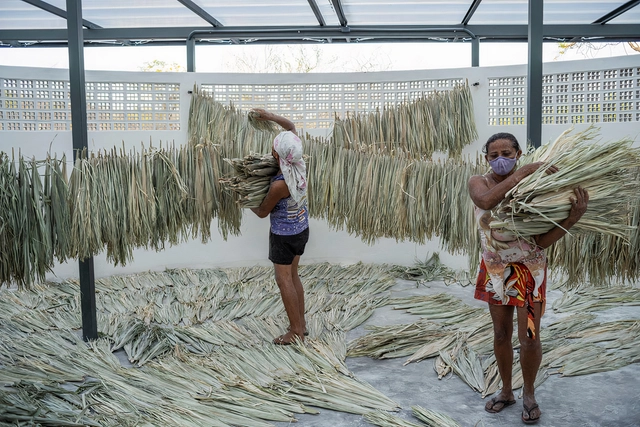
It’s now clear that approximately 80% of emissions from landscape architecture projects come from materials. This includes the extraction of natural resources, and their manufacturing, transportation, and construction in parks, plazas, streets, campuses, and neighborhoods. A significant portion of emissions in the built environment can be traced back to two materials: concrete and metal, which includes steel and aluminum.
The challenge lies in the fact that we use a large amount of both materials, they are difficult to replace due to their strength and utility, and improving their environmental impact is a complex process. But progress is being made.
Discover the latest issue of Sky-Frame's 'My Point of View' with architect David Montalba.
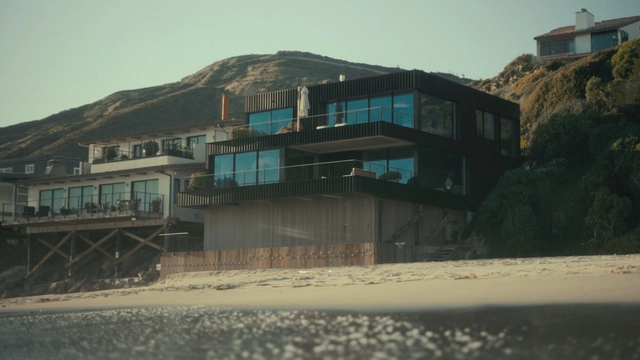
David Montalba was born in Switzerland but grew up in California. He became a passionate surfer, bobbing in the waves of the Pacific, staring at the land, yet always feeling and hearing the ocean around him; profoundly connected to nature.
“I was surfing by the time I was 12 or 13, and it was my driving force probably all the way up to 18 or 19,” he notes. “It brought a kind of spirituality to my life. That was when I felt most connected to nature and I was truly with myself… It’s still a really special thing for me. It’s one of those things that can both ground you and connect you with nature in a unique way.”
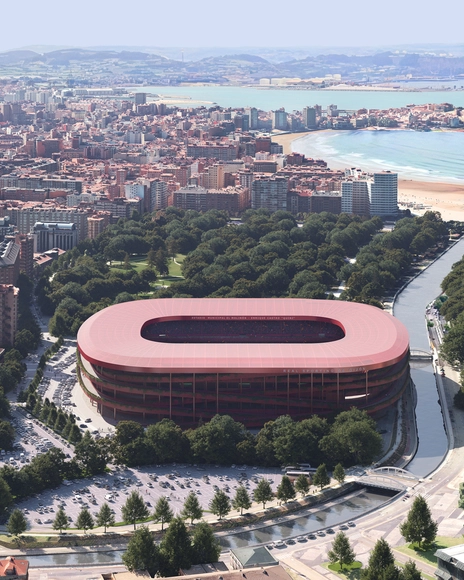
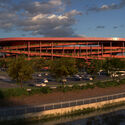
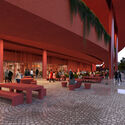
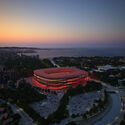
In preparation for the city of Asturias, Spain, to become one of the hosts of the FIFA World Cup in 2030, the El Molinón stadium is proposed to undergo a major remodeling process. Home Real Sporting de Gijón, the stadium is reimagined by the architecture office Sordo Madaleno together with Orlegi Sports. The proposal aims to increase the stadium’s capacity to accommodate 9,000 additional visitors to the 33,650 fixed seats during the World Cup. It also strives to reconnect the venue to its surroundings and the city of Gijón, Asturias.
We are thrilled to announce our upcoming August workshops in collaboration with our ArchDaily Pluspartner, Parametric Architecture. These workshops have been thoughtfully curated to empower architects, designers, and enthusiasts by providing them with the latest insights and skills in the dynamic realm of parametric design. Guided by industry experts and visionaries, these immersive sessions will explore cutting-edge techniques, innovative tools, and practical applications, creating an inspiring and dynamic learning environment where participants can take their design expertise to unprecedented levels.
As a token of our appreciation, ArchDaily Plus will be entitled to exclusive benefits, including special discounts on any of the workshops offered by Parametric Architecture and one complimentary monthly workshop. Your commitment to advancing architectural innovation seamlessly aligns with the enriching experiences that these workshops promise to deliver. Stay tuned for more information on how you can fully unlock your creative potential and embark on an exciting journey of design exploration in August.
https://www.archdaily.com/1018794/parametric-architecture-august-workshopsArchDaily Team
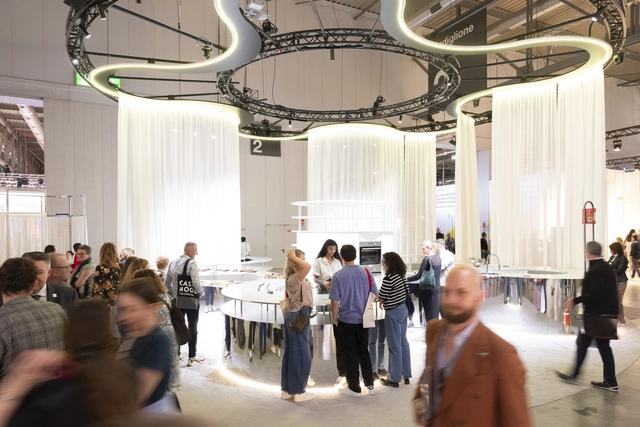
Designing for the human experience has been at the forefront of architect's intentions and motivations behind their work. While traditional processes prove beneficial, the industry is peering over boundaries to find opportunities for collaboration with other design and non-design fields. New approaches have emerged with collaborations between architects and service designers, or even psychologists, to create more human-centric spaces. A new intersection captures the attention of practitioners, especially with a recent installation at Salone de Mobile neuroarchitecture. ArchDaily breaks down the scope and potential for this new field with Federica Sanchez, architect and neuroscience researcher at Italian firm Lombardini22, responsible for revamping the Salone.
The Second Studio (formerly The Midnight Charette) is an explicit podcast about design, architecture, and the everyday. Hosted by Architects David Lee and Marina Bourderonnet, it features different creative professionals in unscripted conversations that allow for thoughtful takes and personal discussions.
A variety of subjects are covered with honesty and humor: some episodes are interviews, while others are tips for fellow designers, reviews of buildings and other projects, or casual explorations of everyday life and design. The Second Studio is also available on iTunes, Spotify, and YouTube.
This week David and Marina of FAME Architecture & Design discuss architecture concepts in the office. The two cover the importance of conceptual thinking, the lack of concepts in architecture offices, projects in architecture school vs in practice, the challenges of merging conceptual thinking and technical aspects in practice, and more. Enjoy!
https://www.archdaily.com/1018823/the-second-studio-podcast-concepts-in-architecture-officesThe Second Studio Podcast
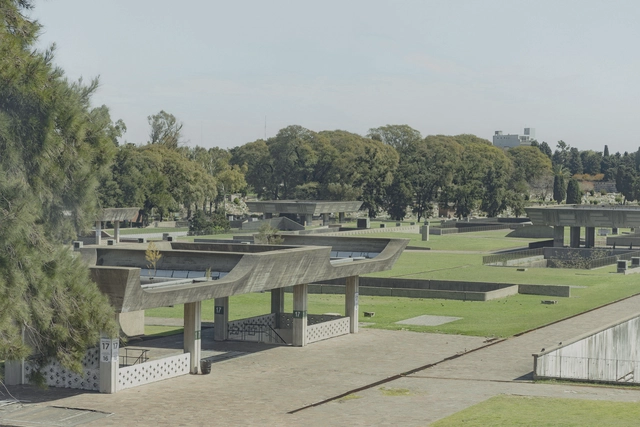
Around 1949, the city of Buenos Aires led the construction of the Sixth Pantheon in the Chacarita neighborhood. Monumental in character and brutalist in style, this underground necropolis turned out to be the first and largest experiment in modern architecture in the funerary field. Designed by Ítala Fulvia Villa, one of the first Argentine women architects and urban planners, and a pioneer of South American modernism, along with her team comprised of Leila Cornell, Raquel S. de Días, Gunter Ernest, Carlos A. Gabutti, Ludovico Koppman, and Clorindo Testa, this work was discovered by Léa Namer, who conducted an in-depth investigation reflecting on the legacy of a modern utopia and a feminist rereading of history.
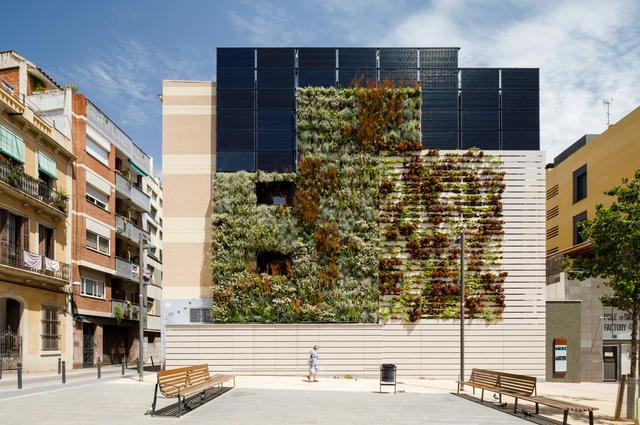
As Barcelona gears up to be the World Capital of Architecture in 2026, it is calling on young architects under 35 to reimagine 10 permanent blind walls, one in each district, and transform them into new facades that will leave a legacy in the city. ThisInternational Ideas Competition for Young Architectsaims to improve the quality of public spacethrough transformation and revitalization. Organized by the Barcelona City Council and the Fundació Mies van der Rohe, made jointly with UNESCOand the International Union of Architects (UIA), it seeks architectural proposals that give meaning to walls that are currently anonymous and without any prominence, exposed in public space in a permanent provisional state.
Deutsches Architekturmuseum (DAM) has announced the International High-Rise Award 2024/25. Selected from more than 1,000 new high-rises worldwide dating from the past two years, the nominated projects are located in 13 counties from 5 continents. In autumn, the five finalists will be announced, followed by the winner announcement scheduled for November 12, 2024. The main objective of the award is to highlight good practices in the ongoing trend of mixed-use high-rises.
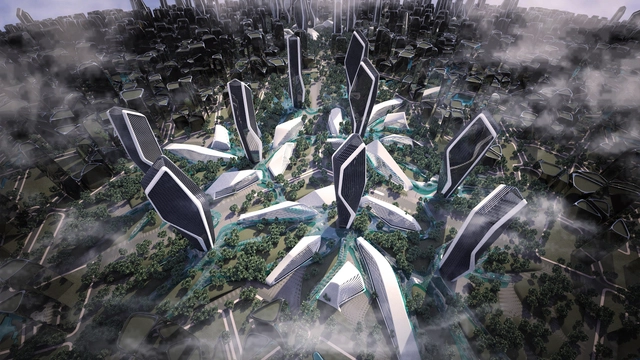
With the increase in the construction of high-rises, special features such as the introduction of greenery in the design, unusual shapes, or the construction of clusters of towers, have become the new normal. DAM’s research this year also shows a growing eco-awareness, as the focus in high-rise construction is increasingly on the use of existing buildings. While the majority of tall buildings continue to be erected in China, followed by the USA, Australia, and Singapore have emerged as new hubs of high-rise architecture.
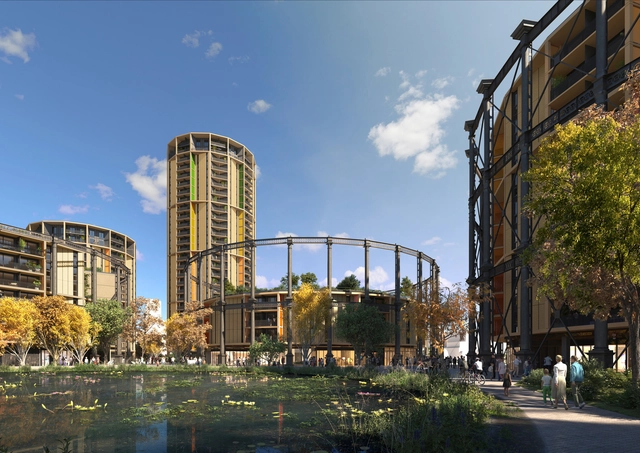
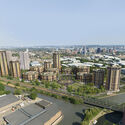
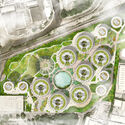
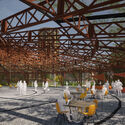
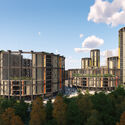
RSHP’s design proposal for the Bromley-By-Bow Gasworks regeneration project has just been approved by the London Borough of Newham’s Strategic Development Committee. The 23-acre site dates back to the 1870s, housing the largest collection of Victorian gasholders worldwide, making the project one of the largest regeneration proposals in the Lower Lea Valley in London. After three years of design development, the scheme reimagines the gas holders into a mixed-use development offering new high-quality residential architecture.
The whining of architects is futile. The stick-frame-over-podium building—the so-called 5-over-1—is here to stay. The Box, as I like to refer to it, utilizes the hybrid technology of a concrete-and-steel base below wood-frame construction, and is used predominantly for market-rate housing. Despite the common negative reaction to its banal aesthetics, the appeal to a large segment of apartment consumers is undeniable. It’s an obvious hit with developers, too.
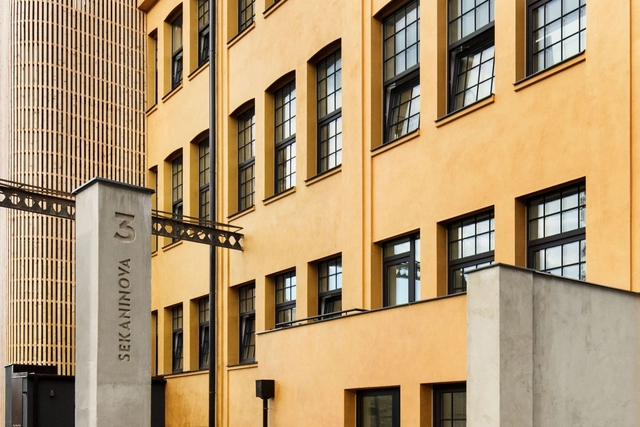
In response to the Czech Republic's soaring real estate prices, architecture firm KOGAA has transformed a former storage facility in Brno into DADA Distrikt, an affordable and diverse housing development. The project's economic approach, achieved through shared funding and direct sales, bypasses extra costs associated with developers while refurbishing a part of the city’s industrial heritage, transforming it into an active urban district. The project also features sustainability measures aimed at lowering its maintenance costs, further exemplifying the intersection of affordable housing, heritage restoration, and sustainable urban living.
The project is now part of Open House Brno, a free weekend festival held annually that allows visitors to enter and explore various locations across the city and discover their stories and architectural narratives. This year, the festival follows the curatorial concept of “Inclusion and Accessibility”, showcasing barrier-free integration of urban locations and the societal impact of buildings. A total of 58 locations will be available to visitors, exploring a variety of programs and scales demonstrating
More than half of the world's population resides in urban areas, with over 4 billion people depending on cities as their main environment. According to the United Nations’ latest report on populations in cities, this number is expected to continue to increase over the next 50 years, prompting cities worldwide to strive to find better ways to accommodate their growing population while transitioning to more sustainable urban practices. To highlight this responsibility, the United Nations has declared July 11th the World Population Day.
Under this year’s theme, “To Leave No One Behind, Count Everyone,” the UN aims to also draw attention to the importance of data collection for reflecting societal diversity. The growth of world cities is part of this equation as an important measure for understanding global population trends. The following list presents the top 20 cities worldwide in 2024, ranked by the population size of their metropolitan areas. Comparing the results to the previous editions, the only cities to reduce their size are the two cities from Japan, Tokyo and Osaka. The highest growth rates can be observed in African mega-cities, Kinshasa and Lagos, while China continues to be the most present country in the list, with 5 metropolises present in the top 20: Shanghai, Beijing, Chongqing, Tianjin, and Guangzhou.
The Royal Institute of British Architects (RIBA) has unveiled the 26 winners of the 2024 RIBA National Awards for Architecture, recognizing the finest examples of UK architecture and showcasing the country's design and social trends. Established in 1996, the awards highlight outstanding architectural projects across the UK, from Northern Ireland and Scotland to the south of England. This year's award celebrates projects that feature "inspiring examples of existing buildings and structures that have been given a new lease of life." Recognized for intelligent design and collaboration with clients and local communities, the award winners also showcase innovative construction techniques and thoughtful material selections.
Increasing urbanization, excessive waste production, excessive consumption of material goods, and exploitation of natural resources. There are many factors that contribute to the environmental impact of humans on Planet Earth. Scarcity of raw materials and the use of non-renewable resources is already the reality of some locations, and nature can no longer reclaim renewables at the same pace as it is exploited. The impact of human activities is so remarkable that scientists have pointed out that we are living in the new geological age of the Anthropocene (the Greek word for “the recent age of man”). The construction industry in particular is a major resource consumer and waste generator. In the European Union, the construction and use of buildings represents about 50% of all resource extraction and energy consumption, and about one third of all water consumption. [1] In 2014, 52% of all waste was attributed to the construction sector. [2].
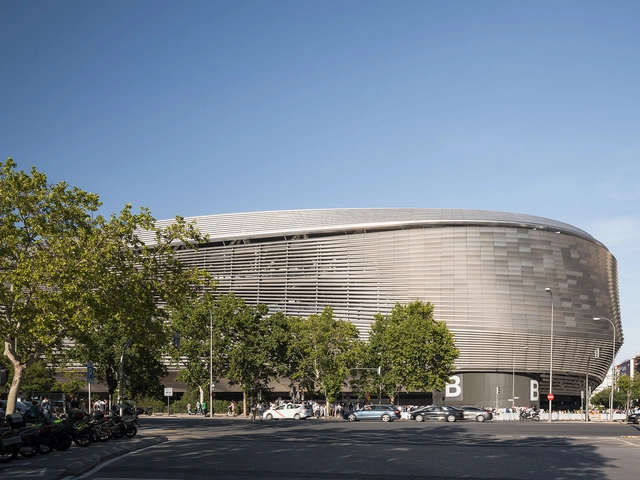
The Santiago Bernabéu Stadium is now recognized as a symbol of Madrid, Spain. Home to the Real Madrid football team, the stadium built in 1947 occupies a key position in the city, adjacent to a major transit artery. The stadium went through several refurbishments since its inauguration, most aimed at increasing the seating capacity. A major modernization process began in 2012, following an international competition. The winning design team is L35 Architects, in collaboration with GMP and Ribas & Ribas. The refurbishment project aimed to redefine the building’s relationship with the surrounding urban spaces, to improve accessibility, and to integrate more activities, from sporting to leisure, commercial, and socio-cultural functions.
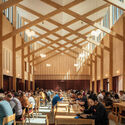
Restoration of Stirling Building | University of Cambridge. Image Courtesy of BDP
The University of Cambridge, in collaboration with BDP, has just unveiled plans to restore and rejuvenate the Grade II* listed History Faculty Building designed by James Stirling. This structure, home to the Seeley Library, is one of the renowned “Red Trilogy” buildings from the 1960s. Initially intended to showcase the significant library and “the act of reading,” the project is internationally celebrated as a landmark from the post-war architecture era. The revitalization project aims to enhance learning and working environments at the University’s Sidgwick site.
Over the years, the nocturnal landscape of cities has witnessed a significant transformation, marked by the emergence of more than 80-night mayors globally, a trend that has been on the rise since the early 2000s. Andreina Seijas, currently working as an Associate at Gehl, has analyzed these shifting dynamics of night-time governance in her research and during her doctoral studies at Harvard GSD. Seijas speaks in the interview about this development, challenges, and opportunities with night mayors, global differences, and the role of climate change. Seijas' upbringing in Caracas, Venezuela, where safety concerns dictated strict curfews, ignited her passion for creating safer, more inclusive urban environments, particularly for the youth. Her quest for a better future for the urban night explores the potential for cities to become safer, more inclusive, and more productive by creating spaces for work and leisure after dark.
The 17th edition of World Architecture Festival (WAF) will take place at Marina Bay Sands in Singapore from the 6-8th November 2024. In addition to the unique live-judged awards programme and crit presentations, this year's event will include fringe events, an exhibition, and keynote talks from an international panel of speakers.
This week, the festival announced their short list of most innovative projects from around the globe, celebrating the best new completed buildings and landscapes as well as the most inspiring future architectural concepts, across 33 categories, ranging from residential, to transport, to retrofit. This year's finalists range from major world architects including Zaha Hadid Architects, WOHA, Renzo Piano Building Workshop, MVRDV, Tadao Ando Architect & Associates, Kohn Pederson Fox, and Nikken Sekkei, with many emerging practices also on stage competing against the big names.
The Holcim Foundation for Sustainable Construction announced the winners of the 2023 edition, celebrating projects that showcase innovative approaches to sustainable construction practices. For the Europe region, the Gold Prize was awarded to Husos, Elli, and Ultrazul for their project “Composition of Knowledge House.” In a video interview with the winners, they explain the details of this rehabilitation project. Developed for the Carasso Foundation headquarters, the project uses an innovative “360° co-design process” to promote inclusivity and community involvement.
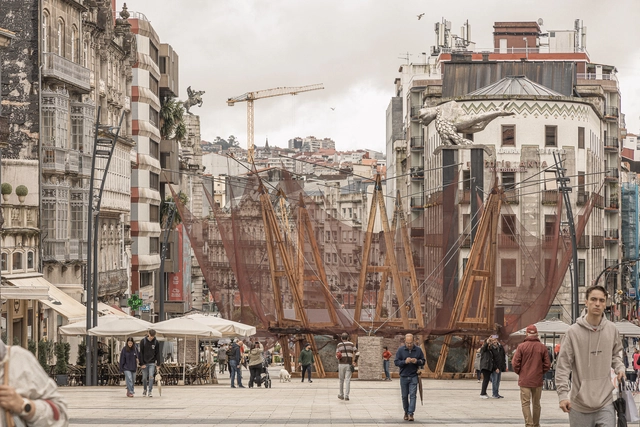
Until July 14, 2024, the pavilion ¡Qué faena(r)! ('What a Task!') by Óscar Cruz García and Pablo Paradinas Sastre will be installed at Puerta del Sol in Vigo, one of the two winning temporary pavilions of the third edition of TAC! Urban Architecture Festival. Reflecting on public spaces and the regeneration of urban centers as the main theme of this new edition, the proposal combines tradition and innovation, involving local producers and artisans during the process and simultaneously reusing materials considered waste, such as fishing nets, rusty 'bombos,' recovered wood from bateas, and granite blocks that gain a second life after fulfilling their mission in the sea.
The A' Design Award, "born out of the desire to underline the best designs and well-designed products," recognizes outstanding and original talent from across the globe. It is both a major achievement for designers and a source of inspiration for award-winning architects, brands, and design agencies. Entry and nomination are open to contestants from around the world. Registration for the A' Design Award & Competition 2024-2025 period is now open. Register and upload your design here.
Marcelo Rosenbaum speaks with vivacity and excitement, reflecting his undeniable passion for what he does. His approach to architecture is marked by a proactive stance, leading him to travel to the most remote interiors of Brazil, often voluntarily. There, he listens carefully to local demands and seeks to develop projects that go beyond simple buildings, becoming instruments of transformation for the local reality. One of his best-known projects is in Tocantins, the Children's Village on the Canuanã Farm, done in partnership with the Aleph Zero office, which has been recognized worldwide and won awards. On June 20, he closed the program of the AsBEA 2024 National Convention, whose theme was "Sustainable Roots," held in Florianópolis, Brazil. We had the chance to talk to him about his professional career and some of his recent work.





















_Jakob_Schoof.jpg?1575315045&format=webp&width=640&height=580)