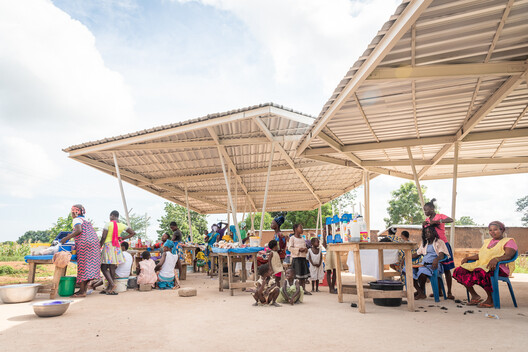
Coming Together and the Making of Place

ArchDaily Topic

A curated selection of articles, interviews, and essays exploring an architecture of togetherness.

The Kitchen as a Social Space: Everyday Rituals and the Making of Place
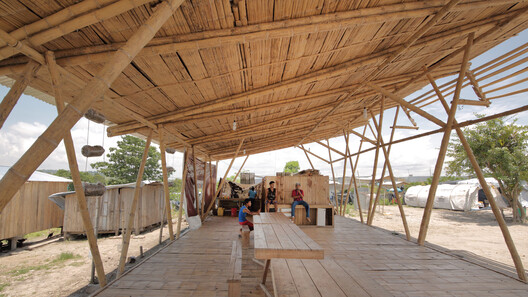
The Kitchen as a Social Space: Everyday Rituals and the Making of Place

Can architecture be built from food? Between the fire that warms, the smells that spread, and the bodies that gather around the table, the apparent banality of cooking and eating reveals itself as a choreographed dance of spatial appropriation and belonging. These gestures organize routines, produce bonds, and transform the built environment into lived place. The kitchen—domestic, communal, or urban—thus ceases to be merely a functional space and affirms itself as a territory of encounter.

Read more »
How Cities Design Public Life in the Shade

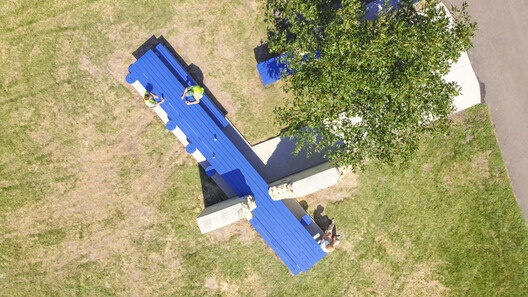
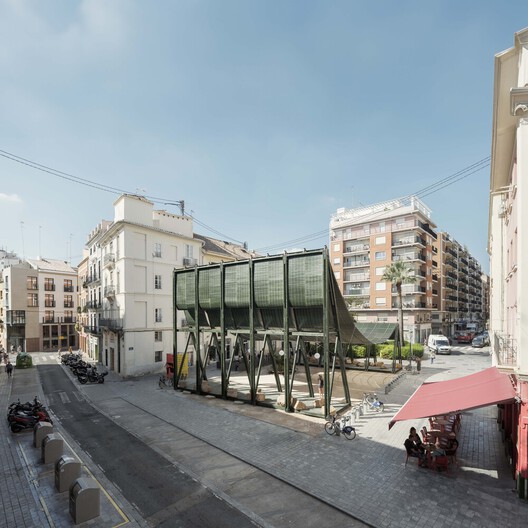
How Cities Design Public Life in the Shade

Cities are warming at roughly twice the global rate, a trend accelerated by rapid urbanization. While rising temperatures are reshaping daily life worldwide, some towns and neighborhoods, often the most vulnerable and least resourced, are warming more than others. The reason comes down to the urban environment. Built infrastructure, such as roads, buildings, sidewalks, and public spaces, determines how heat moves through a city, where it accumulates, and how long it remains trapped. No matter the climate zone or geographical location, shade remains the most effective and immediate way to cool pedestrians and relieve the built environment.

Read more »

From the Courtyard to the Neighborhood: Latin American Lessons on Collective Placemaking

From the Courtyard to the Neighborhood: Latin American Lessons on Collective Placemaking

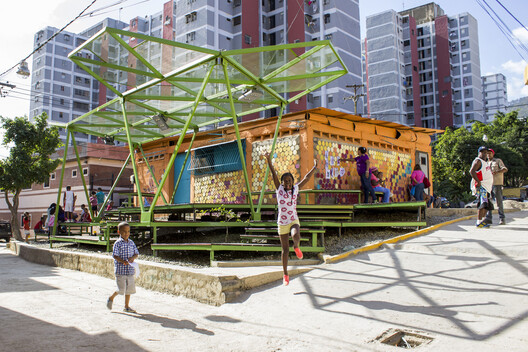
In Latin America, encounters do not necessarily arise from grand architectural gestures or monumental urban plans. They emerge from the in-between, from intermediate spaces: the courtyard, the veranda, the sidewalk, the shared corridor. These areas, often considered residual or informal by the traditional architectural discipline, are precisely where everyday life builds bonds.

Read more »

The Chromatic Canvas: 10 Vibrant Courts Activating Community Space

The Chromatic Canvas: 10 Vibrant Courts Activating Community Space

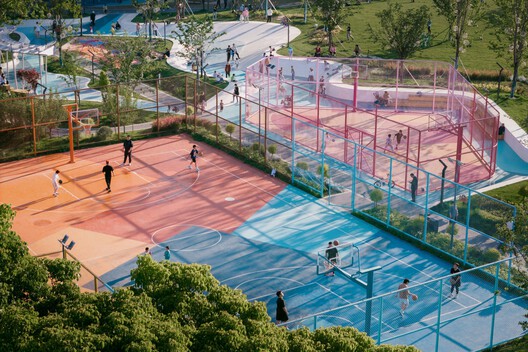
Unlike most popular sports, the origin of basketball has a precise year and creator: it was invented in 1891 in the United States by Canadian physical education instructor James Naismith as an indoor sport for athletes at Springfield College during the winter, after the end of the football season. The sport quickly expanded beyond U.S. borders, being included in the Olympic Games in 1936 and achieving international popularity after the Second World War. As basketball became more widespread, it also left the controlled environment of gymnasiums and began occupying a wide range of locations: playgrounds, public plazas, school courtyards, driveways, and backyard patios became informal courts for play and community life, reinforcing the role of physical activity as a catalyst for social interaction and neighborhood regeneration.

Read more »

Security as Script: Inside the Architecture of Gated Living

Security as Script: Inside the Architecture of Gated Living

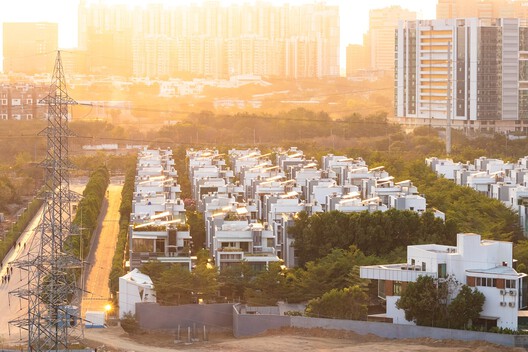
You learn how to behave long before you arrive home. At the gate, you slow down and wait. You are watched, then waved through. A badge is checked, a barrier lifts, a camera blinks. Nothing dramatic happens, and that is precisely the point. The most consequential work of gated communities is not done by their walls, but by the choreography of entry that quietly teaches residents what to expect, whom to trust, and where they belong.

Read more »

Urban Transformation of San Salvador: Contemporary Placemaking in Central America

Urban Transformation of San Salvador: Contemporary Placemaking in Central America

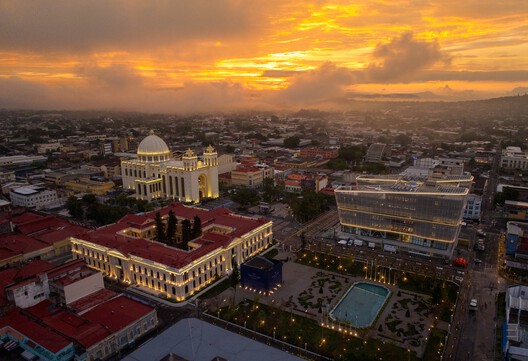
Historic center renewal has become a recurring strategy in Central American cities seeking to reassert the symbolic, economic, and functional relevance of their traditional cores. These processes often combine physical rehabilitation, institutional investment, and stricter control over public space. San Salvador offers a recent and instructive case, which allows for understanding of how interventions in inherited civic spaces balance infrastructure improvement with heritage conservation and social regulation. It also enables the assessment of how these choices resonate within broader debates on urban transformation in the region.

Read more »

Urban Banquet at the Curb: Hong Kong’s Third-Space Dining

Urban Banquet at the Curb: Hong Kong’s Third-Space Dining

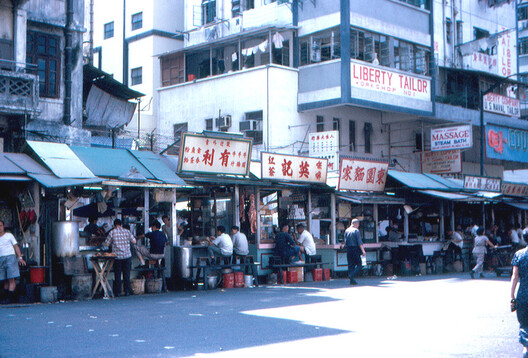
Across cities worldwide, architecture unfolds continuously at the scale of people and community—not only through new buildings, renovations, or monumental works. "Third spaces" are especially revealing. Consider the street-side culinary realm: how seating, serving, and lingering occupy the edge of the street often discloses a city's cultural codes and spatial habits. What forms of dining and inhabitation have emerged in response to local climate, regulation, and social custom—and how have they evolved over time?

Read more »

A Day in the Bazaar: When Architecture Is Observed in Time

A Day in the Bazaar: When Architecture Is Observed in Time

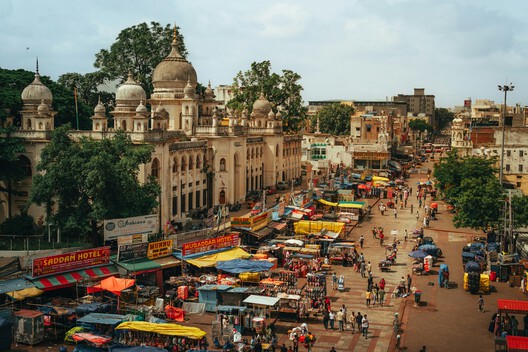
Architecture is most often represented as a stable object: a building captured at a moment of visual clarity, isolated from surrounding contingencies. Plans, sections, and photographs promise legibility by suspending time. Yet many of the world's most enduring public environments resist this mode of representation altogether. They are not designed to be read instantaneously, nor do they reveal their logic through form alone. Their spatial intelligence emerges gradually, through repetition, occupation, and duration. 

Read more »

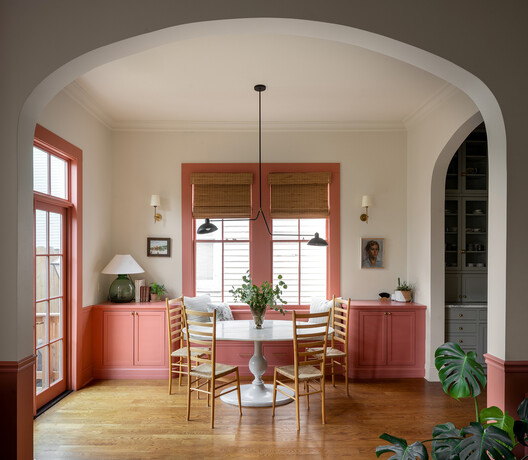
Morning Rituals: Architecture of Breakfast Spaces

Morning Rituals: Architecture of Breakfast Spaces

Breakfast nooks emerged in the early twentieth century in response to increasing domestic density and shifting ideas about everyday life. Rooted in the American Arts and Crafts movement and popularized through bungalow housing of the 1910s and 1920s, they evolved from the more formal Victorian breakfast room into compact, built-in spaces embedded within the kitchen. As houses grew smaller and more economical, architects and millwork companies used fixed benches and tables to occupy corners, alcoves, and bay windows that might otherwise be inefficient. These light-filled enclosures provided an affordable means of concentrating daily activities while preserving comfort and spatial clarity.

Read more »

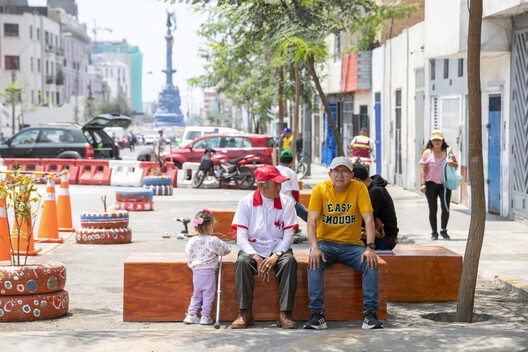
Designing Streets Through the Lens of Care

Designing Streets Through the Lens of Care

Reflecting on the modern city, Walter Benjamin described the flâneur, a figure who walks without a defined destination, attentive to details, chance encounters, and the narratives that emerge from urban space. This way of being in the city, shaped by observation and openness to the unexpected, has long been in tension with the rationalist and functionalist ideals that came to guide urban planning throughout the twentieth century. Streets designed primarily for efficiency and flow rarely leave room for detours, pauses, or the coexistence of different rhythms of life.

Read more »

When Eating Becomes Spatial: 14 Projects Built Around Shared Meals

When Eating Becomes Spatial: 14 Projects Built Around Shared Meals

In recent years, food has taken on a renewed role within architecture, not simply as a program or typology, but as a shared spatial practice. Beyond restaurants or dining design, communal eating spaces are increasingly understood as environments where presence, ritual, and time intersect, allowing people to gather, stay, and coexist. In these settings, eating does not just happen within space; it actively shapes it, temporarily transforming ordinary, borrowed, or improvised environments into places of exchange.

Read more »

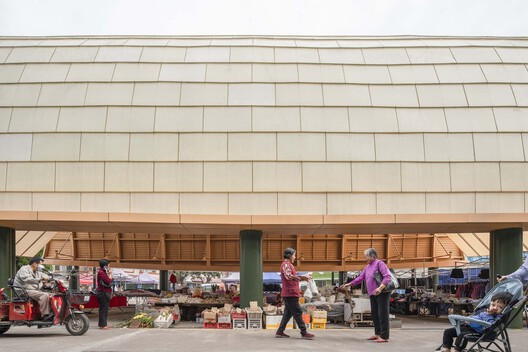
Designing the Public Market: Architecture for Gathering, Trading, and Belonging

Designing the Public Market: Architecture for Gathering, Trading, and Belonging

The making of a place is not a difficult thing in principle; it is enough for people to come together in a regular set location for a purpose or activity, and a space becomes. This does not disregard the fact that a physical element needs to accompany this gathering for a space to become sheltering, accommodating, and alluring. This idea of the space that emerges from intent can most definitely be seen in one of the most ancient of functions, which is food or produce markets. 

Read more »

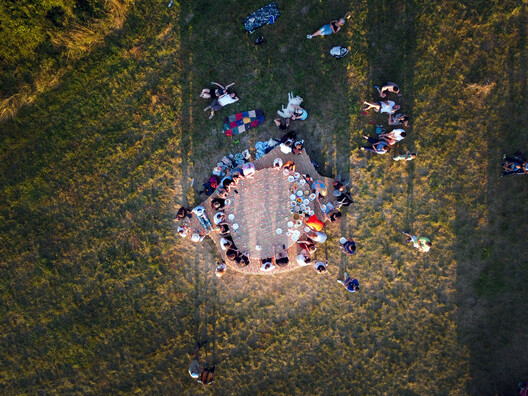
Coming Together and the Making of Place: ArchDaily’s January Editorial Focus

Coming Together and the Making of Place: ArchDaily’s January Editorial Focus

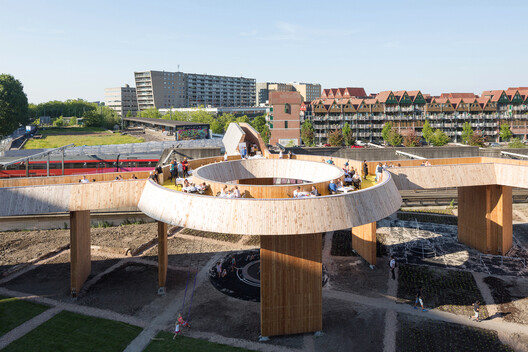
Long before architecture took the form of walls, roofs, or cities, it gathered people around fire. The simple fire pit was one of humanity's earliest spatial devices: a place for warmth, food, storytelling, and ritual. Around it, space took shape through proximity rather than enclosure, through shared presence rather than prescribed use. The fire organized bodies in a circle, fostered alliances, and turned survival into collective life. Today, this ancestral logic persists: architecture has the potential of bringing people together not by commanding how they gather, but by creating the conditions that make togetherness possible.

Read more »