1. ArchDaily
  2. Architecture & Planning

Architecture & Planning: The Latest Architecture and News

Monaco Smart & Sustainable Marina Rendezvous: Winners of the Architecture Awards 2024

 | Sponsored Content

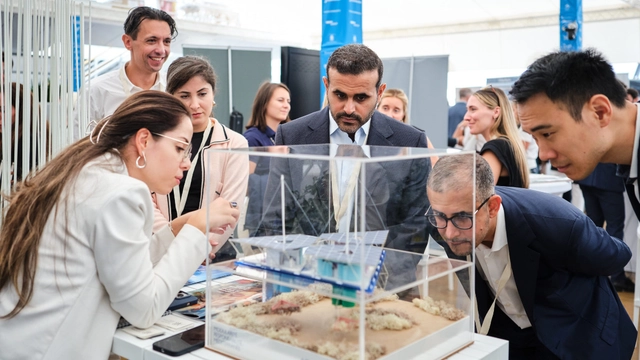
Organized by Monaco Marina Management (M3), the 4th edition hosted on September 22nd & 23rd at the Yacht Club de Monaco, has brought together 250 maritime industry professionals alongside worldwide investors and innovators to encourage the development of virtuous marinas. With the common goal to modernize and make maritime infrastructures more responsible, this annual networking gathering demonstrates how sustainability is becoming a true driver of change by connecting the whole marina ecosystem and promote the development of efficient & attractive marinas.
Designing Shared Rural Environments: Defining Public Spaces beyond Urban Metrics

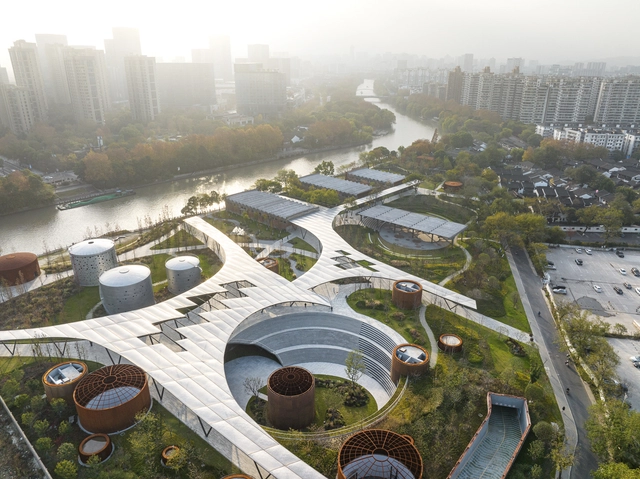
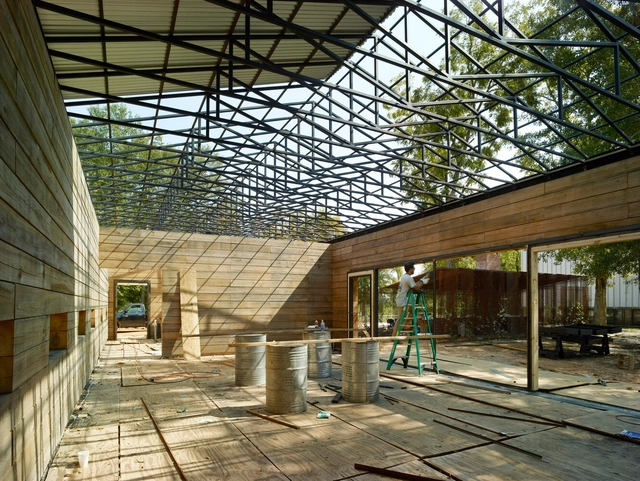
Rural environments are often difficult to define in administrative and professional contexts and carry notable biases and complexities. Population and density thresholds are the most common determinants for drawing administrative boundaries, yet other factors, such as infrastructure, employment, and services, contribute to the characterization of rural environments. In the United States, the Census Bureau defines rurality, not by its characteristics or resources, but by absences, as "any population, housing, or territory not in an urban area." For the design and planning community, it is important to define the future of rural environments, not through the metrics of urban resources or infrastructure, but to design a new framework for flexibility, adaptation, and health.

Designing Shared Rural Environments: Defining Public Spaces beyond Urban Metrics - Image 1 of 4Designing Shared Rural Environments: Defining Public Spaces beyond Urban Metrics - Image 2 of 4Designing Shared Rural Environments: Defining Public Spaces beyond Urban Metrics - Image 3 of 4Designing Shared Rural Environments: Defining Public Spaces beyond Urban Metrics - Image 4 of 4Designing Shared Rural Environments: Defining Public Spaces beyond Urban Metrics - More Images+ 6

A Skyward Shift: Exploring the Social Impact of Elevated Public Spaces in Cities

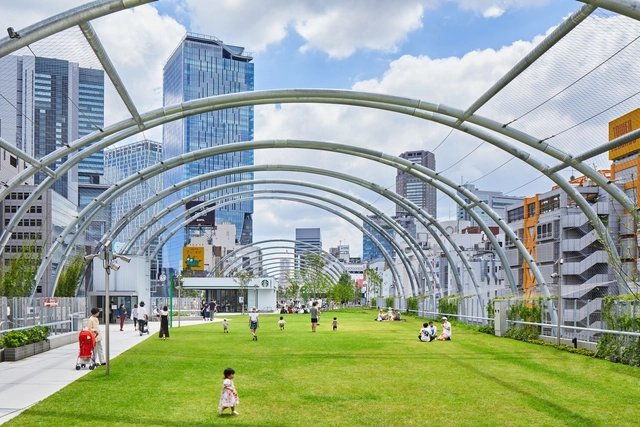
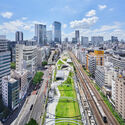
With escalating land values in urban centers, there has been a growing trend to float public spaces from ground level to elevated locations, such as rooftops or podiums between buildings. From a development perspective, maximizing floor area has become crucial as urban environments expand. Ground-level spaces are highly sought after for retail use due to their strategic location, which attracts foot traffic and potential customers and drives city development and economics.

This financial consideration, which often guides building activities and directions in urban centers, contradicts design principles advocated during the modernist era for the benefits of better outdoor space for the public, such as the concept of 'Freeing the Ground'. Architects like Le Corbusier championed this concept through projects like Villa Savoye and Unite d' Habitation. These modernist designs envisioned a future where buildings were elevated to restore open, accessible outdoor ground-level spaces for its users. However, for the reasons above, many contemporary projects instead seek to replicate the function of public grounds within the building's structure.

A Skyward Shift: Exploring the Social Impact of Elevated Public Spaces in Cities - Image 5 of 4A Skyward Shift: Exploring the Social Impact of Elevated Public Spaces in Cities - Image 1 of 4A Skyward Shift: Exploring the Social Impact of Elevated Public Spaces in Cities - Image 2 of 4A Skyward Shift: Exploring the Social Impact of Elevated Public Spaces in Cities - Image 3 of 4A Skyward Shift: Exploring the Social Impact of Elevated Public Spaces in Cities - More Images+ 10

Transforming Urban Spaces: How to Reintegrate Large-Scale Infrastructure Projects?

Large-scale infrastructure projects often aim to connect distant locations within urban areas, facilitating quicker transportation, logistics, and commercial activities along their routes. However, while these projects link distant destinations, their substantial physical presence can significantly affect local communities. This may result in the disconnection and disengagement of previously connected neighborhoods, the disruption of public spaces, and generally negative outdoor experiences caused by noise, pollution, and lack of attention and maintenance to these infrastructures.

Nevertheless, several successful built environment projects have re-integrated contentious infrastructure into the community through thoughtful design of outdoor spaces, with Paris' Coulée verte René-Dumont being one of the first examples and New York's High Line being one of the most prominent examples. The High Line demonstrates how well-conceived outdoor projects can address the alienation caused by extensive infrastructure, foster community reconnection, serve as cultural and economic hubs, and even spur further economic redevelopment, as in Hudson Yards.

Transforming Urban Spaces: How to Reintegrate Large-Scale Infrastructure Projects? - Image 1 of 4Transforming Urban Spaces: How to Reintegrate Large-Scale Infrastructure Projects? - Image 5 of 4Transforming Urban Spaces: How to Reintegrate Large-Scale Infrastructure Projects? - Image 4 of 4Transforming Urban Spaces: How to Reintegrate Large-Scale Infrastructure Projects? - Image 2 of 4Transforming Urban Spaces: How to Reintegrate Large-Scale Infrastructure Projects? - More Images+ 24

What is Architectural Technology? How Innovation is Changing the Industry

Subscriber Access | 

Professionals in the AEC industry are well aware of the issues that grapple the built environment. That the construction industry is the largest consumer of materials and is responsible for 40% of all carbon emissions is a commonplace fact. Construction work is also a large waste generator and could greatly benefit from circular design principles. Almost three-quarters of all construction projects tend to be over budget, and nearly half of the spending on buildings goes into the overheads. In a fast-paced world with multi-faceted challenges, technology, and digitization seek to deliver significant solutions.

What is Architectural Technology? How Innovation is Changing the Industry - Image 1 of 4What is Architectural Technology? How Innovation is Changing the Industry - Image 2 of 4What is Architectural Technology? How Innovation is Changing the Industry - Image 3 of 4What is Architectural Technology? How Innovation is Changing the Industry - Image 4 of 4What is Architectural Technology? How Innovation is Changing the Industry - More Images+ 2

Designing for Community: Ayers Saint Gross on Inclusive Planning and Shared Ownership

Subscriber Access | 

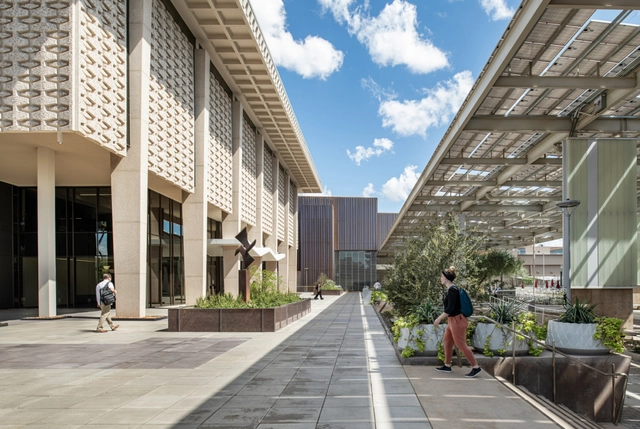
Architecture and planning centers on human experience and bringing people together. Few firms have structured their office around these ideas like Ayers Saint Gross. Founded in 1912, the firm has over a century of experience, including a majority of their work in support of colleges, universities, and cultural facilities. Today, the 185-person firm has offices around the country, including in Baltimore, Washington, D.C., and Tempe, AZ.

Designing for Community: Ayers Saint Gross on Inclusive Planning and Shared Ownership - Image 1 of 4Designing for Community: Ayers Saint Gross on Inclusive Planning and Shared Ownership - Image 2 of 4Designing for Community: Ayers Saint Gross on Inclusive Planning and Shared Ownership - Image 3 of 4Designing for Community: Ayers Saint Gross on Inclusive Planning and Shared Ownership - Image 4 of 4Designing for Community: Ayers Saint Gross on Inclusive Planning and Shared Ownership - More Images+ 17

From Hidden Backrooms to Storage Units, Domestic Workers and the Evolution of their Living Space

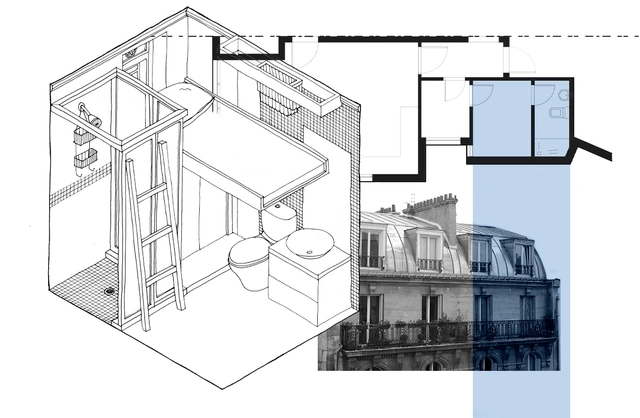
Looking through interior images of houses, we often see grand bedrooms with an influx of natural lighting. We see inviting open-space living rooms, lush terraces, and kitchens with high-end equipment and refined finishes. But what we don't see is that behind these sleek walls are small neglected bedrooms without proper ventilation, natural lighting, or space to move around, dedicated to those who cater to the entire household.  

The disparate spatial configuration and "colonial" approach to the living conditions of servants and foreign laborers have existed long before the rise of congested cities and micro-apartments. Household owners, or at least a good sum of them, have always felt that domestic workers needed and deserved less space to reside in, not just in terms of spatial area, but in terms of necessary living conditions for a better, more comfortable life.

From Hidden Backrooms to Storage Units, Domestic Workers and the Evolution of their Living Space - Image 1 of 4From Hidden Backrooms to Storage Units, Domestic Workers and the Evolution of their Living Space - Image 2 of 4From Hidden Backrooms to Storage Units, Domestic Workers and the Evolution of their Living Space - Image 3 of 4From Hidden Backrooms to Storage Units, Domestic Workers and the Evolution of their Living Space - Image 4 of 4From Hidden Backrooms to Storage Units, Domestic Workers and the Evolution of their Living Space - More Images+ 14

Chinese Architect and Planner Wu Liangyong Explores 70 Years of Design and Teaching

Chinese architect and town planner Wu Liangyong was recently featured in a new interview from the International Union of Architects (UIA) about his life and teaching. As the former Vice-President of the UIA and the Architectural Society of China (ASC), Liangyong won the Jean Tschumi Prize back in 1996. Today, he reflects on his academic career spanning 70 years at the Tsinghua University School of Architecture.

Is Integrating Building Performance Difficult at Your Firm?

Subscriber Access | 

In a study recently published by AIA, less than 13% of architectural firms have incorporated building performance as part of their practice. With buildings contributing 40% of total carbon emissions leading to climate change, just 25 projects are roughly equivalent to planting 1 million trees each year. In addition to that, teams that are able to showcase data-driven and performance-driven decision-making and feature an energy analysis in every pursuit are able to increase fees and generate more revenue. Although integrating building performance sounds like a no-brainer, it proves to be difficult at many firms, because in addition to the practical changes, it requires a culture shift. That culture shift can only happen if the tools are easy to use, accurate, and mesh well with current workflows. Right now is the perfect time to tackle these culture changes due to a few reasons:

5 Ways to Discuss Building Performance for Your Next Project Pursuit

 | Sponsored Content

Today in the United States, buildings account for nearly 40% of carbon emissions (EESI) and 78% of electricity usage. The most sustainability-focused firms run energy simulations for less than 50% of their projects (10% for a typical firm) and only doing so late in the process when design changes are limited and insufficient to combat red flags found in the performance report (AIA 2030 report). We can make building performance widespread once we help the entire community discuss the subject in terms of investment and return. Especially during a project pursuit, since having the buy in from the whole team helps ensure the key project metrics are met. Owners are seeking out teams who are using actual metrics and data driven processes that affect their bottom line. This new approach to practice is what makes the younger teams’ standout and will benefit both the climate and the bottom-line. Here are 5 ways to talk about building performance in your project pursuits: