1. ArchDaily
  2. Architecture

Architecture: The Latest Architecture and News

On World Bicycle Day: 22 Inspiring Architectural Cycling Projects

Subscriber Access | 

Nowadays bicycles are not only used for sports or as a recreational activity, as more and more people are choosing bicycles as their main means of transportation. Architecture plays a fundamental role in promoting the use of bicycles, as a properly equipped city with safe bicycle lanes, plentiful bicycle parking spots, and open areas to ride freely will encourage people to use their cars much less.

Cities are now positioning themselves as a key promoter of sustainable mobility, and Denmark and the Netherlands are currently the leading countries in the field of architecture for bikes. They are considered a cyclist's paradise because of their excellent infrastructure and architecture, making them a worldwide reference.

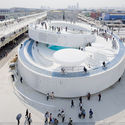
On World Bicycle Day: 22 Inspiring Architectural Cycling Projects - Image 1 of 4On World Bicycle Day: 22 Inspiring Architectural Cycling Projects - Image 5 of 4On World Bicycle Day: 22 Inspiring Architectural Cycling Projects - Image 2 of 4On World Bicycle Day: 22 Inspiring Architectural Cycling Projects - Featured ImageOn World Bicycle Day: 22 Inspiring Architectural Cycling Projects - More Images+ 27

From Paper Tube Shelters to Timber Innovations: Shigeru Ban's Complete Works Explored by Philip Jodidio for Taschen

Japanese architect Shigeru Ban stands out in the architectural world for his commitment to socially responsible design, his eagerness to respond to disaster-related emergencies, and his creativity in adapting solutions to local conditions. He pioneered the use of materials such as paper and cardboard, employing them to create high-quality low-cost shelters and even community amenities such as churches, containers for creating a Nomadic Museum, and mass timber to push the possibilities of responsible design. The works of the Pritzker Prize laureate are now explored in the latest monography by Taschen, “Shigeru Ban. Complete Works 1985–Today” led by author Philip Jodidio. The multilingual edition features texts in English, French, and German, and will become available on June 14, 2024.

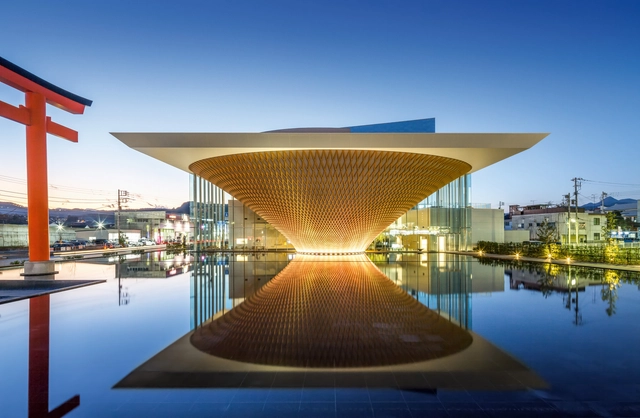
From Paper Tube Shelters to Timber Innovations: Shigeru Ban's Complete Works Explored by Philip Jodidio for Taschen - Image 1 of 4From Paper Tube Shelters to Timber Innovations: Shigeru Ban's Complete Works Explored by Philip Jodidio for Taschen - Image 2 of 4From Paper Tube Shelters to Timber Innovations: Shigeru Ban's Complete Works Explored by Philip Jodidio for Taschen - Image 3 of 4From Paper Tube Shelters to Timber Innovations: Shigeru Ban's Complete Works Explored by Philip Jodidio for Taschen - Image 4 of 4From Paper Tube Shelters to Timber Innovations: Shigeru Ban's Complete Works Explored by Philip Jodidio for Taschen - More Images+ 7

European Collective Housing Award Announces Winners of First Edition

The European Collective Housing Award has selected the winners for the 2024 cycle. Created by The Basque Architecture Institute and Arc en Rêve Centre d’Architecture, in collaboration with the Department of Territorial Planning, the award highlights innovation and excellence in collective housing design, emphasizing aesthetics, social responsibility, and environmental sustainability. Selected from a category of 171 entries from 19 European countries, the winners are La Borda Housing Collectie in Spain and Construction of a Wine Storage into Housing in Switzerland for the new construction and renovation category, respectively. The inaugural edition of the European Collective Housing Award recognizes the importance of collective housing in creating sustainable and inclusive communities while also emphasizing the need to promote architectural excellence in this domain.

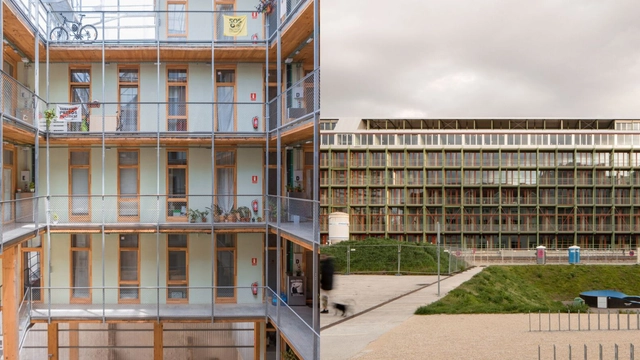
European Collective Housing Award Announces Winners of First Edition - Image 1 of 4European Collective Housing Award Announces Winners of First Edition - Image 2 of 4European Collective Housing Award Announces Winners of First Edition - Image 3 of 4European Collective Housing Award Announces Winners of First Edition - Image 4 of 4European Collective Housing Award Announces Winners of First Edition - More Images+ 2

Reversing Design Order through Material Recycling: An Interview with RUÍNA Architecture

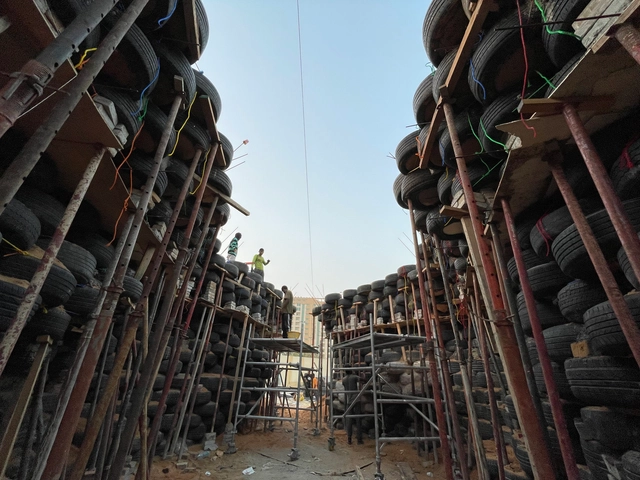
RUÍNA Arquitetura aims for greater socio-environmental awareness and the appreciation of materials while advocating for reuse as an alternative within the construction industry. In their practice, they explore new avenues for reclaimed materials, diminishing demolition waste and supplying construction materials with a reduced environmental footprint. In 2024, they were selected as part of ArchDaily’s 2024 Best New Practice for their unique attention to context, aiming to minimize its impact on the built environment through the effective reuse of materials and construction waste. Their participation in the 2023 Sharjah Architecture Triennale exemplifies how local ideas can achieve global recognition.

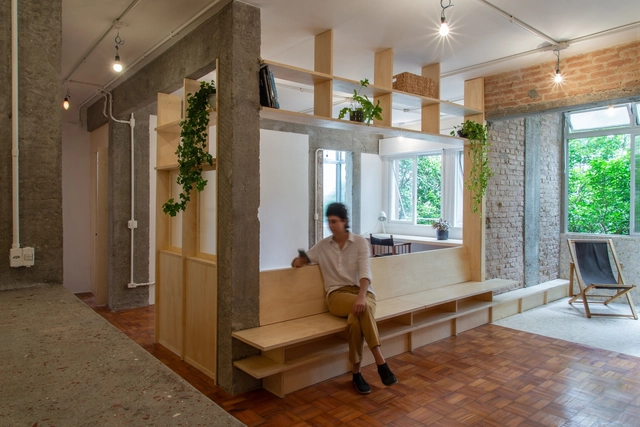
Reversing Design Order through Material Recycling: An Interview with RUÍNA Architecture - Image 1 of 4Reversing Design Order through Material Recycling: An Interview with RUÍNA Architecture - Image 2 of 4Reversing Design Order through Material Recycling: An Interview with RUÍNA Architecture - Image 3 of 4Reversing Design Order through Material Recycling: An Interview with RUÍNA Architecture - Image 4 of 4Reversing Design Order through Material Recycling: An Interview with RUÍNA Architecture - More Images+ 13

Architecture for Glamping: Embracing Nature with Comfort

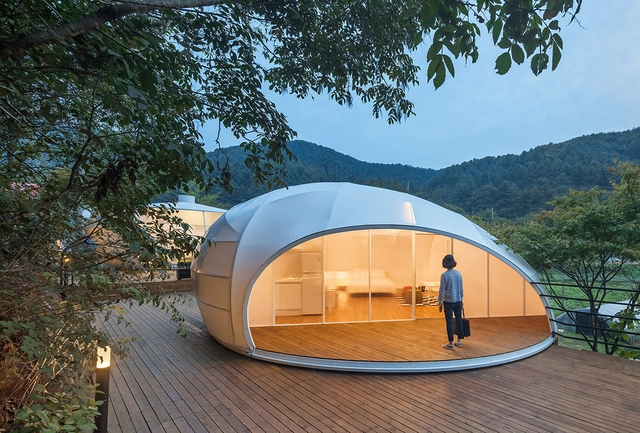
Camping, as defined in dictionaries, involves temporarily staying outdoors, setting up makeshift accommodations, and settling in natural surroundings. In architecture, tents symbolize these aspects, representing a typology that has endured across centuries and cultures, often linked with notions of impermanence and vulnerability.

In light of this common understanding, the term 'glamping' emerged in the early 2000s, blending 'camping' with 'glamour,' suggesting a fusion of camping with luxurious amenities. However, despite its recent popularization, the concept is far from original. Camping has not always been seen as the antithesis of luxury.

Architecture for Glamping: Embracing Nature with Comfort - Image 1 of 4Architecture for Glamping: Embracing Nature with Comfort - Image 2 of 4Architecture for Glamping: Embracing Nature with Comfort - Image 3 of 4Architecture for Glamping: Embracing Nature with Comfort - Image 4 of 4Architecture for Glamping: Embracing Nature with Comfort - More Images+ 12

Houses in Peru: 5 Projects That Use Cement Blocks in Their Construction

Subscriber Access | 

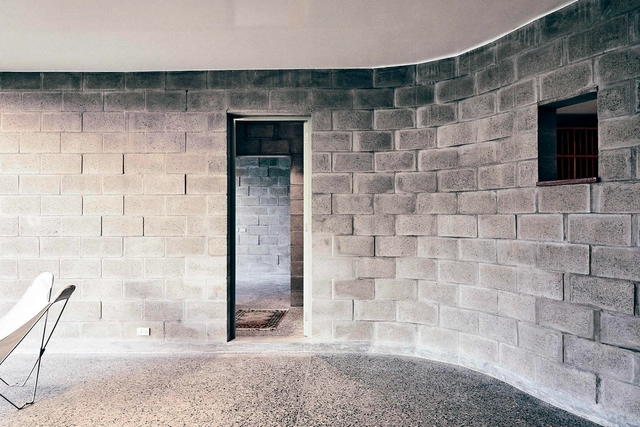
Beyond being a prefabricated material currently produced in large quantities, the use of concrete blocks in architecture continues to evolve to meet the demands and needs of contemporary societies that are constantly changing. Whether in interior or exterior spaces, their use can align with concepts of circular economy, resource efficiency, sustainability, and more, with the goal of creating habitable spaces while also understanding their constructive advantages and disadvantages, their expressive and aesthetic qualities, and so on.

Pavilions in Cities: 14 Structures that Foster Human Interactions

As dwellers of big cities, we tend to be dragged into a very fast-paced lifestyle. Surrounded by monumental buildings and infrastructure, we can easily lose sight of key spaces that connect us with our neighborhood and provide us with rare moments of peace and enjoyment. Appropriation of the environment we inhabit becomes an uncommon circumstance.

Pavilions in Cities: 14 Structures that Foster Human Interactions - Image 24 of 4Pavilions in Cities: 14 Structures that Foster Human Interactions - Image 23 of 4Pavilions in Cities: 14 Structures that Foster Human Interactions - Image 21 of 4Pavilions in Cities: 14 Structures that Foster Human Interactions - Image 1 of 4Pavilions in Cities: 14 Structures that Foster Human Interactions - More Images+ 23

SOM Breaks Ground on the Tallest Mixed-Use Tower in Andares Zapopan District of Guadalajara, Mexico

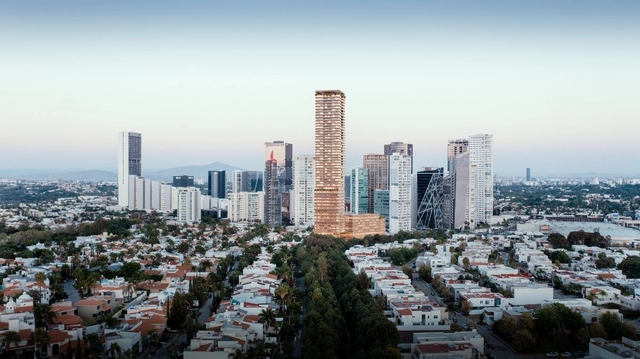
American architecture and engineering firm Skidmore, Owings & Merrill (SOM), in collaboration with Mexico City-based Estudio AMA and interior designer Esrawe Studio, has revealed a new 190-meter-tall mixed-use tower in Guadalajara, Mexico. The new addition, which broke ground on May 24, is slanted to become the tallest building in the Andares Zapopan district of the city, offering residential units, hotel rooms, and various amenities.

SOM Breaks Ground on the Tallest Mixed-Use Tower in Andares Zapopan District of Guadalajara, Mexico - Image 1 of 4SOM Breaks Ground on the Tallest Mixed-Use Tower in Andares Zapopan District of Guadalajara, Mexico - Image 2 of 4SOM Breaks Ground on the Tallest Mixed-Use Tower in Andares Zapopan District of Guadalajara, Mexico - Image 3 of 4SOM Breaks Ground on the Tallest Mixed-Use Tower in Andares Zapopan District of Guadalajara, Mexico - Image 4 of 4SOM Breaks Ground on the Tallest Mixed-Use Tower in Andares Zapopan District of Guadalajara, Mexico - More Images+ 1

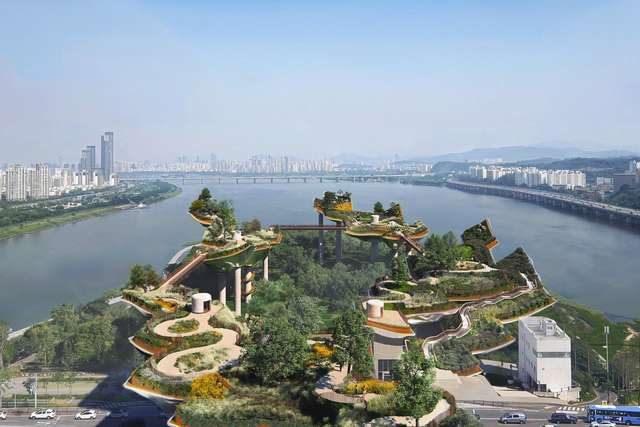
Heatherwick Studio Wins Competition to Reimagine Seoul’s Nodeul Island in South Korea

Heatherwick Studio has just won the global competition to transform Seoul’s uninhabited Nodeul Island on the Han River into a lively public park. Titled “Soundscape,” the winning project “creates a trail of dramatic spaces on different levels that can host musical performances and artistic interventions.” Situated within a green and biodiverse landscape, the design echoes Seoul's mountainous terrain and the patterns of sound waves.

‘Even If a Project Fails, the Ideas Behind It Don’t Disappear’: Atlas of Never Built Architecture

This article was originally published on Common Edge.

For architects and designers, unbuilt/unrealized projects are confounding, bittersweet, frustrating, elusive, even ghostly—the ultimate what-ifs. Often launched with the grandest ambitions, only to become derailed by the multiplicity of complications that can beset every proposed work of architecture. Author, editor, and critic Sam Lubell has spent a healthy chunk of his career cataloging these thwarted fever dreams. Now he has released, with co-author Greg Goldin, a new compilation, Atlas of Never Built Architecture (Phaidon), a global survey of more than 300 unbuilt projects ranging from the 20th century to the present day.

Recently I reached out to the writers to talk about the book, what unbuilt projects say about the culture at large, and some of their favorite unrealized projects. This interview was conducted via email, with Lubell and Goldin choosing to respond jointly.

‘Even If a Project Fails, the Ideas Behind It Don’t Disappear’: Atlas of Never Built Architecture - Image 1 of 4‘Even If a Project Fails, the Ideas Behind It Don’t Disappear’: Atlas of Never Built Architecture - Image 2 of 4‘Even If a Project Fails, the Ideas Behind It Don’t Disappear’: Atlas of Never Built Architecture - Image 3 of 4‘Even If a Project Fails, the Ideas Behind It Don’t Disappear’: Atlas of Never Built Architecture - Image 4 of 4‘Even If a Project Fails, the Ideas Behind It Don’t Disappear’: Atlas of Never Built Architecture - More Images+ 1

Almost Perfect Days: Hirayama and Moriyama, a Double Vision of Architecture

Subscriber Access | 

As an architect I find it truly interesting to read cities and architecture through films, and this is why I went to see the latest film by one of my favourite directors Wim Wenders: Perfect Days. In Wenders’ cinema, his gaze over the city is always the protagonist. He possesses the remarkable ability to make the space of the photographic image the central focus of his filmmaking. It is not only the story that is important to him, but the time and space in which the story takes shape almost by chance.

A Royal Opera in Warsaw and a Center for the Arts in Canada: 8 Music and Performance Venues Submitted by the ArchDaily Community

Subscriber Access | 

Concert halls, music, and performance venues stand as iconic symbols of cultural vitality within urban landscapes. Through these structures, which often become landmarks of the city, the residents are invited to take part and experience artistic expression, fostering a sense of community and connection. For architects, this program poses the intricate challenge of balancing form and function, creating spaces that enhance the acoustic experience, allow for the flow of audience and performers, and create visual spectacles in their own right.

Featuring both emerging and internationally recognized offices, this week’s curated selection showcases music and performance venues, from mixed arts and cultural centers to opera and ballet halls. Including proposals for international competitions such as David Chipperfield Architects or SHL and PAX architects’ designs for the Polish Royal Opera in Warsaw or Hariri Pontarini Architects’ design for an integrated center for the arts in Canada, the selection explores the program of music venues across scales and programs.

A Royal Opera in Warsaw and a Center for the Arts in Canada: 8 Music and Performance Venues Submitted by the ArchDaily Community - Image 19 of 4A Royal Opera in Warsaw and a Center for the Arts in Canada: 8 Music and Performance Venues Submitted by the ArchDaily Community - Image 23 of 4A Royal Opera in Warsaw and a Center for the Arts in Canada: 8 Music and Performance Venues Submitted by the ArchDaily Community - Image 34 of 4A Royal Opera in Warsaw and a Center for the Arts in Canada: 8 Music and Performance Venues Submitted by the ArchDaily Community - Image 39 of 4A Royal Opera in Warsaw and a Center for the Arts in Canada: 8 Music and Performance Venues Submitted by the ArchDaily Community - More Images+ 45

Grand Palais Restoration by Chatillon Architectes Completed ahead of the 2024 Paris Olympics

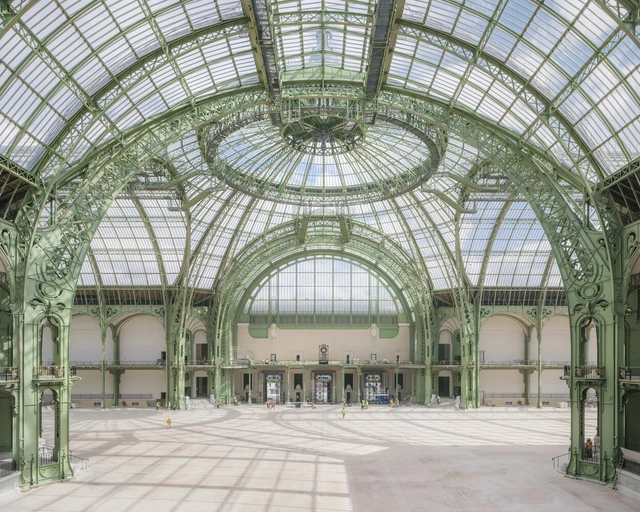
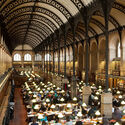
The Grand Palais, an iconic Parisian landmark, is set to play a significant role in the 2024 Paris Olympics following a major restoration by French studio Chatillon Architectes. The first images of the refurbished building, captured by Laurent Kronental, reveal the progress of the extensive project that began in 2021. While the full restoration is expected to be completed by 2025, the initial phase will be unveiled this summer, allowing the historic venue to host Olympic events, including the fencing and taekwondo competitions.

Grand Palais Restoration by Chatillon Architectes Completed ahead of the 2024 Paris Olympics - Image 1 of 4Grand Palais Restoration by Chatillon Architectes Completed ahead of the 2024 Paris Olympics - Image 2 of 4Grand Palais Restoration by Chatillon Architectes Completed ahead of the 2024 Paris Olympics - Image 3 of 4Grand Palais Restoration by Chatillon Architectes Completed ahead of the 2024 Paris Olympics - Image 4 of 4Grand Palais Restoration by Chatillon Architectes Completed ahead of the 2024 Paris Olympics - More Images+ 6

SOM Unveils New Satellite Concourse at Chicago O'Hare International Airport in United States

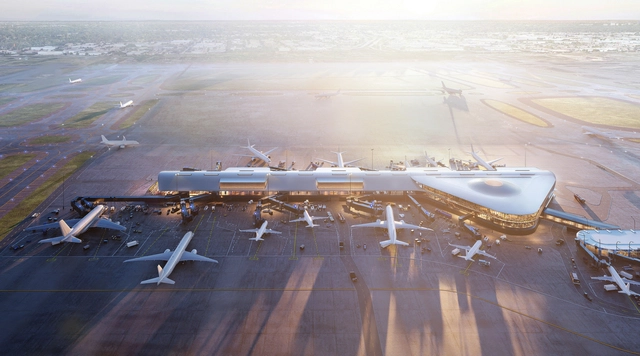
The City of Chicago has just unveiled the design for the first phase of the transformation of O’Hare International Airport. Designed by Skidmore, Ownings & Merrill (SOM), the terminal represents the largest concourse area expansion and revitalization in the airport’s 68-year history. Designed in collaboration with Ross Barney Architects, Juan Gabriel Moreno Architects, and Arup, “Satellite One” seeks to become a landmark in the state.

SOM Unveils New Satellite Concourse at Chicago O'Hare International Airport in United States - Image 1 of 4SOM Unveils New Satellite Concourse at Chicago O'Hare International Airport in United States - Image 2 of 4SOM Unveils New Satellite Concourse at Chicago O'Hare International Airport in United States - Image 3 of 4SOM Unveils New Satellite Concourse at Chicago O'Hare International Airport in United States - Image 4 of 4SOM Unveils New Satellite Concourse at Chicago O'Hare International Airport in United States - More Images

Graham Foundation Announces 56 Grants for Individuals Expanding Architecture Ideas Through Interdisciplinary Work

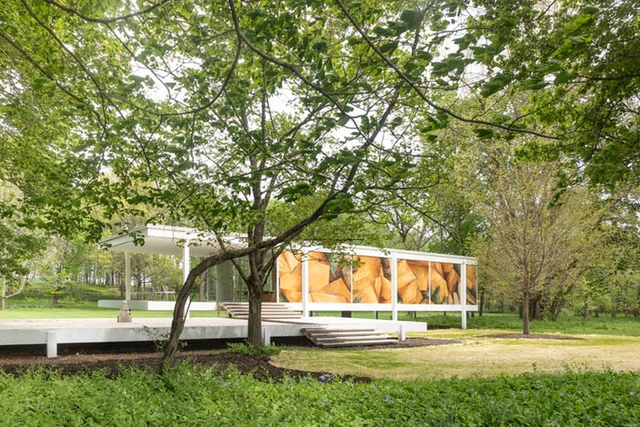
The Graham Foundation has announced 56 new grants to individuals, selected from nearly 600 submissions. Centered on publications, research, exhibitions, films, site-specific installations, and digital initiatives, the funded projects "expand contemporary architecture ideas through innovative rigorous interdisciplinary work on the design and the built environment." The projects are led by 84 individuals, including established and emerging architects, artists, curators, designers, filmmakers, historians, and writers.

Graham Foundation Announces 56 Grants for Individuals Expanding Architecture Ideas Through Interdisciplinary Work - Image 1 of 4Graham Foundation Announces 56 Grants for Individuals Expanding Architecture Ideas Through Interdisciplinary Work - Image 2 of 4Graham Foundation Announces 56 Grants for Individuals Expanding Architecture Ideas Through Interdisciplinary Work - Image 3 of 4Graham Foundation Announces 56 Grants for Individuals Expanding Architecture Ideas Through Interdisciplinary Work - Image 4 of 4Graham Foundation Announces 56 Grants for Individuals Expanding Architecture Ideas Through Interdisciplinary Work - More Images+ 4

Learning from Global Architecture Exhibitions: Resource Efficiency, Vernacular Intelligence, and Social and Environmental Advocacy

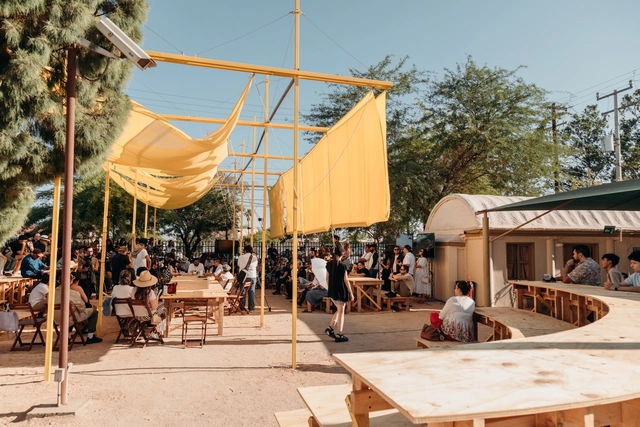
Over the past year, architecture exhibitions have significantly addressed pressing global issues such as climate change, resource scarcity, and social advocacy. According to the Harvard Graduate School of Design, architecture exhibitions can foster dynamic engagement with contemporary issues, serving as platforms for experimentation and critique. These events, such as the Venice Architecture Biennale, Sharjah Architecture Triennial, Milan Design Week, and Concéntrico, serve as essential platforms for creatives to showcase and explore new ideas. Moreover, they have been instrumental in addressing the urgent challenges posed by the climate crisis by promoting sustainable practices.

Learning from Global Architecture Exhibitions: Resource Efficiency, Vernacular Intelligence, and Social and Environmental Advocacy - Image 1 of 4Learning from Global Architecture Exhibitions: Resource Efficiency, Vernacular Intelligence, and Social and Environmental Advocacy - Image 2 of 4Learning from Global Architecture Exhibitions: Resource Efficiency, Vernacular Intelligence, and Social and Environmental Advocacy - Featured ImageLearning from Global Architecture Exhibitions: Resource Efficiency, Vernacular Intelligence, and Social and Environmental Advocacy - Image 3 of 4Learning from Global Architecture Exhibitions: Resource Efficiency, Vernacular Intelligence, and Social and Environmental Advocacy - More Images+ 9

MAD Architects Reveals Latest Construction Updates for the Hainan Science Museum in China

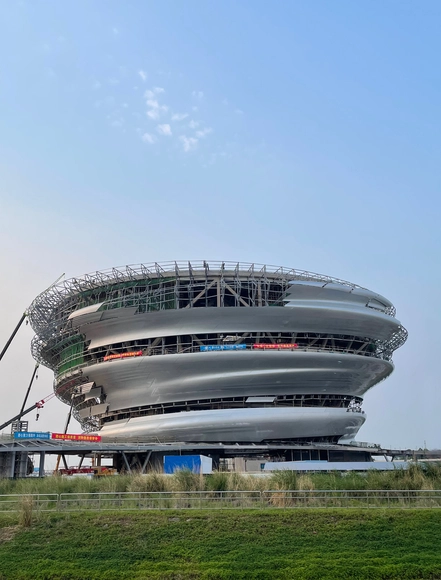
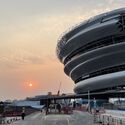
The Hainan Science Museum, designed by Ma Yansong / MAD Architects, is progressing through its construction phases. The project began its design phase in 2020, broke ground in November 2021, and completed its main structure in June 2023. The museum, located on the west coast of Haikou City in Hainan Province, aims to be a landmark that integrates modern architecture with natural surroundings, promoting the convergence of technology and nature. The museum is expected to finish its curtain wall and landscaping by June this year and open for visitors in 2025.

MAD Architects Reveals Latest Construction Updates for the Hainan Science Museum in China - Image 1 of 4MAD Architects Reveals Latest Construction Updates for the Hainan Science Museum in China - Image 2 of 4MAD Architects Reveals Latest Construction Updates for the Hainan Science Museum in China - Image 3 of 4MAD Architects Reveals Latest Construction Updates for the Hainan Science Museum in China - Image 4 of 4MAD Architects Reveals Latest Construction Updates for the Hainan Science Museum in China - More Images+ 21

Zaha Hadid Architects' Development Reaches Roof Level in Hong Kong

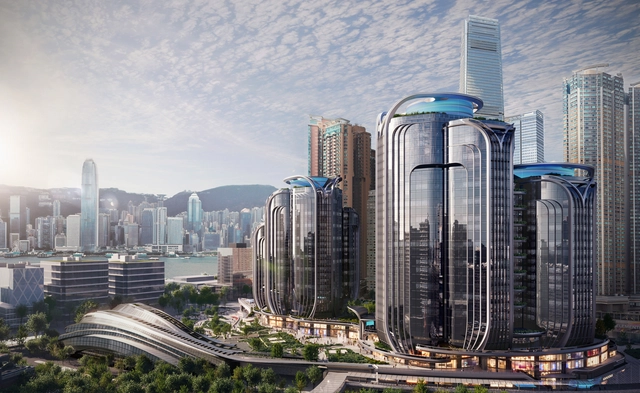
Construction has reached the roof level in Zaha Hadid Architect’s development above Hong Kong High-Speed Rail West Kowloon Terminus. Adjacent to the West Kowloon Cultural District, this development connects established and emerging neighborhoods with a network of public gardens and landscaped plazas. Designed by Zaha Hadid Architects (ZHA), it seeks to integrate seamlessly with the surrounding station and rooftop park, offering civic, office, and retail spaces.


Zaha Hadid Architects' Development Reaches Roof Level in Hong Kong - Image 1 of 4Zaha Hadid Architects' Development Reaches Roof Level in Hong Kong - Image 2 of 4Zaha Hadid Architects' Development Reaches Roof Level in Hong Kong - Image 3 of 4Zaha Hadid Architects' Development Reaches Roof Level in Hong Kong - Image 4 of 4Zaha Hadid Architects' Development Reaches Roof Level in Hong Kong - More Images+ 1