1. ArchDaily
  2. Architecture

Architecture: The Latest Architecture and News

Dissolving Architecture into Nature: Dorte Mandrup Designs Hotel in Norway's Arctic Circle

Danish architecture studio Dorte Mandrup has just released the designs for its new project in the Arctic Region. Teaming up with high-end Norwegian adventure and outdoor brand Norrøna, the studio has designed a nature hotel. Situated in Northern Norway in Senja, Norway’s second-largest island, the hotel is surrounded by dramatic landscapes featuring steep mountains, beaches, valleys, and deep fjords.

New AI Image Generator Can Help Users Redesign Their Own Interior Spaces

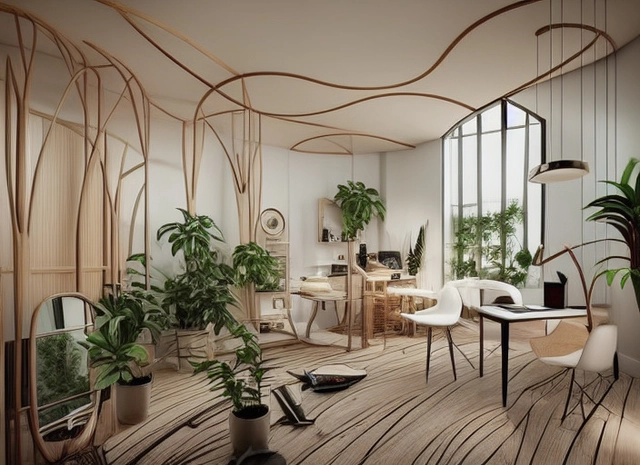
Interior AI is a new platform that helps users generate new styles and even new functions for their interior spaces. The program uses the input of a 2D image of an interior space, be it a picture found on the internet or a photograph taken by the user. It can then modify this picture to fit one of the 16 preselected styles, ranging from Minimalist, Art nouveau, or Biophilic to Baroque or Cyberpunk. The program also allows users to select a different function for the room, kitchen, home office, outdoor patio, or even fitness gym, thus creating a completely new interior design.

New AI Image Generator Can Help Users Redesign Their Own Interior Spaces - Image 1 of 4New AI Image Generator Can Help Users Redesign Their Own Interior Spaces - Image 2 of 4New AI Image Generator Can Help Users Redesign Their Own Interior Spaces - Image 3 of 4New AI Image Generator Can Help Users Redesign Their Own Interior Spaces - Image 4 of 4New AI Image Generator Can Help Users Redesign Their Own Interior Spaces - More Images+ 5

On Ethics and Fair Labor in Architecture: The Example of Theaster Gates’ Serpentine Pavilion Design

When he was invited to design the 21st Serpentine Pavilion in London’s Kensington Gardens public park, Chicago-based artist Theaster Gates envisioned a calm space to offer respite and a subtle exploration into the power of sound and music in architecture. Created out of lightweight stained wood, the “Black Chapel” demonstrates more than just artistic and architectural sensibilities. In addition to the use of sustainable materials, the project also pays close attention to how the building materials are sourced, bringing visibility to the problem of modern slavery in the construction materials supply chain.

To ensure fair labor conditions not just on-site, but throughout the entire production process, the Serpentine Pavilion collaborated with Grace Farms, a US-based non-profit foundation helping designers and industry leaders to eliminate forced labor in the building materials supply chain, thus establishing more ethical practices and a more humane future.

On Ethics and Fair Labor in Architecture: The Example of Theaster Gates’ Serpentine Pavilion Design - Image 1 of 4On Ethics and Fair Labor in Architecture: The Example of Theaster Gates’ Serpentine Pavilion Design - Image 2 of 4On Ethics and Fair Labor in Architecture: The Example of Theaster Gates’ Serpentine Pavilion Design - Image 3 of 4On Ethics and Fair Labor in Architecture: The Example of Theaster Gates’ Serpentine Pavilion Design - Image 4 of 4On Ethics and Fair Labor in Architecture: The Example of Theaster Gates’ Serpentine Pavilion Design - More Images+ 2

A Lot With Little: Video Installation at the AA School in London Highlights Resource Efficiency in Architecture

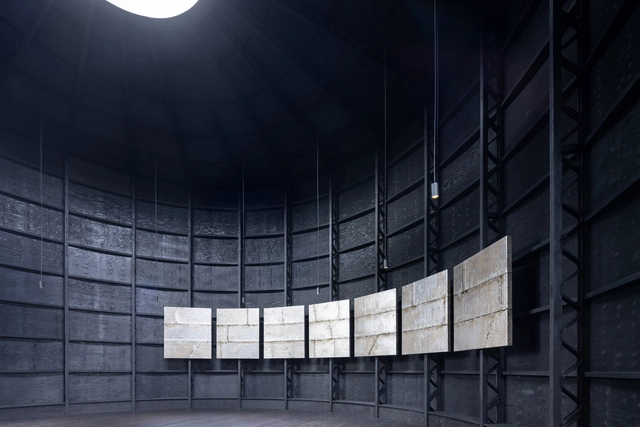
Noemí Blager and Tapio Snellman are presenting a new video installation at the Architectural Association (AA) in London. The exhibition titled “A Lot with Little” set out to explore and showcase how architects can employ a more economical use of resources to create architectural works that are both sensible and sustainable. Previously shown in Germany, Switzerland, China, Czechia, the US, and the Venice Architecture Biennale, this London debut aims to highlight the global relevance of resource-efficient architectural practices. The exhibition is now on view at the AA School in London from April 26, until May 30, 2024.

A Lot With Little: Video Installation at the AA School in London Highlights Resource Efficiency in Architecture - Image 1 of 4A Lot With Little: Video Installation at the AA School in London Highlights Resource Efficiency in Architecture - Image 2 of 4A Lot With Little: Video Installation at the AA School in London Highlights Resource Efficiency in Architecture - Image 3 of 4A Lot With Little: Video Installation at the AA School in London Highlights Resource Efficiency in Architecture - Image 4 of 4A Lot With Little: Video Installation at the AA School in London Highlights Resource Efficiency in Architecture - More Images+ 13

J. Mayer H. Architects Wins Competition to Design Water-Inspired "Cheongdam Tower" in Seoul, South Korea

J. Mayer H. Architects has just won the competition for their “Cheongdoam Tower” design in Seoul. As part of the Seoul City Urban/Architecture Creation/Innovation Design Project contest, the competition was initiated by the city of Seoul, aiming to enhance urban qualities and improve the quality of life for residents. Chosen from numerous submissions and six shortlisted projects, Cheongdam Tower emerged victorious.

J. Mayer H. Architects Wins Competition to Design Water-Inspired "Cheongdam Tower" in Seoul, South Korea - Image 3 of 4J. Mayer H. Architects Wins Competition to Design Water-Inspired "Cheongdam Tower" in Seoul, South Korea - Featured ImageJ. Mayer H. Architects Wins Competition to Design Water-Inspired "Cheongdam Tower" in Seoul, South Korea - Image 1 of 4J. Mayer H. Architects Wins Competition to Design Water-Inspired "Cheongdam Tower" in Seoul, South Korea - Image 2 of 4J. Mayer H. Architects Wins Competition to Design Water-Inspired Cheongdam Tower in Seoul, South Korea - More Images

Maximizing Dilapidated Infrastructure: The Potential of Repurposing Abandoned Buildings into Social Housing

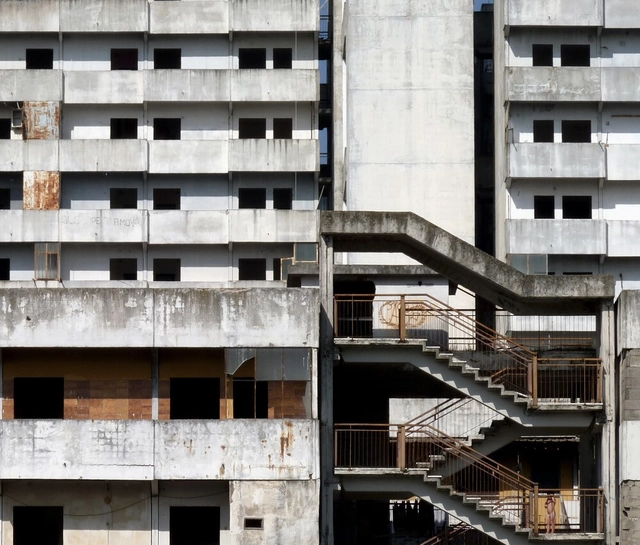
As the demand for affordable housing grows and the availability of low-cost properties diminishes, stakeholders in housing must become more innovative in their approach to social housing development. One opportunity lies in restoring and repurposing abandoned buildings. While building new houses remains the primary strategy for Housing Authorities and Associations, rehabilitating derelict buildings can be a more economical option. This approach not only maximizes the use of dilapidating infrastructure but also provides an economic opportunity to increase affordable housing within the city. Although rehabilitating derelict residential buildings may seem like an obvious solution, it becomes even more crucial when considering abandoned commercial, institutional, or historical buildings for social housing.
Maximizing Dilapidated Infrastructure: The Potential of Repurposing Abandoned Buildings into Social Housing - Image 1 of 4Maximizing Dilapidated Infrastructure: The Potential of Repurposing Abandoned Buildings into Social Housing - Image 2 of 4Maximizing Dilapidated Infrastructure: The Potential of Repurposing Abandoned Buildings into Social Housing - Image 3 of 4Maximizing Dilapidated Infrastructure: The Potential of Repurposing Abandoned Buildings into Social Housing - Image 4 of 4Maximizing Dilapidated Infrastructure: The Potential of Repurposing Abandoned Buildings into Social Housing - More Images+ 1

Explore Jean Nouvel's Pop-Up Store on the Champs Élysées in Paris, Through the Lens of Jad Sylla

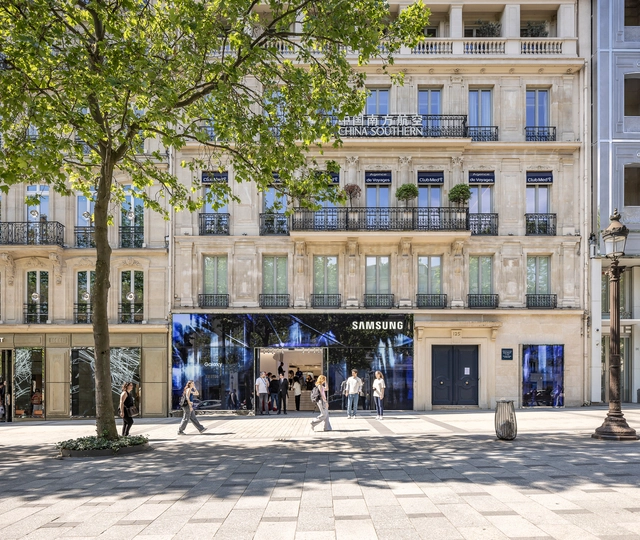
Renowned French architect Jean Nouvel has unveiled his design for Samsung’s pop-up store on the iconic Avenue des Champs-Élysées in Paris, France. The store aims to represent the company’s role as a Worldwide Olympic Partner, offering visitors a space where they can engage with the newest mobile technologies and Olympic-related activities. The first images by architectural photographer Jad Sylla highlight Jean Nouvel’s design of the immersive retail space.

Explore Jean Nouvel's Pop-Up Store on the Champs Élysées in Paris, Through the Lens of Jad Sylla - Image 1 of 4Explore Jean Nouvel's Pop-Up Store on the Champs Élysées in Paris, Through the Lens of Jad Sylla - Image 2 of 4Explore Jean Nouvel's Pop-Up Store on the Champs Élysées in Paris, Through the Lens of Jad Sylla - Image 3 of 4Explore Jean Nouvel's Pop-Up Store on the Champs Élysées in Paris, Through the Lens of Jad Sylla - Image 4 of 4Explore Jean Nouvel's Pop-Up Store on the Champs Élysées in Paris, Through the Lens of Jad Sylla - More Images+ 6

"The Designer Should Challenge The Context:" In Conversation with Formafantasma at Milan Design Week 2024

Simone Farresin is the co-founder of Formafantasma, a research-driven design studio exploring the ecological, historical, political, and social influences that shape the design industry. Most recently, the studio participated in Milan Design Week 2024 and Salone del Mobile.Milano with various products and exhibitions. Onsite in Milan, ArchDaily had the chance to speak to Simon Farresin about the studio’s installation for Cosentino at the historic Teatro Gerolamo, and the broader Formafantasma design practice.

"The Designer Should Challenge The Context:" In Conversation with Formafantasma at Milan Design Week 2024 - Image 1 of 4"The Designer Should Challenge The Context:" In Conversation with Formafantasma at Milan Design Week 2024 - Image 2 of 4"The Designer Should Challenge The Context:" In Conversation with Formafantasma at Milan Design Week 2024 - Image 3 of 4"The Designer Should Challenge The Context:" In Conversation with Formafantasma at Milan Design Week 2024 - Image 4 of 4The Designer Should Challenge The Context: In Conversation with Formafantasma at Milan Design Week 2024 - More Images+ 1

The Loeb Fellowship at Harvard GSD Announces the Selection for the Class of 2025

The Harvard Graduate School of Design (Harvard GSD) has announced the Class of 2025 Loeb Fellows. Ten practitioners and activists from around the world have been selected to join the Loeb Fellowship program to expand their careers and advance their programs and initiatives focused on equity, resilience, and collective action.

The ten selected practitioners are mid-career professionals coming from diverse backgrounds. Each one has been recognized for initiating practices that are transforming public spaces and urban infrastructures, addressing public health concerns and environmental injustices, as well as housing needs and efforts to preserve the cultural, natural, and architectural heritage of diverse regions from all continents.

The Loeb Fellowship at Harvard GSD Announces the Selection for the Class of 2025 - Image 1 of 4The Loeb Fellowship at Harvard GSD Announces the Selection for the Class of 2025 - Image 2 of 4The Loeb Fellowship at Harvard GSD Announces the Selection for the Class of 2025 - Image 3 of 4The Loeb Fellowship at Harvard GSD Announces the Selection for the Class of 2025 - Image 4 of 4The Loeb Fellowship at Harvard GSD Announces the Selection for the Class of 2025 - More Images+ 7

AI, Data, and Predicting Urbanism: Interview with Peter Hirshberg and Anna Fedorova

This article is the ninth in a series focusing on the Architecture of the Metaverse. ArchDaily has collaborated with John Marx, AIA, the founding design principal and Chief Artistic Officer of Form4 Architecture, to bring you monthly articles that seek to define the Metaverse, convey the potential of this new realm as well as understand its constraints. In this feature, architect John Marx interviews Peter Hirshberg, chairman, and Anna Fedorova, principal at the Maker City Project.

AI, Data, and Predicting Urbanism: Interview with Peter Hirshberg and Anna Fedorova - Image 1 of 4AI, Data, and Predicting Urbanism: Interview with Peter Hirshberg and Anna Fedorova - Image 2 of 4AI, Data, and Predicting Urbanism: Interview with Peter Hirshberg and Anna Fedorova - Image 3 of 4AI, Data, and Predicting Urbanism: Interview with Peter Hirshberg and Anna Fedorova - Image 4 of 4AI, Data, and Predicting Urbanism: Interview with Peter Hirshberg and Anna Fedorova - More Images+ 3

Diller Scofidio + Renfro's London Wall West Redevelopment: Demolition of Iconic 1970s Buildings for New Office Space Set to Proceed

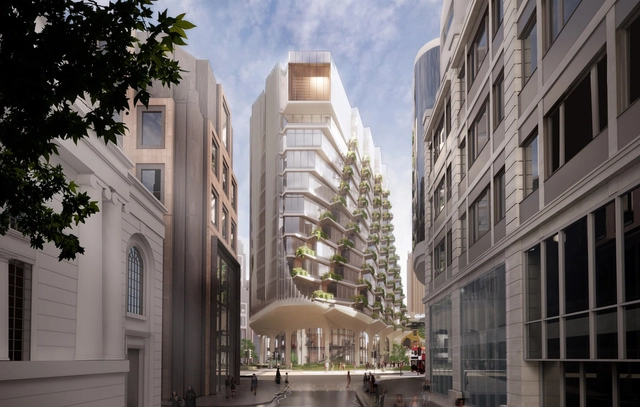
The controversial London Wall West redevelopment project, which involves the demolition of the former Museum of London and Bastion House, is set to proceed. The redevelopment, designed by architecture firms Diller Scofidio + Renfro and Sheppard Robson, will replace the landmark 1970s buildings with a modern office complex. The City of London has confirmed that the Secretary of State for Leveling Up, Housing, and Communities, Michael Gove, has decided not to call in the plans to reevaluate the former museum, allowing the project to move forward.

Diller Scofidio + Renfro's London Wall West Redevelopment: Demolition of Iconic 1970s Buildings for New Office Space Set to Proceed - Image 1 of 4Diller Scofidio + Renfro's London Wall West Redevelopment: Demolition of Iconic 1970s Buildings for New Office Space Set to Proceed - Image 2 of 4Diller Scofidio + Renfro's London Wall West Redevelopment: Demolition of Iconic 1970s Buildings for New Office Space Set to Proceed - Image 3 of 4Diller Scofidio + Renfro's London Wall West Redevelopment: Demolition of Iconic 1970s Buildings for New Office Space Set to Proceed - Image 4 of 4Diller Scofidio + Renfro's London Wall West Redevelopment: Demolition of Iconic 1970s Buildings for New Office Space Set to Proceed - More Images+ 3

An Abstract Chapel in Portugal and a Museum in Iran: 10 Unbuilt Projects Featuring Concrete Designs

Subscriber Access | 

A cornerstone of architectural innovation for centuries, concrete has transformed the structural capabilities of buildings worldwide. As one of the more versatile and durable building materials, concrete has aided architects and engineers in pushing the traditional boundaries of design. Today, it is the most widely used construction material on the planet. According to the Guardian, concrete is also a “lifestyle concept,” using its “gritty, urban” aesthetic to shape the imagination of all our architectures at every scale.

MTspace Studio Designs Flood-Resistant 3D Printed Homes for ICON's Initiative99 Competition

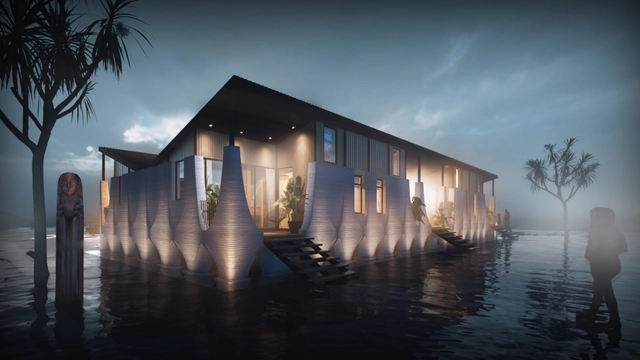
In an open competition, ICON’s Initiative 99 requested participants to design a home using ICON’s 3D printing technologies while keeping the construction budget under $99,000. Among the three selected winners for the Open Category, New Zealand-based office MTspace Studio proposes a robust flood-resistant design, in response to the housing crisis in New Zealand’s flood zones. Titled “Wai Home” after the Māori word for water, the concept revolves around the idea of working with this essential natural element. The design features innovative rainwater collection and storage systems, along with elements to increase the resilience of the construction in the face of increasing threats.

MTspace Studio Designs Flood-Resistant 3D Printed Homes for ICON's Initiative99 Competition - Image 1 of 4MTspace Studio Designs Flood-Resistant 3D Printed Homes for ICON's Initiative99 Competition - Image 2 of 4MTspace Studio Designs Flood-Resistant 3D Printed Homes for ICON's Initiative99 Competition - Image 3 of 4MTspace Studio Designs Flood-Resistant 3D Printed Homes for ICON's Initiative99 Competition - Image 4 of 4MTspace Studio Designs Flood-Resistant 3D Printed Homes for ICON's Initiative99 Competition - More Images+ 8

Neutelings Riedijk Architects and ARS Architectes Design Cité des Imaginaires and Grand Musée Jules Vernes in Nantes, France

Neutelings Riedijk Architects and ARS Architects Urbanistes have just won a competition to design the Cité des Imaginaires and Grand Musée Jules Verne in Nantes, France. Selected from 160 entries, their design seeks to revitalize the historic “Moulins de Nantes” mil, also known as CAP44. This industrial heritage site, notable for its unique Hennebique concrete structure, is set to be transformed into a sustainable structure within the Garden Extraordinaire. Additionally, the museum will celebrate the legacy of the renowned author Jules Verne, born in Nantes.

Architecture in South Asia: Transitions in Patronage, Practitioners, and Public Perception

Subscriber Access | 

South Asia has undergone notable transformations across economic, political, social, and various other spheres. Mirroring these patterns of societal change are the architectural practices across this region. The modern nation-states of South Asia – Afghanistan, Bangladesh, Bhutan, India, Maldives, Nepal, Pakistan, and Sri Lanka – share similar histories and a future characterized by rapid economic development and urbanization. However, each region exhibits distinct nuances concerning the present and potential state of architectural praxis, informed by their socio-cultural contexts and emerging political climates.

Architecture in South Asia: Transitions in Patronage, Practitioners, and Public Perception - Image 1 of 4Architecture in South Asia: Transitions in Patronage, Practitioners, and Public Perception - Image 2 of 4Architecture in South Asia: Transitions in Patronage, Practitioners, and Public Perception - Image 3 of 4Architecture in South Asia: Transitions in Patronage, Practitioners, and Public Perception - Image 4 of 4Architecture in South Asia: Transitions in Patronage, Practitioners, and Public Perception - More Images+ 4

Space as a Collaborator for Design: Get to Know the Works of Davidson Rafailidis

Subscriber Access | 

There's something quite exciting about imagining how a particular space within an existing built form can dictate its use and vice-versa, how the function of a determined space can shape the space's appearance, and the endless possibilities that this entails. This reciprocal process is a concept we often find in the works of the experimental architecture duo Davidson Rafailidis, whose projects evidence a thorough understanding of the existing form that results in a careful and thoughtful ensemble of dynamic architecture.

Space as a Collaborator for Design: Get to Know the Works of Davidson Rafailidis - Image 1 of 4Space as a Collaborator for Design: Get to Know the Works of Davidson Rafailidis - Image 2 of 4Space as a Collaborator for Design: Get to Know the Works of Davidson Rafailidis - Image 3 of 4Space as a Collaborator for Design: Get to Know the Works of Davidson Rafailidis - Image 4 of 4Space as a Collaborator for Design: Get to Know the Works of Davidson Rafailidis - More Images+ 14

Architect Alberto Campo Baeza and Chronobiology Professor Till Roenneberg Receive the Daylight Award 2024

In Copenhagen, during the 2024 UNESCO International Day of Light, The Daylight Award has announced Spanish architect and professor Alberto Campo Baeza as the laureate for the architecture category and German professor of chronobiology Till Roenneberg for his scientific research regarding the impact of daylight. The two categories create an interdisciplinary bridge between fields, grounding architectural thinking with high-level research. The two winners have been commended for scientific investigations into issues like circadian rhythms and dependencies in the case of Professor Roenneberg, and the poetic qualities obtained through the use of daylight in Alberto Campo Baeza’s architectural works.

Architect Alberto Campo Baeza and Chronobiology Professor Till Roenneberg Receive the Daylight Award 2024 - Image 1 of 4Architect Alberto Campo Baeza and Chronobiology Professor Till Roenneberg Receive the Daylight Award 2024 - Image 2 of 4Architect Alberto Campo Baeza and Chronobiology Professor Till Roenneberg Receive the Daylight Award 2024 - Image 3 of 4Architect Alberto Campo Baeza and Chronobiology Professor Till Roenneberg Receive the Daylight Award 2024 - Image 4 of 4Architect Alberto Campo Baeza and Chronobiology Professor Till Roenneberg Receive the Daylight Award 2024 - More Images+ 23

Minsuk Cho of Mass Studies Reveals New Details for the 23rd Serpentine Pavilion

Seoul-based Korean architect Minsuk Cho and his firm Mass Studies have been selected to design the 23rd Serpentine Pavilion, to open on June 5, 2024, in London’s Kensington Gardens. Titled “Archipelagic Void,” this iteration of the iconic commission will consist of five ‘islands’ displayed around an open space, breaking down the structure into a series of smaller elements intertwined with the park’s natural ecology. The pavilion will be open to the public from June 7, until October 27, 2024, with a press preview two days before the opening.