1. ArchDaily
  2. Architecture

Architecture: The Latest Architecture and News

Carlo Ratti Associati Designs Buzzi Heritage Cultural Center in Italy With the New Digital Construction System

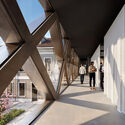
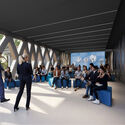
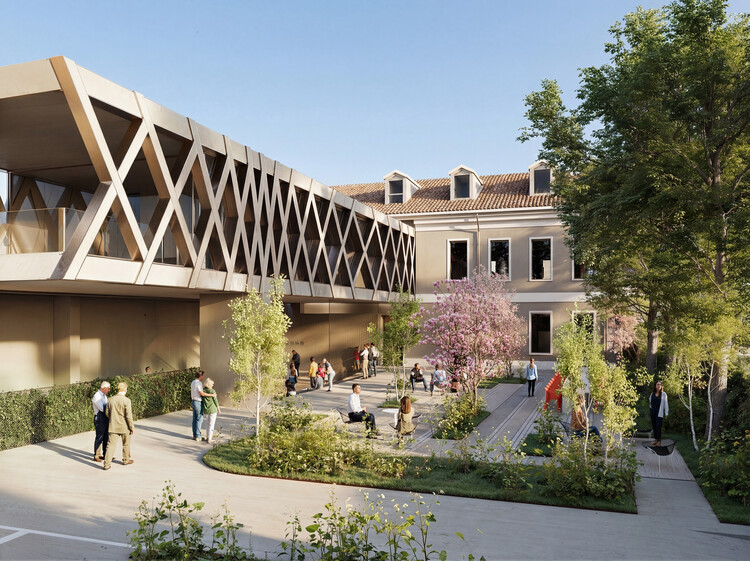
CRA–Carlo Ratti Associati has been selected to design the Buzzi Heritage cultural center in Casale Monferrato, Italy. The proposal introduces a 100-meter-long suspended truss that links two former educational buildings, consolidating archival, research, and cultural functions within a single structure. The project also marks the first real-world application of a patented structural system developed through research by Carlo Ratti Associati in partnership with Maestro Technologies. Positioned above a system of open spaces, the intervention reconfigures the site as a publicly accessible cultural complex while maintaining a clear distinction between built and landscaped areas.
Carlo Ratti Associati Designs Buzzi Heritage Cultural Center in Italy With the New Digital Construction System - Image 1 of 4Carlo Ratti Associati Designs Buzzi Heritage Cultural Center in Italy With the New Digital Construction System - Image 2 of 4Carlo Ratti Associati Designs Buzzi Heritage Cultural Center in Italy With the New Digital Construction System - Image 3 of 4Carlo Ratti Associati Designs Buzzi Heritage Cultural Center in Italy With the New Digital Construction System - Image 4 of 4Carlo Ratti Associati Designs Buzzi Heritage Cultural Center in Italy With the New Digital Construction System - More Images+ 1

Housing Affordability Crisis: Architectural and Policy Responses from Spain, France, Australia, and the United States

Today's housing crisis is a global phenomenon that can be broadly divided into two major problems: a shortage of residential buildings and barriers to accessing those that already exist. The deficit is real and concrete when it comes to what the UN calls "adequate housing for all." According to UN-Habitat, an estimated 96,000 new housing units would need to be built per day to meet population needs by 2030. Climate change and forced migration are broadening the gap. But 2.8 billion people worldwide, representing nearly 40% of the global population, lack access to stable shelter, secure land, and basic sanitation services not only because of underproduction, but also due to an economic barrier: an affordability crisis. As demand grows and prices rise, housing, now increasingly functioning as a form of social security, becomes a target for rental income and real estate speculation. As adequate housing is a human right, pressure on governments and private entities is increasing worldwide to limit speculation and ensure fair access to existing dwellings. Below, we present four examples of initiatives in Spain, Australia, France, and the United States that aim to urgently expand housing access while limiting speculation.

Housing Affordability Crisis: Architectural and Policy Responses from Spain, France, Australia, and the United States - Image 1 of 4Housing Affordability Crisis: Architectural and Policy Responses from Spain, France, Australia, and the United States - Image 2 of 4Housing Affordability Crisis: Architectural and Policy Responses from Spain, France, Australia, and the United States - Image 3 of 4Housing Affordability Crisis: Architectural and Policy Responses from Spain, France, Australia, and the United States - Image 4 of 4Housing Affordability Crisis: Architectural and Policy Responses from Spain, France, Australia, and the United States - More Images+ 3

Rethinking Architecture at the Scale of Planetary Systems

Architecture has traditionally been described as a discipline concerned with space, form, and material presence. Yet this understanding becomes increasingly limited when confronted with the conditions that shape contemporary construction. Buildings no longer emerge from a stable relationship between site, program, and material. Instead, they are produced within a dense web of technological systems that operate across territorial, ecological, and temporal scales. Energy networks, data infrastructures, extraction processes, and global logistics shape architecture as decisively as climate or urban context.

Seen from this angle, architecture is less a discrete object than a moment within a larger technical field. Supply chains, data systems, automated maintenance, and energy grids do not sit "behind" the built environment. In a certain way, they influence what can be built, what is affordable, how buildings perform over time, and what kinds of waste they produce. When architecture is assessed primarily through form, it risks overlooking the systems that condition its production and afterlife.

Rethinking Architecture at the Scale of Planetary Systems - Image 1 of 4Rethinking Architecture at the Scale of Planetary Systems - Image 2 of 4Rethinking Architecture at the Scale of Planetary Systems - Image 3 of 4Rethinking Architecture at the Scale of Planetary Systems - Image 4 of 4Rethinking Architecture at the Scale of Planetary Systems - More Images+ 30

The 20 Shortlisted Projects of the ArchDaily Student Project Awards

Every architecture student knows what it's like to spend sleepless nights working away, rushing to finalize a project as a deadline looms ahead. Revising every detail, putting the finishing touches and hoping for the best. The pay-off? Seeing the finished project, talking about it with your classmates, and getting to dream about your perfect idea of what a space should look and feel like.

While making the shortlist selection throughout the past two weeks, the ArchDaily jury panel was well-aware of what it feels like to be an architecture student. Comprised of architects, the panel carefully studied, considered and debated each individual project, with an understanding of what goes into each and every submission. The result is a shortlist that exemplifies the spirit of the Student Project Awards and its mission to recognize the creativity and vision of students who are redefining architectural practice and discourse.

Architects Office Designs World Trade Center Biotic Mixed-Use Complex in Brasília’s Parque Tecnológico

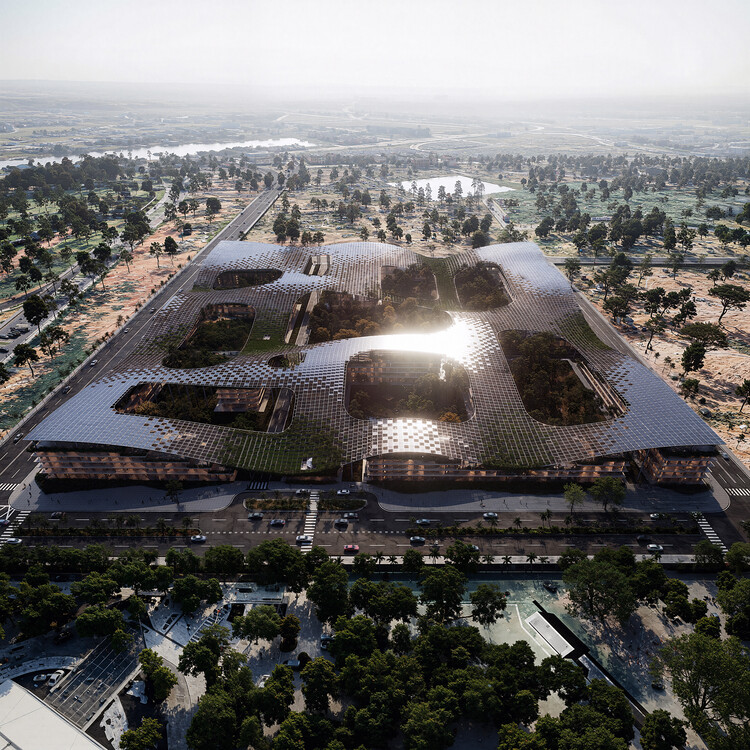
Located within the Parque Tecnológico de Brasília, the World Trade Center Biotic is a mixed-use development designed by Brazilian studio Architects Office as part of the district's broader urban expansion. The project is part of the master plan developed in 2020 by Carlo Ratti Associati and is currently being developed. Conceived as a multi-program complex, the proposal brings together offices, residential units, a hotel, retail spaces, and shared facilities within a single urban framework. The project occupies a site of approximately 70,000 square meters and is planned to reach about 180,000 square meters of built area, with an estimated 150,000 square meters expected to be completed by 2030.

Architects Office Designs World Trade Center Biotic Mixed-Use Complex in Brasília’s Parque Tecnológico - Image 1 of 4Architects Office Designs World Trade Center Biotic Mixed-Use Complex in Brasília’s Parque Tecnológico - Image 2 of 4Architects Office Designs World Trade Center Biotic Mixed-Use Complex in Brasília’s Parque Tecnológico - Image 3 of 4Architects Office Designs World Trade Center Biotic Mixed-Use Complex in Brasília’s Parque Tecnológico - Image 4 of 4Architects Office Designs World Trade Center Biotic Mixed-Use Complex in Brasília’s Parque Tecnológico - More Images+ 8

Lesley Lokko Receives African Cultural Icon Award for Her Contributions to Architectural Education and Discourse

Lesley Lokko OBE has been recognized with the African Cultural Icon Award, honoring "leaders in the creative arts who promote African culture and heritage on a global stage." The accolade is one of nine awards presented annually to publicly nominated and industry-recommended figures by a panel of judges from across Africa. Nominees are evaluated based on "impact, innovation, sustainability, and contribution to Africa's growth." Lokko is the Founder and Chair of the African Futures Institute (AFI), headquartered in Accra, Ghana, and Director of the Nomadic African Studio, an annual month-long itinerant teaching program working across the African continent. She has been acknowledged for her transformative contributions to architecture, education, and cultural discourse within and beyond Africa, consistently challenging conventional narratives around African identity, space, and creativity.

Lesley Lokko Receives African Cultural Icon Award for Her Contributions to Architectural Education and Discourse - Image 1 of 4Lesley Lokko Receives African Cultural Icon Award for Her Contributions to Architectural Education and Discourse - Image 2 of 4Lesley Lokko Receives African Cultural Icon Award for Her Contributions to Architectural Education and Discourse - Image 3 of 4Lesley Lokko Receives African Cultural Icon Award for Her Contributions to Architectural Education and Discourse - Image 4 of 4Lesley Lokko Receives African Cultural Icon Award for Her Contributions to Architectural Education and Discourse - More Images+ 6

Orms Appointed to Lead Redevelopment of London’s BT Tower into Hotel

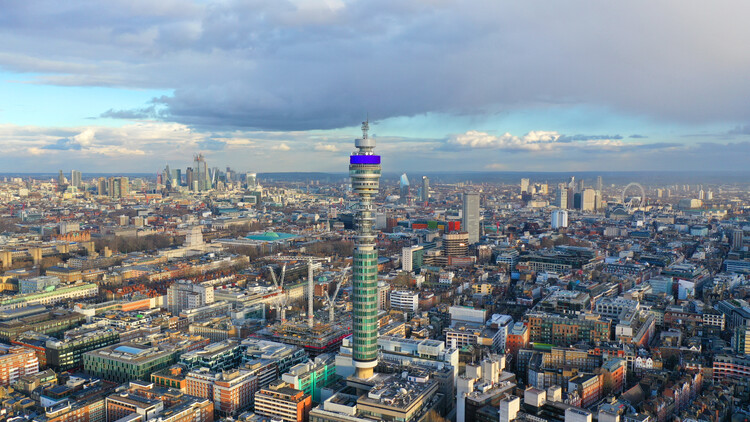
BT Tower, one of London's most recognizable postwar landmarks, is set to be converted into a hotel. London-based architecture practice Orms has been appointed to lead the redevelopment following the acquisition of the Grade II–listed tower by the American hospitality company MCR Hotels in early 2024. The project was initially expected to be led by Heatherwick Studio, though the practice is no longer involved; Orms will now advance the scheme and is expected to present its initial proposals during a first round of public consultations scheduled for May. Construction cannot begin until the decommissioning and removal of telecommunications equipment by BT Group, a process currently expected to conclude around 2030.

Orms Appointed to Lead Redevelopment of London’s BT Tower into Hotel - Image 1 of 4Orms Appointed to Lead Redevelopment of London’s BT Tower into Hotel - Image 2 of 4Orms Appointed to Lead Redevelopment of London’s BT Tower into Hotel - Image 3 of 4Orms Appointed to Lead Redevelopment of London’s BT Tower into Hotel - Image 4 of 4Orms Appointed to Lead Redevelopment of London’s BT Tower into Hotel - More Images+ 1

Modular Installation Reimagines Unfinished Structures at Limbo Museum in Accra, Ghana

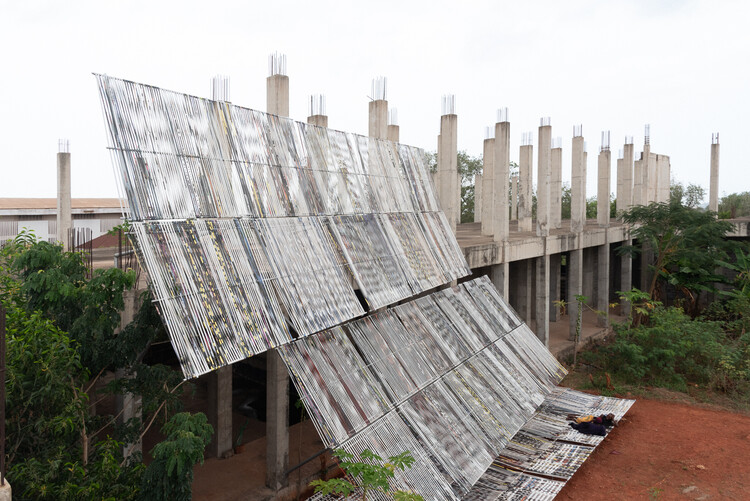
The recently opened Limbo Museum in Accra, Ghana, inaugurated a two-part architectural installation by TAELON7 on March 12th, led by architect Juergen Benson-Strohmayer. The installation was commissioned by the museum in partnership with Art Omi, a not-for-profit arts center in New York's Hudson Valley. The project is the first commission of a collaboration between the two institutions and will be installed in both locations, Accra and New York. Titled Limbo Engawa, the modular, lightweight structure dialogues with the formerly abandoned Brutalist building housing the museum, transforming its skeletal concrete structure and its surrounding land into spaces for use, care, and encounter. The project reflects on the boundaries between unfinished urban architecture and the landscape, foregrounding the labor and stewardship often invisible in both urban and institutional contexts, and asserting that even incomplete or overlooked sites are vessels of civic possibility.

Modular Installation Reimagines Unfinished Structures at Limbo Museum in Accra, Ghana - Image 1 of 4Modular Installation Reimagines Unfinished Structures at Limbo Museum in Accra, Ghana - Image 4 of 4Modular Installation Reimagines Unfinished Structures at Limbo Museum in Accra, Ghana - Image 5 of 4Modular Installation Reimagines Unfinished Structures at Limbo Museum in Accra, Ghana - Image 23 of 4Modular Installation Reimagines Unfinished Structures at Limbo Museum in Accra, Ghana - More Images+ 27

Who Is Smiljan Radić Clarke? 10 Things to Know About the 2026 Pritzker Architecture Laureate

Smiljan Radić Clarke, the 2026 Pritzker Prize winner, is a contemporary Chilean architect known for his experimental approach to design, with a practice that balances the elemental with the intimate, the monumental with the fragile. Over the course of more than three decades, Radić has developed an architecture that resists repetition and conventional stylistic categorization, favoring instead deeply site-specific, materially attuned, and culturally reflective interventions.

His work negotiates between permanence and impermanence, memory and imagination, creating buildings that are as much about human experience and emotion as they are about structure and form. Across residences, cultural institutions, and temporary installations, Radić's architecture foregrounds the interplay between context, materials, and the subtle gestures that shape how spaces are inhabited and perceived.

Who Is Smiljan Radić Clarke? 10 Things to Know About the 2026 Pritzker Architecture Laureate - Image 1 of 4Who Is Smiljan Radić Clarke? 10 Things to Know About the 2026 Pritzker Architecture Laureate - Image 2 of 4Who Is Smiljan Radić Clarke? 10 Things to Know About the 2026 Pritzker Architecture Laureate - Image 3 of 4Who Is Smiljan Radić Clarke? 10 Things to Know About the 2026 Pritzker Architecture Laureate - Image 4 of 4Who Is Smiljan Radić Clarke? 10 Things to Know About the 2026 Pritzker Architecture Laureate - More Images+ 11

RSHP Wins Competition to Redevelop Rives-Défense Site in Paris

RSHP has won a competition to redevelop the Rives-Défense site in La Défense, the business district of Paris. Announced during MIPIM, the project envisions the transformation of an 8-hectare site at the western edge of the district into a low-carbon mixed-use neighborhood. Commissioned by Paris La Défense, the proposal is developed by a multidisciplinary team led by RSHP and including Atelier SOIL as co-architect and urban planner, Altitude 35 as landscape architect, Arcadis as engineering consultant, as well as Atelier Franck Boutté, Urban Eco, and Mobius.

Mobility Justice: Urban Equity in an Era of Innovation

Subscriber Access | 

Every city contains two transportation systems. One is the visible network of roads, rail lines, sidewalks, and bus routes mapped in planning documents. The other is the invisible geography of privilege and exclusion embedded within it: the neighborhoods that received highways instead of parks, the communities whose bus routes were cut, the sidewalks that abruptly end at the edge of a district. For many years, built-environment professionals have treated infrastructure as a technical challenge. Mobility justice insists it is, fundamentally, a political one.

Mobility Justice: Urban Equity in an Era of Innovation - Image 1 of 4Mobility Justice: Urban Equity in an Era of Innovation - Image 2 of 4Mobility Justice: Urban Equity in an Era of Innovation - Image 3 of 4Mobility Justice: Urban Equity in an Era of Innovation - Image 4 of 4Mobility Justice: Urban Equity in an Era of Innovation - More Images+ 25

OPPLE Turns 30 by Making Light a Building Material

 | Sponsored Content

At Light + Building 2026 in Frankfurt, OPPLE Lighting marked its 30th anniversary with an architectural proposition rather than a retrospective. Presented under the theme "Hi Light!," the company unveiled Light as Cloud, a booth designed by OMA. The installation also served as the international debut platform for OLL, OPPLE's new high-end design brand. Rather than functioning as a conventional product display, the project positioned light as a spatial system—one that shapes architecture, circulation, and perception.

Setbacks as Courtyards: How Civil Architecture Reimagines the Gulf House in Bahrain

For centuries, domestic architecture throughout the Gulf has been organized around the courtyard. Houses presented thick exterior walls and limited openings to the street, turning inward toward a shaded garden that structured everyday life. This spatial arrangement responded to both climate and culture. The courtyard brought daylight into deep plans, enabled cross-ventilation, and provided a protected outdoor environment within dense urban fabrics. In the House with Seven Gardens, in Diyar Al Muharraq, Bahrain, the Bahrain-based practice Civil Architecture, one of the winners of the ArchDaily 2025 Next Practices Awards, revisits this spatial tradition through the conditions of contemporary suburban housing. Rather than reproducing the courtyard house as a historical model, the project reinterprets its environmental logic within the regulatory frameworks and spatial conditions that shape much of today's urban development in the Gulf.

Setbacks as Courtyards: How Civil Architecture Reimagines the Gulf House in Bahrain - Image 1 of 4Setbacks as Courtyards: How Civil Architecture Reimagines the Gulf House in Bahrain - Image 2 of 4Setbacks as Courtyards: How Civil Architecture Reimagines the Gulf House in Bahrain - Image 3 of 4Setbacks as Courtyards: How Civil Architecture Reimagines the Gulf House in Bahrain - Image 4 of 4Setbacks as Courtyards: How Civil Architecture Reimagines the Gulf House in Bahrain - More Images+ 3

Snøhetta, BIG, and MVRDV Collaborate on New Coastal Neighborhood in Istanbul, Türkiye

Located in Istanbul, Türkiye, an 84-hectare neighborhood is currently under development in the Riva area of Beykoz along the city's Black Sea coast. The master plan has been developed by an international design team including Snøhetta, Bjarke Ingels Group, and MVRDV, alongside local practices KEYM, DB Architects, Rasa, and Bilgin Architects. Known as Ion Riva, the project is conceived as a landscape-led residential community that integrates housing, cultural facilities, and public programs within an ecological framework shaped by the meeting of forest, river, and sea. The first phase of the development, which has received planning permission and is currently under construction, will deliver 969 homes designed for approximately 3,000 residents, with the first completed residences expected to be occupied in 2027.

Snøhetta, BIG, and MVRDV Collaborate on New Coastal Neighborhood in Istanbul, Türkiye - Image 1 of 4Snøhetta, BIG, and MVRDV Collaborate on New Coastal Neighborhood in Istanbul, Türkiye - Image 2 of 4Snøhetta, BIG, and MVRDV Collaborate on New Coastal Neighborhood in Istanbul, Türkiye - Image 3 of 4Snøhetta, BIG, and MVRDV Collaborate on New Coastal Neighborhood in Istanbul, Türkiye - Image 4 of 4Snøhetta, BIG, and MVRDV Collaborate on New Coastal Neighborhood in Istanbul, Türkiye - More Images+ 17

SOM Designs Landmark Mixed-Use Tower Complex for the New City of Alatau in Kazakhstan

On March 5, 2026, Skidmore, Owings & Merrill (SOM) revealed images of a new landmark project in Kazakhstan, in Central Asia. The project consists of two towers, the "Iconic Complex," and a master plan for the area, the "Gateway District." The complex is located in Alatau, a new city along the Almaty–Qonaev highway planned to become an international investment hub. A strategic project for the country, the city's master plan extends through 2050, with the first phase of major infrastructure projects scheduled for completion by 2030. Within this context, SOM's design is expected to serve as the city's economic and administrative nucleus, establishing the central business district of Alatau City and setting a benchmark for future investment projects in the area.

SOM Designs Landmark Mixed-Use Tower Complex for the New City of Alatau in Kazakhstan - Image 1 of 4SOM Designs Landmark Mixed-Use Tower Complex for the New City of Alatau in Kazakhstan - Image 2 of 4SOM Designs Landmark Mixed-Use Tower Complex for the New City of Alatau in Kazakhstan - Image 3 of 4SOM Designs Landmark Mixed-Use Tower Complex for the New City of Alatau in Kazakhstan - Image 4 of 4SOM Designs Landmark Mixed-Use Tower Complex for the New City of Alatau in Kazakhstan - More Images+ 2

Gateway in Lunar Orbit: Extending Architecture Beyond Earth

The concept of the technosphere provides a framework for understanding the scale of human impact on Earth. The term was coined by Peter K. Haff, and it is defined as the global network of human-made artifacts: a physical layer of infrastructure, buildings, vehicles, and machinery that functions alongside the biosphere and atmosphere. Currently estimated at 30 trillion tons, this human-constructed mass is dominated by the built environment. In this context, architecture serves as the primary interface, shaping how technology interacts with local ecologies. However, it seems that soon, the Technosphere will no longer be confined to the terrestrial surface. Through NASA's Artemis program, this network of human-made mass is expanding beyond Earth's atmosphere and is looking to establish new orbital infrastructure that represents the first permanent off-world extension of this man-made system.

Gateway in Lunar Orbit: Extending Architecture Beyond Earth - Image 1 of 4Gateway in Lunar Orbit: Extending Architecture Beyond Earth - Image 2 of 4Gateway in Lunar Orbit: Extending Architecture Beyond Earth - Image 3 of 4Gateway in Lunar Orbit: Extending Architecture Beyond Earth - Image 4 of 4Gateway in Lunar Orbit: Extending Architecture Beyond Earth - More Images+ 3

How Architecture Is Learning to Generate Its Own Energy

 | Sponsored Content

Beyond being a source of life, the power of the sun in architecture has long been tied to humanity's need to harness and control it as a vital resource. Since ancient times, solar energy has been used to measure time, support planting and harvesting, and provide protection from heat and cold. Today, solar radiation plays a significant role in global energy consumption. Architectural solutions based on materials, technologies, and environmental analysis are developed with an understanding of solar energy's capacity to transform the interior environment of buildings. But how can buildings be transformed into sources of clean energy?

How Architecture Is Learning to Generate Its Own Energy - Image 1 of 4How Architecture Is Learning to Generate Its Own Energy - Image 2 of 4How Architecture Is Learning to Generate Its Own Energy - Image 3 of 4How Architecture Is Learning to Generate Its Own Energy - Image 4 of 4How Architecture Is Learning to Generate Its Own Energy - More Images+ 12

Facing the Age of Robots? Material Innovation in Architectural Structures

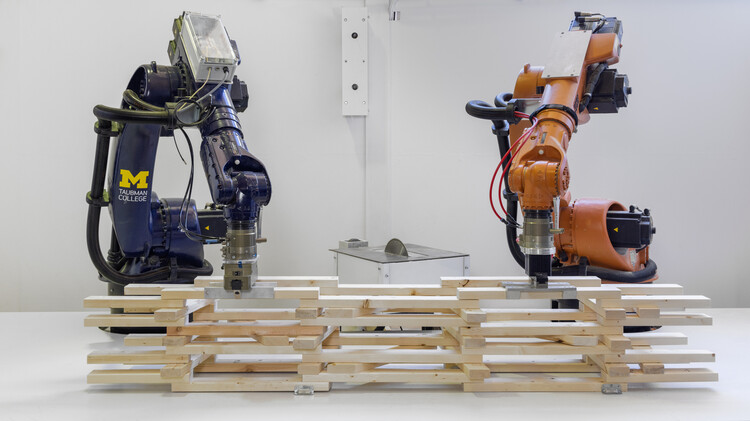
By exploring the art of robotics in construction, advances in architectural technologies are increasingly shaping multiple aspects of human life. From robotic arms and drones to robots that move across large surfaces and even 3D printing robots, their use in construction is accelerating research and the development of new working methods, as well as structural and material experimentation. In collaboration with multiple disciplines and spanning various facets of architecture, the role of robots in the contemporary landscape demonstrates a potential that extends beyond merely automating processes or reducing construction times and costs. This raises the question: Are we building architecture to serve technology, or technology to serve architecture?

Facing the Age of Robots? Material Innovation in Architectural Structures - Image 1 of 4Facing the Age of Robots? Material Innovation in Architectural Structures - Image 2 of 4Facing the Age of Robots? Material Innovation in Architectural Structures - Image 3 of 4Facing the Age of Robots? Material Innovation in Architectural Structures - Image 4 of 4Facing the Age of Robots? Material Innovation in Architectural Structures - More Images+ 17