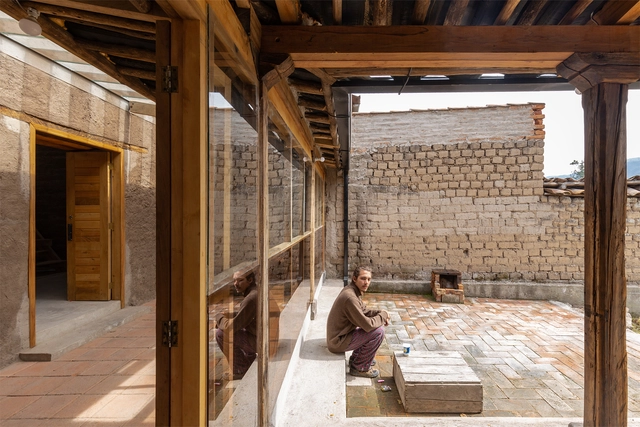
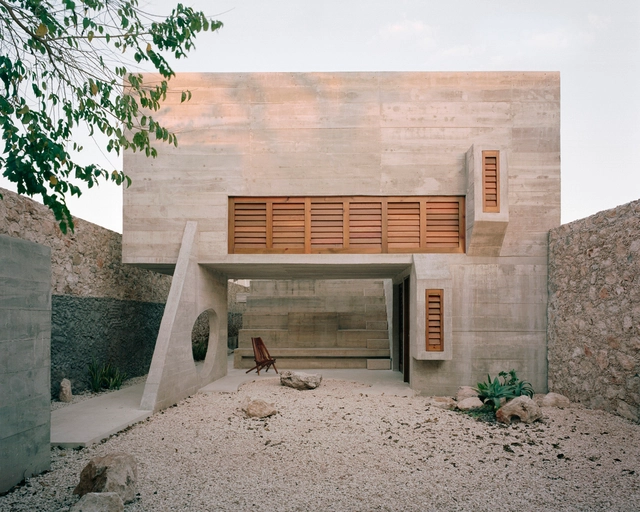
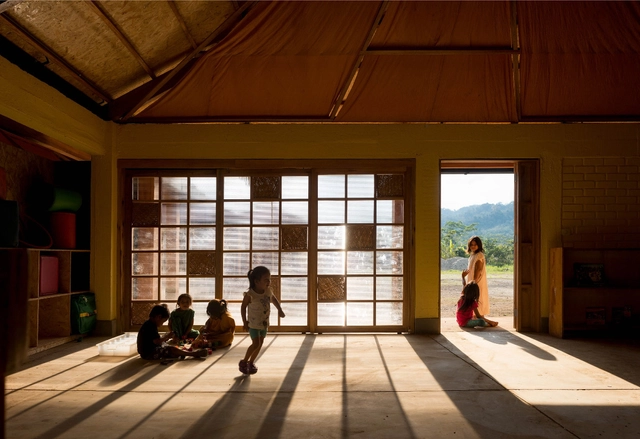
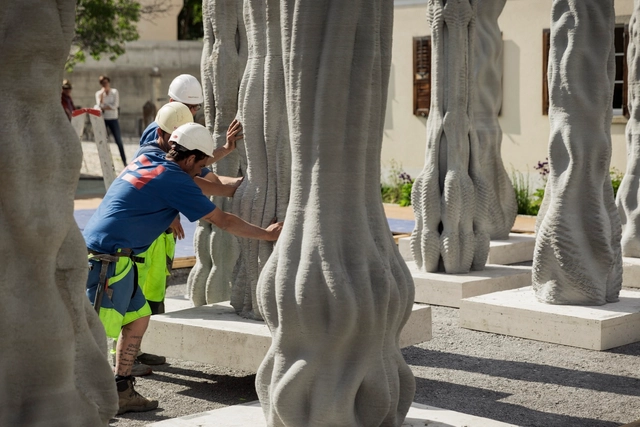
House of the Flying Beds . Image Courtesy of Al Borde
The 2023 Sharjah Architecture Triennial (SAT) will take place from November 11th, 2023 to March 10th, 2024, under the theme "The Beauty of Impermanence: An Architecture of Adaptability". Focusing on how scarcity in the Global South has led to a culture of re-use, re-appropriation, innovation, collaboration, and adaptation, the second edition of the architectural exhibition, curated by Tosin Oshinowo, aims to shift global conversations towards creating a more sustainable, resilient, and equitable future.
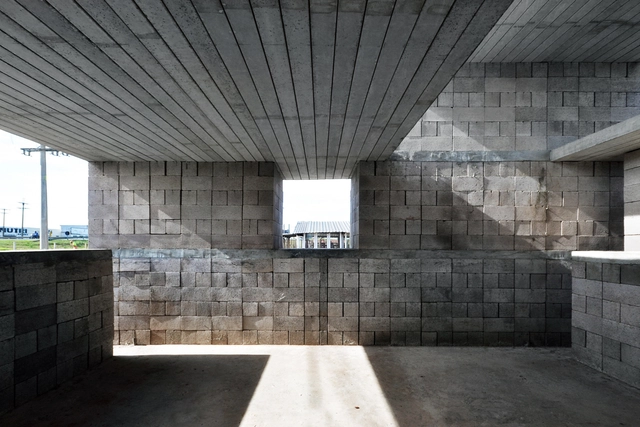
Brutalism is an architectural style that originated in the 1950s and became popular in the 1960s. Its name comes from the French "béton brut," which means "raw concrete," as this material is one of the most characteristic elements of the style. Its main features are the apparent use of concrete, offering visuals where natural texture and tonality are the protagonists of the buildings. Brutalist buildings often have an austere and massive aesthetic, with simple and repetitive geometric shapes. The use of industrial materials and innovative construction techniques is also common in brutalism.
The Diversity in Architecture Prize (DIVIA) was awarded to Italian architect Marta Maccaglia, founder of Semillas, for her commitment to educational construction in Peru. This international recognition of 20,000 euros aims to promote the visibility of women in the architecture industry. Among the five finalists of this edition were Tosin Oshinowo (Nigeria), May al-Ibrashy (Egypt), Noella Nibakuze (Rwanda), and Katherine Clarke and Liza Fior (United Kingdom).
Professionals in the AEC industry are well aware of the issues that grapple the built environment. That the construction industry is the largest consumer of materials and is responsible for 40% of all carbon emissions is a commonplace fact. Construction work is also a large waste generator and could greatly benefit from circular design principles. Almost three-quarters of all construction projects tend to be over budget, and nearly half of the spending on buildings goes into the overheads. In a fast-paced world with multi-faceted challenges, technology, and digitization seek to deliver significant solutions.
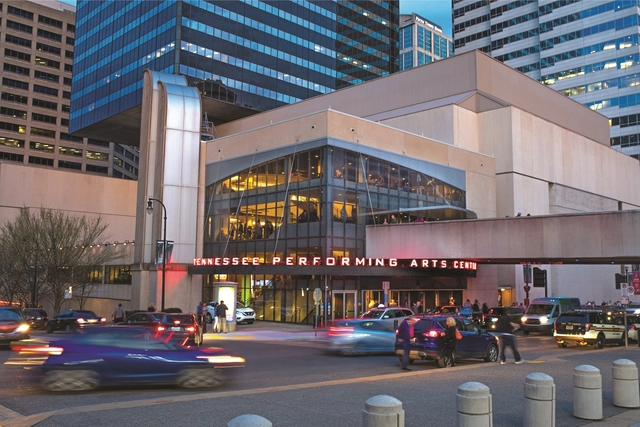
The Tennessee Performing Arts Center (TPAC) has selected an international architecture teamto design its new performance home. Comprising BIG (Bjarke Ingels Group), William Rawn Associates, and Nashville-based EOA Architects, the global architecture team will reimagine the 50-year-old performing arts non-profit on a different site from its original 1974 plot, part of the State-owned James K. Polk Cultural Center.
In theory, architecture is separate from art. Some even argue that there is a hierarchy between the two. Fortunately, Vão is an example of how this separation doesn't need to exist and how having a hierarchy between them is unproductive for both sides. Founded in 2013 by Anna Juni, Enk te Winkel, and Gustavo Delonero in São Paulo, the office develops architectural projects fueled by artistic thought. It also develops artistic works on an architectural scale.
SpaceX founder and science-fiction fan Elon Musk is attempting to make the fiction of space travel a scientific reality. ‘In order to safeguard the existence of humanity,’ he explains, ‘we need to become a multi-planetary civilization.’ Musk says he’s laser-focused on ensuring we make a second home elsewhere in space, and has his sights set on Mars. He’s not alone, of course. NASA’s recently-released Moon to Mars Architecture Concept Review is a ‘study of the hardware and operations needed for human missions to the Moon and Mars,’ leading to long-term scientific discovery and human habitation in deep space.
But there’s a long way to go before we get there – and not just the 140 million miles (average distance to Mars). The biggest challenge to Mars habitation and eventual colonization is humanity itself, and our indecision. Many of us question why we should sink so much of our energy – both effort and resources – into such a task, when there are plenty of more pressing matters to address here on Earth?
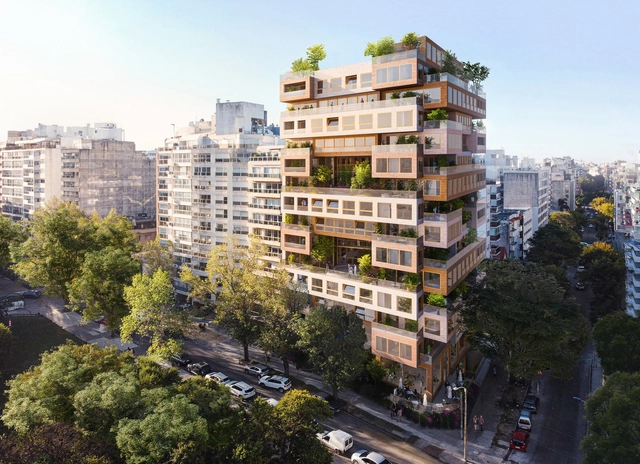
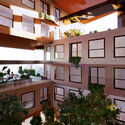
The 15-story residential building designed by MVRDV in Montevideo, Uruguay, has been approved for construction. Named "Ziel," the project consists of individual homes creating an open and permeable environment that allows light and air to flow through the structure, resulting in spacious green spaces for the enjoyment and coexistence of residents. This project is MVRDV's first in Uruguay, designed for developer IXOU in collaboration with Monoblock's executive architecture.
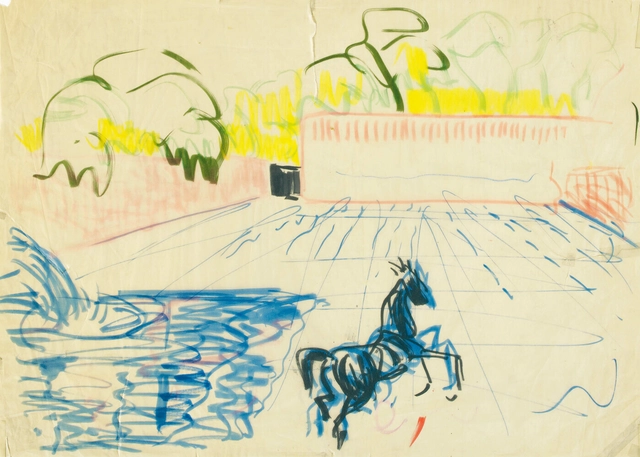
Cuadra San Cristóbal, Los Clubes, Atizapán de Zaragoza, State of Mexico, 1966-1968. Perspective sketch of the main courtyard by Luis Barragán. Image via Barragan Foundation
Two years ago, as part of an initiative by the Barragan Foundation, the launch of the institution's renewed website was announced via its Instagram account. This represented an effort to compile all the information that exists so far from the Barragán Archive that enriches the study of his career, opening up the panorama to understand his trajectory and evolution from a clear chronology, experiments, and collaborations, as well as unrealized or demolished projects. The website compiles these five decades of career, presenting a list of 170 works inside and outside the country that is updated as more material is researched and collected.
The ninth edition of Concéntrico, the international festival of architecture and design in Logroño, was inaugurated on April 27th to once again promote dialogue between the city, heritage, and contemporary architecture. Until May 2nd, citizens will have the opportunity to rediscover their urban environment alongside the work of more than 60 professionals from 15 different nationalities who have proposed an extensive program with 21 interventions, meetings, and activities.
Wivi Lönn (1872-1966) established and ran her own architectural office in Finland, becoming the first woman to do so. Lönn designed a number of significant public facilities and received widespread professional recognition, serving as a role model for aspiring female architects. And in May 1942, while a group of female architects gathered to commemorate Wivi Lönn's 70th birthday, they founded Architecta, the Finnish Association of Women Architects. At that point, up to a hundred women architects had already graduated in Finland. To celebrate the 150th birthday of architect Lönn and the 80th anniversary of the organization, Architecta commissioned interviews that highlight the different types of careers pursued by women in the field. Discover the profiles of 11 female Finnish architects with texts by Paula Holmila, journalist and architecture critic at Helsingin Sanomat, translated by Pirkko-Liisa Schulman.
If we were to design an ideal building material, it would look like bamboo. At least, that's what Neil Thomas, director of the London-based structural engineering firm Atelier One, claims. Its tubular shape, vascular bundles, fast growth rate, and ease of manipulation make it ideal for construction. Today, it is even more interesting to the market as a renewable source with low environmental impact compared to other materials. Additionally, it is extremely versatile and can be used in various ways in construction. Here, we list some of them.
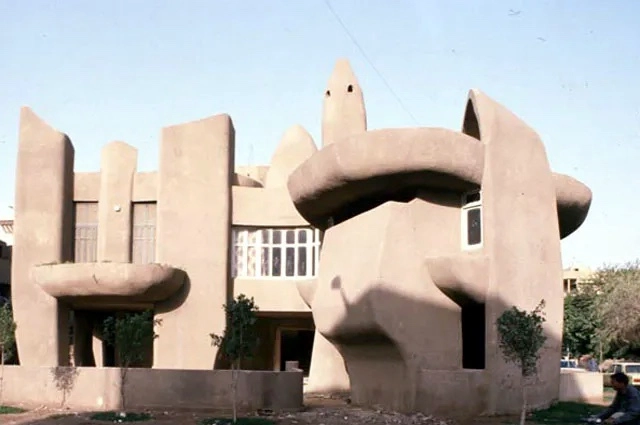
Villa Badran. Image Courtesy of Rare Books and Special Collections Library American University in Cairo
While Egyptian architects were exercising their understanding of modernism in the urban fabric in the 1970s, a “chubby rebellion” in the form of Villa Badran defied the standardized curvilinear forms and rigid geometry. Gamal Bakry dived deep into his imagination to construct this unique piece of architecture that still stands as part of the city of Cairo today. With curving and free-flowing facades, Villa Badran drew inspiration from natural forms. In an attempt to create a living space that was more natural in its essence, the bubbly intervention puts in place a monolithic composition that hosts a two-story detached home for an Egyptian family.
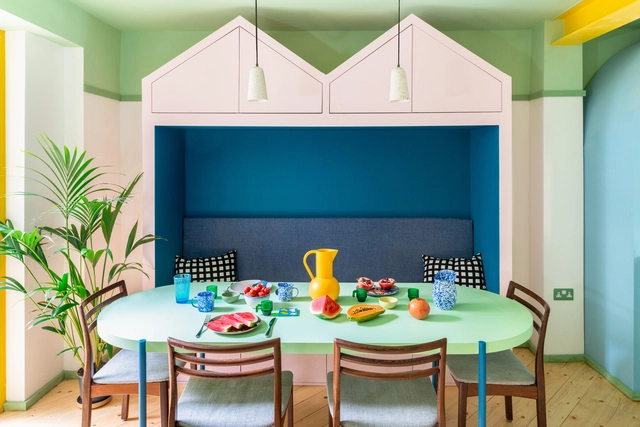
Though it has long been assumed that newborns don't see color at all, more recent studies have shown that they can indeed distinguish between different shades. And even though young minds may not fully realize what they're looking at, the impression and effect of a bright visual still elicit a potent response. This remains true throughout our lifetime: colors can influence our feelings in powerful ways. Architects and designers have long employed this to their advantage, especially when it comes to interior spaces. Whether it be to highlight specific architectural features, create certain moods, distinguish areas in open concept layouts, or brighten a room with its finishing touches, colors are a pivotal tool for professionals throughout the design process. The combination of multiple bold shades — color blocking — in particular can be a success if done right.
The Second Studio (formerly The Midnight Charette) is an explicit podcast about design, architecture, and the everyday. Hosted by Architects David Lee and Marina Bourderonnet, it features different creative professionals in unscripted conversations that allow for thoughtful takes and personal discussions.
A variety of subjects are covered with honesty and humor: some episodes are interviews, while others are tips for fellow designers, reviews of buildings and other projects, or casual explorations of everyday life and design. The Second Studio is also available on iTunes, Spotify, and YouTube.
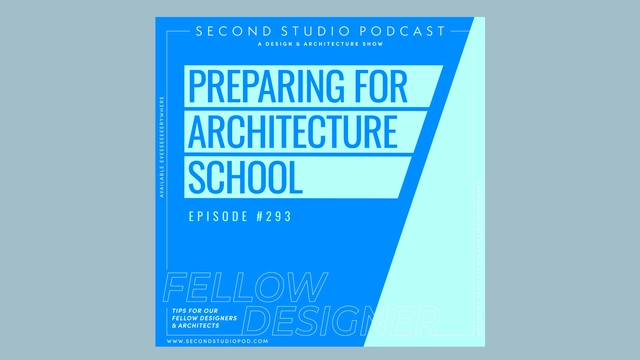
This week David and Marina of FAME Architecture & Design discuss how to prepare for undergraduate architecture school. The two cover learning different skills and tools such as software programs, sculpture, drawing, and painting; learning about construction; common challenges students face; architectural education in general; dealing with negativity in the profession of architecture; and more.
https://www.archdaily.com/1000578/the-second-studio-podcast-preparing-for-architecture-schoolThe Second Studio Podcast
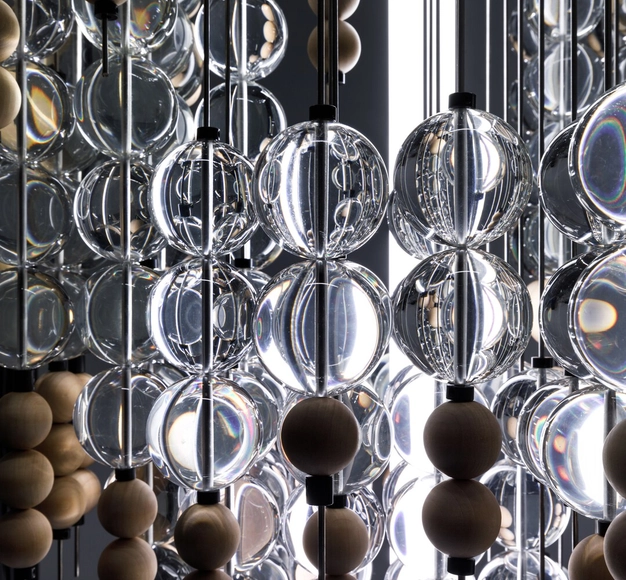
Minimaforms Presents The Order of Time at the Architectural Association School of Architecture Gallery. It is an immersive installation aimed to connect the preoccupations of physics, art, and architecture by revealing the ordering of spaces and constructed relationships through direct experience.
Three Sculptural installations are the highlight of the exhibition. Spherical organizations deployed through mathematical logic and designed to extend space within reflective light boxes, gifting its viewer a new immersive moment at every turn. ArchDaily had the chance to engage in a conversation with Theodore Spyropoulos; Artist & Architect at Minimaforms and Director of the Architectural Association’s Design Research Lab, on issues that tackled the interdisciplinary nature of architecture, the creative process of the installation, and how it influences the creation of spaces, buildings & cities.
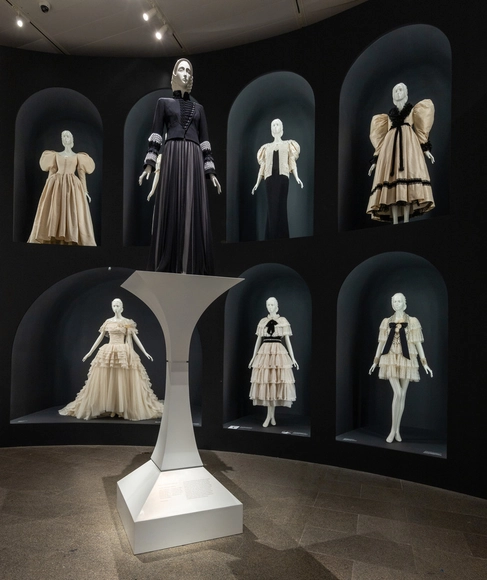
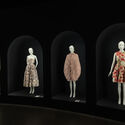
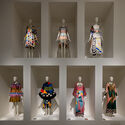
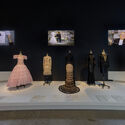
Architect Tadao Ando has been commissioned to design this year’s Costume Institute exhibition highlighting the work of Karl Lagerfeld. The opening of the exhibition titled “Karl Lagerfeld: A Line of Beauty” was marked by the world-renown Met Gala, a fundraising event attended by celebrities and personalities perceived to be culturally relevant in the fashion scene. Perceived as a thematic and conceptual essay on Lagerfeld’s work, rather than a traditional retrospective, the exhibition aims to illustrate the designer’s method of creative expression and its significance in the industry.
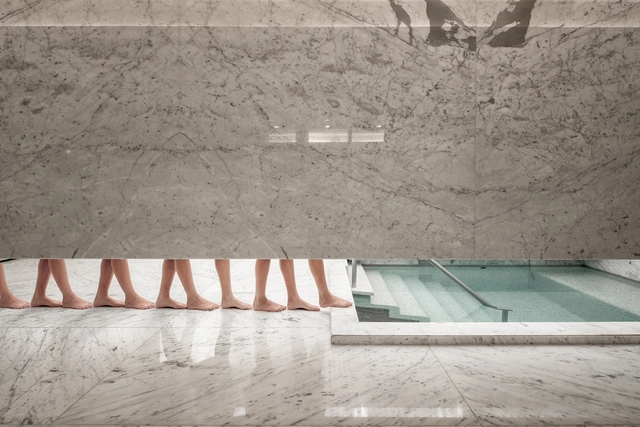
The skin absorbs matter, and the world is contemplated, touched, heard, and measured through our bodily existence. Juhani Pallasmaa, a Finnish architect known for propagating sensory architecture, defends the notion that, unlike vision, touch is the sense of proximity, becoming a main axis by covering the entire body. It is a fact that, when speaking of touch, the first image that comes to mind is usually contact with hands. However, there are other ways to feel architecture that can be developed in projects, such as the touch of bare feet on a particular surface.