1. ArchDaily
  2. Architecture

Architecture: The Latest Architecture and News

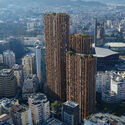
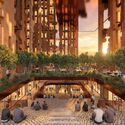
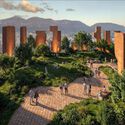
King Salman Park Advances Toward 2026 Opening on Former Riyadh Airbase

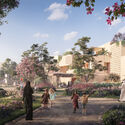
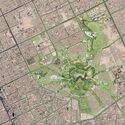
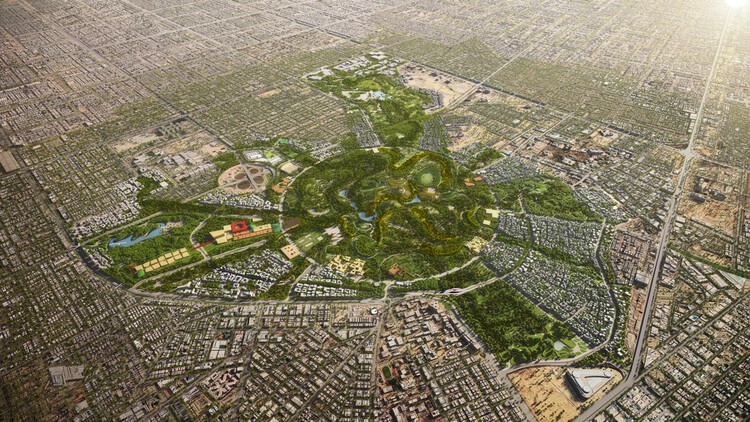
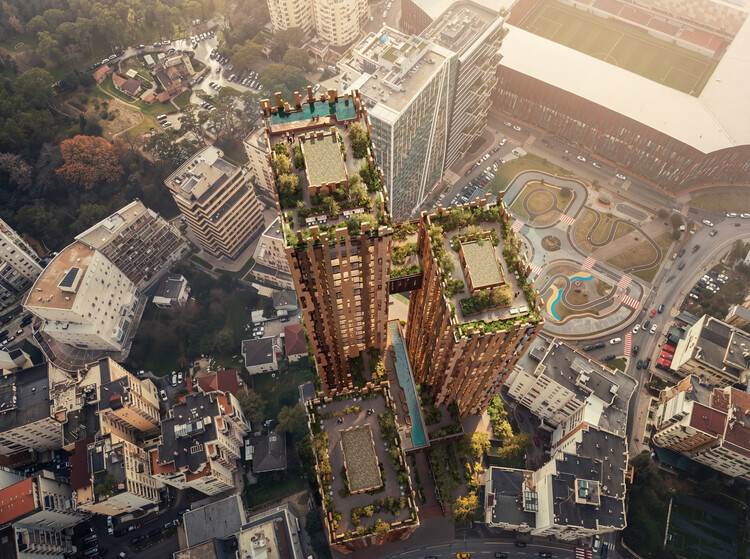
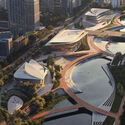
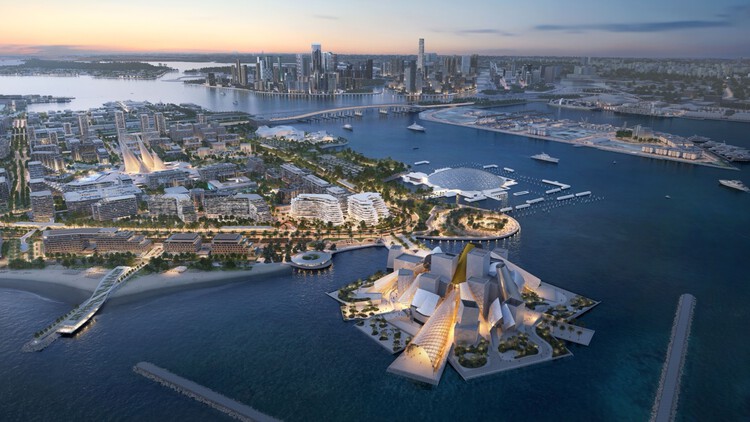
Construction continues on King Salman Park in Riyadh, a 16.9-square-kilometre public landscape taking shape on the grounds of the city's former airport. Led by Omrania as lead design consultant, in collaboration with Henning Larsen for master planning and urban design, the project reimagines the centrally located site as a large-scale green and cultural district. Conceived as a new civic core for the capital, the park combines ecological restoration, public programming, and mixed-use development. Initial phases are expected to open in late 2026, with substantial completion targeted for 2027, following a phased construction schedule currently underway.
King Salman Park Advances Toward 2026 Opening on Former Riyadh Airbase - Image 1 of 4King Salman Park Advances Toward 2026 Opening on Former Riyadh Airbase - Image 2 of 4King Salman Park Advances Toward 2026 Opening on Former Riyadh Airbase - Image 3 of 4King Salman Park Advances Toward 2026 Opening on Former Riyadh Airbase - Image 4 of 4King Salman Park Advances Toward 2026 Opening on Former Riyadh Airbase - More Images+ 25

The Two Cathedrals of Managua: Architectural Memory After Nicaragua’s 1972 Earthquake

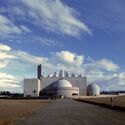
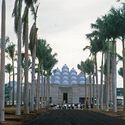
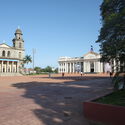
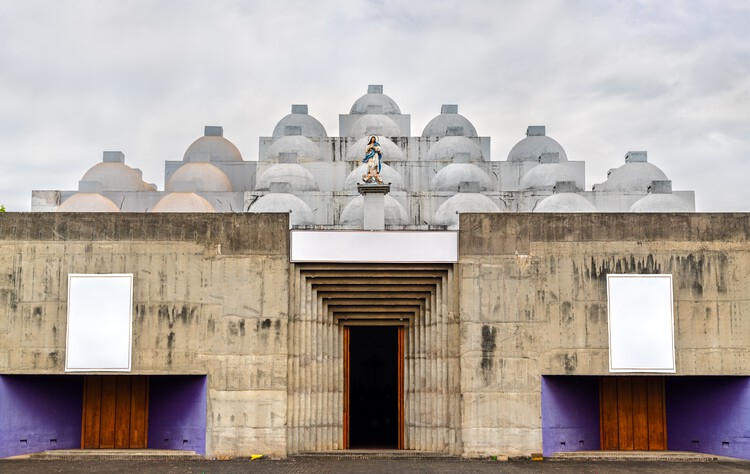
On December 23, 1972, Managua, the capital of Nicaragua, was struck by a 6.3-magnitude earthquake. In a matter of minutes, its urban core, which for decades had functioned as a compact political and economic center, abruptly collapsed. In the reconstruction process that followed, the authorities sought not simply to rebuild but to reorganize. Their objective was to decentralize the city and prevent future paralysis by dispersing functions across multiple zones. Among the most significant architectural outcomes of this shift was the new Metropolitan Cathedral. Its modernist language symbolized both institutional continuity and urban transformation. In doing so, it embodied Managua's transition from a Spanish-style, centralized urban grid to a contemporary, decentralized metropolis.

The Two Cathedrals of Managua: Architectural Memory After Nicaragua’s 1972 Earthquake - Image 1 of 4The Two Cathedrals of Managua: Architectural Memory After Nicaragua’s 1972 Earthquake - Image 2 of 4The Two Cathedrals of Managua: Architectural Memory After Nicaragua’s 1972 Earthquake - Image 4 of 4The Two Cathedrals of Managua: Architectural Memory After Nicaragua’s 1972 Earthquake - Image 3 of 4The Two Cathedrals of Managua: Architectural Memory After Nicaragua’s 1972 Earthquake - More Images+ 3

Between Materials and Memory: Three Madrid Architecture Practices on Heritage Rehabilitation

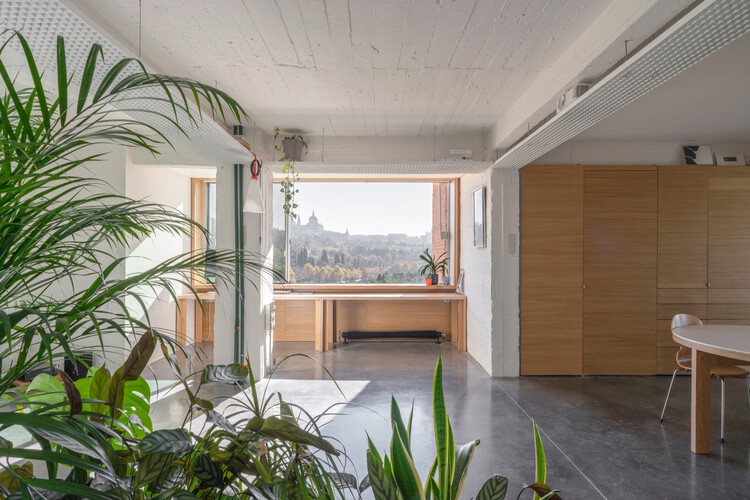
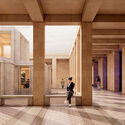
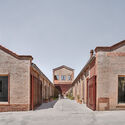
The role of heritage rehabilitation in the contemporary architectural landscape is shaped by a wide range of research, beliefs, memories, and efforts aimed at redefining and strengthening our built environment. When undertaking a transformation, renovation, or preservation project, architects can employ diverse strategies and tools to encourage a meaningful coexistence between what already exists and what is newly introduced. Together with three Madrid-based architecture practices—SOLAR, Pachón-Paredes, and BA-RRO—we set out to engage in conversation and explore their creative processes and ideals, recognizing the complexity and value of historic buildings as repositories of materials, structures, and construction techniques from other eras.

Between Materials and Memory: Three Madrid Architecture Practices on Heritage Rehabilitation - Image 1 of 4Between Materials and Memory: Three Madrid Architecture Practices on Heritage Rehabilitation - Image 2 of 4Between Materials and Memory: Three Madrid Architecture Practices on Heritage Rehabilitation - Image 3 of 4Between Materials and Memory: Three Madrid Architecture Practices on Heritage Rehabilitation - Image 4 of 4Between Materials and Memory: Three Madrid Architecture Practices on Heritage Rehabilitation - More Images+ 22

Henning Larsen Launches OpenDetail as Digital Platforms Expand Carbon-Focused Tools for the Built Environment

As the building industry continues to account for a significant share of global carbon emissions, digital platforms are increasingly being developed to support carbon reduction across different stages of the design and construction process. These initiatives range from material-focused knowledge databases to project life-cycle guidance and early-stage embodied carbon assessment tools. While differing in scope and methodology, they commonly aim to improve access to technical knowledge, clarify responsibilities across the value chain, and facilitate more informed decision-making in the built environment. Recently, Henning Larsen launched OpenDetail, joining related efforts by Grimshaw and MVRDV to address decarbonization through shared digital infrastructure.

Henning Larsen Launches OpenDetail as Digital Platforms Expand Carbon-Focused Tools for the Built Environment - Image 1 of 4Henning Larsen Launches OpenDetail as Digital Platforms Expand Carbon-Focused Tools for the Built Environment - Image 2 of 4Henning Larsen Launches OpenDetail as Digital Platforms Expand Carbon-Focused Tools for the Built Environment - Image 3 of 4Henning Larsen Launches OpenDetail as Digital Platforms Expand Carbon-Focused Tools for the Built Environment - Image 4 of 4Henning Larsen Launches OpenDetail as Digital Platforms Expand Carbon-Focused Tools for the Built Environment - More Images+ 10

Eduardo Longo’s Futuristic Spherical House in São Paulo to Open for ABERTO5 Exhibition

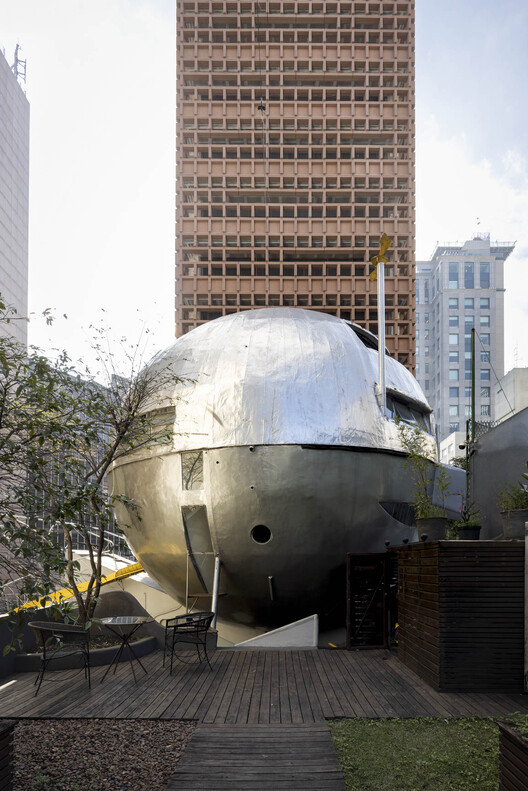
From 7 March to 31 May 2026, Brazilian architect Eduardo Longo's Casa Bola will open to the public for the first time. The futuristic ball-shaped house in São Paulo will host one of the two parts of the ABERTO5 exhibition, alongside a project on Faria Lima, a major avenue at the heart of the city featuring landmarks by architects such as Ruy Ohtake and Isay Weinfeld. Founded in 2022, ABERTO is an exhibition platform that promotes the encounter of architecture, art, and design in Brazil and internationally. After its first international exhibition at Maison La Roche in Paris, ABERTO returns to São Paulo for its fifth edition, presenting over 60 art and design pieces by 50 Brazilian and international artists. According to architect and curator Fernando Serapião, Casa Bola represents one of the most radical works of Brazilian architecture, challenging conventional domestic space and reflecting Eduardo Longo's experimental vision for housing.
Eduardo Longo’s Futuristic Spherical House in São Paulo to Open for ABERTO5 Exhibition - Image 1 of 4Eduardo Longo’s Futuristic Spherical House in São Paulo to Open for ABERTO5 Exhibition - Image 2 of 4Eduardo Longo’s Futuristic Spherical House in São Paulo to Open for ABERTO5 Exhibition - Image 3 of 4Eduardo Longo’s Futuristic Spherical House in São Paulo to Open for ABERTO5 Exhibition - Image 4 of 4Eduardo Longo’s Futuristic Spherical House in São Paulo to Open for ABERTO5 Exhibition - More Images+ 5

Frida Escobedo and Ma Yansong Among 11 International Architects Named 2026 AIA Honorary Fellows

The American Institute of Architects (AIA) has elevated 78 architects to its College of Fellows, recognizing members whose work has demonstrated a sustained impact on the discipline and on society. Fellowship is described as one of the Institute's highest honors and is conferred upon architects who have advanced design excellence, strengthened professional practice, expanded architectural education, or contributed to public service. Selected by a nine-member Jury of Fellows chaired by Sanford Garner of RG Collaborative, this year's cohort reflects a wide range of geographic and professional backgrounds, with honorees representing firms, public agencies, and academic institutions across the United States.

Frida Escobedo and Ma Yansong Among 11 International Architects Named 2026 AIA Honorary Fellows - Image 1 of 4Frida Escobedo and Ma Yansong Among 11 International Architects Named 2026 AIA Honorary Fellows - Image 2 of 4Frida Escobedo and Ma Yansong Among 11 International Architects Named 2026 AIA Honorary Fellows - Image 3 of 4Frida Escobedo and Ma Yansong Among 11 International Architects Named 2026 AIA Honorary Fellows - Image 4 of 4Frida Escobedo and Ma Yansong Among 11 International Architects Named 2026 AIA Honorary Fellows - More Images+ 9

London’s Southbank Centre Receives National Heritage Protection After 35-Year Campaign

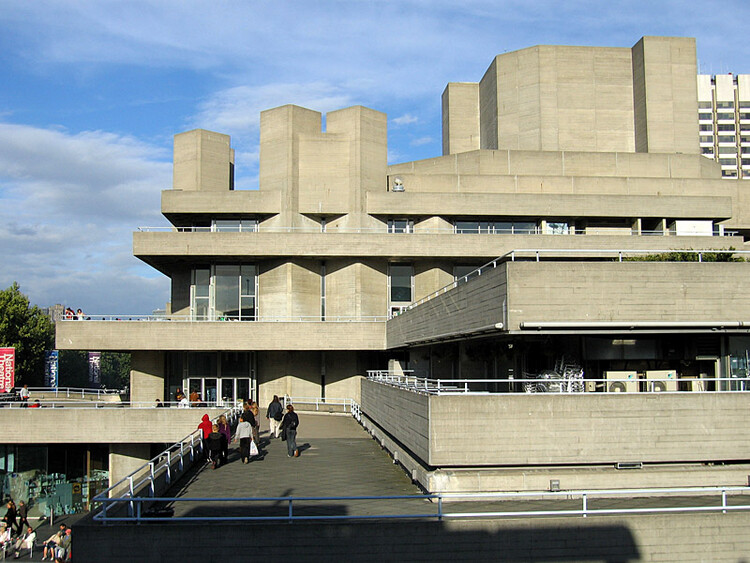
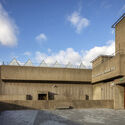
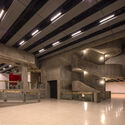
The Southbank Centre is a cultural complex in London built between 1963 and 1968 and widely regarded as a representative example of British Brutalism. Today, the site hosts a wide range of events, including visual arts, theatre, dance, classical and contemporary music, literature, poetry, and debate. The building was designed by a team from the Architects' Department of the London County Council, led by architect Norman Engleback. It became a controversial example of modern architecture following its opening in October 1967, when engineers voted Queen Elizabeth Hall "the supreme ugly" in a poll of new buildings, and the Daily Mail referred to it as "Britain's ugliest building." Fifty-nine years later, on February 10, 2026, the complex was granted Grade II listed status by the UK government's Department for Culture, Media and Sport (DCMS), following a 35-year campaign advocating for its protection as modern architectural heritage.

London’s Southbank Centre Receives National Heritage Protection After 35-Year Campaign - Image 1 of 4London’s Southbank Centre Receives National Heritage Protection After 35-Year Campaign - Image 2 of 4London’s Southbank Centre Receives National Heritage Protection After 35-Year Campaign - Image 3 of 4London’s Southbank Centre Receives National Heritage Protection After 35-Year Campaign - Image 4 of 4London’s Southbank Centre Receives National Heritage Protection After 35-Year Campaign - More Images+ 3

Heritage in Motion: Bangkok’s Buildings That Continue to Become

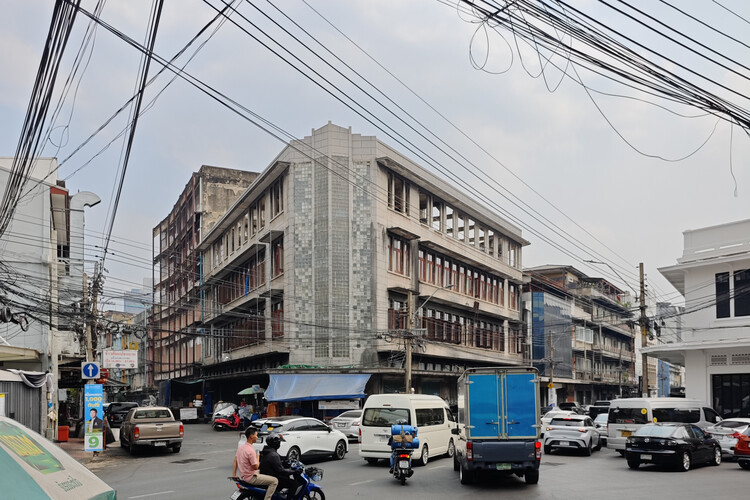
Architectural heritage is not only what a building was, but what it continues to become: a long process of building, rebuilding, and re-occupying over time. Where opportunities allow, this continuity produces a layered condition—one in which visitors can witness, experience, and feel the gradual shifting of a building's fabric, materiality, spatial order, and patterns of use, and occasionally even participate in that transformation.

Yet many projects—particularly those driven primarily by commercial imperatives—do not choose to value, or even to recognize, this slower work of adaptive reuse and heritage continuation. Developments governed by a numbers-only logic often opt for the easier path of demolition and rebuild: maximizing plot ratio, GFA, and rentable area with the efficiency of a clean slate. And still, every now and then, an opportunity surfaces that allows us to see—and to enjoy—the city's process of architectural "heritaging" in real time.

Heritage in Motion: Bangkok’s Buildings That Continue to Become - Image 1 of 4Heritage in Motion: Bangkok’s Buildings That Continue to Become - Image 2 of 4Heritage in Motion: Bangkok’s Buildings That Continue to Become - Image 3 of 4Heritage in Motion: Bangkok’s Buildings That Continue to Become - Image 4 of 4Heritage in Motion: Bangkok’s Buildings That Continue to Become - More Images+ 17

ArchDaily Student Project Awards: Submission Deadline Extended

The ArchDaily Student Project Awards submission deadline has been extended by one week. Students now have until February 20, 2026, at 11:59 pm (CET) to submit their projects.

Open to students subscribed to ArchDaily Campus, the inaugural edition of the Awards centers on the theme Architecture of Coexistence, inviting proposals that explore inclusive spaces for communities and collective forms of care. The extension provides additional time for students to refine their conceptual projects and strengthen both their spatial and narrative arguments.

Diriyah Contemporary Art Biennale 2026 Opens at JAX District in Saudi Arabia

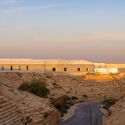
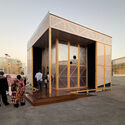
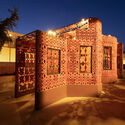
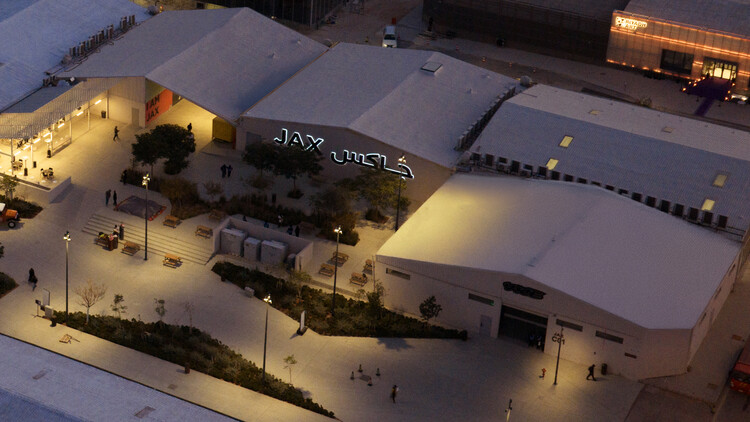
The third edition of the Diriyah Contemporary Art Biennale opened on January 30, 2026, and will remain on view through May 2, 2026, in Riyadh, Saudi Arabia. Organized by the Diriyah Biennale Foundation, the Biennale takes place at JAX District, a former industrial area in Diriyah near the UNESCO World Heritage Site of At-Turaif. Titled "في الحِلّ والترحال" / In Interludes and Transitions, the exhibition is led by Co-Artistic Directors Nora Razian and Sabih Ahmed, while Milan-based architect Sammy Zarka contributed as the Associate Architect and Exhibition Designer. The exhibition scenography is designed by Formafantasma, and the event brings together more than 65 artists from over 37 countries, including more than 25 newly commissioned works.

Diriyah Contemporary Art Biennale 2026 Opens at JAX District in Saudi Arabia - Image 1 of 4Diriyah Contemporary Art Biennale 2026 Opens at JAX District in Saudi Arabia - Image 2 of 4Diriyah Contemporary Art Biennale 2026 Opens at JAX District in Saudi Arabia - Image 3 of 4Diriyah Contemporary Art Biennale 2026 Opens at JAX District in Saudi Arabia - Image 9 of 4Diriyah Contemporary Art Biennale 2026 Opens at JAX District in Saudi Arabia - More Images+ 11

Kazakhstan's Almaty Named Host City of the 2029 Asian Winter Games After NEOM's Trojena Withdrawal

On February 5, 2026, Almaty, Kazakhstan's largest metropolis, was officially declared the host city of the 2029 Asian Winter Games. The Host City Contract was signed between the Olympic Council of Asia (OCA) and the National Olympic Committee of the Republic of Kazakhstan during a ceremony in Milan, Italy, one of the host cities of the ongoing Winter Olympics. Established in 1986 in Sapporo, Japan, the Asian Winter Games will mark their tenth edition in 2029 and are held approximately every four years. The announcement follows an earlier decision to postpone the Games, which were originally scheduled to take place in the Trojena ski resort, masterplanned by LAVA and currently under construction as part of the NEOM mega-project in Saudi Arabia.

When Do Buildings Begin to Matter? Rethinking Heritage in Local Time

A building still being adjusted, repaired, and debated is declared World Heritage. Another, equally influential, must survive five centuries before anyone considers protecting it. This is not an anomaly in the heritage system; it is the system. Across the world, architecture does not age at the same pace because time itself is not neutral. It is cultural, political, and deeply uneven. What we call "heritage" is not simply old architecture; it is architecture that has reached the right moment in a particular place.

When Do Buildings Begin to Matter? Rethinking Heritage in Local Time - Image 1 of 4When Do Buildings Begin to Matter? Rethinking Heritage in Local Time - Image 2 of 4When Do Buildings Begin to Matter? Rethinking Heritage in Local Time - Image 3 of 4When Do Buildings Begin to Matter? Rethinking Heritage in Local Time - Image 4 of 4When Do Buildings Begin to Matter? Rethinking Heritage in Local Time - More Images+ 6

Rojkind Arquitectos Selected for Tirana Multifunctional Development as Part of Broader Citywide Renewal

Rojkind Arquitectos, in collaboration with artist Pedro Reyes, SON Architects, Motus Holdings, and ASAB, has been selected as the winner of the mixed-use component in the International Concept Design and Build Competition for the redevelopment of the Zyber Hallulli site in Tirana, Albania. Organized by the Albanian Investment Corporation in partnership with the National Agency for Territorial Planning, the competition was launched in September 2025, with the jury announcing its decision on January 29, 2026. The proposal led by the Mexico-based office was awarded the mixed-use development, while a separate Mexican practice, Taller Héctor Barroso, was selected to design CASA FAMILIA, a new children's campus to be built on a greener, more child-oriented site.

Rojkind Arquitectos Selected for Tirana Multifunctional Development as Part of Broader Citywide Renewal - Image 1 of 4Rojkind Arquitectos Selected for Tirana Multifunctional Development as Part of Broader Citywide Renewal - Image 2 of 4Rojkind Arquitectos Selected for Tirana Multifunctional Development as Part of Broader Citywide Renewal - Image 3 of 4Rojkind Arquitectos Selected for Tirana Multifunctional Development as Part of Broader Citywide Renewal - Image 4 of 4Rojkind Arquitectos Selected for Tirana Multifunctional Development as Part of Broader Citywide Renewal - More Images+ 4

Heritage Transformations, New Capital Cities, and Residential Innovations: This Week’s Review

This week's news landscape brought together diverse approaches to built and cultural heritage, ranging from the design of a Museum of Jesus' Baptism at a UNESCO World Heritage Site in Jordan to major transformations of modern industrial sites and the development of major cultural districts. The World Monuments Fund's support for 21 locally led heritage projects foregrounds conservation strategies that reinforce the role of architecture in safeguarding both material and intangible heritage. Across this week's highlighted projects, adaptive reuse, landscape integration, and the reconfiguration of civic space emerge as recurrent strategies for extending the life and relevance of existing built environments. The projects also reflect broader contemporary concerns, including material research in timber construction, zero-waste urban installations, large-scale residential efficiency, and infrastructure upgrades linked to global events like the Olympic Games. Framing these developments within a wider territorial perspective, discussions on relocating capital cities worldwide offer an example of how geopolitical discourses continue to shape architecture, revealing the evolving relationship between the built environment and structures of power over time.

Heritage Transformations, New Capital Cities, and Residential Innovations: This Week’s Review - Image 1 of 4Heritage Transformations, New Capital Cities, and Residential Innovations: This Week’s Review - Image 2 of 4Heritage Transformations, New Capital Cities, and Residential Innovations: This Week’s Review - Image 3 of 4Heritage Transformations, New Capital Cities, and Residential Innovations: This Week’s Review - Image 4 of 4Heritage Transformations, New Capital Cities, and Residential Innovations: This Week’s Review - More Images+ 40

Playful and Ironic: The Legacy of Postmodernist Architecture in the United States

Postmodernism in the United States turned architecture into a stage for cultural memory, irony, and heritage at a moment when the built environment was becoming less civic and more commercial and curated. By the late twentieth century, architectural investment no longer centered on monumental public institutions or shared federal commitment to civic space. Private development, corporate expansion, and consumer environments increasingly shaped cities across the country. Buildings took on a new role as cultural images, expected to communicate identity and meaning as much as they provided function.

Postmodernism began as a critique of modernism's exhausted promises. By the late 1960s and early 1970s, many designers no longer treated modernism as radical or socially redemptive. Urban renewal projects accelerated the demolition of historic neighborhoods, and landmark preservation battles raised urgent questions about what the United States valued and, ultimately, protected. The loss of major civic icons, including New York's Penn Station, sharpened public awareness that progress often arrives through erasure. In Chicago, architect and provocateur Stanley Tigerman captured this sense of rupture in his 1978 photomontage The Titanic, which depicts Mies van der Rohe's Crown Hall sinking into Lake Michigan, a blunt image of modernism's symbolic collapse. Postmodern architects worked inside this turbulence, shaped by economic shocks, corporate excess, shifting cultural production, and a growing skepticism toward grand architectural solutions.

Playful and Ironic: The Legacy of Postmodernist Architecture in the United States - Image 1 of 4Playful and Ironic: The Legacy of Postmodernist Architecture in the United States - Image 2 of 4Playful and Ironic: The Legacy of Postmodernist Architecture in the United States - Image 3 of 4Playful and Ironic: The Legacy of Postmodernist Architecture in the United States - Image 4 of 4Playful and Ironic: The Legacy of Postmodernist Architecture in the United States - More Images+ 19

Introducing the 75 Finalists of the 2026 ArchDaily Building of the Year Awards

Two weeks and over 85,000 nominations later, the finalists of this year's Building of the Year Awards are in. The selection is much like the ArchDaily audience that chose it: diverse in geography, generous in ideas, and precise in intent. With projects from 46 countries, in a variety of typologies and scales, they present a beautiful snapshot of the current architectural moment.

We invite you to sit back, browse, and vote for your ultimate favorites. Below, you will find all of the 75 finalists in their respective categories. Voting is open until February 18th at 18:00 EST. Thank you—your participation is key to making this the world's largest community-driven architecture award.

Druzhba Sanatorium: A Soviet Monument Suspended Between Earth and Sea

Subscriber Access | 

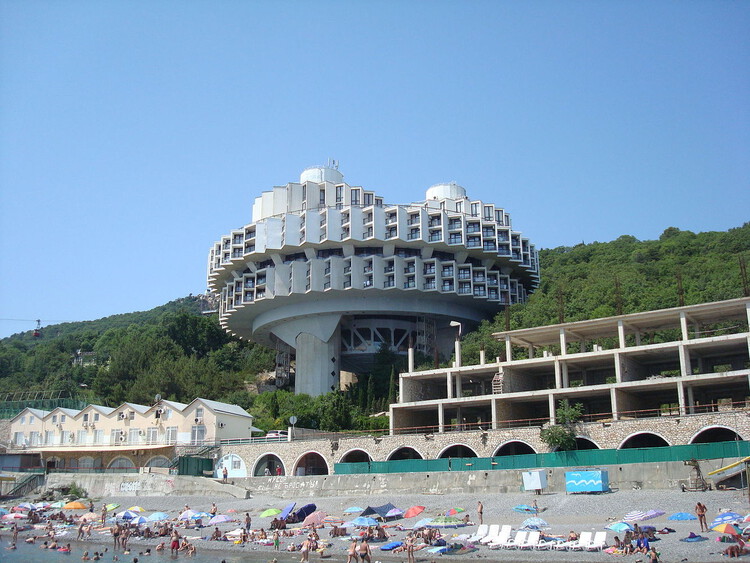
Perched above the cliffs of Crimea, the Druzhba Thermal Sanatorium appears less as a building than as a landed spacecraft. Its circular forms, suspended decks, and spiraling ramps evoke a scene from Andrei Tarkovsky's Solaris (1972), where architecture and psychology merge into a single landscape. Built between 1978 and 1985 by Igor Vasilevsky, the complex was conceived as a thermal resort for workers of the oil industry, part of the Soviet Union's extensive network of sanatoria dedicated to health and recreation.

Beyond its function as a place of recovery, Druzhba, meaning "friendship", embodied a broader political and aesthetic ambition. It sought to merge technological prowess with the restorative ideals of socialist modernity, translating collective well-being into concrete form. Rising from a steep coastal slope overlooking the Black Sea, its massive structure defies gravity, supported by a central concrete core from which radial wings extend like the blades of an enormous gear. Seen from a distance, it feels simultaneously mechanical and organic, a hybrid of infrastructure and landscape.

Druzhba Sanatorium: A Soviet Monument Suspended Between Earth and Sea - Image 1 of 4Druzhba Sanatorium: A Soviet Monument Suspended Between Earth and Sea - Image 2 of 4Druzhba Sanatorium: A Soviet Monument Suspended Between Earth and Sea - Image 3 of 4Druzhba Sanatorium: A Soviet Monument Suspended Between Earth and Sea - Image 4 of 4Druzhba Sanatorium: A Soviet Monument Suspended Between Earth and Sea - More Images+ 16

Who Should Win the 2026 Pritzker Prize?

As the architecture community looks ahead to the announcement of the 2026 Pritzker Architecture Prize, anticipation is once again building around who will be named this year's laureate. While the official date has yet to be confirmed, the annual reveal traditionally takes place in early March, marking one of the most closely watched moments in the architectural calendar. Established in 1979 by the Hyatt Foundation, the Pritzker Architecture Prize is widely regarded as "the profession's highest honor." Each year, it recognizes a living architect, or architects, whose work demonstrates a consistent and significant contribution to humanity and the built environment. Over the decades, the award has reflected shifting priorities within the discipline, highlighting practices engaged with social equity, environmental responsibility, material experimentation, and cultural continuity.