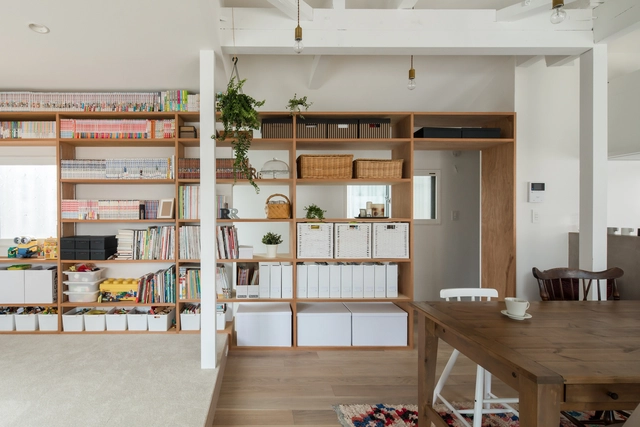
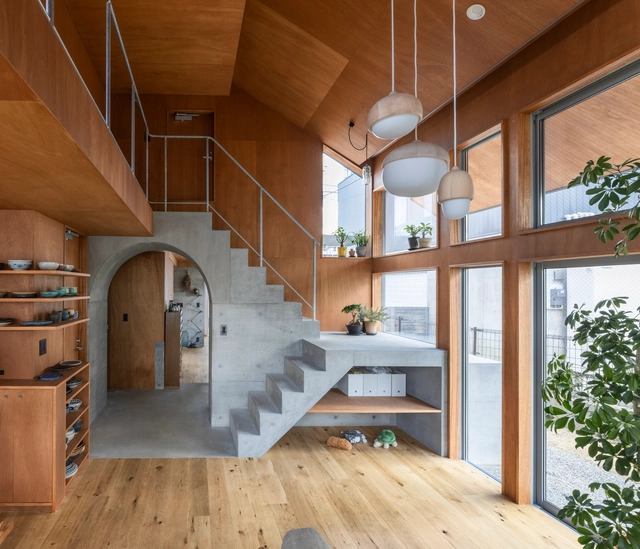
Shelves have a clear function: to organize, store and display. This simple, yet vital role has made them a must in every household, keeping the place neat and tidy by holding books, clothes, toys or any other items that would otherwise be scattered on the floor. Although usually found in closets, bedrooms, bathrooms and kitchens, shelves are useful wherever the extra storage is necessary. They are especially ideal for making the most out of small rooms, which will always benefit from having cleaner, clutter-free floor space. Responding to this crucial storage need and following a strict 'form follows function' approach, traditional shelves are often comprised of minimal, flat horizontal planes attached to a wall –a simple layout that is not particularly meant to draw attention. Hence, people don’t tend to think about shelving ideas beyond storage, and in that sense, the countless design possibilities they offer are often overlooked.
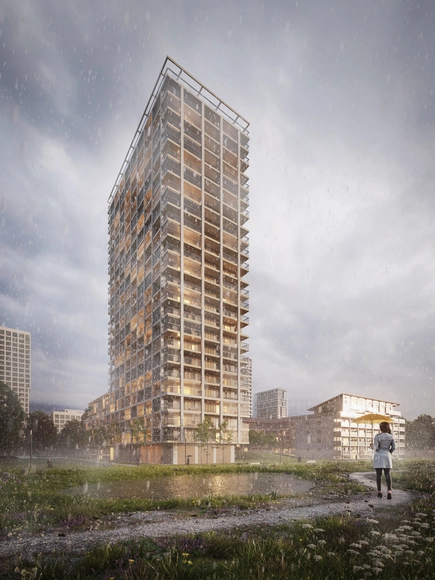
Shigeru Ban has just launched the office’s most recent project in Nieuw Zuid in Antwerp, Belgium. Named Ban, after its creator, and in collaboration with Bureau Bouwtechniek, the complex puts in place a 25-story residential tower and a separate building, creating a total of 295 residential units. During the breaking ground ceremony, the architect also inaugurated an exhibition of images highlighting his humanitarian work in conflict and disaster areas, in near proximity to the construction site.
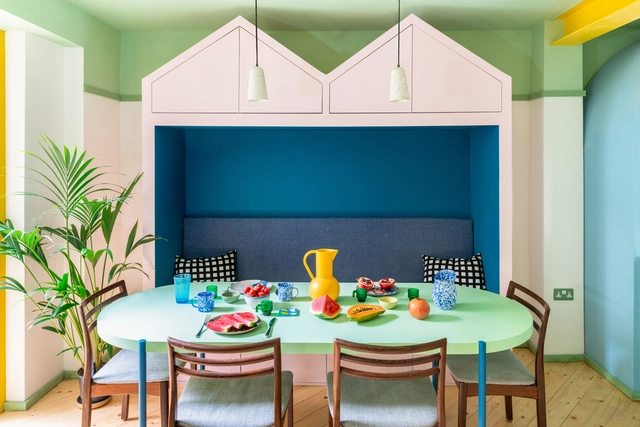
Playfulness is a concept often attributed to children and hardly connected with adult life. In architecture, projects dedicated to childhood propose a combination of objects, colors and solutions to encourage imagination and break the rigidity of spaces. In contrast, most conventional projects are limited to regularity and stamp the sobriety of adult life.
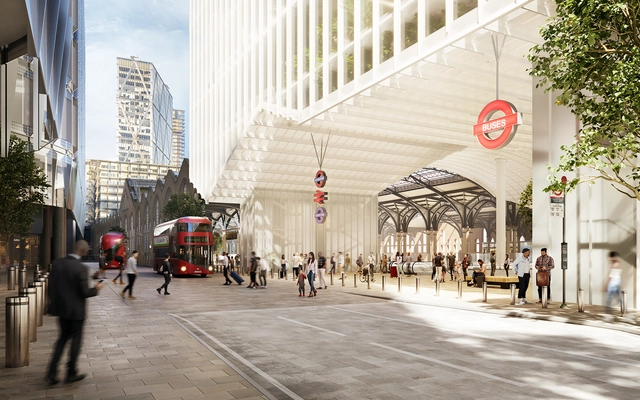
Architecture office Herzog & de Meuron has unveiled plans to revamp the Liverpool Street station in London. The scheme includes “vital upgrades” aimed at transforming the Victorian-era station into a fully accessible transportation hub fit to accommodate the 135 million people using the station annually. It also includes the addition of 840,000 square feet of offices and a 190,000 square feet hotel in two new structures, 10 and 6 stories high, respectively. These new interventions have attracted criticism from conservation groups. The proposal is currently undergoing its first round of public consultation. The development is overseen by Stellar, working with MTR, the operator of rail transport services and Network Rail.
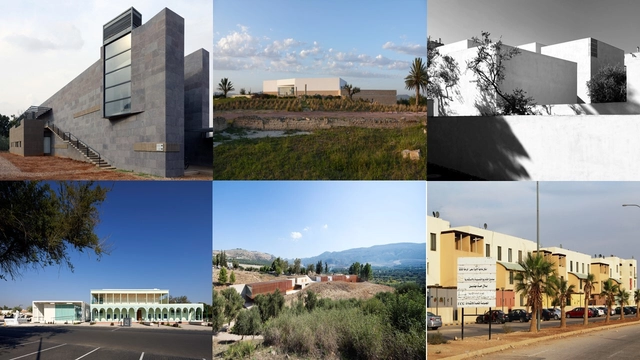
The Association of Arab Architects has announced the winners of the 2022 Arab Architects Awards. This year’s winning architectural projects highlight the importance of inclusive design, taking into account sustainability and designing with a sensible response to the local communities and landscapes they inhibit. The two-day ceremony was held in Amman, Jordan on November 16-17, 2022, and gathered hundreds of regional architects, urban planners, engineers, and designers of all demographics to explore and engage in discussions about architecture and the future of the built environment in the Arab region.
In interior design – and many other design disciplines – it is much easier to be unsustainable. Buying or developing custom solutions for a room often requires less time and research than purchasing second-hand materials or concern for waste flow and the circular economy.
But the construction and decoration industry can no longer afford the luxury of ignoring the environmental impacts caused by their activities.
The standards for classifying good or terrible architecture are usefulness and beauty, or what we commonly refer to as practicality and aesthetics. However, practicality might quickly direct us toward functionalism, which is the only viable option, or toward the design of sculptural structures. The architect Le Corbusier once stated, "If you create a house with stone, wood, and concrete, that's just a building; if you touch my heart, that's architecture." However, perhaps the readability of architecture might serve as a criterion for good architecture: Reading architecture as a book with complete words and sentences that stand up to careful consideration.
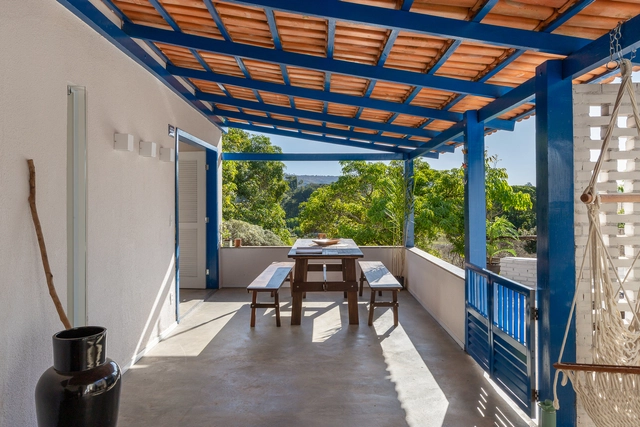
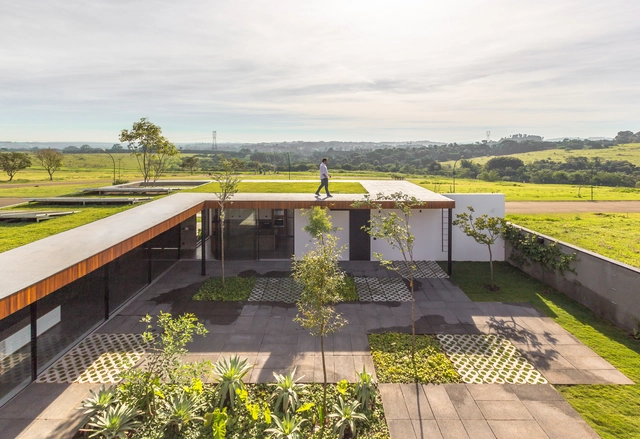
Brazil is one of the largest countries in the world, covering an area that goes from the Equator to beyond the Tropic of Capricorn, presenting a wide variety of climates and vegetation, which implies in the diverse natural landscape, flora and fauna for which the country is known. Residential architecture, when considered from its location, must adapt to the conditions of the surroundings, transforming its design according to the climate and morphology. We have gathered below a selection of Brazilian houses that respond to the natural environment in which they are located.
The advantages of a courtyard house are well known. In addition to bringing closer contact with the outside from the inside, it substantially improves comfort by providing more natural lighting and ventilation. This typology goes through time being reinvented from different ways of thinking not only its architecture, but also the landscaping of its external area. Therefore, we have gathered different ways of conceiving the garden and other elements that can make up that space.
The Second Studio (formerly The Midnight Charette) is an explicit podcast about design, architecture, and the everyday. Hosted by Architects David Bruce Lee and Marina Bourderonnet, it features different creative professionals in unscripted conversations that allow for thoughtful takes and personal discussions.
A variety of subjects are covered with honesty and humor: some episodes are interviews, while others are tips for fellow designers, reviews of buildings and other projects, or casual explorations of everyday life and design. The Second Studio is also available on iTunes, Spotify, and YouTube.
This week David and Marina answer two questions from listeners: How to cope with the feeling of failure in architecture school and whether or not architecture is hard and stressful. The two cover why freshmen often have false expectations of success, embracing failure, not seeking approval from teachers or clients, dealing with ‘dumb’ design assignments, overcoming paralysis, the main reasons why being an architect is challenging, and more!
https://www.archdaily.com/992767/the-second-studio-podcast-overcoming-failure-in-architecture-schoolThe Second Studio Podcast
The undisputed protagonist of the last few years has been the Metaverse. The news is already flooding the world of video games and technology. Today, architects and designers are increasingly aware of the responsibility they have in leading this construction of the virtual environment. But what is the architecture of the Metaverse, how is it designed, how is it built?
Fundamental for the development of large metropolises as we know them today, cement is a material used historically, whose technological advances have revolutionized construction technique and technology of civil construction, enabling the verticalization of construction and the densification of urban centers. Cement, both added to water and sand to make mortar and combined with steel and aggregate to form concrete, performs different functions in a work, from structure to finish.
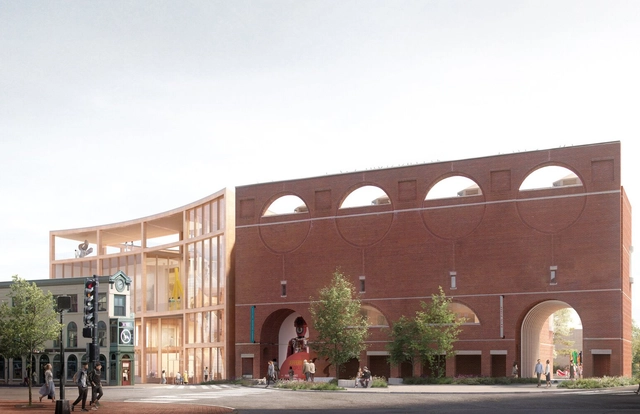
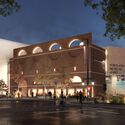
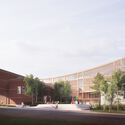
Four teams have been declared the finalists in the competition to design the Portland Museum of Art campus expansion located in Portland, Maine. The finalist teams are led by Adjaye Associates, Lever Architecture, MVRDV and Toshiko Mori Architect + Johnston Marklee + Preston Scott Cohen. The project includes a 60,000 square feet expansion in the form of a six or seven-story structure planned to accommodate an increase in the number of visits and a growing collection of art. The museum is now asking for public feedback on the designs, as the projects are on view at PMA until December 11th.
As of today, over 50% of the world’s population lives in urban areas, and by 2050, this urban population will almost double in size, and 7 of 10 people in the world will live in cities. As cities have continued to grow and expand throughout history, a new vocabulary has also emerged, often to better communicate the scale of urban living in a relatively contemporary context. One such example is the term megalopolis – typically defined as a network of large cities that have been interconnected with surrounding metropolitan areas by infrastructure or transportation. In effect, it’s a region perceived as an encompassing urban area, within which there is a constant flow of commerce and migration.
The Philippines' history and cultural background are continually reflected in the architectural landscape throughout the country, with its structures and dwellings harboring a handful of influences from the nations that once purveyed the island.
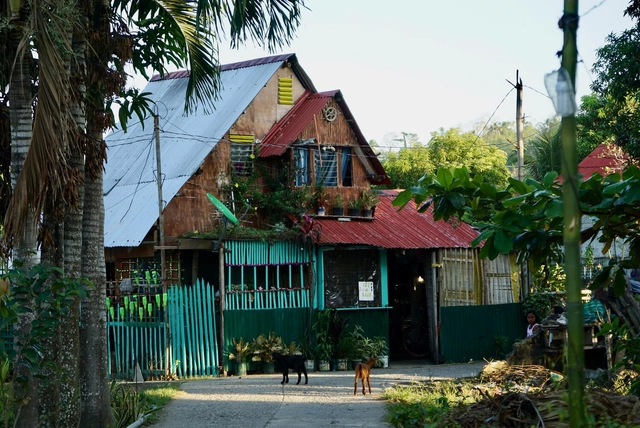
When we talk about the topic of Filipino architecture and dwellings, more often than not, we may think of the first known Filipino home: Bahay Kubo. The Bahay Kubo is a small hut comprising nipa, bamboo, and other indigenous materials. It is often times that many citizens still choose to adopt this style of habitation, however, over time, the concept of the nipa hut has evolved into a more modern structure.
Blair Kamin stepped down as architecture critic for the Chicago Tribune in January 2021, after a nearly 30-year run in the post. He won a Pulitzer Prize in 1999 for a body of work highlighted by a series on Chicago’s lakefront, including a story that documented the race- and class-based disparity between the city’s north and south lakefronts. He has previously published two collections of his work: Why Architecture Matters (2001) and Terror and Wonder (2010), both from the University of Chicago Press. His third collection, Who is the City For? Architecture, Equity, and the Public Realm in Chicago, was released last week. Recently I talked to Kamin about the new book, the state of post-pandemic Chicago, and the need for more mainstream architecture criticism. I will post the second of our conversations tomorrow, in which the critic pushes the need for a redefinition of the phrase “design equity.”
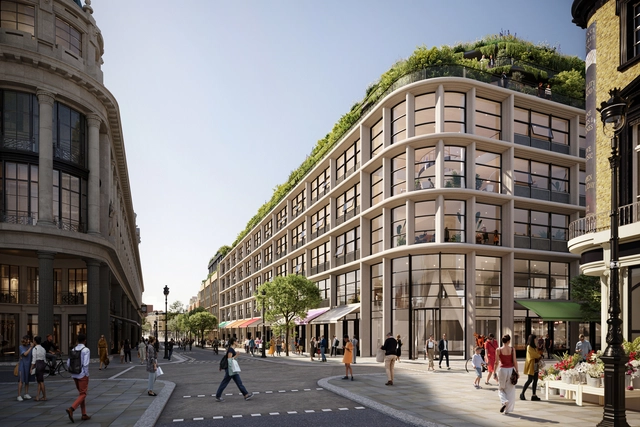
Foster + Partners has revealed the design for a new mixed-use development in the northern end of the central London high street. The building is located on Queensway, opposite the Whitley, the famous department store, which is also being transformed by Foster + Partners as part of a larger redevelopment scheme. Named The William, after William Whiteley, the eponymous founder of the famous Whiteleys, the project includes six floors of office space, shops, and 32 new homes, 11 of which will be affordable.