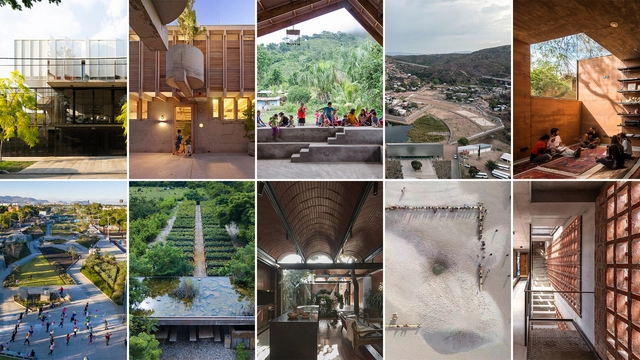
After a two-year suspension due to the COVID-19 Pandemic, the Mies Crown Hall Americas Prize has announced that 10 projects designed by emerging practices in the Americas have been shortlisted for the 2022 MCHAP.emerge.
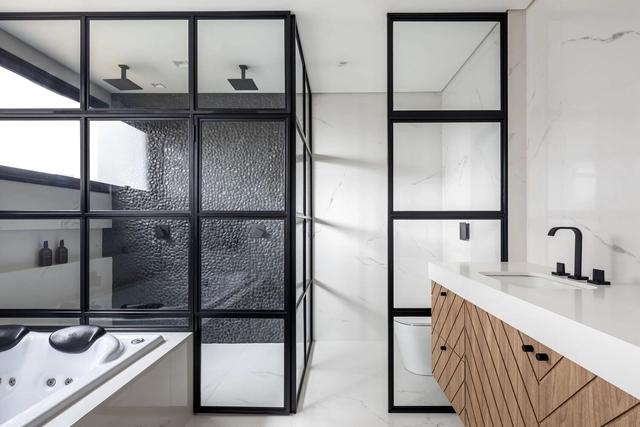
Although the design and layout of bathrooms we use nowadays date back millennia, they are still considered as one of the most difficult to design and renovate. During the earliest stages of planning a bathroom, there are plenty of rules of thumb to follow, especially since it involves a lot of association and "pre-planning" with plumbing, electrical circuits, angular or uniquely-shaped fittings, and small floor areas. We will explore the basics of bathroom plumbing and where to allocate each fixture to optimize the bathroom's layout, facilitating your DIY remodel project or creating the space from scratch.
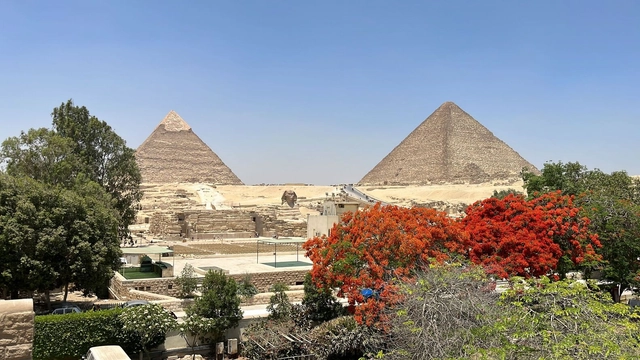
Skidmore, Owings & Merrill (SOM) and Egypt-based Raafat Miller Consulting (RMC) have been selected by OSL for Entertainment Projects to reimagine the visitor experience at one of the Seven Wonders of the World, the historic Pyramids and the Sphinx of Giza, Egypt. SOM will serve as lead designer of the project's concept, design, and masterplan, which will feature the transformation of the existing show facilities into a world-class visitor experience with a program that ensures environmental and preservation measures.
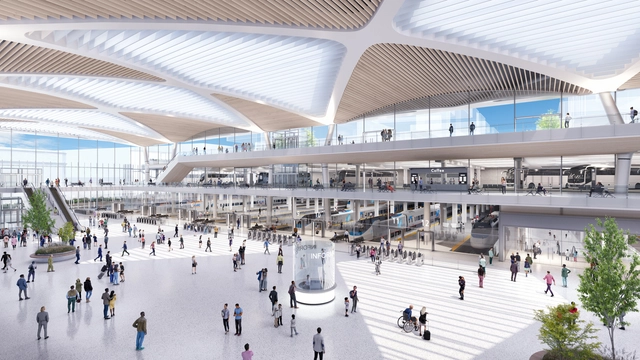
Architecture practice Grimshaw, in collaboration with Beyer Blinder Belle, Arup, and VHB, has revealed designs for the Washington Union Station Expansion Project (SEP) in Washington DC, USA. The project will ensure the preservation of the historic station and will improve access to the existing railway services, Metrorail, DC Streetcar, and bus services. The expansion aims to become a multi-modal transportation hub for the district adjacent to the historic station. In addition, the SEP will incorporate enhanced vehicle access and cycle and pedestrian routes.
Trampoline Bridge / AZC Architects. Image Courtesy of AZC Architects
Humane cities center around the relationships between people and places. Communities thrive on shared resources, public spaces, and a collective vision for their locality. To nurture happy and healthy cities, designers and the public apply methods of placemaking to the urban setting. Placemaking—the creation of meaningful places—strongly relies on community-based participation to effectively produce magnetic public spaces.
The urgency to reduce greenhouse gas emissions has never been greater, and getting there is going to require bold steps for buildings, infrastructure, and communities. Incremental reductions are not enough; we need to focus on full decarbonization, which means removing carbon emissions caused by our built environment.
These big changes in the way energy is generated and used will raise important questions about who benefits and who pays. Technology-focused incentive programs can wind up leaving our most vulnerable communities behind, exacerbating a legacy of underinvestment and health disparities, while also failing to reach the essential goals of a complete energy transition. Instead, we need holistic solutions that put disadvantaged communities first and transition buildings that would otherwise be left out, leading to bottom-up market transformation that benefits everyone.
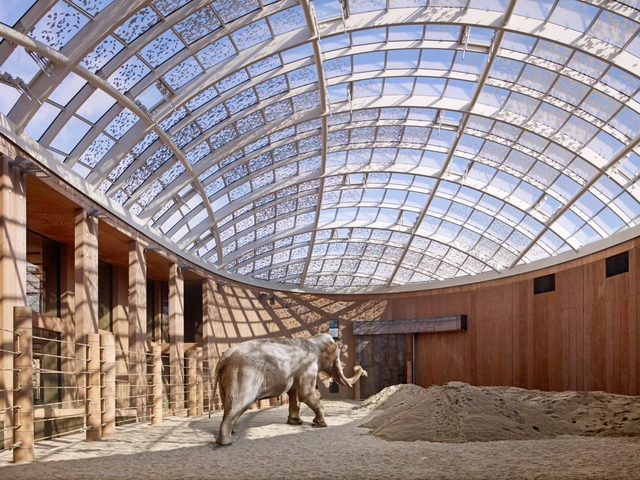
Architecture is created for people, but how do we design beyond the human scale? With a renewed interest in biodiversity and animal habitats accelerated by the climate crisis, there is also the question of shelter and what it means to design spaces for interaction and rehabilitation. As architects look beyond structures for people, they are turning their attention to different kinds of enclosures and open spaces that rethink engagement with animals and their wellbeing.
Access to adequate housing is a human right. But with prices rising dramatically, incomes not growing proportionally and ineffective public policies, the lack of secure, affordable homes is fueling an ongoing global housing crisis. In fact, 90% of 200 polled cities were found to be unaffordable to live in, with the impact of COVID-19 only worsening the situation and forcing much of the world’s population to settle for precarious living conditions. This is only expected to aggravate in the not-too-distant future; by 2025, the World Bank estimates that 1.6 billion people will be affected by the housing shortage.
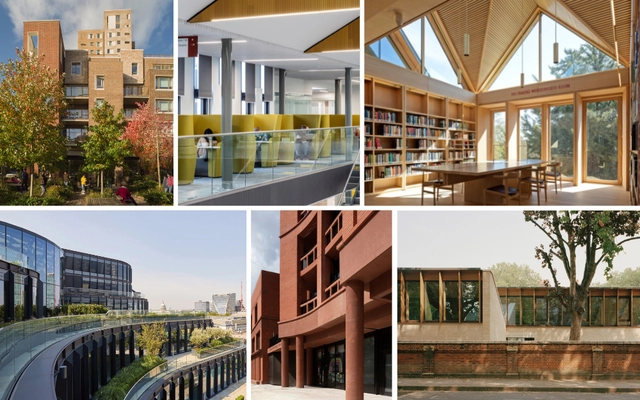
The Royal Institute of British Architects (RIBA) has announced the six buildings competing for the 2022 RIBAStirling Prize. Marking its 26th edition, the award honors the United Kingdom’s best new building, and is considered the country's highest accolade in architecture. The six projects range between educational, cultural, and residential buildings, all designed for sustained community benefits that "demonstrate the power of exceptional architecture to enhance lives". The winner of the 2022 Stirling Prize will be announced on October 13th, 2022 at RIBA's 66 Portland Place in London.
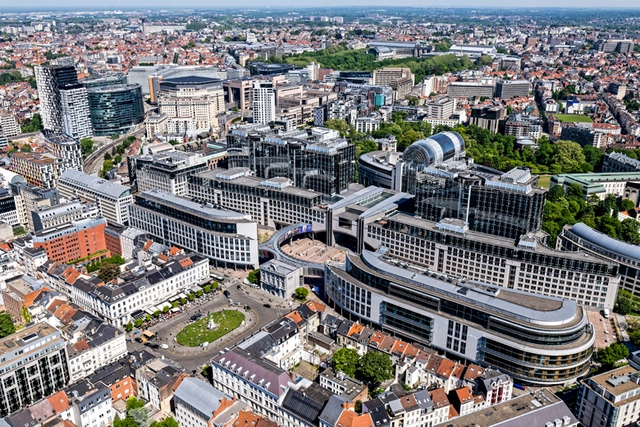
The European design team integrated by architectural firms JDS Architects, Coldefy, Carlo Ratti Associati, NL Architects, and Ensamble Studio has been announced as the winner of the international design competition for the renewal of the Paul-Henri SPAAK Building, the European Parliament plenary building in Brussels, Belgium.
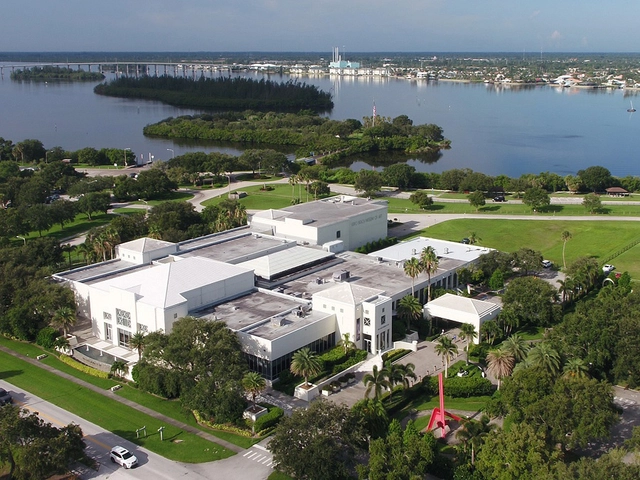
Vero Beach Museum of Art. Image Courtesy of Vero Beach Museum of Art
The Vero Beach Museum of Art (VBMA) in Florida has announced the appointment of Allied Works Architecture to lead the expansion and renovation project. The selection process took over nine months and it entailed a line-up of 13 national architectural firms and an eventual short-list. The winning design team will be led by Allied Works founder Brad Cloepfil and Principals Chelsea Grassinger and Gabe Smith. The expansion and renovation process is expected to be completed by 2026.
As one of the first steps in the elaboration of an architectural project, the study of the current legislation on the ground is of paramount importance for the success of the proposal. Through calculations and restrictions, zoning laws present limits to be considered in projects that, consequently, instigate architects to think of intelligent solutions, dealing with such limitations in a practical and creative way.
These parameters are dictated by the government and aim to stop, maintain or accelerate urban growth in certain portions of cities. These are norms that establish guidelines for land occupation, delimiting the percentage of built-up area, setbacks, distances, permeability, among others.
The luxury hotel, as an architectural typology, is distinctive. In effect, it's a self-contained community, a building that immerses the well-off visitor into their local context. Self-contained communities they might be, but these hotels are also vessels of the wider socioeconomic character of a place, where luxury living is often next door to informal settlements in the most extreme examples of social inequality.
Ennead Architects and Kahler Slater have unveiled the design of a new 200,000 square-foot museum building in Milwaukee, Wisconsin. Set on a 2.4 acre site in the Haymarket neighborhood, the design is based on four core principles: community, nature, education, and the preservation of the museum’s vast collections. The project is expected to break ground in late 2023 and open to the public in 2026.
The New York City Senate and Assembly have passed the SIGH act, prohibiting the construction of new schools near major roadways. The act, named The Schools Impact by Gross Highways Act, aims to protect school-age children from air pollution. Under this law, the commissioner of education for the city will not be able to approve the plans for the construction of any new schoolhouse within 500 feet (150 meters) of a controlled-access highway unless the commissioner determines that space limitations are so severe that there is no other site to erect such new schoolhouse.
Earlier this year, I witnessed an intriguing situation. I followed, via an architect friend, the negotiation for the contracting of an architectural project for a single family home. The land owner, a public school teacher, sought professional help to build her dream home, estimated at about 60 square meters. It was a challenging terrain, with specific cutouts and a very steep topography that was compensated by the view of the city. The limited budget and the owner's history indicated that this would be the seaside version of the famous Vila Matilde House by Terra e Tuma.
With all of the strange residential interior design trends that are making a comeback, conversation pits are probably one that you wouldn’t expect. This well-known 1970s design feature feels both very retro and modern, providing a comfortable place to lounge and a complete escape from the distractions of television and cinema. Instead of a design that supports and enhances a digital connection, having a large area to sit, and quite literally conversate, might be the space that we all need.