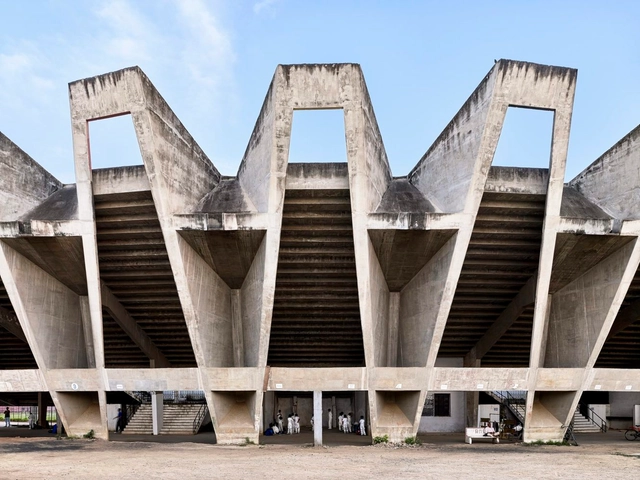
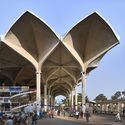
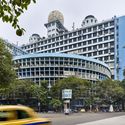
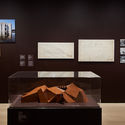
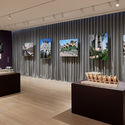
The Museum of Modern Art - MoMA has announced the opening of an exhibition that explores the ways modern architecture in South Asia shaped up "idealistic societal visions and emancipatory politics" of the post-independence period. Titled The Project of Independence: Architectures of Decolonization in South Asia, 1947–1985, the exhibition includes over 200 works, ranging from sketches and drawings to photographs and architecture models sourced from prominent lenders and institutions in Bangladesh, India, Pakistan, and Sri Lanka.
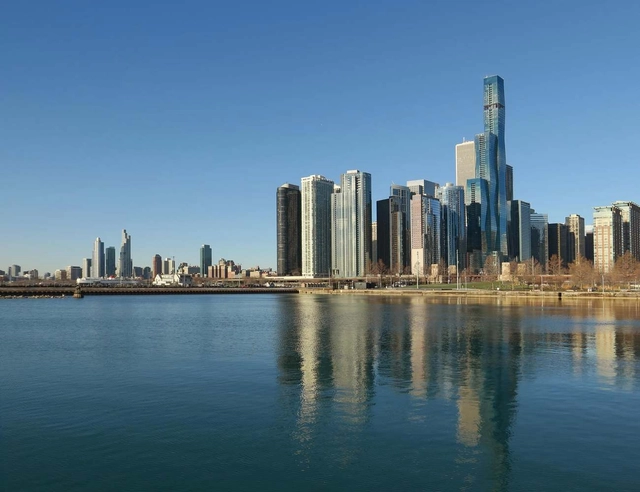
The tower aims to enhance rather than disrupt its surrounding urban fabric. Sitting between downtown Lakeshore East Park and the Chicago Riverwalk, the careful design of the lower levels allows for a porous connection between the two attractions. Innovative structural systems are implemented to achieve this by completely elevating the second volume from the ground.
Since the emergence of the design profession, boosted in the Industrial Revolution with the increasing production of objects and the desire of a middle class eager to consume; designers, interior decorators and architects are known as professionals who create spaces and products to beautify the world.
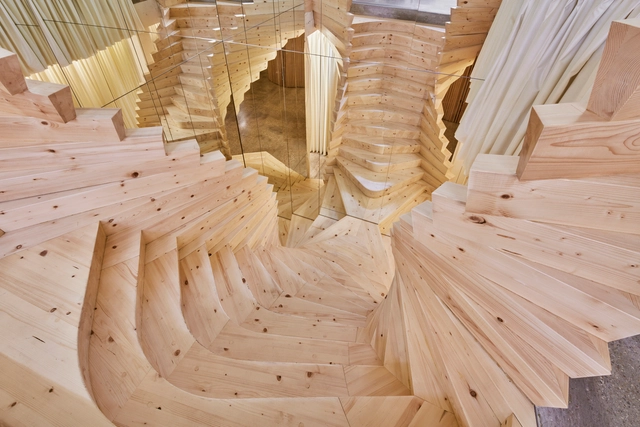
Stairs in architecture are oftentimes a design focal point- the heavyhandedness in creating something that moves us from one level to the next, up and down repeatedly, something so simple and familiar with a twist is what makes the experience of traversing a stair so unique. Our obsession with stairs and the level of illusion that they create in architecture perhaps stems from the way that they’re able to twist the optics and perceptions of space. We understand that they transport us in one direction or another, but can stairs ever be circular? Is it possible to go up and down for eternity?
BEYOME, led by Project Consortium together with the architects of Enorme Studio, seeks to transform traditional dwellings by providing a greater degree of flexibility in their spaces, so that they can adapt to contemporary lifestyles, taking into account the different uses that their inhabitants give to them. But how can we make the same space capable of adapting to different uses? What strategies could be developed to double the surface area of our homes and make better use of them?
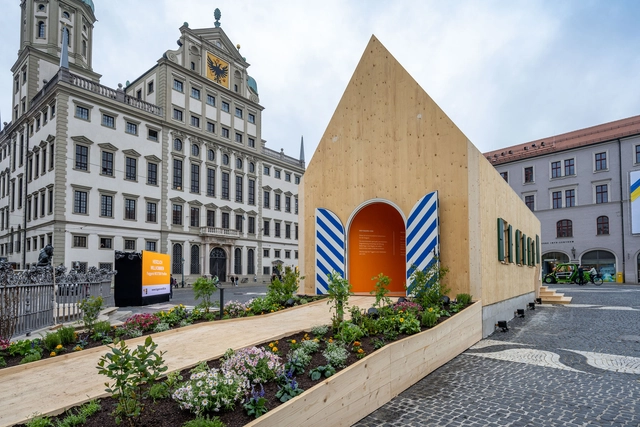
MVRDV and Fugger Foundation are celebrating the 500th anniversary of the Fuggerei social housing project, the world's oldest housing complex, with a ceremonial pavilion and three proposals for “Fuggerei of the Future”. The celebration features a 5-week programme of interdisciplinary discussions and events about social housing and current global challenges. In honor of the occasion, MVRDV designed the 'NEXT500' pavilion, which exhibits an MVRDV study on the “Fuggerei of the Future”, presenting a new Fuggerei code and three proposals for new Fuggerei complexes around the world.
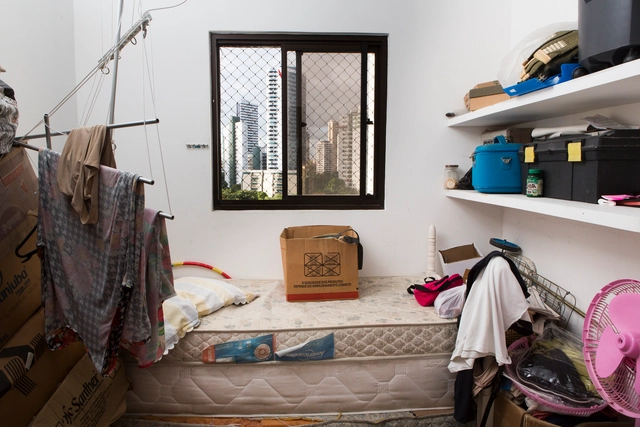
The maid's quarters are "with their days numbered", although they still find a place in the new luxury apartments. The information is from a report published in Folha de S. Paulo in March of this year, which says that in 2018 less than 1% of domestic workers, mostly black women, lived on the premises of their employers - a low number when compared to the 12% of 1995. With the decrease in the number of professionals residing in the employers' homes, the "maid's room" would gradually be no longer part of the architectural plans of Brazilian housing buildings.
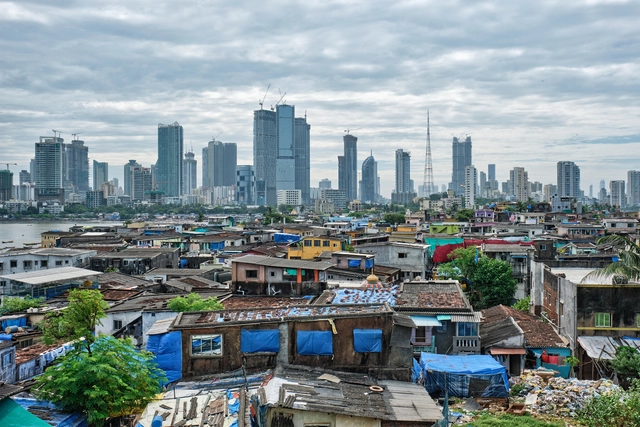
Almost seven kilometers from the green of Uhuru Park in central Nairobi, lies the informal settlement of Kibera. It is an area whose urban character consists of corrugated iron roofs, mud walls, and a complicated network of utility poles. Kibera, at this point in time, is a well-known place. Much has been written and researched on this “city within a city,” from its infrastructural issues to its navigation of the COVID-19 pandemic.
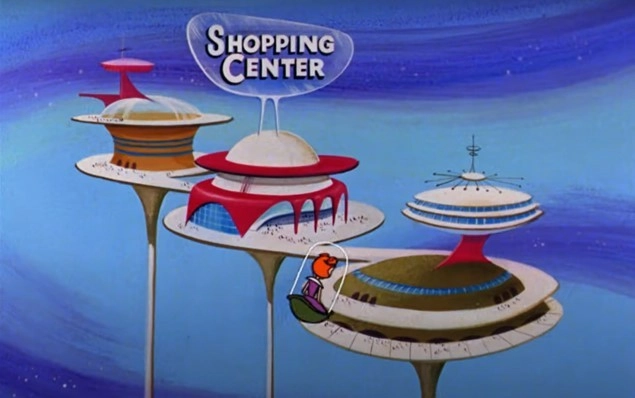
Futuristic shopping center. Image via The Jetsons, 1962 / Hanna-Barbera Productions
The dawn of nuclear power, dramatic advances in rocketry, and the desire to be the first to put men into space and on the moon, kick-started an era known as the ‘Space Age’. Upon the closure of WW2, both the Soviets and the Allies found themselves in a state of antagonism, as they both began to struggle to make advancements in space exploration before the other, a race for space. The era would give way to rapid advancements in technology and huge accomplishments including the moon landing in 1969. The Space Age aesthetic completely changed the way designers visualized the new world and left a dramatic impression on architecture and interiors. A new vision of futurism and prosperity.
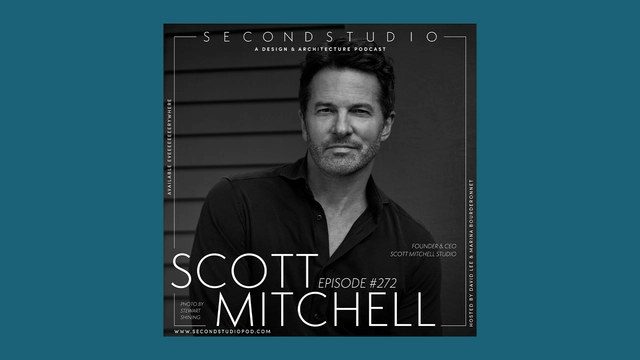
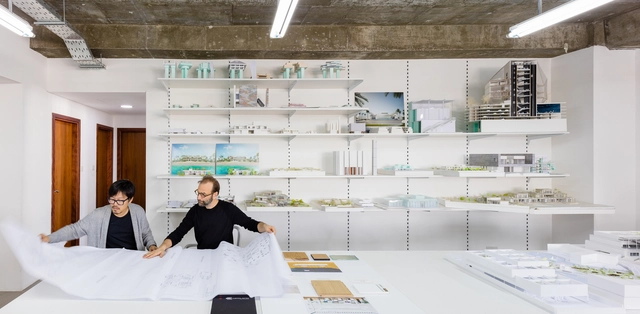
The Second Studio (formerly The Midnight Charette) is an explicit podcast about design, architecture, and the everyday. Hosted by Architects David Lee and Marina Bourderonnet, it features different creative professionals in unscripted conversations that allow for thoughtful takes and personal discussions.
A variety of subjects are covered with honesty and humor: some episodes are interviews, while others are tips for fellow designers, reviews of buildings and other projects, or casual explorations of everyday life and design. The Second Studio is also available on iTunes, Spotify, and YouTube.
This week David and Marina are joined by Scott Mitchell, Founder and Chief Executive Officer of Scott Mitchell Studio, to discuss his designs; his early interests in architecture; his office; influential people in his life; the power of thoughtful architecture; and much more.
One of the elements of most affinity between architecture and cinema is the scenographic project. The set designer, like the architect, starts from a concept to create spaces with a purpose. The architect designs spaces for living and the set designer designs spaces for storytelling. Many architects work with scenography because of the affinity between the activities.
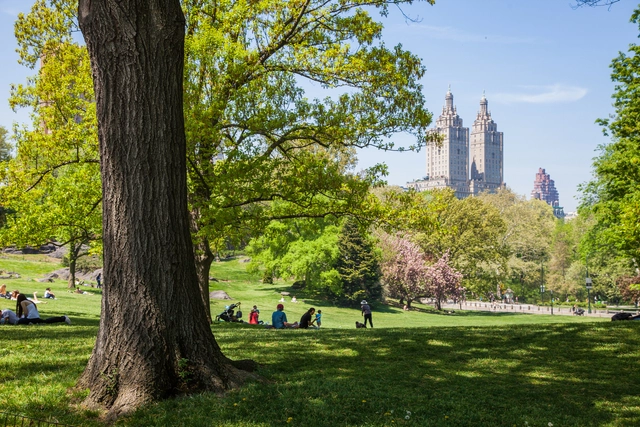
Central Park, New York, NY, 2015. Photo by Barrett Doherty. Image Courtesy of The Cultural Landscape Foundation
Celebrating the bicentennial of the birth of Frederick Law Olmsted, Sr., known as "the father of landscape architecture", the Cultural Landscape Foundation has created an ever-growing digital guide of Olmsted’s most notable works. The illustrated guide features more than 300 landscapes throughout North America, including Canada and 30 U.S. States, along with stories by practitioners who worked for, with, or were otherwise associated with Olmsted, Sr. and his successor firms.
Various cities have been experimenting with wavering fees for public transport in an effort to promote sustainable mobility, alleviate traffic congestion and decrease social inequality. This past February, Salt Lake City has paused fare collection for a month to reduce carbon emissions in the region. At the end of March, the Italian city of Genoa extended free access to some of its public transport networks, following a successful experiment which began at the end of 2021 and in an ambitious plan to become the first Italian city with free transportation. Meanwhile, the small duchy of Luxembourg became the world’s first country with free public transit in 2020.
Improving people's quality of life is one of the biggest goals of professionals in Architecture and Urbanism. When planning cities, creating housing or carrying out a simple refurbishment, we seek to improve the built space regardless of scale. The Urban Rehabilitation of Alto de Bomba, carried out in the city of Mindelo, Cape Verde, arose from the need to combat the precariousness found previously in the place. A project that required the immersion of the team in the daily life of the city and resulted in an inspiring proof of how much architecture can reveal better ways of living the city and acting directly in society. No wonder it received the Work of the Year Award in 2022, chosen by our readers as the winner among hundreds of competing projects.
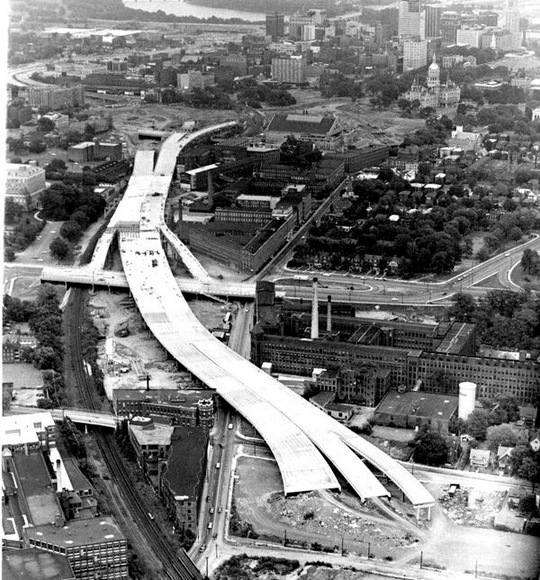
Can a piece of infrastructure literally kill a city? This is the question that writer Jim Krueger poses in his recent podcast, The Road That Killed a City. The place in question is Krueger’s current hometown—Hartford, Connecticut—which he grew up next to in the leafy suburb of West Hartford. Kruerger has lived in both towns, and that helps to balance the amazing story he uncovers about how Connecticut’s capital was impaled by a roadway (actually, two: east/west I-84 and north/south I-91 converge in Hartford in a sort of arterial highway ground zero). I spoke with Krueger about what prompted the podcast, some of what he uncovered about the history of this ill-fated urban “improvement,” and the legacy of a highway that continues to thwart Hartford’s rebirth—an inheritance shared by many cities across North America.
https://www.archdaily.com/981425/did-a-highway-kill-the-city-of-hartfordMichael J. Crosbie
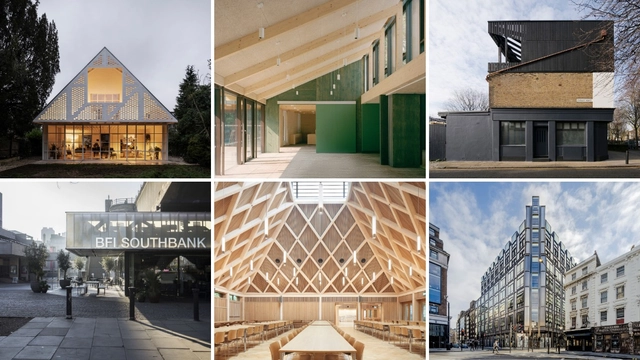
The Royal Institute of British Architects (RIBA) has announced the winning projects for the 2022 RIBA London architecture awards. The list of 42 buildings includes projects ranging from a sustainable council housing development to a cookery school for children, showcasing the best architectural interventions in London over the past two years. The projects were selected by a regional jury, who visited all 66 shortlisted projects. RIBA London Award winners will now be considered for a highly-coveted RIBA National Awardin recognition of their architectural excellence, which will be announced in June.
Architecture draws together influences in art, culture and daily life. When designing for local communities and sourcing regional materials, architects often take inspiration from vernacular traditions. Utilizing traditional materials and resources from the area where a building is located, they draw from local climates and a history of building and ideas. Building sites around the world are diverse locations shaped by new construction technologies, past techniques, and changing conditions of cultural life.
OMA /Jason Long revealed its latest adaptive reuse project in Detroit, transforming a former bakery and warehouse into mixed-use art, education and community space. Developed in collaboration with Library Street Collective, the project provides new headquarters for two local non-profits, PASC and Signal-Return, while creating a mix of artist studios, galleries, community-serving retail and gathering spaces. Dubbed “LANTERN”, the development is set to become an “activity condenser.”







 .
.






.jpg?1651830269 "Khayelitsha Township - Cape Town. Image © Olga Ernst under the Creative Commons Attribution-Share Alike 4.0 International license.")