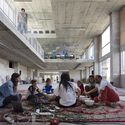
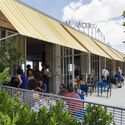
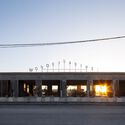
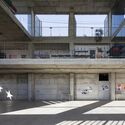
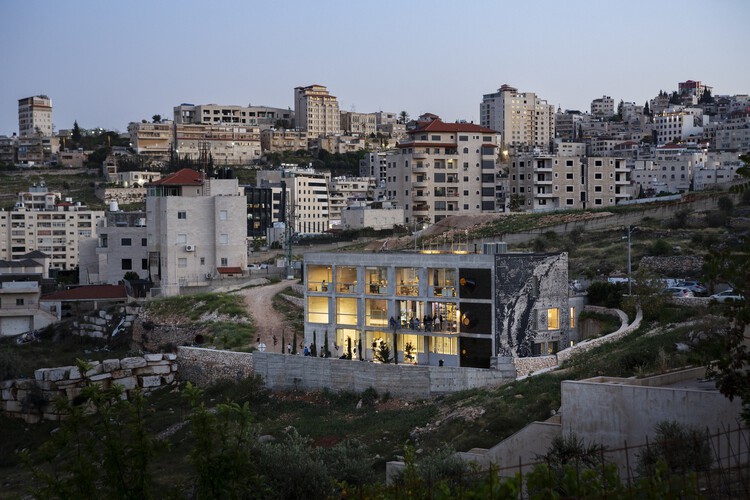
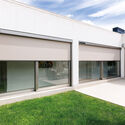
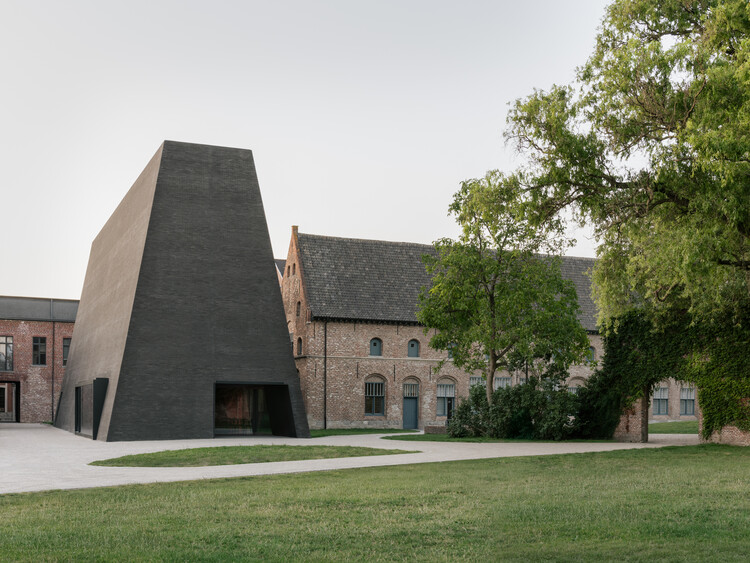
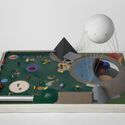
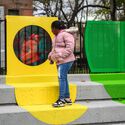
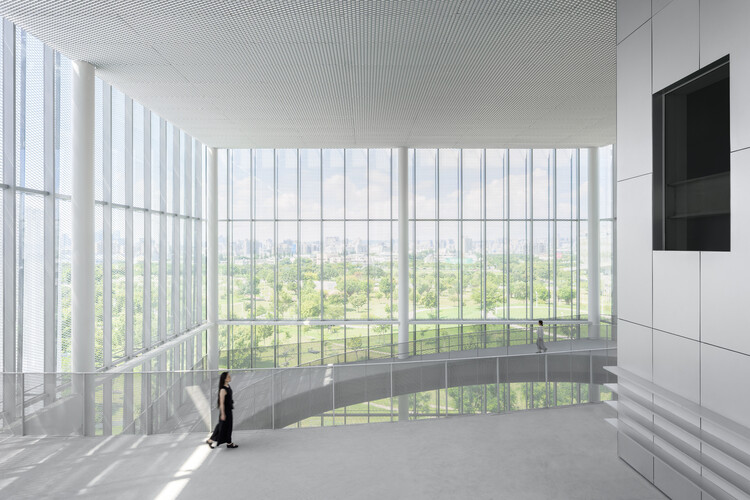
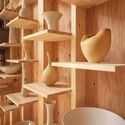
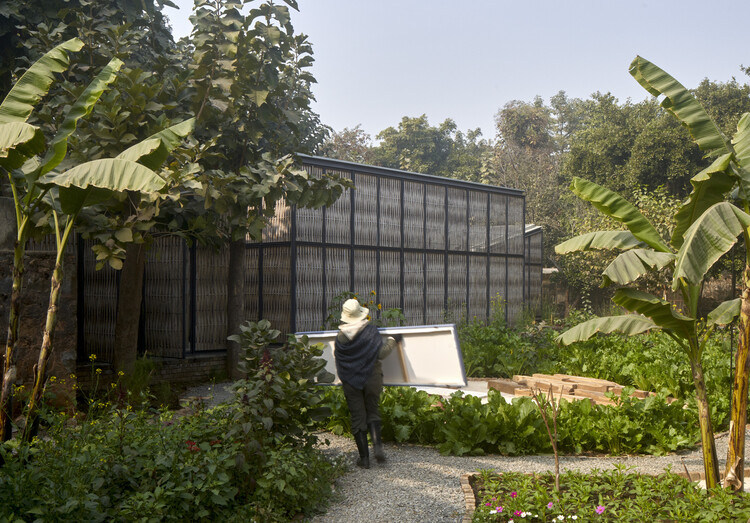
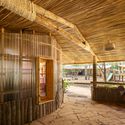
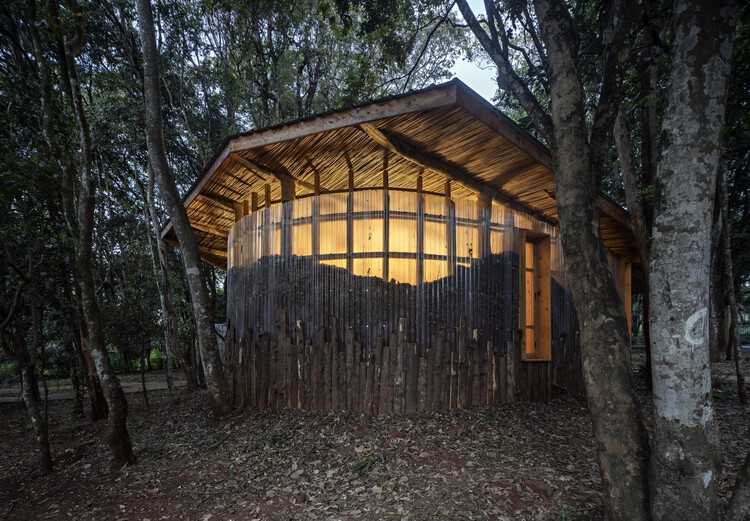
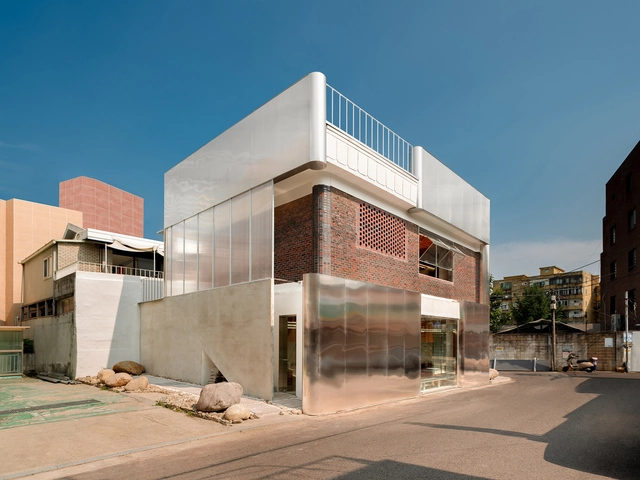
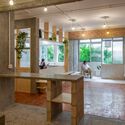
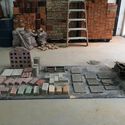
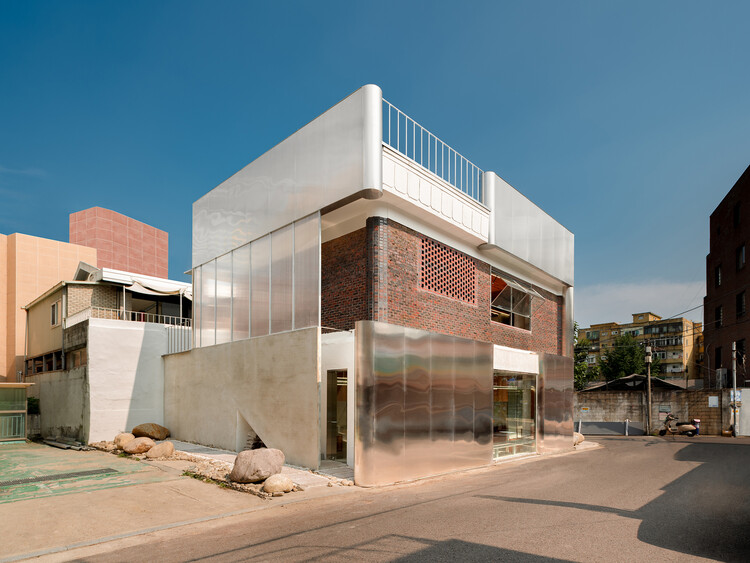
Wonder Cabinet / AAU ANASTAS. Image Courtesy of AAU ANASTAS
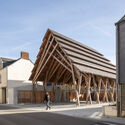
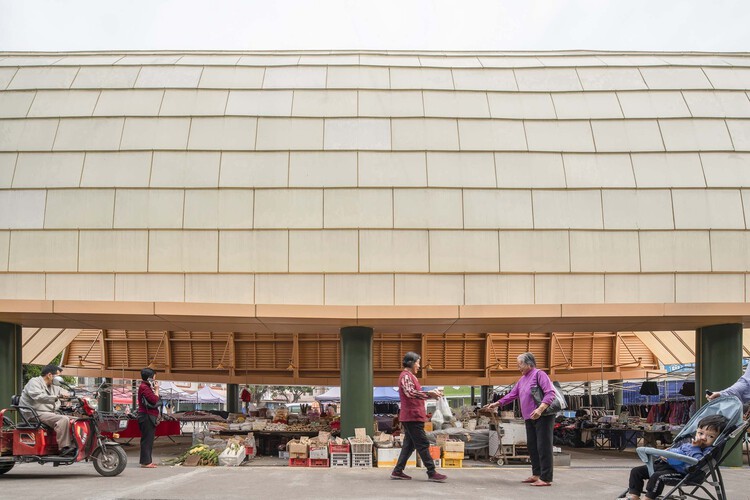
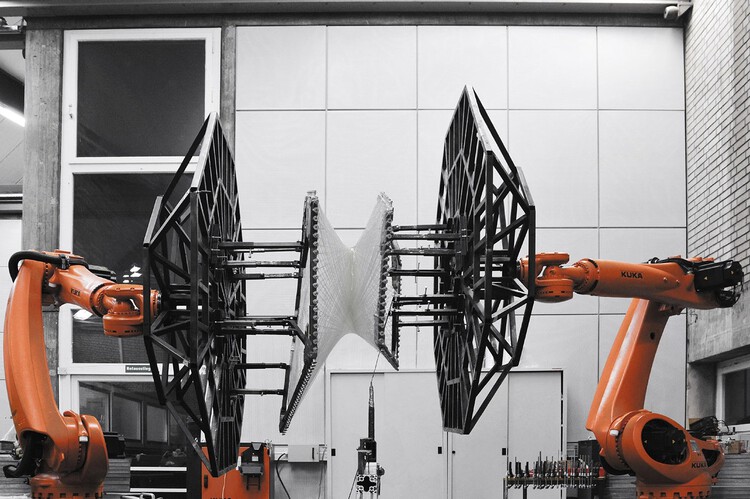
Among the 2025 Aga Khan Award winners is AAU Anastas and their project, Wonder Cabinet in Palestine, whose central aim is to serve as a haven for culture and creativity and a bridge between design and production. Beyond this meaningful project, AAU Anastas—working from offices in Bethlehem, Palestine, and Paris, France—has built a broad portfolio since 2015. Notable works include Dar Al Majous, a restoration in Bethlehem that challenges the boundary between domestic and public realms; the Tulkarm Courthouse (2015), one of their first projects that redefined civicness and social gathering on a prominent corner site in Tulkarm; and The Flat Vault, a commercial intervention that adds a juxtaposed stone vault to an existing monastery shop associated with a church built in the 12th century by the Crusaders.
Among these compelling works, Wonder Cabinet likely drew the jury's attention not only for its refined execution and layered spatial complexity, but also for how it operates as a socially generative platform—dissolving the boundary between social infrastructure and architecture. Conceived to support culture, creativity, design, and production, the building aspires to host architects, designers, chefs, artisans, and sound and visual artists, among others. In no small way, it advances the spirit articulated by the 2025 judges, who characterized this cycle as a year of fostering resilience and optimism through design, by demonstrating how architecture can catalyze community and enterprise simultaneously.
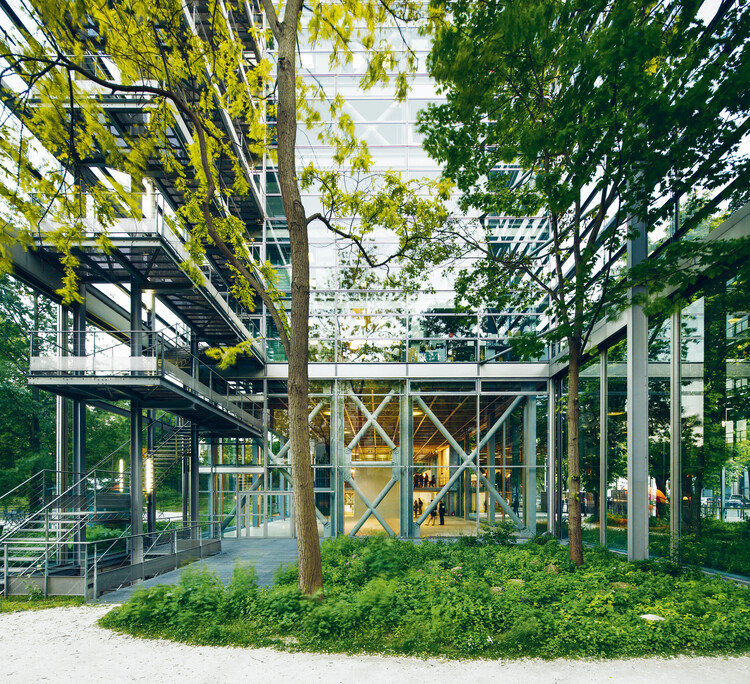
The opening of the new Fondation Cartier pour l'Art Contemporain in Paris last October sparked renewed questions around the role, form, and future of museums. As cultural institutions continue to proliferate worldwide in this digital era, the museum itself appears increasingly in need of redefinition. Rather than offering a single model or solution, Architecture for Culture: Rethinking Museums, written by architectural historian and curator Béatrice Grenier, argues for a more contextual and plural understanding of what a museum can be: an institution shaped by its environment, its public, and the specific cultural questions it seeks to address.
ArchDaily had the opportunity to discuss these ideas with the author against the backdrop of the Fondation Cartier's newly inaugurated home on Rue de Rivoli. Housed within a restored Haussmannian building that once accommodated the Grands Magasins du Louvre, the space has been radically reimagined by Jean Nouvel as a dynamic, transformable architecture.
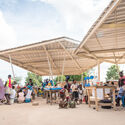
The making of a place is not a difficult thing in principle; it is enough for people to come together in a regular set location for a purpose or activity, and a space becomes. This does not disregard the fact that a physical element needs to accompany this gathering for a space to become sheltering, accommodating, and alluring. This idea of the space that emerges from intent can most definitely be seen in one of the most ancient of functions, which is food or produce markets.
For a market to become, the architectural element can be as simple as a light roof, which would harbor merchants and offer a non-spoken boundary to the place, or it can be as resourceful as adaptively reusing an existing building or site to fit new needs. Finally, it can be a temporary and lightweight structure pitched for certain events or needs and then removed to be used elsewhere, or for other means.
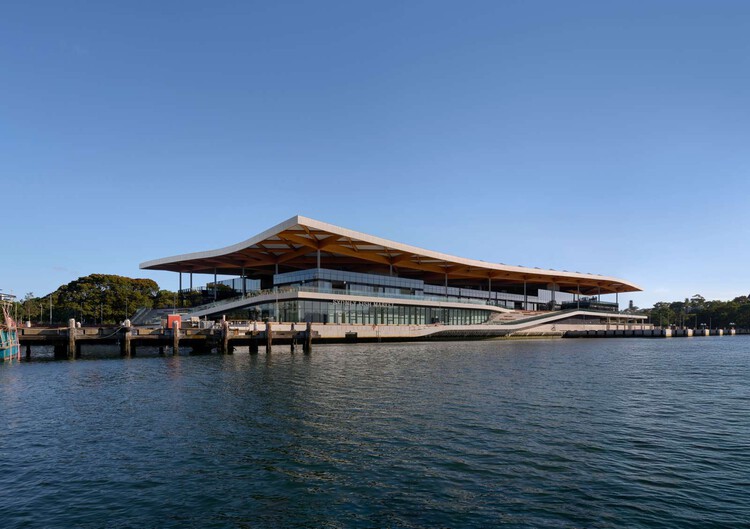
Set to open on January 19, 2026, the Sydney Fish Market marks the first completed project within the broader renewal of Blackwattle Bay on Sydney's inner harbour. Designed by 3XN in collaboration with BVN and Aspect Studios, and delivered by Multiplex, the purpose-built facility replaces the former market with a contemporary structure that combines an operating wholesale fish market with retail, dining, and publicly accessible waterfront spaces. Positioned approximately one mile southwest of Sydney's central business district, the project reframes one of the world's largest fish markets by volume as both working infrastructure and a civic destination.
Indian modernism is often narrated through a narrow lens: a handful of iconic institutions, master architects, and formally radical experiments that came to symbolize the nation's post-Independence aspirations. Yet this version of history overlooks the far larger body of modernist architecture that quietly shaped everyday life across the country. Beyond celebrated campuses and canonical buildings exists a vast, dispersed landscape of housing blocks, offices, hostels, hospitals, markets, and townships — structures that were designed to function and endure.
Taking a deeper look at the interplay of light and shadow in architecture seems to be a recurring topic on the agenda of many professionals in the field. Spaces of light and darkness are conceived to enhance circulation and spatial directionality, as well as to highlight the colors, textures, and forms of specific architectural elements. That said, the impact of natural light on building facades reveals the need to develop strategies that support energy savings, improve the thermal and visual comfort of interior spaces, and promote the reduction of carbon emissions. Considering light as another material in architecture, in what ways could its power contribute to the architectural experience?
The past year marked a defining moment in ArchDaily's evolution: a year of recalibration, intention, and renewed editorial purpose.
In an increasingly fast-moving and saturated media landscape, we took the opportunity to ask the fundamental questions: What does architectural media need to be today? What responsibilities do we carry as a global platform? And how can we contribute meaningfully to a profession navigating social, environmental, and cultural transformation?
And by engaging deeply with these reflections, we stepped fully into our role, bringing greater definition to who ArchDaily is and how it operates.
This week's news compilation brings together current discussions around public and collective space, cultural infrastructure, and long-term urban transformation across diverse geographic contexts. From shared management models redefining public space ownership in cities such as Paris and New York, to large-scale event-driven initiatives linked to Milano Cortina 2026 and the World Urban Forum in Baku, the selected projects and initiatives highlight how governance, culture, and infrastructure intersect in contemporary practice. These themes are further developed through a mix of strategic planning processes, including international test planning efforts in Northern Lviv, and built projects spanning education, culture, and temporary architecture, from a new dental teaching facility in Blantyre, Malawi, to restored and newly opened cultural venues in the United States and Taiwan, and adaptive reuse interventions showcased at the ChicagoArchitecture Biennial. The international examples outline an architectural landscape shaped by reuse, public engagement, and the evolving role of design in responding to social, cultural, and institutional frameworks.
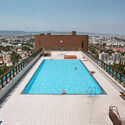
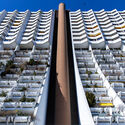
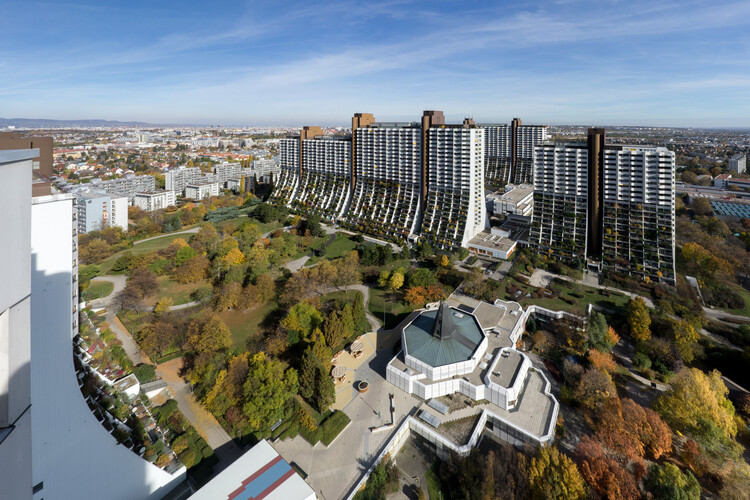
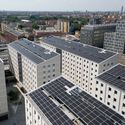
On the southern edge of Vienna, a cluster of monumental terraces rises above the cityscape, their stepped balconies cascading with greenery and their rooftops crowned with swimming pools. This is the Wohnpark Alterlaa, one of the most ambitious social housing projects in postwar Europe. Designed by Austrian architect Harry Glück and built between 1973 and 1985, the complex was founded on a provocative principle: municipal housing should not only provide affordable shelter but also offer the pleasures and amenities usually reserved for the wealthy.
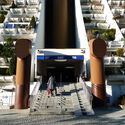
With more than 3,000 apartments housing nearly 9,000 residents, Alterlaa was conceived as a city within the city. Alongside its residential towers, it incorporates shops, schools, medical services, and cultural facilities, ensuring that daily life can unfold entirely within its boundaries. The project reflects a moment of optimism in Vienna's urban policy, when housing was understood as infrastructure for collective well-being rather than as a commodity.
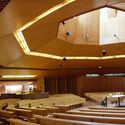
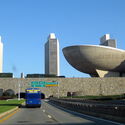
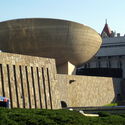
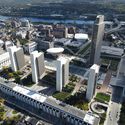
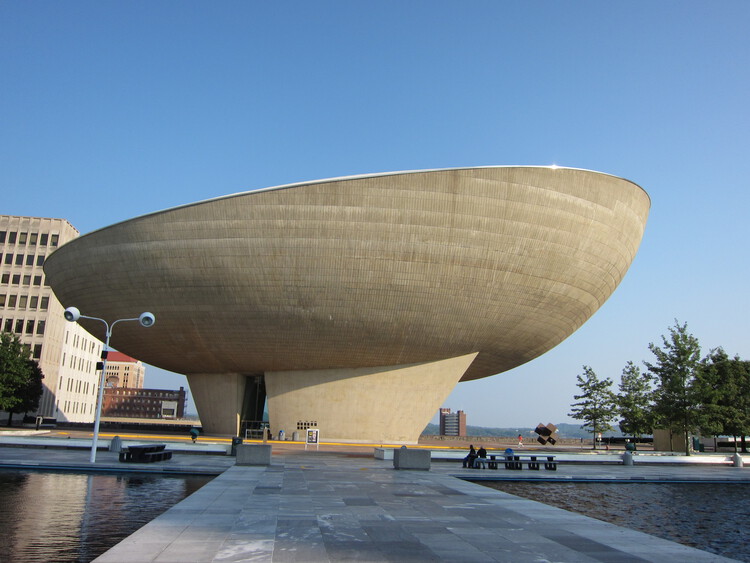
The Egg is a performing arts centre located in Albany, within New York's Empire State Plaza, designed by the North American firm Harrison & Abramovitz. Construction began in 1966 and was completed twelve years later, in 1978, with the aim of hosting a broad range of cultural events and performances for New York State residents. Drawing inspiration from Brazilian modernism, the domed, egg-like concrete structure stands out as a striking counterpoint within an otherwise rational urban ensemble. Surrounded by state government towers set in an open plaza and clad in stone, the building's exposed concrete, its seemingly suspended form, and pronounced curved geometry position it as a late example of modernist Brutalism. The venue is currently undergoing restoration and, after six months of renovations, is set to reopen on January 8, 2026, in what has been described as a "refreshed and reimagined" space.
The circular economy, including the reuse of building materials, is fast becoming a key component in the fight against carbon emissions. This involves designing to minimize waste and utilize materials that can be reused at the end of the building's life. On the opposing side, the reuse of materials from partially or wholly demolished buildings can also reduce waste and carbon emissions that would have resulted from using virgin materials. Sustainability purposes aside, the reuse of building materials has a centuries-old history, both for symbolic reasons and simply out of necessity.
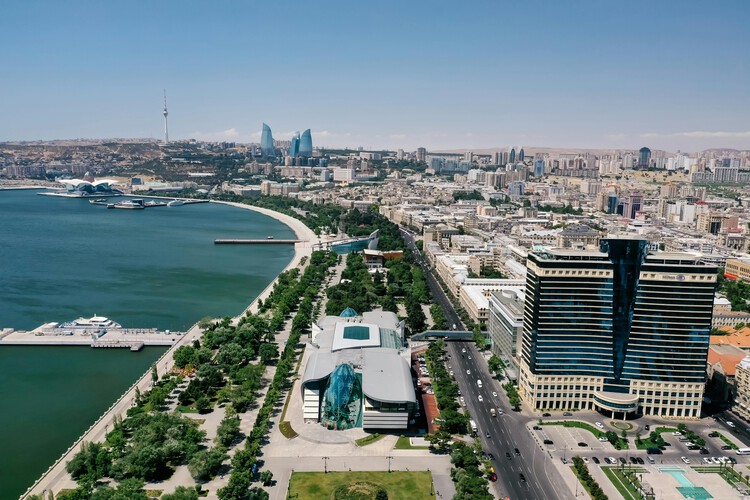
President Ilham Aliyev has signed an order declaring 2026 the "Year of Urban Planning and Architecture" in the Republic of Azerbaijan. The decision establishes a national framework focused on urban planningpolicy, architectural culture, and sustainable development, aligning with Azerbaijan's preparations to host the 13th World Urban Forum (WUF13) in Baku in May 2026. According to the order, the designation aims to preserve Azerbaijan's centuries-old traditions while integrating contemporary approaches that respond to current social, environmental, and spatial challenges. The President's Administration will now prepare and submit a comprehensive action plan for the year within one month.
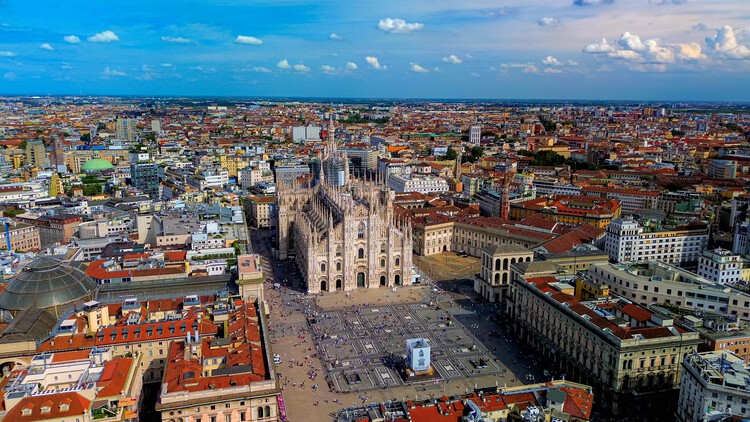
One month remains until the Opening Ceremony of the Olympic Winter Games Milano Cortina 2026, with competitions set to run from February 4 to 22, 2026. The Opening Ceremony will take place on February 6 at the Milano San Siro Olympic Stadium and will bring together approximately 2,900 athletes from around the world competing across 16 sports, with 116 gold medals to be awarded. The Olympic Winter Games return to Italy twenty years after Torino 2006 and seventy years after Cortina 1956. This edition, however, adopts a markedly different approach, proposing a shift away from the traditional high-cost, high-waste model toward adaptive reuse, renewable energy, and long-term regional development. The most geographically dispersed Winter Games in history plan to rely on 92% existing or temporary venues, build on regions with established tourism industries, avoid major environmental disruption, and implement circular design and recycling strategies, the results of which will become evident in the coming months. The Milano Cortina 2026 Winter Paralympics will follow, taking place from March 6 to 15, 2026.
Which materials have taken center stage in the architectural discourse of 2025? Which projects have rediscovered new construction practices and methods through material innovation? While the future of building materials still appears uncertain, year after year, experimentation and research continue to reveal diverse practices, initiatives, and efforts dedicated to understanding their value and responsibility within the built environment. From agricultural waste that reduces carbon footprints to recycled plastics given new life, and living materials that engage with emerging technologies while reconnecting with nature, 2025 has highlighted and strengthened the role of architects as mediators between materials, disciplines, knowledge, and interests from diverse origins.