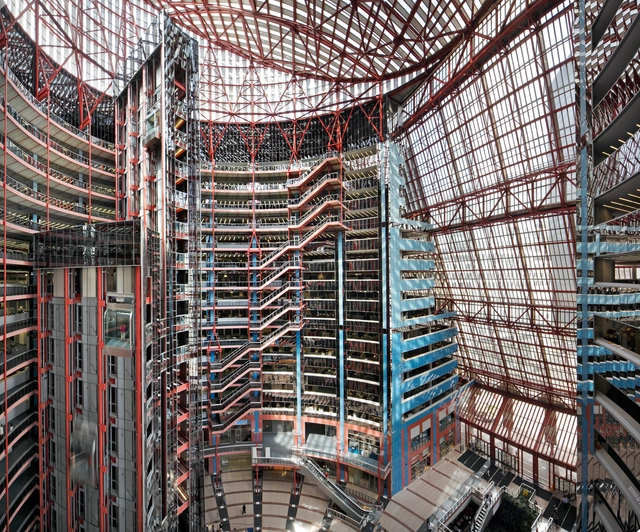
It would seem that the ongoing saga of the James R. Thompson Center, Chicago’s beloved but neglected governmental office building-slash-postmodernist mecca, might be reaching its final act.
Yesterday, Brendan Reilly, alderman of the city’s 42nd ward, announced a proposed rezoning ordinance that could kick the sale of the prized 3-acre site (12,140 m2) at 100 West Randolph Street into high-gear. The cash-strapped State of Illinois has been considering/trying to offload the property as early as 2003.
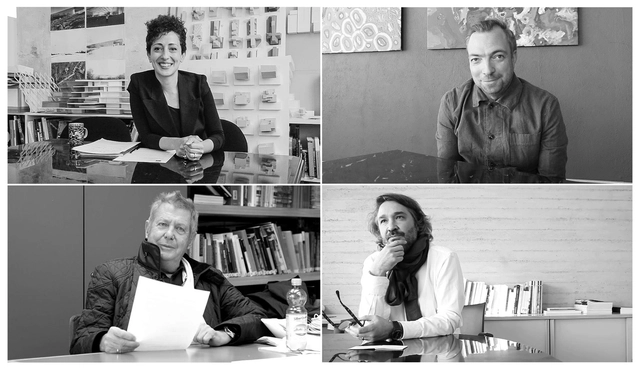
Simple in form but complex in substance, “What is Architecture?” remains an existential question for a lot of architecture students and young professionals. In an attempt to define this ever-changing interrogation and expose the different visions out there, the interview series: WIA – What is architecture? asks four, straightforward, questions to world-leading architectural designers and thinkers. Seeking to uncover their opinion on what architecture is and what it can do, these short videos reveal responses to “What is architecture? What can architecture do? What is your architectural position? and What is your design method?”.
The Second Studio (formerly The Midnight Charette) is an explicit podcast about design, architecture, and the everyday. Hosted by Architects David Lee and Marina Bourderonnet, it features different creative professionals in unscripted conversations that allow for thoughtful takes and personal discussions.
A variety of subjects are covered with honesty and humor: some episodes are interviews, while others are tips for fellow designers, reviews of buildings and other projects, or casual explorations of everyday life and design. The Second Studio is also available on iTunes, Spotify, and YouTube.
This week David and Marina give an introduction to what architecture is, covering how architecture is different from 'buildings'; the key aspects of a work of architecture (and what makes for good architecture); why architecture is necessary, but also unnecessary; the common belief that architecture only pertains to the exterior of buildings, the common focus on styles; whether or not architecture is subjective; and more.
https://www.archdaily.com/959496/the-second-studio-podcast-on-why-architecture-is-necessary-but-also-unnecessaryThe Second Studio Podcast
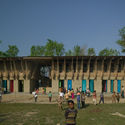
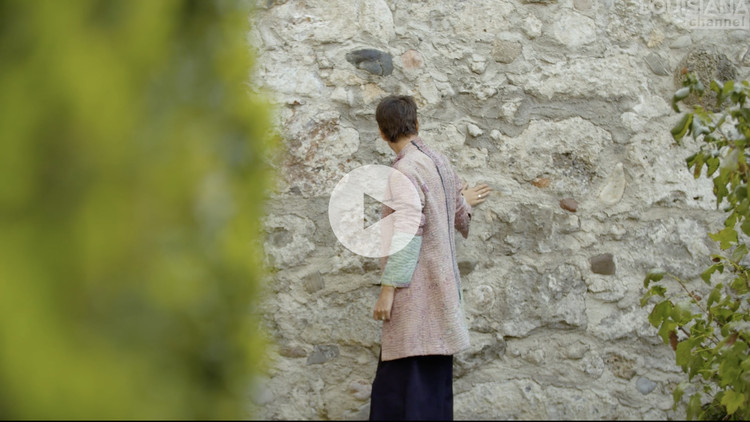
Talking to the Louisiana Channel, German architect Anna Heringer outlines the way she works and her multi-disciplinary approach to architectural practice. Growing up in a small town at the Austrian-Bavarian border close to Salzburg - Heringer spent a year living and working in Bangladesh at the age of 19, a place that is now home to a majority of her office's projects. Heringer describes herself as a mix of things in addition to being an architect, describing herself as an activist and a development worker - using her creativity to explore ideas in a variety of forms and media.
If someone tried to sell you a virtual building, would you buy it? That’s right- a virtual building. Not something that will ever be built in the physical world, or something you can occupy, but an image you can look at, or a video you could watch. This is exactly what’s being proposed as architecture enters the realm of NFTs (non-fungible tokens) that have taken the world by storm. And in the design profession, which continuously seeks to redefine what it means to be an architect, NFTs have big implications for the future of digitization and commoditization of the unbuilt environment.
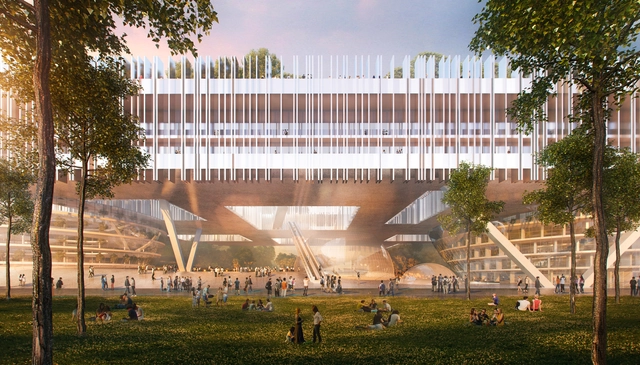
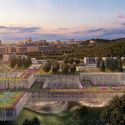
Dominique Perrault Architecture, together with Chinese studio Zhubo Design Co, has won the international competition for the new campus of Shenzen's Institute of Design and Innovation. Stretching along a mountain range, the large-scale horizontal structure preserves the views towards the landscape, while creating a strong relationship between the learning spaces and the environment.
Globalization and its pension for both virtual and physical connectivity has led to the linking of the world's economies, territories, and cultures and nowhere is this more evident than in the field of architecture.
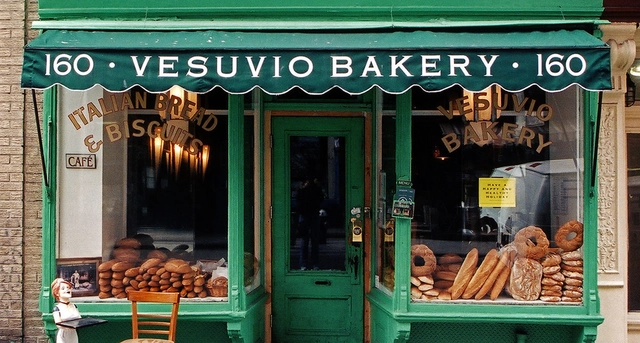
Few businesses in the United States are regarded with more fondness than mom-and-pop retailers. There’s an “all’s right with the world” quality about owner-run shops that meet a neighborhood’s everyday needs and, through repeated face-to-face exchanges, help people feel they’re members of a mutually supportive community. And yet for a long time, mom-and-pop stores have been under stress. In the half-century after 1950, cars shifted much of United States’s retailing to unwalkable roadside strips and winnowed the ranks of neighborhood-scale mom-and-pops. In the past two decades, the burgeoning of the internet has intensified the pressure on brick-and-mortar retail, a situation worsened by the pandemic.
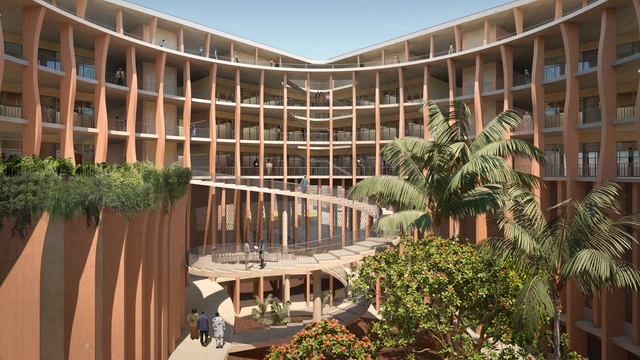
Benin's National Assembly in Porto-Novo Proposal. Image Courtesy of Kéré Architecture
Founder of the Berlin-based firm Kéré Architecture, Francis Kéré, has won the 2021 Thomas Jefferson Foundation Medal in Architecture. Presented by the University of Virginia and the Thomas Jefferson Foundation at Monticello, the award is one of four honors recognizing achievements in architecture, citizen leaderships, global innovation, and law. The Thomas Jefferson Foundation Medals recognize the exemplary contributions of recipients to the endeavors in which Jefferson excelled and held in high regard.
For the 17th international architecture exhibition – la biennale di Venezia 2021, Austria is creating a platform of debate around how we envision the architecture of the future. In fact, the Austrian contribution, entitled “Platform Austria”, curated by Peter Mörtenböck and Helge Mooshammer, seeks to articulate the profound changes established by the development of digital platforms in our built environment.
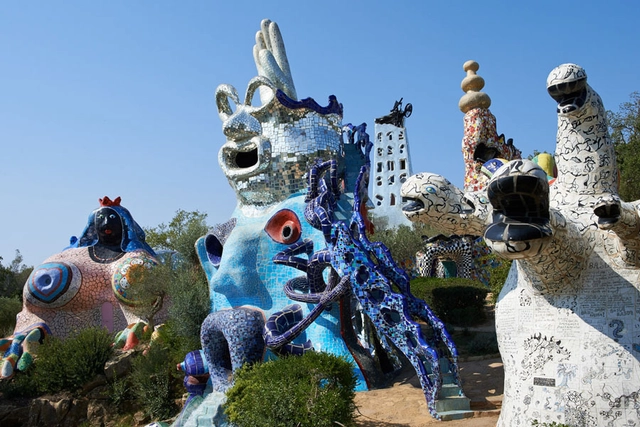
Tarot is often described as a mirror of the soul. Much like the spaces we inhabit, we can look at the symbols housed within the 72-card deck and see reflections of ourselves and our belief systems. The object and practice itself contain many architectural associations: It’s not uncommon for words like “structures,” “foundations,” and “home” to come up in a tarot reading. Traditional cards depict towers, castles, and churches. Sometimes the cards are described as keys, sometimes as gateways.
https://www.archdaily.com/959469/the-fantastic-architecture-of-niki-de-saint-phalleLeilah Stone
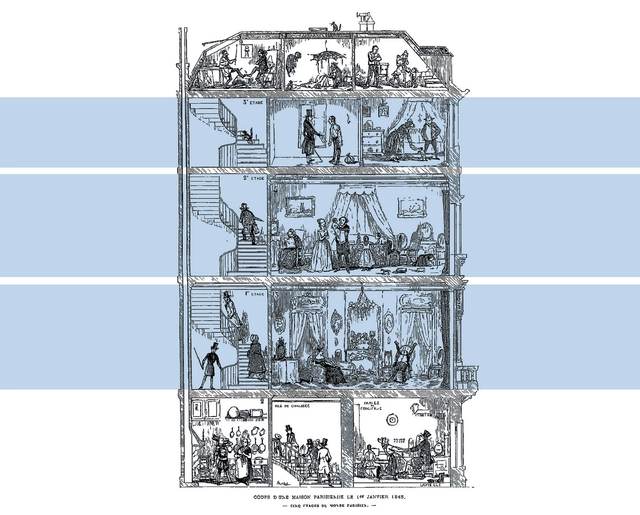
The introduction of new techniques and materials, along with innovations in indoor plumbing systems, resulting from the industrial revolution, paved the way for vertical living. Investigating specifically a period of time where a flux of population was driven to cities, and social class divisions were being questioned, this article looks back at the evolution of the house plan in Europe between 1760 and 1939.
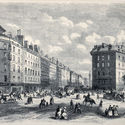
Tackling the transformation of the housing unit during the industrial revolution all the way to the interwar period, this feature highlights four prominent examples that rethought traditional layouts and responded to the challenges of their time. Still influential today, the mentioned models, restored for use, happen to be part of the 21st-century urban fabric. Located in London, Paris, Amsterdam, and Moscow, the plans showcase the ever-changing interior wellbeing standards, directly linked to a broader metamorphosis, equalizing and providing for growing urban populations. Discover the evolution of living units from the Back to Back Houses to the Garden Cities of England; the Haussmannien Block, a Vertical Living for a Modern Bourgeoisie; the Extension of Amsterdam, from Alcove Housing to Social Housing Blocks; and the Transition Type House in Russia.
The Estonian Centre for Architecture is presenting the exhibition “Square! Positively shrinking” curated by Jiří Tintěra, Garri Raagmaa, Kalle Vellevoog, Martin Pedanik, and Paulina Pähn, in the Pavilion of Estonia at the 17th International Architecture Exhibition of La Biennale di Venezia. Hosted in the Arsenale complex, the project will “explore the role of high-quality urban space in enhancing the future development of small towns that are in jeopardy of depopulation, […] sparking a debate on the lesser-known facet of urbanization”.
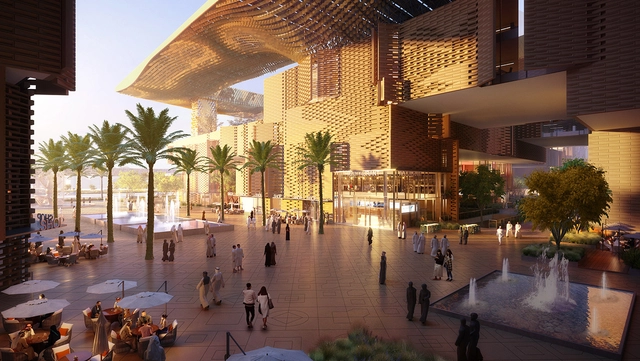
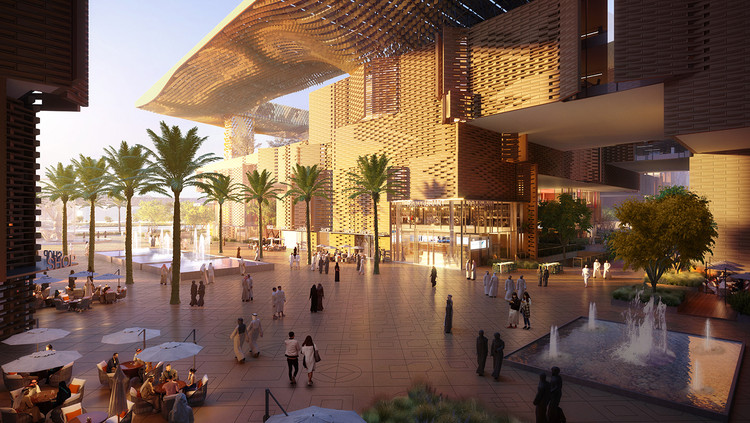
Architecture and design practice Brooks + Scarpa have designed a new complex for the Ministry of Environment Water and Agriculture (MEWA) in Riyadh, Saudi Arabia. The 1.2 million square foot complex includes seven buildings and a solar system that will generate 75% of the entire energy use of the complex of buildings. The team designed the project as a "tapestry of spaces and landscapes" offering connections through shaded outdoor rooms.
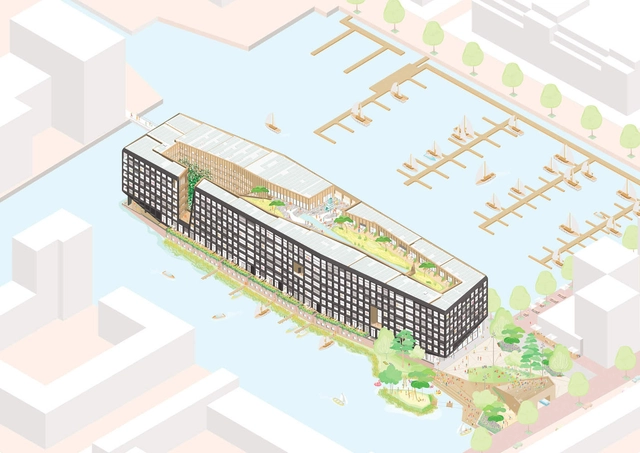
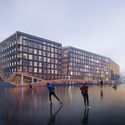
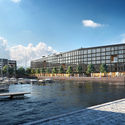
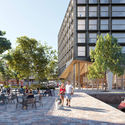
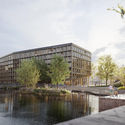
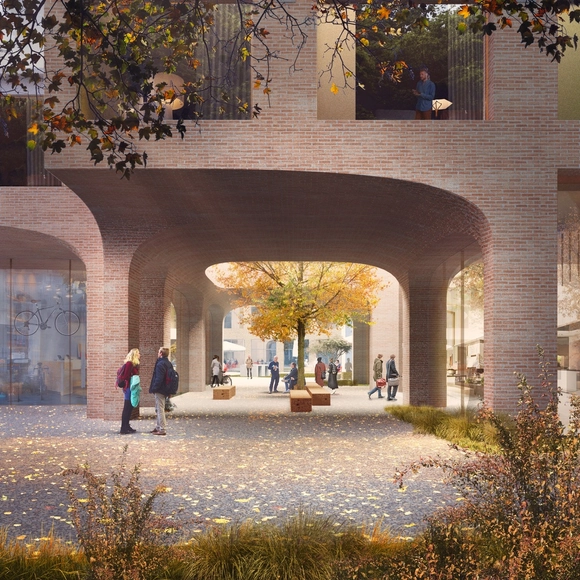
Landscape and architecture studios Felixx and Orange Architects have designed a new housing development in the heart of IJburg, Amsterdam. Rising atop an artificial island, the project is organized around the surrounding marina to provide family housing. The new residential building will include commercial and social programming, as well as new areas for the public realm.
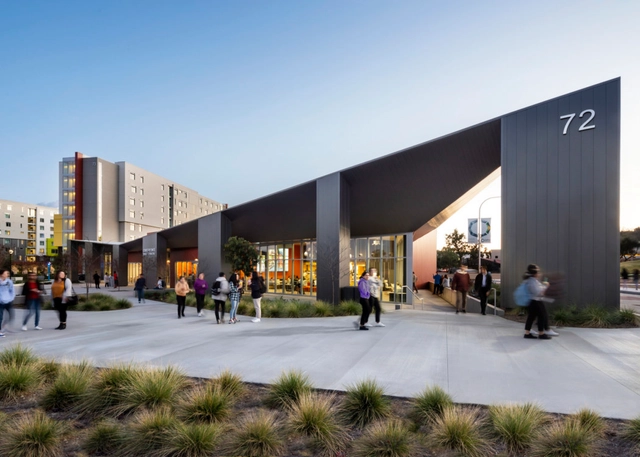
Dining Commons at Cal Poly, designed by EYRC Architects. Student Housing by HMC. Image Courtesy of HMC Architects
Beautiful design is grounded in functional, accessible and healthy environments. For designers Mariné Maroukian, Kristina Singiser, and Adeleh Nejati at HMC Architects, equity and wellness go hand-in-hand. Each of these three women are leaders in their community and in practice, championing new ways to address local needs and create positive impact.
Powerhouse Company has won the competition to transform the Alo-location and neighborhood in Groningen, a city in the Netherlands. They teamed up with Houben/Van Mierlo, Vector-i and landscape architect DELVA to create the proposal. Dubbed HOLT, the project was developed with MWPO, Nijestee and Nijhuis Bouw. The plan for a new green and healthy neighborhood looks to the future of healthy living in the city.
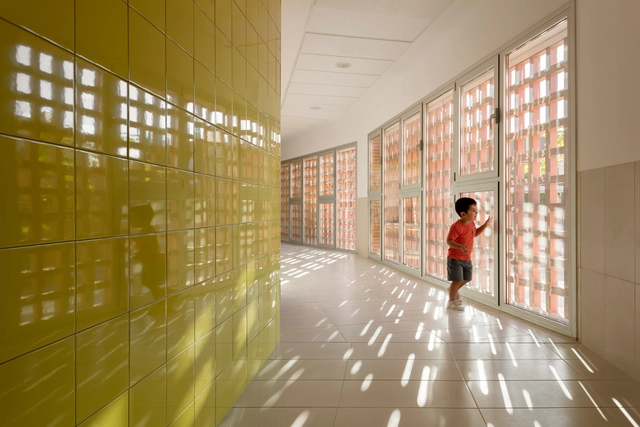
The ongoing pandemic has been a disruption to the everyday routines of billions around the world, as due to being confined to their households, the separation between work and rest has become extremely blurry, with people forced to rethink and reconfigure the layout of their personal spaces. Conversations have abounded on how to create flexible working spaces in a home environment, and if offices themselves are an outdated model that we should leave behind. A missing part of that conversation, however, is the impact that the pandemic has had on children, specifically primary-school level children, on their education - as inequalities are emphasized, some children learning with slow internet connection speeds, or struggling to have the space required to adequately complete educational activities.



















.jpg "Residential houses \"Eigen Haard\", Spaarndammerplantsoen, Amsterdam, Original state, 1915. Image Courtesy of Wikimedia")