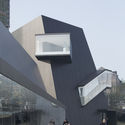
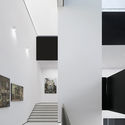
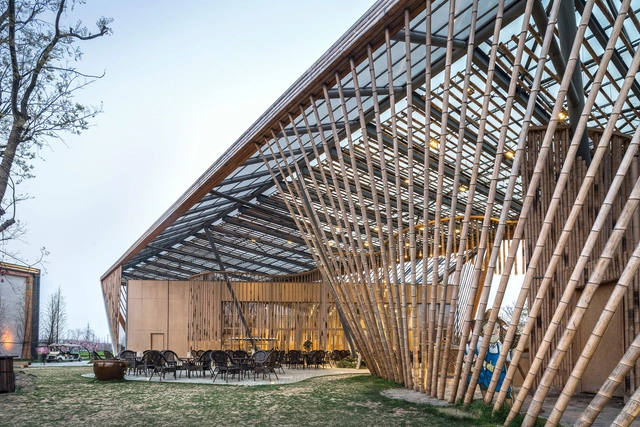
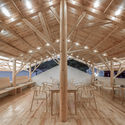
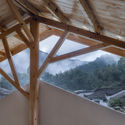
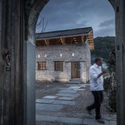
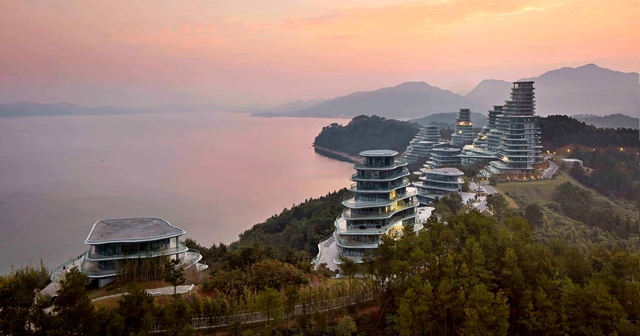
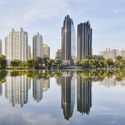
With the unconventional, undulating forms of his buildings—and the fact that his path to architectural success included a stint working for Zaha Hadid—Ma Yansong is often miscategorized as an architect of the latter generation of Deconstructivists, interested only in futuristic forms that push the boundaries of technology for the sake of innovation as an end in itself. But in fact Ma’s designs, especially those in his home country of China, are deeply rooted in nature and tradition, as he explains in the latest interview from Vladimir Belogolovsky’s “City of Ideas” series.
What if your apartment was more than just a place to live? What if it was a catalyst for social interactions? Or what if it removed the everyday tedious tasks of cleaning, paying bills, and buying furnishings? Co-living, a modern form of housing where residents share living spaces, is aiming to do just that.
Co-living is growing in popularity in major cities such as London and New York, where increasing housing prices are forcing residents to look at new and adaptive ways to rent in the city. When we discussed the ambitions and inspirations behind the co-living movement in 2016, it was still a concept that was in its relatively experimental stages. Today, co-living is more focused in its mission, and has found success by pushing people together through a collection of common themes: a yearning for social connection, participation in an increasingly shared economy, and the affordability of a convenient housing solution.
Recently, long-standing architecture critic for the LA Times Christopher Hawthorne announced that he was stepping down to take up the position of chief design officer for the City of Los Angeles in Mayor Eric Garcetti’s administration. According to Hawthorne, the role will involve raising “the quality of public architecture and urban design across the city — and the level of civic conversation about those subjects.” This dramatic shift from the question: what is the role of the critic and architecture criticism in shaping civic architecture?
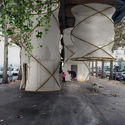
As hundreds of refugees continue to arrive in Paris, France, the city faces an ongoing struggle to find safe and suitable housing for the influx of migrants. As a result, many end up sleeping in underused urban spaces or on the side of the road with almost no access to water, sanitation, and food.
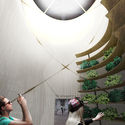
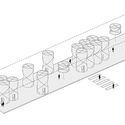
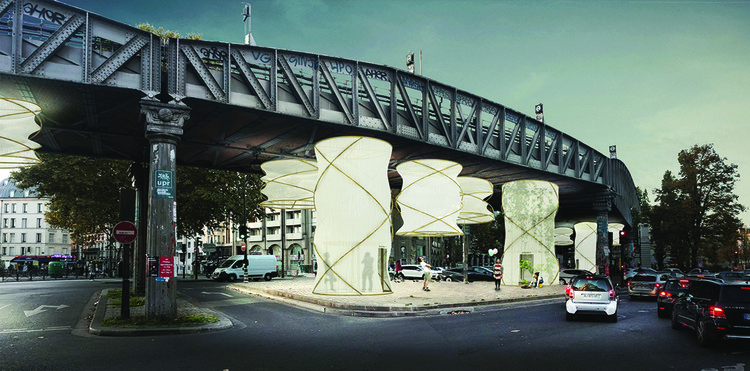
In response, Paris- and Santiago-based firm 1week1project in collaboration with Sophie Picoty unveil their design for a speculative public park titled “Illuminate Paris!” beneath an elevated railway bridge to provide additional support for organizations handling the influx of refugees. This modular “field of experiences” features a series of lantern-like environments forming a canopy along the underside of the bridge that allows for much-need space for migrants who are currently forced to sleep in encampments under similar infrastructure and in parks.
The history of Mexican photography has contributed to highlighting Mexico's presence in the world. Photographers like Elsa Medina, Lola Álvarez Bravo, Graciela Iturbide, Maya Goded, and Juan Rulfo have masterfully portrayed the life of the buildings, houses and the streets of a rapidly built, nineteenth-century Mexico.
As a consequence, the contemporary scene of Mexican photography has become a fundamental tool for architecture and has contributed to a better visual understanding of the works that are erected every day.
Photography and architecture are two disciplines that go hand in hand and whose relationship has been reinforced thanks to the digital tools that we currently have. For that reason, we have compiled the work of contemporary Mexican photographers who record our walk through the world we live in and contribute to constructing the image of contemporary Mexico.
The MAS in Collective Housing is celebrating its 10th anniversary and they want to share their happiness for that achievement. After having 256 alumni from 38 different countries, and 70 international workshops, we are convinced that they are doing something right. The application period for the 2019 edition is already open.
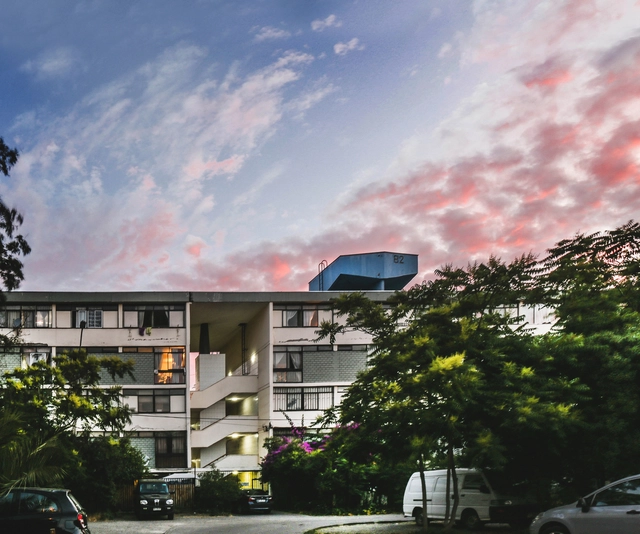
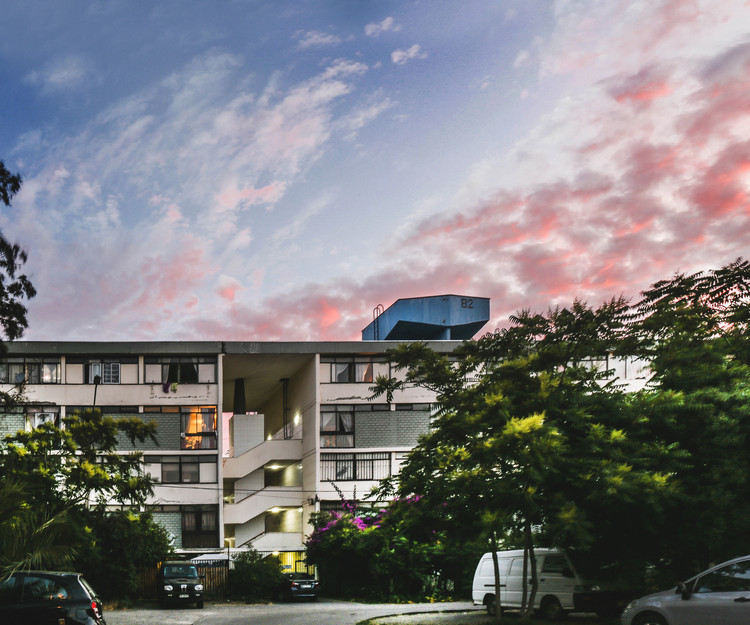
The modern movement was a key player in the cultural construction of Chile in the 20th century. Although the first projects came from the private sector, their urban and landscape principles were adopted by the modernizing project of the welfare state that began to be built after the social conflicts that exploded in the 1920s.
During chile's industrialization process, the State's housing construction incorporated concepts such as liveability, and universal access to housing and sanitation, which were put to the test early on in the reconstruction of cities such as Chillán after the 1939 earthquake. As Chile is a country that is familiar with earthquakes, it was necessary to readjust the concepts of the modern movement to national structural requirements, that is, resizing the reinforced concrete sections, which gave them a heavier visual expression than in Brazil or Argentina.
From the daring vision of Sergio Larraín García-Moreno and Jorge Arteaga in the Oberpaur building - the first of the modern movement - to the urban visions of BVCH in the Villa Portales, or the first exercises in height in the upper middle class sectors, the modern movement has left its mark on our society and in our cities. However, only one of the projects presented here is declared a historical monument.
In this edition of the architectural guides, we present you twenty chronologically ordered projects that reflect the evolution of the modern movement in Santiago, Chile.
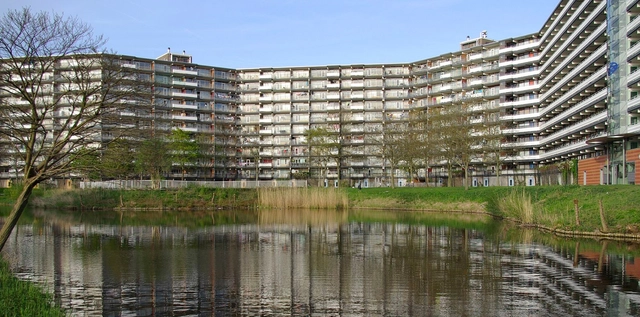
How can we plan a better city? The answer has confounded architects and urban planners since the birth of the industrial city. One attempt at answering came in the form of a spectacular modernist proposal outside of Amsterdam called the Bijlmermeer. And, as a new two-part episode by 99% Invisible reveals, it failed miserably. But, like all histories, the story is not as simple as it first appears.
New York-based Stephen B Jacobs Group has almost completed construction on a pair of towers at 29-26 Northern Boulevard in Long Island City. Dubbed the QE7 for its adjacency to the Q, E, and 7 trains (not to mention its cruise ship-like amenities), the pair of towers will contain 467 units, including 13 floors dedicated to the largest co-living development in North America. What makes this building so unique, however, is how the architects and engineers devised a solution to overcome noise generated by the three neighboring subway lines.
Modern cities, especially New York, are always looking for ways to increase density, which often means building in locations that were once overlooked due to their particular site conditions. We spoke with SBJGroup principal Isaac-Daniel Astrachan to find out how his firm managed to reduce noise levels on this site.
The hyperrealistic representation of architecture is not a new concept due to the ubiquity of tools that offer the possibility of creating perplexing images with photographs. However, those who defend the expressive capacity of hand drawings have found ways to take advantage of the digital tools of the last decades to represent their architectural projects.
A new group of young Mexican architects is committed to a form of representation that relies on tools from our era, simultaneously taking up concepts from the sixties and seventies, where the technique of collage made it possible to face the frustrating reality that took place at the time to represent the utopias thought up by architects.
Everyone knows that becoming an architect translates to a lot of time in front of a computer screen, or on-site or in the model shop—or waiting for renders to finish. But we also know that being a good architect is about much more; truly savvy architects and really thoughtful projects often spring from strong theoretical, philosophical or practical trains of thought (and they are not always directly inspired by architecture itself!).
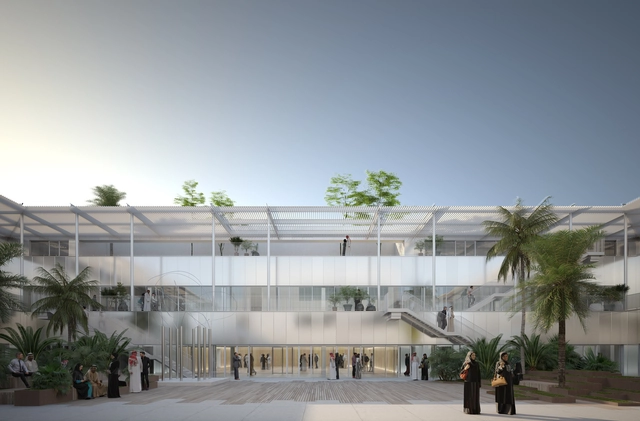
Thanks to Art Jameel, a Middle Eastern non-profit arts organization, a new arts district is taking shape in Jeddah, Saudi Arabia. Since the crowning of Prince Mohammad bin Salman, Saudi Arabia has shifted focus from oil to arts and technology. The new multidisciplinaryart center, named Hayy, is a 17,000 square meter step in the right direction.









.jpg?1500259381 "© Ren Jun, He Zhihan")

.jpg?1500259478 "© Ren Jun, He Zhihan")