1. ArchDaily
  2. Architecture

Architecture: The Latest Architecture and News

Foster + Partners’ BDO Unibank Campus Breaks Ground in Manila, Philippines

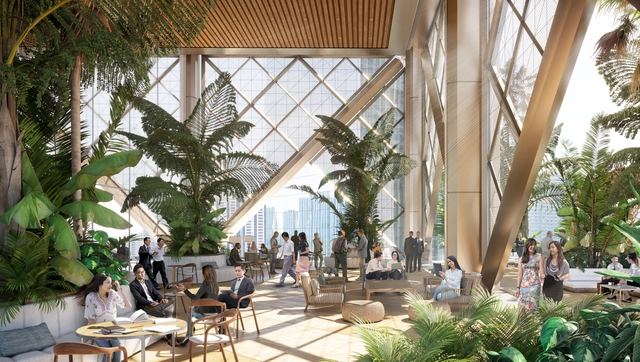
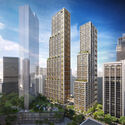
Foster + Partners has announced the breaking ground of BDO Unibank's new headquarters in Makati, Manila. The design aims to offer a climate-responsive approach inspired by vernacular architecture. The campus integrates five separate plots into a cohesive whole, featuring two high-rise towers flanking a sheltered public space incorporating lush landscaping and artwork.

Foster + Partners’ BDO Unibank Campus Breaks Ground in Manila, Philippines - Image 1 of 4Foster + Partners’ BDO Unibank Campus Breaks Ground in Manila, Philippines - Image 2 of 4Foster + Partners’ BDO Unibank Campus Breaks Ground in Manila, Philippines - Image 3 of 4Foster + Partners’ BDO Unibank Campus Breaks Ground in Manila, Philippines - Image 4 of 4Foster + Partners’ BDO Unibank Campus Breaks Ground in Manila, Philippines - More Images

Riyadh Metro Orange Line Now Is Operational, Marking Completion of a Citywide Network in Saudi Arabia

The Royal Commission for Riyadh City (RCRC) has confirmed that the Orange Line of the Riyadh Metro, also known as the Al Madinah Al Munawwarah Axis, began operations on Sunday, January 5, 2025. Spanning 41 kilometers, the Orange Line runs east to west, connecting Jeddah Road in the west to the Second Eastern Ring Road near Khashm Al Aan in the east in Saudi Arabia. This newly operational line is a key component of the city's metro system, designed to enhance urban mobility and connectivity.

Riyadh Metro Orange Line Now Is Operational, Marking Completion of a Citywide Network in Saudi Arabia - Image 1 of 4Riyadh Metro Orange Line Now Is Operational, Marking Completion of a Citywide Network in Saudi Arabia - Image 2 of 4Riyadh Metro Orange Line Now Is Operational, Marking Completion of a Citywide Network in Saudi Arabia - Image 3 of 4Riyadh Metro Orange Line Now Is Operational, Marking Completion of a Citywide Network in Saudi Arabia - Image 4 of 4Riyadh Metro Orange Line Now Is Operational, Marking Completion of a Citywide Network in Saudi Arabia - More Images

Part Infrastructure, Part Landscape, Part Architecture: In Conversation with Marion Weiss and Michael Manfredi

New York architects Marion Weiss and Michael Manfredi founded their studio, Weiss/Manfredi, in 1989 after winning a couple of important competitions—for the Military Women's Memorial at Arlington National Cemetery and Olympia Fields and Community Center near Chicago—both were built in the 1990s. Their most representative built works include the Brooklyn Botanic Garden Visitor Center, Hunter's Point South Waterfront Park, and the Barnard College Diana Center, all in New York City. The architects' Seattle Museum of Art's Olympic Sculpture Park, which won an international competition and was built in 2007, was praised by critics as one of the world's greatest sculpture parks and among the best examples of landscape urbanism.

Part Infrastructure, Part Landscape, Part Architecture: In Conversation with Marion Weiss and Michael Manfredi - Image 1 of 4Part Infrastructure, Part Landscape, Part Architecture: In Conversation with Marion Weiss and Michael Manfredi - Image 2 of 4Part Infrastructure, Part Landscape, Part Architecture: In Conversation with Marion Weiss and Michael Manfredi - Image 3 of 4Part Infrastructure, Part Landscape, Part Architecture: In Conversation with Marion Weiss and Michael Manfredi - Image 4 of 4Part Infrastructure, Part Landscape, Part Architecture: In Conversation with Marion Weiss and Michael Manfredi - More Images+ 12

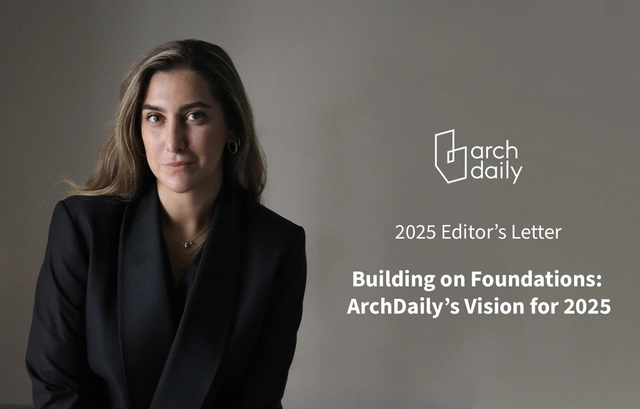
Building on Foundations: ArchDaily’s Vision for 2025

Dear Readers,

It is with immense gratitude and excitement that I share my first letter as Editor-in-Chief. Addressing you directly marks a meaningful shift from our usual approach, and I believe it's the perfect way to begin the year. As I step into this new role, I am honored by the opportunity to lead ArchDaily into a new chapter, building on our strong foundation to reach even greater heights.

At ArchDaily, we have always believed that architecture has the power to transform lives and environments. For 17 years, we have been more than just a platform; we have become a community and a voice for architecture—a collaborative network where architects, designers, and enthusiasts come together to shape the built environment and redefine urban living. Reflecting on this journey, I am deeply inspired by our shared accomplishments, made possible by the dedication of our talented global team and the unwavering support of our users. Together, we have created a space where ideas thrive and innovation blossoms.

New York City Implements Traffic Congestion Pricing, the First in the US

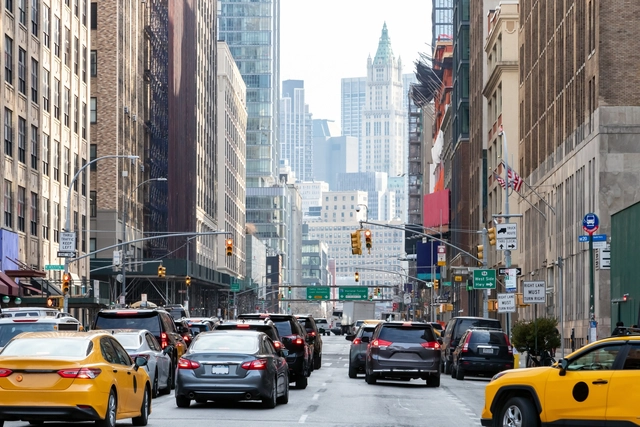
New York City has implemented the first congestion pricing scheme in the US, charging drivers up to $9 per day to enter a designated zone south of Central Park, encompassing areas like Times Square and Wall Street. The initiative aims to alleviate chronic traffic congestion, improve air quality, and generate revenue for public transportation improvements, addressing New York City's ranking as the world's most congested urban area for two consecutive years. The plan went into effect Sunday, January 5th, 2025.

New York City Implements Traffic Congestion Pricing, the First in the US - Image 1 of 4New York City Implements Traffic Congestion Pricing, the First in the US - Image 2 of 4New York City Implements Traffic Congestion Pricing, the First in the US - Image 3 of 4New York City Implements Traffic Congestion Pricing, the First in the US - Image 4 of 4New York City Implements Traffic Congestion Pricing, the First in the US - More Images

Cross Works Unveils Masterplan for New Tashkent Expansion in Uzbekistan

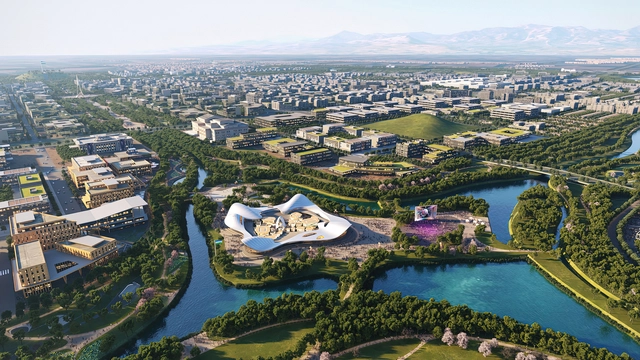
Cross Works just unveiled the plans for New Tashkent, a large-scale expansion of Uzbekistan's capital, Tashkent. The project covers 25,000 hectares to the east of the existing city, located between the Chirchiq and Karasu Rivers. Designed to accommodate an estimated 2.5 million people in the coming decades, the development aims to address population growth in a sustainable manner. The initiative follows an international design competition held in early 2023, which was won by London-based design and technology firm Cross Works. Following their selection, the firm has taken the lead on masterplanning, digital twin development, and coordination of a multidisciplinary team.

Cross Works Unveils Masterplan for New Tashkent Expansion in Uzbekistan - Image 1 of 4Cross Works Unveils Masterplan for New Tashkent Expansion in Uzbekistan - Image 2 of 4Cross Works Unveils Masterplan for New Tashkent Expansion in Uzbekistan - Image 3 of 4Cross Works Unveils Masterplan for New Tashkent Expansion in Uzbekistan - Image 4 of 4Cross Works Unveils Masterplan for New Tashkent Expansion in Uzbekistan - More Images+ 11

Heritage in Syria: Independent Groups Documenting the Country’s Historic Architecture

Subscriber Access | 

It is common for states to have legislation and institutions that protect their built heritage. It is also common for there to be gaps in the laws themselves or their implementation while certain circumstances may place a country's heritage under specific vulnerabilities. Thus, alongside state institutions, there are locally based architects and researchers establishing independent initiatives to document and conserve aspects of their built heritage. Syria is one example of a place with an extensive history of monuments and buildings of interest as well as active groups of independent conservators.

Heritage in Syria: Independent Groups Documenting the Country’s Historic Architecture - Image 3 of 4Heritage in Syria: Independent Groups Documenting the Country’s Historic Architecture - Image 1 of 4Heritage in Syria: Independent Groups Documenting the Country’s Historic Architecture - Image 11 of 4Heritage in Syria: Independent Groups Documenting the Country’s Historic Architecture - Image 5 of 4Heritage in Syria: Independent Groups Documenting the Country’s Historic Architecture - More Images+ 9

The Role of Digital Technologies in Modern Construction: Insights into BAU 2025

 | Sponsored Content

The use of innovative tools, techniques, materials, and technologies to shape the future of construction is a subject that captivates professionals across architecture, engineering, construction, and planning, as well as investors and industry leaders. Advances in technology and breakthroughs in material science provide a rich landscape for exploration and discussion, sparking lively debates on the ongoing transformations in both urban and rural environments. Key areas of focus include resource management, the challenges posed by the climate crisis, and the broader implications for the built environment.

Detroit’s Renaissance Center to Be Reimagined as a Mixed-Use Waterfront Destination in United States

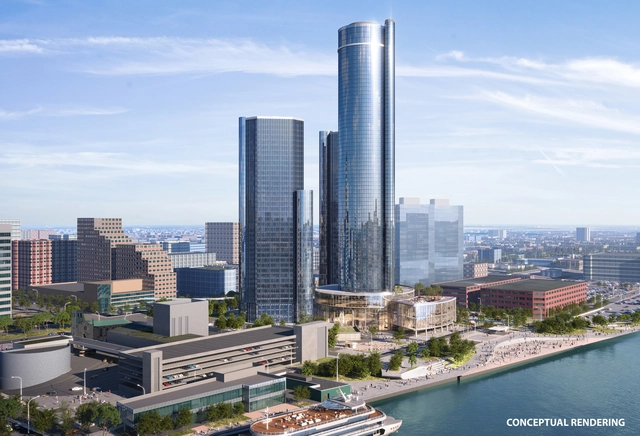
General Motors and Bedrock have unveiled a bold $1.6 billion proposal to reimagine Detroit's iconic Renaissance Center and 27 surrounding acres along the Detroit riverfront. The plan aims to transform the 1970s landmark into a dynamic mixed-use complex focused on housing, offices, and entertainment while preserving the essence of Detroit's skyline. The redevelopment includes the demolition of two 39-story towers in the five-skyscraper complex, freeing up valuable riverfront space for redevelopment while preserving the city's skyline.

Detroit’s Renaissance Center to Be Reimagined as a Mixed-Use Waterfront Destination in United States - Image 1 of 4Detroit’s Renaissance Center to Be Reimagined as a Mixed-Use Waterfront Destination in United States - Image 2 of 4Detroit’s Renaissance Center to Be Reimagined as a Mixed-Use Waterfront Destination in United States - Image 3 of 4Detroit’s Renaissance Center to Be Reimagined as a Mixed-Use Waterfront Destination in United States - Image 4 of 4Detroit’s Renaissance Center to Be Reimagined as a Mixed-Use Waterfront Destination in United States - More Images

The 'Siestario' Project Representing Argentina at the 2025 Venice Architecture Biennale

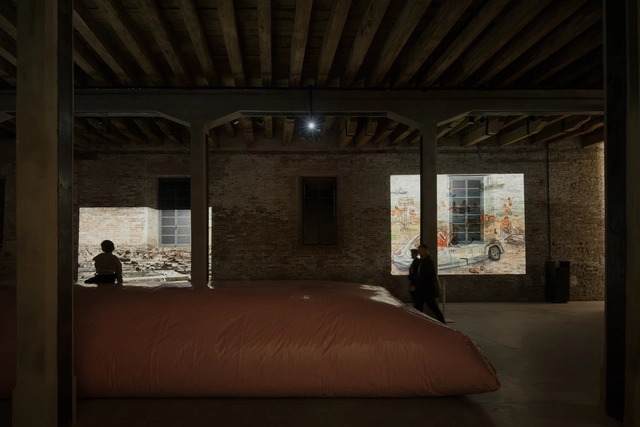
The Argentinian Pavilion at 19th Venice Architecture Biennale 2025 showcases 'Siestario,' the winning project by architects Juan Manuel Pachué and Marco Zampieron, with Brian Ejsmont as a collaborator. Both architects, graduates of the Faculty of Architecture, Planning, and Design at the National University of Rosario, are also co-founders of Cooperativa, a space dedicated to organizing architecture competitions. Currently, Pachué and Zampieron practice professionally and teach in the city of Rosario, Argentina.

The 'Siestario' Project Representing Argentina at the 2025 Venice Architecture Biennale - Image 1 of 4The 'Siestario' Project Representing Argentina at the 2025 Venice Architecture Biennale - Image 2 of 4The 'Siestario' Project Representing Argentina at the 2025 Venice Architecture Biennale - Image 3 of 4The 'Siestario' Project Representing Argentina at the 2025 Venice Architecture Biennale - Featured ImageThe 'Siestario' Project Representing Argentina at the 2025 Venice Architecture Biennale - More Images+ 12

An Urban Living Machine for the Common Good: Municipal Services Buildings in Hong Kong

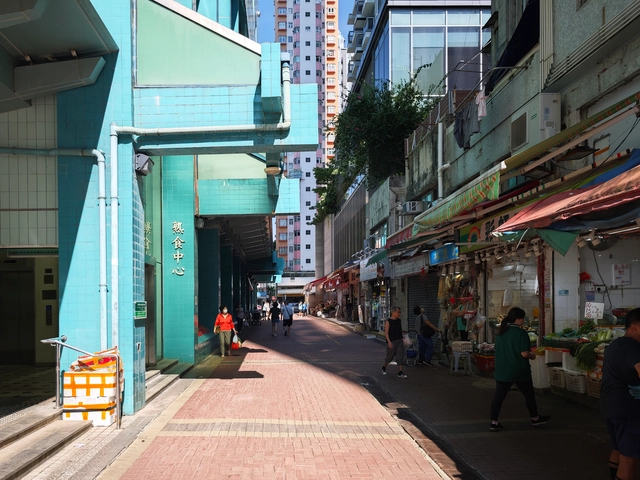
In Delirious New York, Rem Koolhaas vividly discusses the Downtown Athletic Club, a striking example of how an unassuming building exterior can conceal a vibrant mix of distinct, self-contained programs. Inside the uniform facade of this skyscraper, a private athletic club hosts an eclectic range of facilities—boxing gyms next to oyster bars and interior golf ranges below swimming pools—all segregated yet highly accessible. The Downtown Athletic Club epitomized the dynamism of New York's skyscrapers at the time, showcasing the thrill of capitalism through a selective, inward-focused world of leisure and privilege for the selected. This "machine of programs" operated independently of the external city as an isolated ecosystem within its walls. Yet, one might ask: could a similar model, designed for public use, create a more inclusive, lively community and neighborhood experience? This will activate the building within, instead of only serving the selected elites, and influence and transform the urban fabric and shapes around the building. In Hong Kong, a distant parallel can be drawn with the Municipal Services Buildings (MSBs)—publicly-funded structures that serve the community by integrating diverse functions within a singular vast building mass, much like the Downtown Athletic Club.

An Urban Living Machine for the Common Good: Municipal Services Buildings in Hong Kong - Image 1 of 4An Urban Living Machine for the Common Good: Municipal Services Buildings in Hong Kong - Image 2 of 4An Urban Living Machine for the Common Good: Municipal Services Buildings in Hong Kong - Image 3 of 4An Urban Living Machine for the Common Good: Municipal Services Buildings in Hong Kong - Image 4 of 4An Urban Living Machine for the Common Good: Municipal Services Buildings in Hong Kong - More Images+ 15

Transforming Sacred Spaces: 17 Adaptive Reuse Projects Revitalizing Churches

Subscriber Access | 

The architectural practice of reusing and refurbishing should be the first consideration when designing and reshaping our already overbuilt cities. Good architecture prioritizes this approach over demolition, as it can reduce costs, enhance environmental efficiency, and preserve functional structures that can continue serving their purpose for years.

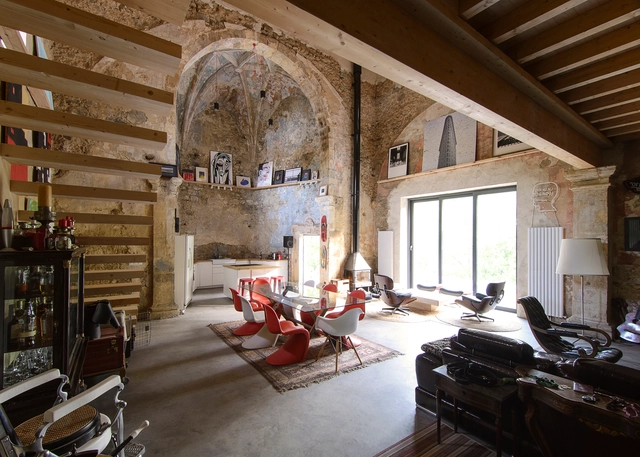
Transforming Sacred Spaces: 17 Adaptive Reuse Projects Revitalizing Churches - Image 1 of 4Transforming Sacred Spaces: 17 Adaptive Reuse Projects Revitalizing Churches - Image 15 of 4Transforming Sacred Spaces: 17 Adaptive Reuse Projects Revitalizing Churches - Image 20 of 4Transforming Sacred Spaces: 17 Adaptive Reuse Projects Revitalizing Churches - Image 4 of 4Transforming Sacred Spaces: 17 Adaptive Reuse Projects Revitalizing Churches - More Images+ 21

The 50 Best Latin American Houses of 2024

Annually, ArchDaily's curatorial team undertakes a rigorous selection process to identify exemplary projects in Latin American residential architecture. The goal is to share these works of architecture with our audience and highlight and promote good practices within contemporary architecture. This meticulous effort focuses on identifying projects that stand out for their design and their positive impact on the environment, innovative use of materials and techniques, and ability to address current needs.

The 50 Best Latin American Houses of 2024 - Image 5 of 4The 50 Best Latin American Houses of 2024 - Image 9 of 4The 50 Best Latin American Houses of 2024 - Image 10 of 4The 50 Best Latin American Houses of 2024 - Image 8 of 4The 50 Best Latin American Houses of 2024 - More Images+ 54

The Museum of Emotions: How Buildner’s Winners Bring Feelings to Life

 | Sponsored Content

Buildner has announced the results of its Museum of Emotions Competition Edition 5. The Museum of Emotions is an annual international design competition that tasks participants with exploring the extent to which architecture can be used as a tool to evoke emotion.

Alvar Aalto's Finlandia Hall Reopens in Helsinki After Extensive Renovations Led by Arkkitehdit NRT

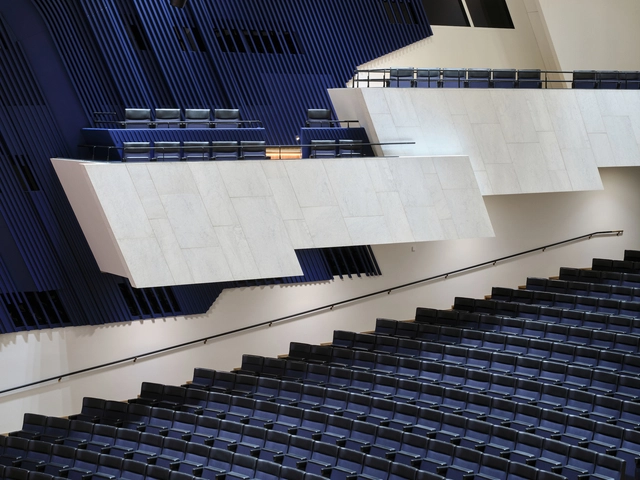
Originally designed by Modernist architect and designer Alvar Aalto in 1971, Finlandia Hall represents one of Helsinki's most important modernist works of architecture. In early 2022, an extensive renovation project began, led by Finnish architecture firm Arkkitehdit NRT, aiming to make the venue more accessible to the wider public and create additional services while respecting Alvar Aalto's original design. After three years of renovation, Finlandia Hall officially reopens on Saturday, 4 January 2025.

Alvar Aalto's Finlandia Hall Reopens in Helsinki After Extensive Renovations Led by Arkkitehdit NRT - Image 1 of 4Alvar Aalto's Finlandia Hall Reopens in Helsinki After Extensive Renovations Led by Arkkitehdit NRT - Image 2 of 4Alvar Aalto's Finlandia Hall Reopens in Helsinki After Extensive Renovations Led by Arkkitehdit NRT - Image 3 of 4Alvar Aalto's Finlandia Hall Reopens in Helsinki After Extensive Renovations Led by Arkkitehdit NRT - Image 4 of 4Alvar Aalto's Finlandia Hall Reopens in Helsinki After Extensive Renovations Led by Arkkitehdit NRT - More Images+ 1

BBC Names Lesley Lokko Among 100 Most Influential Women of 2024

Lesley Lokko, a Ghanaian-Scottish academic, writer, and curator, has been named one of the BBC's 100 most influential women of 2024. The prestigious list highlights women from around the globe who are recognized for their resilience and their contributions toward driving change in their respective fields. Lokko's inclusion reflects her groundbreaking work in architectural education, her commitment to diversity and inclusion, and her focus on addressing global challenges like decolonization and decarbonization.

BBC Names Lesley Lokko Among 100 Most Influential Women of 2024 - Image 1 of 4BBC Names Lesley Lokko Among 100 Most Influential Women of 2024 - Image 2 of 4BBC Names Lesley Lokko Among 100 Most Influential Women of 2024 - Image 3 of 4BBC Names Lesley Lokko Among 100 Most Influential Women of 2024 - Image 4 of 4BBC Names Lesley Lokko Among 100 Most Influential Women of 2024 - More Images+ 1

From Patina to Purpose: 15 Projects that Explore Corten Steel as a Design Element

Subscriber Access | 

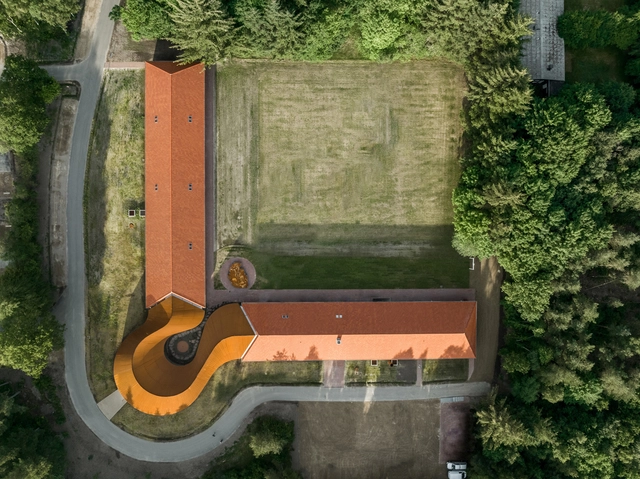
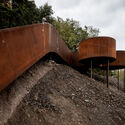
In architectural design, materials convey narratives, shaping how spaces are perceived and experienced. Weathering steel, often known by its genericized trademark name, Corten steel, stands out for its ability to evolve, transforming into a medium that tells its own story. It represents a group of steel alloys that form a stable external layer of rust that replaces the need for paint to protect the steel while allowing it to develop in time. Its weathered patina serves as more than a functional shield; it becomes an aesthetic language, a testament to the interplay between architecture and nature. This ever-changing surface bridges the ephemeral and the enduring, offering architects a material that grows richer with age.

From Patina to Purpose: 15 Projects that Explore Corten Steel as a Design Element - Image 1 of 4From Patina to Purpose: 15 Projects that Explore Corten Steel as a Design Element - Image 4 of 4From Patina to Purpose: 15 Projects that Explore Corten Steel as a Design Element - Image 2 of 4From Patina to Purpose: 15 Projects that Explore Corten Steel as a Design Element - Image 3 of 4From Patina to Purpose: 15 Projects that Explore Corten Steel as a Design Element - More Images+ 13

What is Low-Tech Architecture: Comparing Shigeru Ban and Yasmeen Lari's Approaches

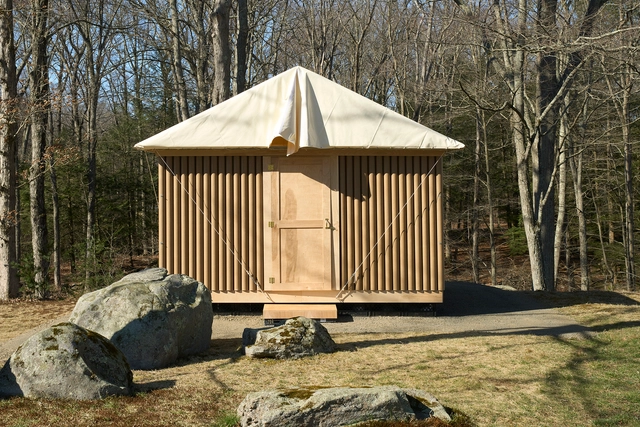
The concept of low-tech architecture recognizes the impact of carbon-intensive technologies and building practices and proposes an alternative: a rediscovery of practical, rational, locally adapted solutions that count on smart design strategies instead of energy-intensive devices to ensure a safe, comfortable living environment. Far from being a regressive approach, the term remains open to innovations but seeks to rebalance the industry's reliance on mechanization. It thus favors an architecture of fewer components, minimized dependence on high-tech solutions, and a preference for low-embodied carbon materials.


What is Low-Tech Architecture: Comparing Shigeru Ban and Yasmeen Lari's Approaches - Image 1 of 4What is Low-Tech Architecture: Comparing Shigeru Ban and Yasmeen Lari's Approaches - Image 2 of 4What is Low-Tech Architecture: Comparing Shigeru Ban and Yasmeen Lari's Approaches - Image 3 of 4What is Low-Tech Architecture: Comparing Shigeru Ban and Yasmeen Lari's Approaches - Image 4 of 4What is Low-Tech Architecture: Comparing Shigeru Ban and Yasmeen Lari's Approaches - More Images+ 15