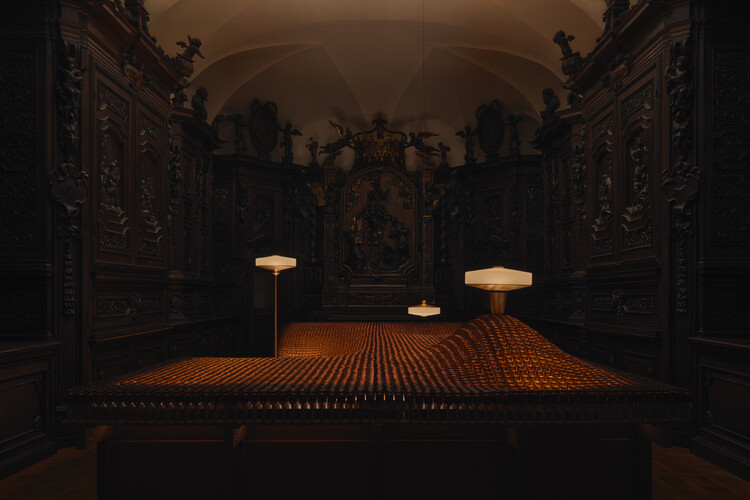
Each spring, Milan Design Week 2026 transforms the city into a distributed platform for design culture, where prototypes, product launches, and research-driven explorations coexist across multiple scales, including a growing presence of architect-designed objects. Held from April 20 to 26, the 2026 edition once again centered around the 64th Salone del Mobile.Milano at Fiera Milano, complemented by a network of independent venues and exhibitions throughout the city, an expanded landscape that is further reflected in ArchDaily's accompanying selection of installations and exhibitions from this year's program.
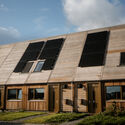
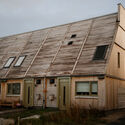
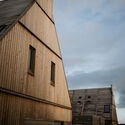
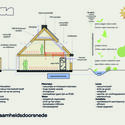
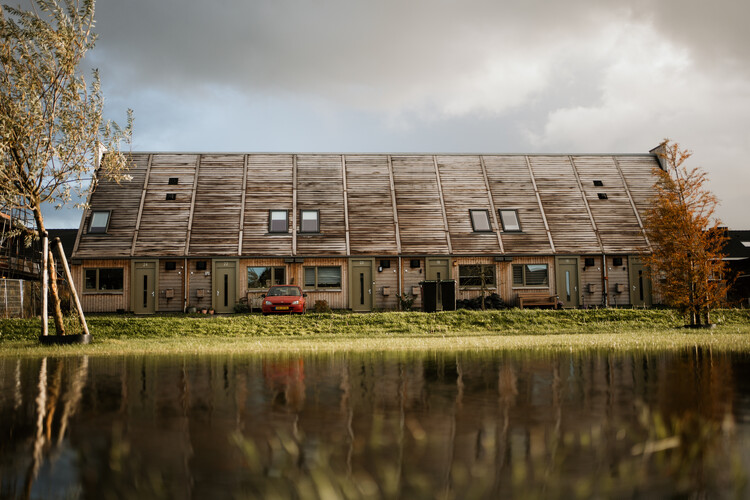
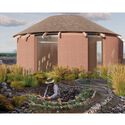
Netherlands-based, nature-inspired architecture practice ORGA has completed the design of a carbon-negative neighborhood in Marknesse, a village in the Dutch province of Flevoland. The project comprises 12 affordable rental homes built with a high percentage of biobased materials. Its main objective is to develop scalable housing solutions that minimize CO₂ emissions and reduce reliance on fossil resources. The design reinterprets the traditional Dutch brick house, known as the "Delft Red" typology, characterized by red brick facades and orange-red roof tiles, while introducing wooden chimneys that double as habitats for bats. Commissioned by housing association Mercatus, the prototype was built in the first half of 2025 and is intended for first-time buyers and low-income households.
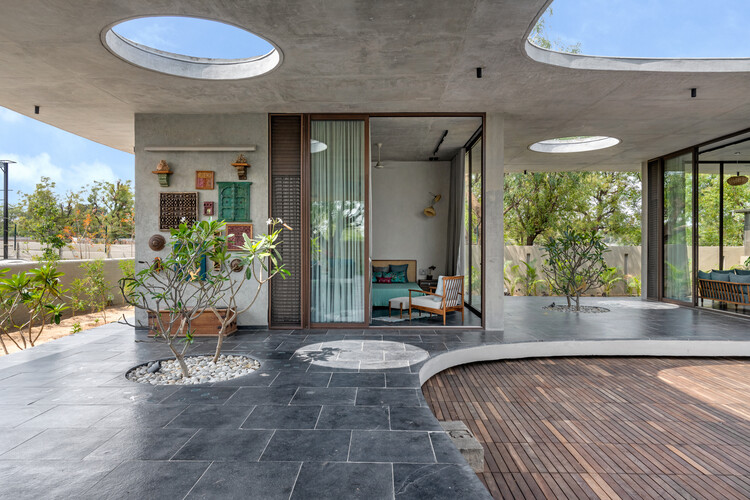
The image is familiar, a façade layered with brise-soleil, light softened into a patterned shadow, interiors kept cool without machines. It appears as intelligence made visible, architecture that understands the sun. This image is rarely examined closely. The same devices that temper heat also organize access, distribute comfort, and depend on particular forms of labor. What looks like a climatic response is also a decision about who gets relief from heat, and how. Tropical modernism, often reduced to a visual language of shade and porosity, emerges instead as a set of situated practices where climate, labor, and power are negotiated differently across contexts.
At the scale of the element, tropical modernism begins as a technical problem. In hot climates, solar radiation is not incidental but constant, requiring buildings to mediate light, heat, and air before they reach the interior. Architects like Maxwell Fry and Jane Drew approached this with a level of precision that resists any reading of these elements as decorative. Shading devices are calibrated according to solar angles, orientation, and seasonal variation. Brise-soleil are dimensioned to block high-angle sun while admitting diffuse light; overhangs extend just enough to prevent direct gain at peak hours; openings are aligned to encourage cross-ventilation. Mid-century research further tested these strategies, measuring temperature reductions and airflow improvements. In this sense, the language of tropical modernism is not symbolic. It is performative: each projection, void, and screen is part of an environmental system.
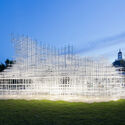
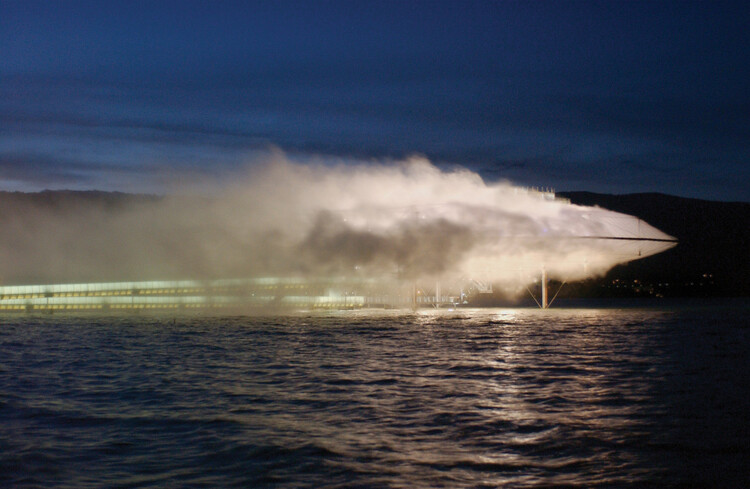
Blur Building, Lake Neuchatel, Yverdon-les-Bains, Switzerland, 2002. Image Courtesy of Diller Scofidio + Renfro
Architecture is traditionally chronicled through the persistence of the solid. We define the discipline by the weight of the lintel, the mass of the pier, and the resistance of the wall. Even when lightness is invoked, it is usually understood as a subtractive act, the thinning of a section or the precarious reduction of a load. Yet there is a parallel history, less visible and harder to isolate, in which the primary material of construction is not what occupies space, but what moves through it.
To treat air as a medium is to move past the binary of the envelope. The boundary between the interior and the world ceases to be a line of absolute separation and becomes, instead, a site of filtration and pressure. We begin to see the building as a thermal valve, a series of gradients where moisture, velocity, and heat are not merely background "conditions" to be mitigated by mechanical systems, but are the very substances being shaped.
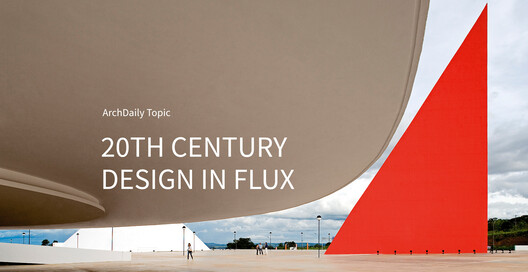
"The story of architecture is not wrong," argued Lesley Lokko in her introduction to the Venice Architecture Biennale 2023, "but it is incomplete." For most of the 20th century, architectural history spoke in one tongue: a singular, dominant narrative centered on a handful of movements, names, and cities, whose reach and influence appeared universal precisely because alternative voices were rendered inaudible. Design movements, however, rarely traveled intact across borders. They were frequently absorbed, resisted, reinterpreted, and transformed depending on geography, politics, economy, climate, and available materials. What arrived in one place as doctrine became, somewhere else, something entirely different.
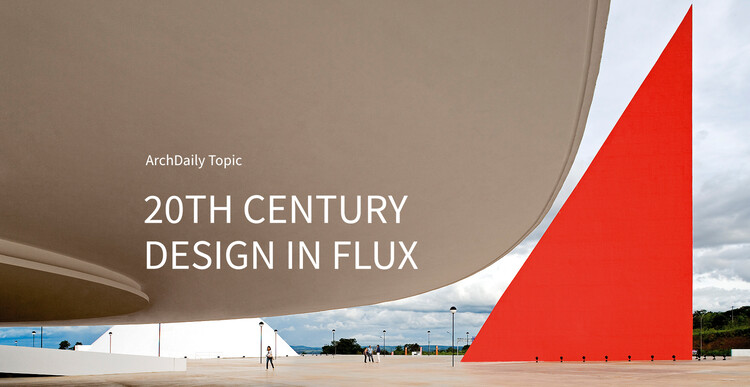
This month, ArchDaily explores 20th Century Design in Flux: A Global Reinterpretation of Architectural History, a topic that traces the century's design languages not as a single canon but as a constellation of evolving, intersecting, and continually reinvented trajectories. The theme challenges the assumption that regional and non-Western architectures were merely derivative — positioning them instead as sites of active reinterpretation, where global ideas were filtered through local materials, climates, labor, and cultural practices to produce something entirely distinct.
Each year, the ArchDaily Next Practices Awards highlights emerging studios that are expanding the scope of architecture through new methods, materials, and ways of working. Selected from a global pool, these practices reflect a shift away from singular definitions of the discipline, engaging instead with broader questions of construction, environment, and social impact. Rather than operating within fixed categories, many of these studios position themselves across fields, combining design, research, and production to respond to contemporary conditions.
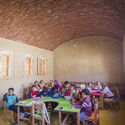
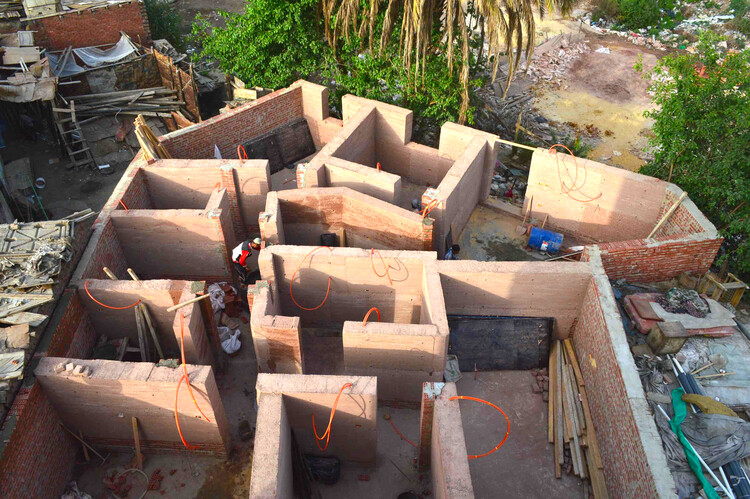
Named one of the winners of the 2025 edition, Hand Over is a Cairo-based practice operating across design, construction, and research. Founded by Radwa Rostom, a civil engineer with over fifteen years of experience in development and sustainability, the studio works through an integrated design-build model, engaging with earth construction, local materials, and community-based processes.
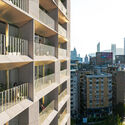
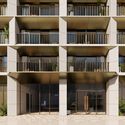
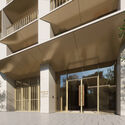
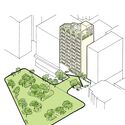
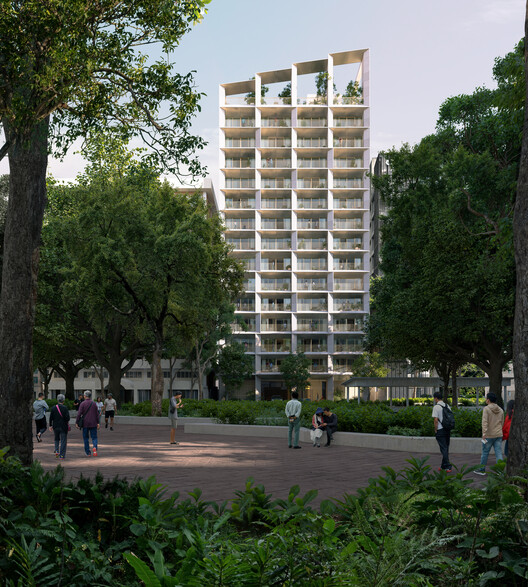
Henning Larsen, in collaboration with KHL Architects & Planners, Arup, and Flaviano Capriotti Architetti, has proposed the design for a 14-story residential building in Taipei for Continental Development Corporation. The project, titled Northern Lights, has a gross floor area of 3,464 square meters and is scheduled for completion in 2029. Situated adjacent to Daan Park, the development includes 46 residences and is positioned within a dense urban environment while maintaining proximity to one of the city's primary green spaces, which is described as a key contextual reference in the design.
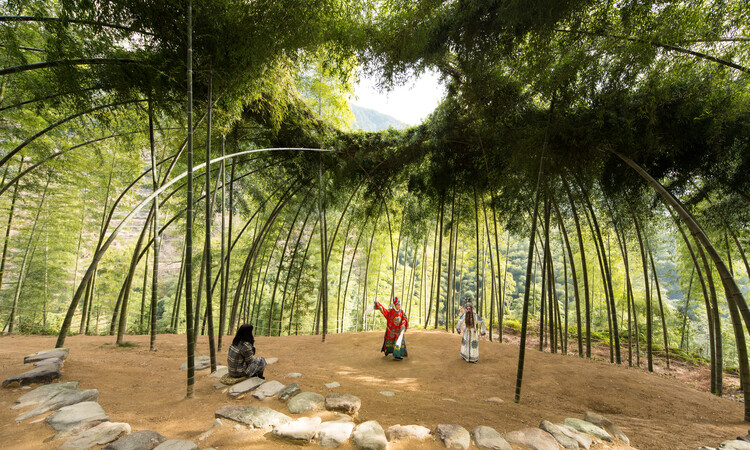
Xu Tiantian is the founding principal of DnA_Design and Architecture, an interdisciplinary practice that addresses both the physical and social dimensions of the contemporary living environment, across scales. Born in 1975 in Fujian, China, she received a Master of Architecture in Urban Design from the Harvard Graduate School of Design and a bachelor's degree in architecture from Tsinghua University in Beijing. Her recent work focuses on rural revitalization through a strategy she describes as "architectural acupuncture," understood as small-scale, site-specific interventions designed to activate local culture, agriculture, and tourism. These interventions, primarily concentrated in China's rural regions, have been recognized by UN-Habitat as a global model for urban–rural integration. In this interview with Louisiana Channel, she reflects on the role of the architect, questions architecture itself and the concept of beauty, explains her working methodology, and emphasizes the spatial dimension of nature.
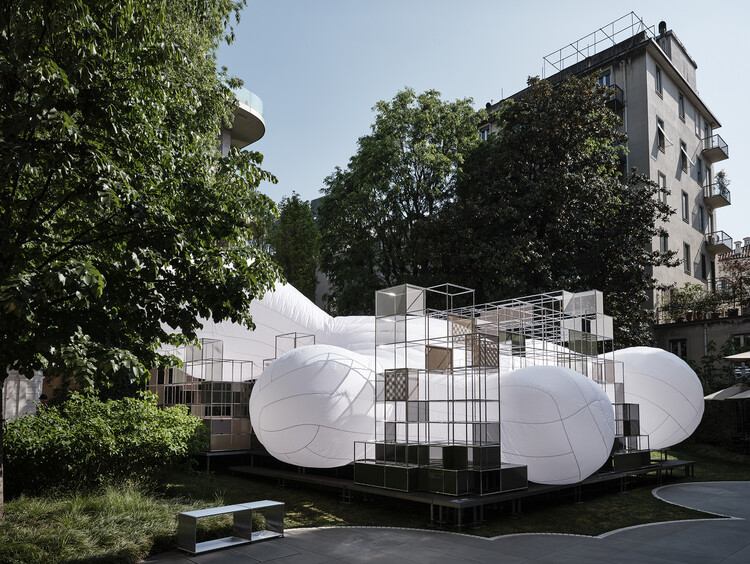
Renaissance of the Real by Annabelle Schneider and Snøhetta, Milan Design Week 2026. Image Courtesy of USM
Across cultural platforms, heritage sites, and institutional developments, this week's news reflects how the built environment is reshaped through processes of transformation, reinterpretation, and public engagement. From archaeological reactivations and adaptive reuse strategies to museum expansions and large-scale international gatherings, architecture operates across multiple temporalities, balancing preservation with contemporary use and spatial continuity with evolving cultural programs. Within this context, ArchDaily's selection of installations and exhibitions from Milan Design Week 2026 highlights how design weeks increasingly function as curatorial frameworks for experimentation, while global events and institutional projects continue to expand the formats through which architecture is produced, shared, and debated.
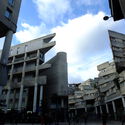
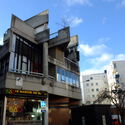
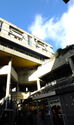
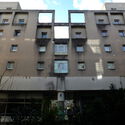
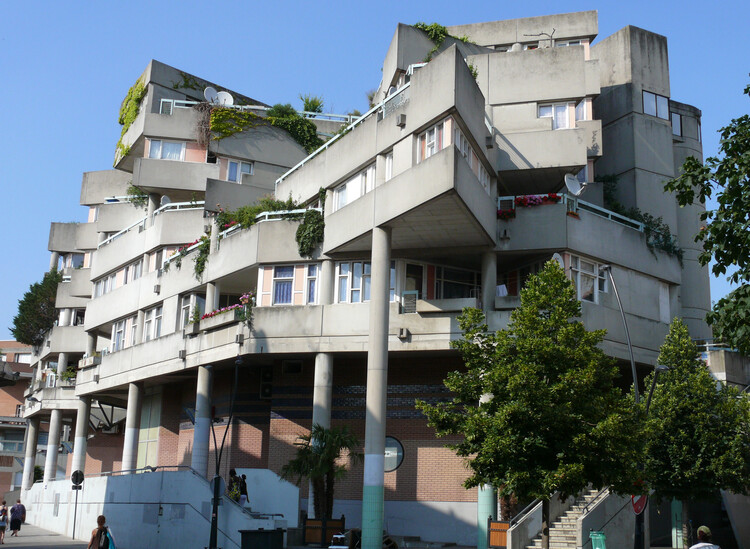
Saint-Denis is a commune in the northern suburbs of Paris, France, known for the Gothic Basilica of Saint-Denis and the Stade de France. At one corner of Place Jean-Jaurès in its historic center, adjacent to the Basilica, stands the Îlot 8 housing complex, a Brutalist landmark designed by architect Renée Gailhoustet. Built between 1975 and 1986 to provide workers' housing in the city center, countering the trend of relegating social housing to peripheral areas, the project is now at the center of a controversial redevelopment plan. Often referred to as "residentialization" and restructuring, the proposal involves the demolition of significant parts of its original design. This reconversion is part of the French Nouveau Programme National de Renouvellement Urbain (NPNRU) and is justified by concerns over structural deficiencies, safety, and maintenance.
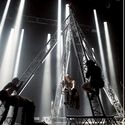
Daryan Knoblauch's work sits at the intersection of architecture and live cultural production, with a focus on how space is made legible through tension and atmosphere. Rather than treating temporary work as a lesser category of architecture, Knoblauch approaches installations, stages, and event architectures as full disciplinary problems—where enclosure, stability, light, and movement must be resolved with the same seriousness as any building, often under tighter constraints and faster timelines.
Across projects, a consistent thread is the productive tension between high-modern precision and an intentionally raw clarity of assembly. Membranes and lightweight systems are not deployed as surface effects, but as structural and spatial instruments—tuned to wind, load, and occupation, and calibrated to produce a sublimity that is felt as much as it is seen. Here, ephemerality is not simply a duration, but a design condition: temporality makes forces—weather, wear, performance—more visible, and demands an ethic of making that is both exacting and adaptable.
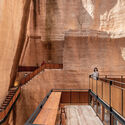
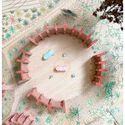
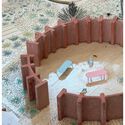
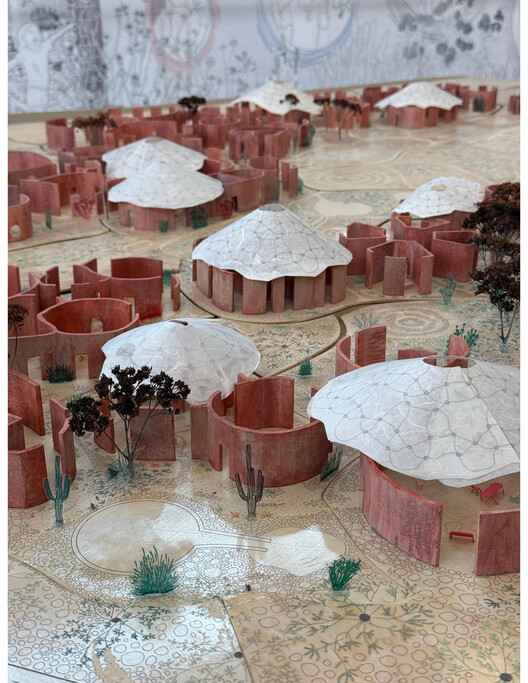
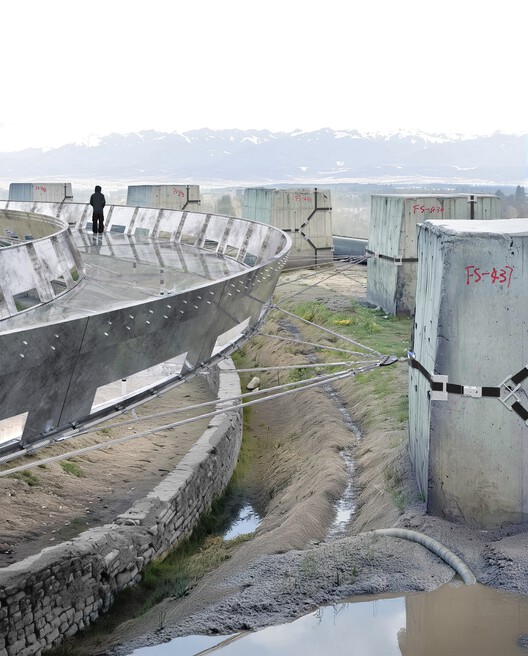
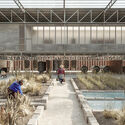
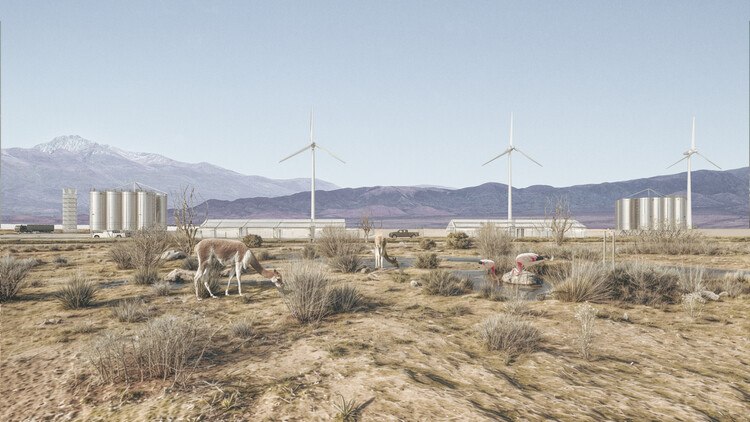
Remediation areas. Image Courtesy of Ezequiel Lopez, Maria Victoria Echegaray, and Agustina Durandez
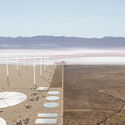
When people think of Argentina, they often picture landmarks like the Obelisk of Buenos Aires. Yet the country spans over 2,780,400 km², making it one of the largest in South America and home to a wide range of landscapes and realities that frequently go unnoticed. In fact, the province of Jujuy in northern Argentina lies within the Lithium Triangle: a high-altitude region shared with Bolivia and Chile that contains roughly 54% of the world's lithium reserves. Within this territory sits the Olaroz Salt Flat, a site where today two competing dynamics converge: the expansion of industrial lithium extraction and the preservation of ancestral culture and lands inhabited by Kolla and Atacama communities, creating a clash of high-capacity industrial extraction and traditional, low-impact agrarian practices.
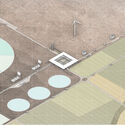
In light of this problem, one of the winning teams of the ArchDaily Student Project Awards, made up of Ezequiel Lopez, Maria Victoria Echegaray, and Agustina Durandez, decided to look into the issue. This was done as part of their thesis project for the Bachelor's in Architecture program at the National University of Córdoba. Their work stems from an interest in engaging with territories that remain peripheral to architectural discourse, using the thesis as an opportunity for sustained, in-depth research. This allowed them to formulate informed design responses grounded in both territorial and socio-economic realities. Rejecting the binary between extraction and preservation, the project approaches the territory as a system where both can coexist through spatial and technical mediation.
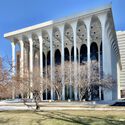
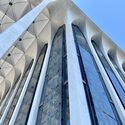
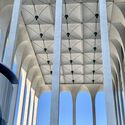
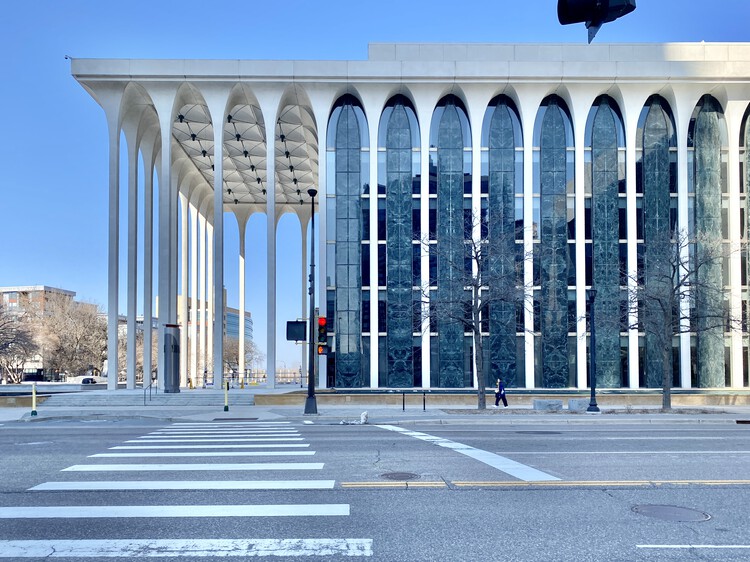
A building designed by Minoru Yamasaki in downtown Minneapolis is set to be converted into a hotel, marking a new phase in the life of the former headquarters of the Northwestern National Life Insurance Company, one of the architect's lesser-known yet formally distinctive works. Vacant since 2023, the building at 20 Washington Avenue South is now the subject of an adaptive reuse proposal that aims to introduce hospitality and public-facing functions. Initial plans were presented in April 2026, outlining a transformation of the structure while retaining its defining architectural features. The project is expected to move forward pending approvals, with a projected opening targeted for 2028.
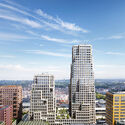
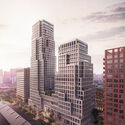
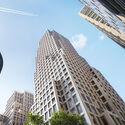
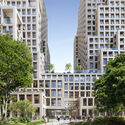
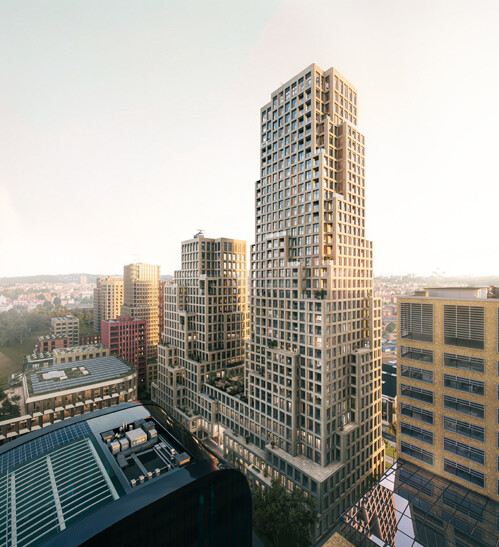
Rotterdam-based firm MVRDV has announced a new milestone in the development of its Tour & Taxis Towers, a mixed-use project in Brussels, Belgium. The design was commissioned by real estate investor and developer Nextensa in 2021, within the framework of a site-specific land use masterplan also designed by MVRDV. The two-tower project combines offices, housing, and public amenities across 58,000 m², forming a landmark in the neighbourhood and reaching 126 metres at its highest point. Recently granted construction permission, the project is designed to reduce embodied carbon through the use of a hybrid structure and lightweight façade elements, aiming to minimize the use of concrete in both the structure and foundations. From the early stages, the firm has employed its CarbonSpace software to guide these decisions.
In Six Memos for the Next Millennium, Italo Calvino explores lightness from a literary perspective and argues, "Opposed to lightness is weight. Removing weight produces lightness; it is a value, not a defect." Drawing on Greek mythology, he reflects on one of Perseus's feats after severing the head of the terrible Gorgon Medusa without being turned to stone. Assisted by the gods Hades, Hermes, and Athena, Perseus flies with his winged sandals and uses a bronze shield as a mirror to reflect her image. Relying, like many architects, on what is lightest—the wind and the clouds—he also fixes his gaze on what is revealed through indirect vision: an image reflected in a mirror.
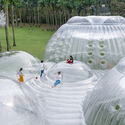
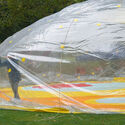
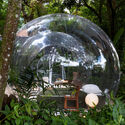
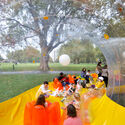
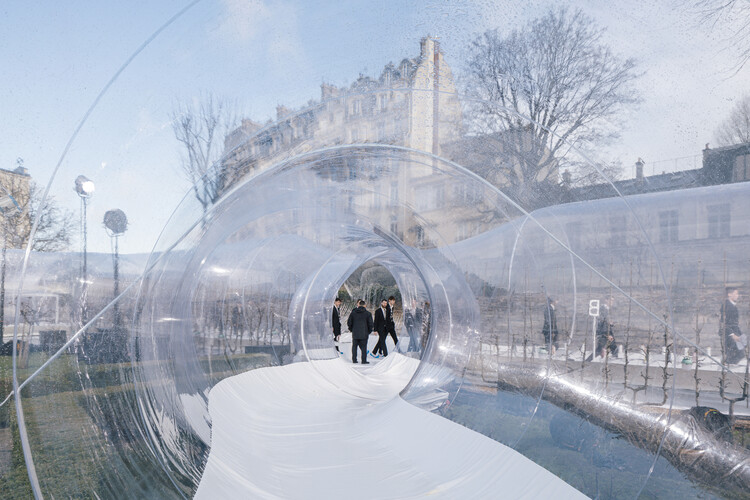
Historically, transparency has been naturalized as an inherent condition of modern architecture. With the shift from the heavy load-bearing wall to the lightweight glass envelope, glass was introduced into the discipline, blurring the boundaries between interior and exterior spaces. In connection with inflatable architecture, transparency is linked to lightness and impermanence, leaving temporary traces on the landscapes it inhabits. By using textiles or plastics as main materials and air as a structural system, the search for lightness in the built environment now recognizes more than a single atmosphere of application.
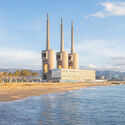
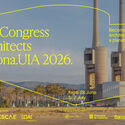
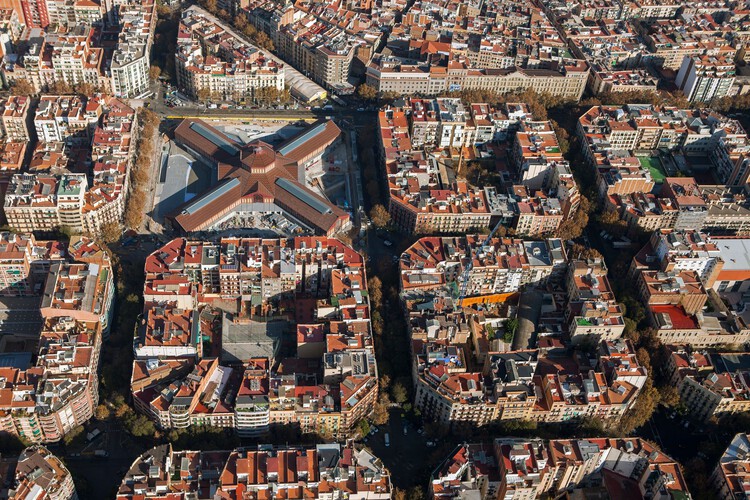
The UIA World Congress of Architects 2026 Barcelona has released its full program, outlining the structure, participants, and range of activities scheduled to take place from June 28 to July 2, 2026. Expanding on the previously introduced theme, Becoming. Architectures for a Planet in Transition, the Congress is conceived as a distributed event across multiple venues and urban contexts rather than a single-site conference. Organized by the International Union of Architects (UIA) in collaboration with the Higher Council of the Colleges of Architects of Spain (CSCAE) and the Architects' Association of Catalonia (COAC), the event is expected to gather approximately 10,000 participants and 250 speakers from more than 130 countries.