1. ArchDaily
  2. Christo and Jeanne-Claude

Christo and Jeanne-Claude: The Latest Architecture and News

Celebrate World Water Day With These 20 Designs That Feature Water Elements

Subscriber Access | 
Celebrate World Water Day With These 20 Designs That Feature Water Elements - Image 5 of 4
© Fernando Guerra | FG + SG

March 22 is World Water Day, an annual international celebration launched and organized by the United Nations. The goal of the day is to raise awareness about a wide range of water-based issues from around the world. This year’s theme is “Nature From Water”, which invites everyone to think about how nature can provide solutions to the water challenges we face today.

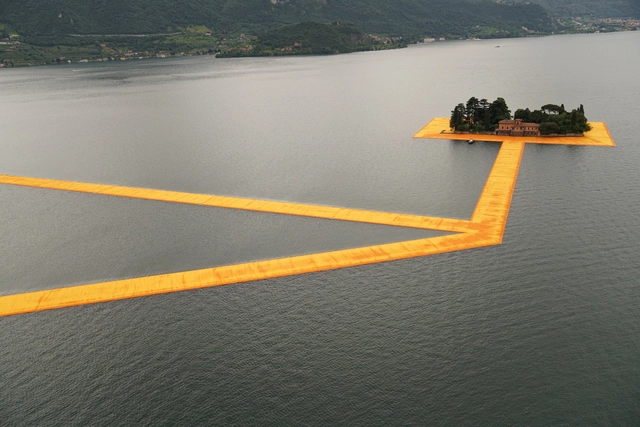
To celebrate World Water Day this year, we’ve rounded up 20 of our favorite projects that utilize water as a central design feature. Whether it be Zumthor's Thermal Vals or Chritso and Jeanne-Claude's Floating Piers, water has been playing an important role in architectural design and in demarcating the boundaries of nature against our built environment.
Celebrate World Water Day With These 20 Designs That Feature Water Elements - Image 1 of 4Celebrate World Water Day With These 20 Designs That Feature Water Elements - Image 2 of 4Celebrate World Water Day With These 20 Designs That Feature Water Elements - Image 3 of 4Celebrate World Water Day With These 20 Designs That Feature Water Elements - Image 4 of 4Celebrate World Water Day With These 20 Designs That Feature Water Elements - More Images+ 16

Constructing The Floating Piers: How the Last Great Work of Christo and Jean-Claude was Built

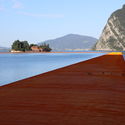
Until July 3rd, you can experience the latest and last work of artist duo Christo and Jean-Claude. Called The Floating Piers, the floating dock extends over the water of Italy's Lake Iseo.

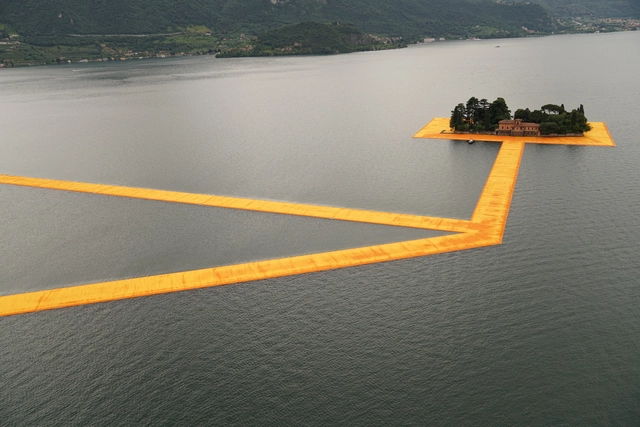
The work consists of a three kilometer walkway wrapped in 100,000 square meters of yellow cloth, which is supported by a floating dock system composed of 220,000 high-density polyethylene cubes. These elements naturally undulate with the movement of the waves at Lake Iseo, which is located 100 kilometers east of Milan and 200 kilometers west of Venice. The floating yellow roads extend from the pedestrian streets of Sulzano, connecting the islands of San Paolo and Monte Isola.

The Floating Piers is the first large-scale work of Christo for more than a decade after making The Gates in 2005 with Jeanne-Claude, who passed away four years later. Due to the importance of Christo and Jeanne-Claude's work and the inspiration they have given to many architects, we wanted to investigate the process of building this spectacular project, which makes the dream of walking on water a reality.

Constructing The Floating Piers: How the Last Great Work of Christo and Jean-Claude was Built - Image 1 of 4Constructing The Floating Piers: How the Last Great Work of Christo and Jean-Claude was Built - Image 2 of 4Constructing The Floating Piers: How the Last Great Work of Christo and Jean-Claude was Built - Image 3 of 4Constructing The Floating Piers: How the Last Great Work of Christo and Jean-Claude was Built - Image 4 of 4Constructing The Floating Piers: How the Last Great Work of Christo and Jean-Claude was Built - More Images+ 26

Video: Christo Explains the Vision Behind "The Floating Piers"

Subscriber Access | 

“They are projects that cannot be bought, cannot be owned, cannot be possess, to be kept; they are projects in total freedom. Nobody can own this, because if you own something, it’s not free.” -Christo

In this latest video from NOWNESS, Bulgarian artist Christo explains the fleeting nature of his most recent work, The Floating Piers, a floating dock system wrapped in yellow fabric that connects the towns of Sulzano and Peschiera Maraglio to the island of San Paolo in Italy’s Lake Iseo. First conceived by Christo alongside his late wife and creative partner Jeanne-Claude in 1970, The Floating Piers is in the midst of its 16 day run, lasting until July 3rd. After the conclusion of the exhibition, all components will be removed and industrially recycled, leaving its site precisely the way it was found.

The Floating Piers Opens on Lake Iseo Allowing Visitors to "Walk on Water"

Beginning this week, and lasting for only sixteen days, visitors to the Italian Lake Iseo can "walk on water." The Floating Piers is the work of Christo and Jeanne-Claude, based on an idea first conceived in 1970. Built using 100,000 square meters of shimmering yellow fabric, carried by a modular floating dock system of 220,000 high-density polyethylene cubes, the installation—which sits just above water level—undulates with the movement of the lake.

According to Italian news source, Leggo, two people were "seriously injured" and the installation was "evacuated" on its opening day due to the quantity of visitors and inclement weather conditions.

Those who experience The Floating Piers will feel like they are walking on water – or perhaps the back of a whale.

The Floating Piers Opens on Lake Iseo Allowing Visitors to "Walk on Water" - Image 1 of 4The Floating Piers Opens on Lake Iseo Allowing Visitors to "Walk on Water" - Image 2 of 4The Floating Piers Opens on Lake Iseo Allowing Visitors to "Walk on Water" - Image 3 of 4The Floating Piers Opens on Lake Iseo Allowing Visitors to "Walk on Water" - Image 4 of 4The Floating Piers Opens on Lake Iseo Allowing Visitors to Walk on Water - More Images+ 7

Christo's Floating Piers Will Let You Walk on Water in Italy

By adjoining 200,000 fabric-lined floatable components, Christo hopes to allow the residents of two mainland towns in Italy's Lombardy region to walk on water for a duration of two weeks in June 2016. If approved, the "Floating Piers" would connect both towns with the Lake Iseo islands via an extended, brightly colored fabric dock that would stretch across two miles.

Christo Unveils Inflatable, Light-Infused Installation in Germany

Christo Unveils Inflatable, Light-Infused Installation in Germany - Featured Image
© Wolfgang Volz, 2013 Christo

The internationally - and often controversial - acclaimed artist Christo has unveiled the “largest indoor sculpture ever made”. Prepared to debut in a public exhibition starting March 16, the inflated “Big Air Package” has been designed to occupy a 117-meter-tall former gas tank known as Gasometer Oberhausen in Germany. The 90-meter-high, 50-meter-wide sculpture is made from 20,350 square meters of semitransparent polyester fabric and 4,500 meters of rope, with a total weight of 5.3 tons and a volume of 177,000 cubic meters.

The seemingly endless, inflatable installation was conceived in 2010 and is Christo’s first major work after the passing of his wife and artistic partner Jeanne-Claude in 2009.

More on Christo’s “Big Air Package” after the break...