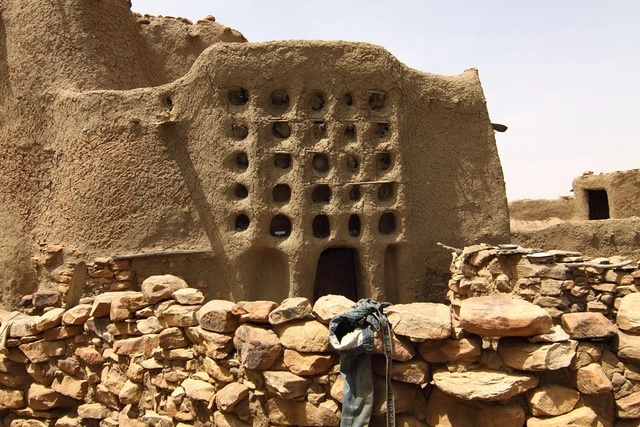
Eighteen years after its original publication, Paul Oliver’sEncyclopedia of Vernacular Architecture of the World will be updated, revised, and expanded to include over 30% of new material. With around 3,000 entries, the new version of the encyclopedia is set to be published in 2018, and will reflect the considerable growth and changes in the architectural field.
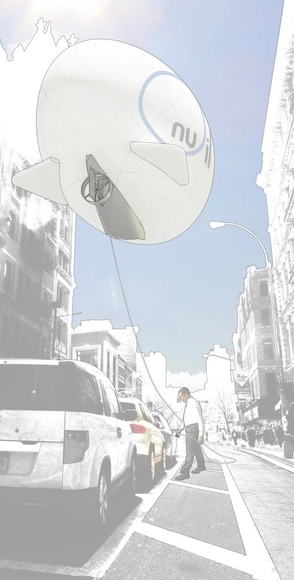
Winning Entry: Nu Oil / Felix Yang and Thomas Noussis. Image Courtesy of Combo Competitions
Filling Station(s), the latest ideas-based challenge organised by Combo Competitions, asked participants to "rethink refueling" in a competition which sought to re-imagine the ubiquitous filling station. The historical rise of this 20th century typology, from simple fuel dispensers to palatial rest-stops on the highway, grew with the proliferation of the car and became symbols for societal progression, personal status, and "a bright future." Although the number of vehicles worldwide "surpassed one billion in 2010, there has been a steady decline in filling stations since the end of the last century." As such, perhaps this is the time to start to rethink how these fragments of the international mobility infrastructure operate?
Videos
Courtesy of The American Institute of Architects
As a part of its #ILookUp campaign, the American Institute of Architects has announced its Look Up Film Challenge, a competition that invites filmmakers and architects to collaborate on a short film that illuminates how architecture enriches our lives and our communities.
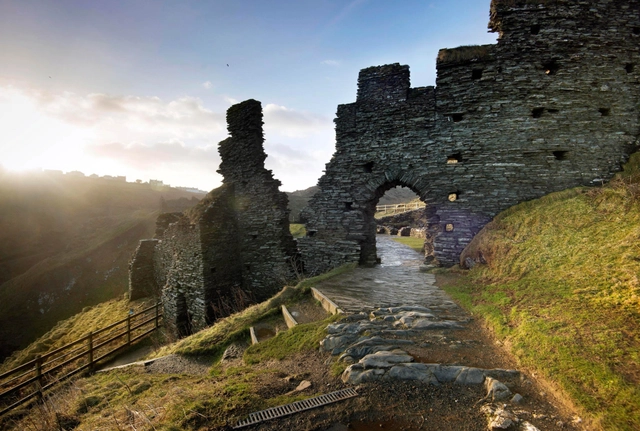
The ruins of Tintagel Castle, one of English Heritage's most visited sites, has been announced as the site for a new two-stage international ideas competition. The castle, which is linked to the legend of King Arthur, is located in north Cornwall (in the south of the UK) and is built on a rocky outcrop connected to the mainland by a narrow, now eroded, land-bridge. English Heritage require a new footbridge which will be 28 metres higher than the current one, spanning a total distance of 72 metres, with an estimated budget of around £4million (around $6.3million).
ReDeBOSTON 2100; Architerra. Image Courtesy of Boston Living with Water
The winning projects of the Boston Living with Water competition have been announced. The competition “sought design solutions envisioning a beautiful, vibrant, and resilient Boston that is prepared for end-of-the-century climate conditions and rising sea levels.” Out of 50 teams, three were selected, each for separate sites—one for a building, one for a neighborhood, and one for a significant piece of city infrastructure—in addition to one honorable mention. Each of the winners will receive a $13,000 prize funded by the Massachusetts Office of Coastal Zone Management and the Barr Foundation.
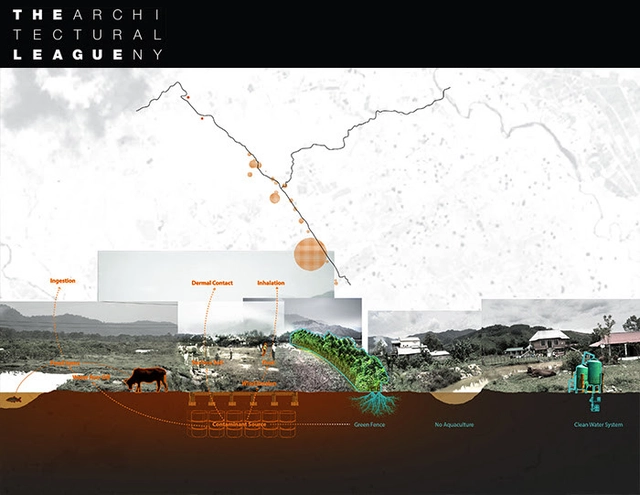
The Architectural League has named Ylan Vo the winner of this year’s Deborah J. Norden Fund travel grant for her project entitled Ecologies of War and Recovery: A Case Study in Vietnam’s A Luoi Valley.
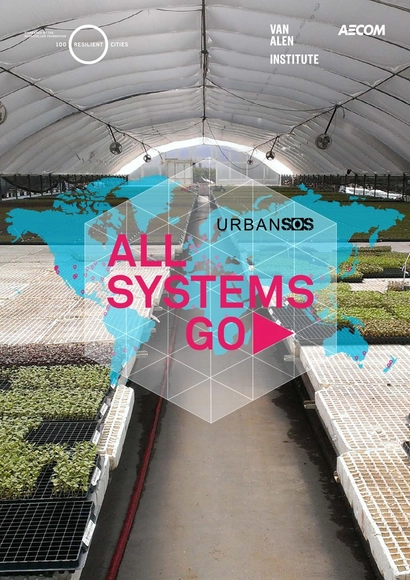
In collaboration with the Van Alen Institute and 100 Resilient Cities, AECOM has announced its international Urban SOS: All Systems Go competition for undergraduate and graduate students.
The competition “calls on multidisciplinary teams of students to envision more resilient food, water, and energy systems for supplying cities and regions today and in the future.” Teams should “identify an urban population facing the possibility of disruption to its food, energy, or water systems, and offer strategies that strengthen these systems’ ability to withstand future shocks or stresses, while also making them more efficient, equitable, and accessible to diverse populations.” All “proposals must be located in one of 67 cities that currently make up the 100 Resilient Cities network.”
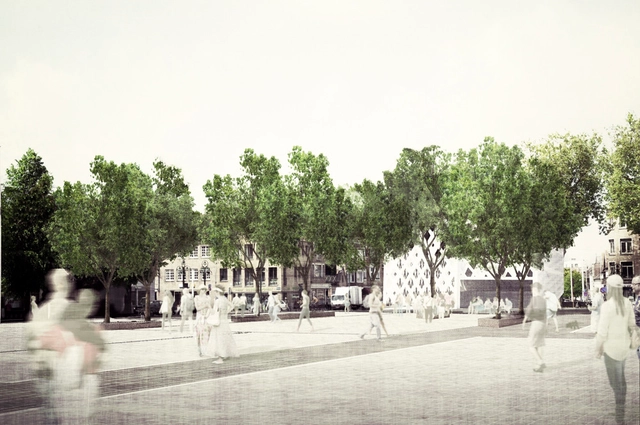
Residents of 's-Hertogenbosch have been asked to vote on proposals by UNStudio and Ector Hoogstad Architectento decide who will design their new City Center Theater. Though vastly different, both proposals promise to provide a timeless main theater and flexible performance hall that connects to an inviting foyer and seamlessly merges with the adjacent public plaza.
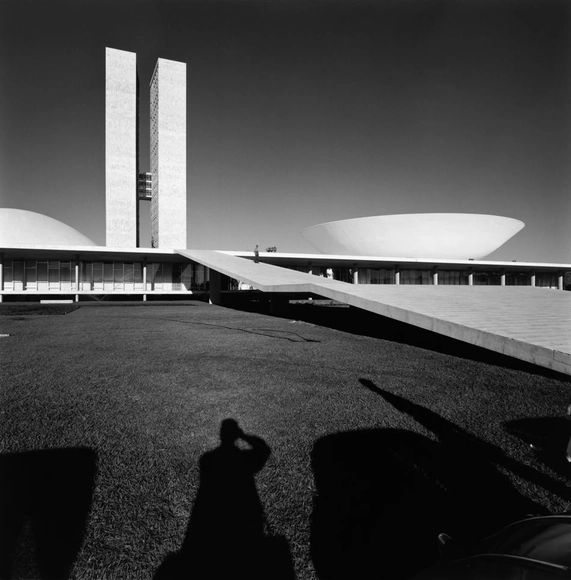
The United States Department of State (DOS) has released a request for information (RFI) in search of architects interested in designing a New Embassy Compound (NEC) in Brasília, the federal capital of Brazil. The (up to) $350 million, design-bid-build project will be located on a 4.86 hectares (12 acres) site near the seat of the Brazilian Government within the city's planned "Diplomatic Sector." All proposals must take in considering the site's conditions, the city planning context and the architectural significance of Brasilia as a 1956 urban planned city and now UNESCO World Heritage Site. More details after the break.
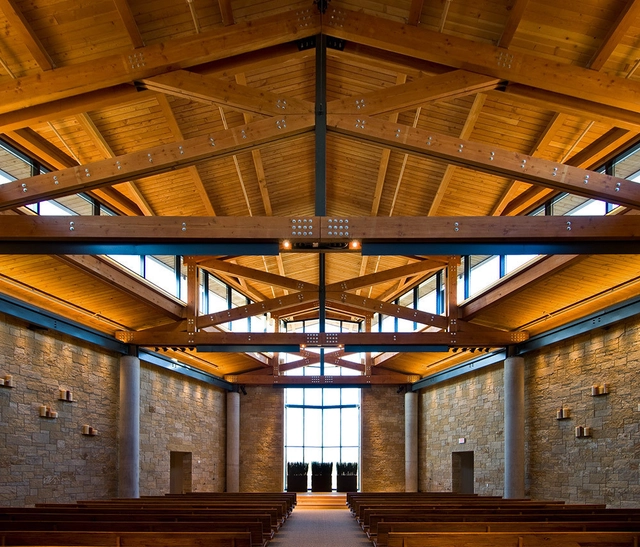
Submissions are invited for the 2015 Faith & Form/IFRAA International Awards Program, which recognizes excellence in the design of religious architecture, restoration and renovation of religious buildings, religious arts, religious landscape design, the design of unbuilt religious projects, and student design projects for spiritual environments. The winners of the awards program will be chosen by an independent jury panel of recognized experts in the field and will be published globally. All submissions are digital and the deadline is June 30, 2015. More information can be found here.
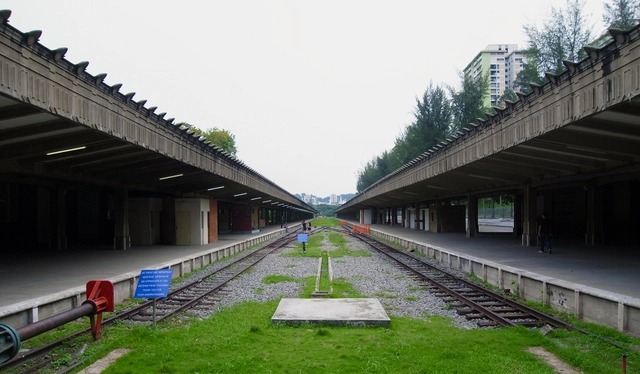
MVRDV, OMA and DP Architects are among five shortlisted teams competing to design the Singapore Rail Corridor. Spanning the island south to north, from the Tanjong Pagar Railway Station to the Woodlands Checkpoint, the corridor is the site of Singapore’s previous rail link to Malaysia. With this competition, the Singapore government hopes to develop a feasible plan to transform the 24 kilometer stretch into a public greenway that connects four important urban nodes: Buona Vista, the Bukit Timah Railway Station area, the former Bukit Timah Fire Station, and Kranji.
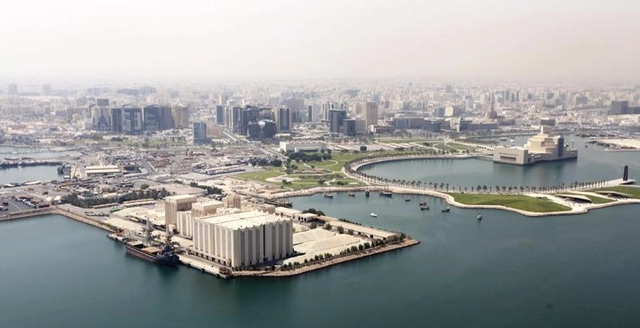
Qatar Museums has launched an international search for an architect to convert an existing flour mill within the Arabian Gulf port into a massive "Art Mill." Planned for a prominent site in Doha, near I.M. Pei’s Museum of Islamic Art and Jean Nouvel’s forthcoming National Museum of Qatar, the new museum will be realized through a three-stage competition open to practicing architects with at least seven years of experience.
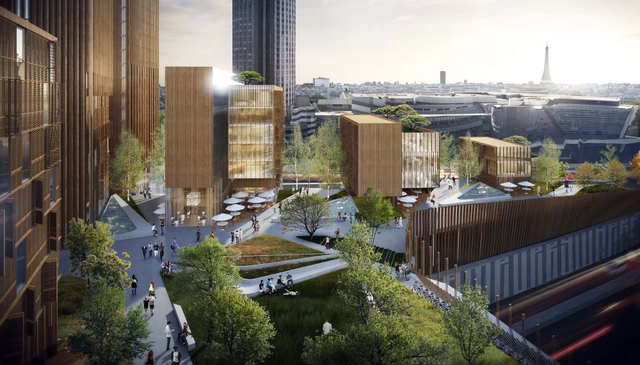
Michael Green Architecture (MGA) and DVVD has teamed up with REI France developments to propose the world's tallest wood building in Paris. The carbon-neutral proposal, developed as part of the city’s innovative Réinventer Paris competition, aims to alleviate the city's urban housing challenges.
In collaboration with the Colombian Society of Architects, the National Centre for Historical Memory (NCHM) has announced a new international competition to design Colombia's National Museum of Memory. Commemorating decades-long internal conflict in Colombia, the competition is part of a series of initiatives to make reparations to victims of the unrest, and will be the first national museum constructed in the midst of ongoing armed conflict. It is hoped that the museum will bring together mainstream historical accounts and "voices of resistance" to create a cultural landmark that is "restorative, monumental and memorial in nature." On June 1, the organizers will conduct a competition Q&A live stream in Spanish, after which point competition registration will be open until June 19. Entries can be submitted until July 29, with a winner announced on August 13. To read more about the competition and to register, click here.
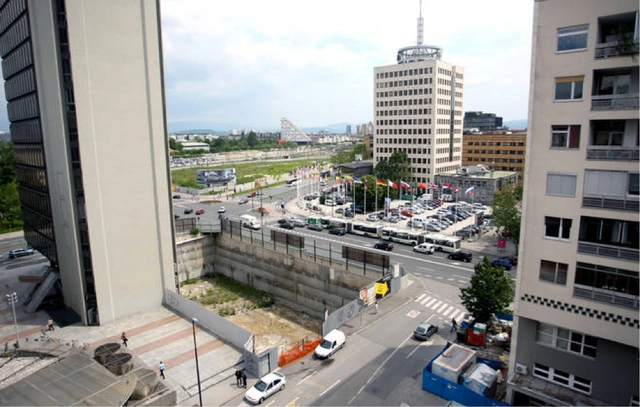
In cooperation with the Museum of Architecture and Design Ljubljana an interactive Blind Date of European architects, planners and experts in urban development will be organized in autumn 2015. Under the title “Urban Realities”a collaboration of three selected teams together with local experts will be started. Invited architects and planners will work on a concrete topic and on abandoned construction pits in the city of Ljubljana.
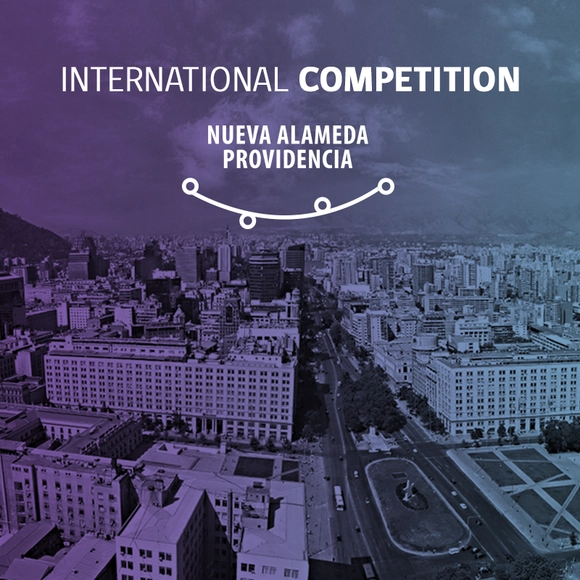
The Metropolitan Regional Government of Santiago, Chile has launched a Two Stage International Public Competition for the development of the urban design and engineering of the urban axis Alameda Providencia. This axis is not only the main avenue of the city of Santiago de Chile, but is also considered to be the “heart of the metropolis” and the republic's most representative public space. The 12 km corridor integrates civic, symbolic and economic functions, represented by the highest concentration of retail, business and civic activities of the Metropolitan Region.
https://www.archdaily.com/634573/open-call-santiago-launches-international-competition-for-nueva-alameda-providenciaSponsored Post



_-_Final_Boards_4.jpg?1434518015&format=webp&width=640&height=580)