White Arkitekter has proposed a timber-framed "lantern" design for in a new addition to the local art center in Akershus, Norway as part of a limited architecture competition. The design by White Arkitekter was selected as a runner-up, with Haugen/Zohar Arkitekter named the winner. White’s design aims to connect the art facilities to adjacent historical institutions and create additional public space.
Diller Scofidio + Renfro in collaboration with Rockwell Group has released a new animation of “The Shed” (previously known as “The Culture Shed”), a convertible cultural center designed for New York City’sHudson Yards development overlooking The High Line. When complete, the building will contain 170,000 square feet of exhibition space for temporary installations, concerts, performances and other cultural productions. Watch in the video as The Shed grows out of its partnering residential skyscraper, also designed by Diller Scofidio + Renfro and Rockwell Group, and transforms to serve various program types.
A part of Phase 1 of the Hudson Yards project, construction on The Shed began in mid-2015 and is scheduled to be completed in 2019. The venue will serve as the new home of several high profile events, including New York Fashion Week.
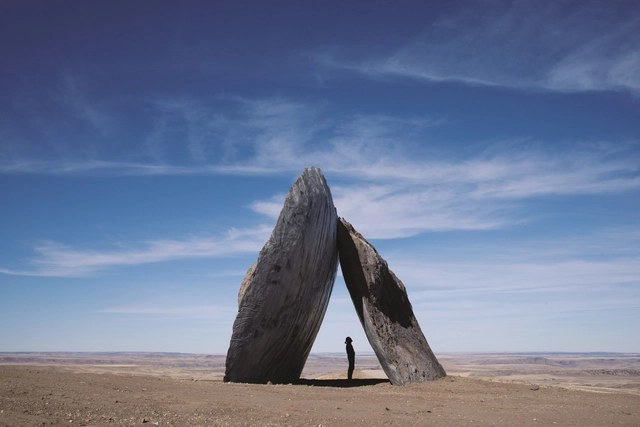
What do Frederic Chopin, Alexander Calder and Montana's Bear Tooth Mountains have in common? A long summer day at Tippet Rise Art Center seeks to make the connections audible, visible, tangible.
Founded by philanthropists and artists Cathy and Peter Halstead and inaugurated in June 2016, Tippet Rise began as—and largely remains—a working ranch. It sprawls across 11,500 acres of rolling hills and alluvial mesas of southwestern. To the west rise the snowy heights of the Bear Tooth Mountains. Off to the east, hills give way to golden prairies that stretch out to the horizon.
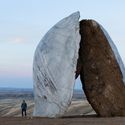
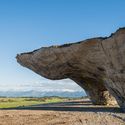
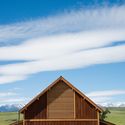
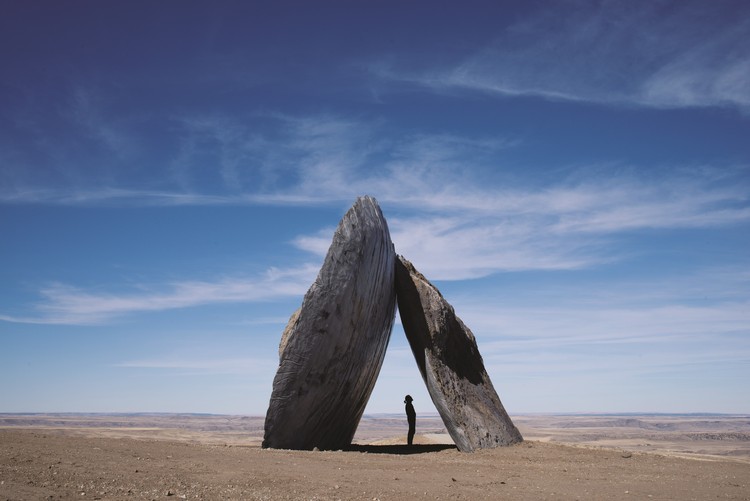
Into this privileged landscape, the Halsteads and team have strategically inserted massive outdoor sculptures by Alexander Calder, Mark di Suvero, Stephen Talasnik, plus three specially commissioned works by the Spanish architectural firm Ensamble Studio. And hidden in a small depression near the entrance of the massive ranch, the LEED Platinum-certified Olivier Barn serves as both base camp for visitors and a state-of-the-art concert hall.
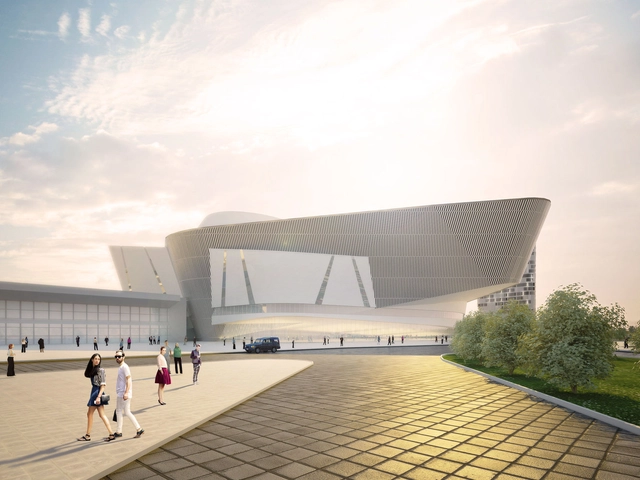
After receiving building permit approval, Twelve Architects has revealed their design for a 42,000 square meter international exhibition center in Yekaterinburg, Russia. The design, which houses a series of conference halls, a media center, gallery, exhibition space, seminar rooms and lounges, has been developed from their initial 2015 competition winning entry. Partnership with a local practice has helped to guide the design of the center, enabling the creation of a major cultural hub within Yekaterinburg.
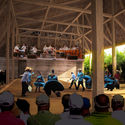
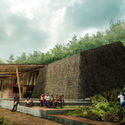
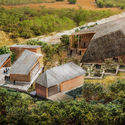
The offices of Caá Porá, Siete86 and Ingeniera Alternativa have released designs for “Palenque Cultural Tambillo,” a cultural center dedicated to the artistic tradition of marimba music in the Afroecuadorean town of Tambillo, Ecuador. Consisting of a performance and meeting hall, two multi-use classrooms, rehearsal spaces, an artisanal instrument workshop and ecologically friendly public bathrooms, the project is planned to become one piece of a network of cultural centers to be built in the UNESCO heritage province of Esmeraldas.
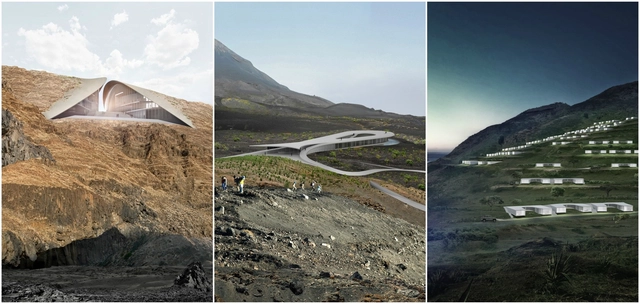
The 2016 Venice Biennale has highlighted that dealing with natural disasters may become one of the main preoccupations of architecture in the future. But nature has its destructive ways, and volcanic eruptions are among the most extreme case in point. On the Island of Fogo (Cape Verde), the Natural Park Venue designed by OTO – and elected Best Building of the Year 2015 by Archdaily readers – was destroyed by molten lava flow only one year after its opening in 2013. The building, which combined a cultural center and administrative activities, helped to activate the economy in the island’s most remote area. Following the disaster, Adrian Kasperski, a student at Krakow University, devoted his master’s thesis to the redevelopment of this area, by proposing the expansion of the existing roads and hiking trails and designing facilities to improve alternative tourism offerings.
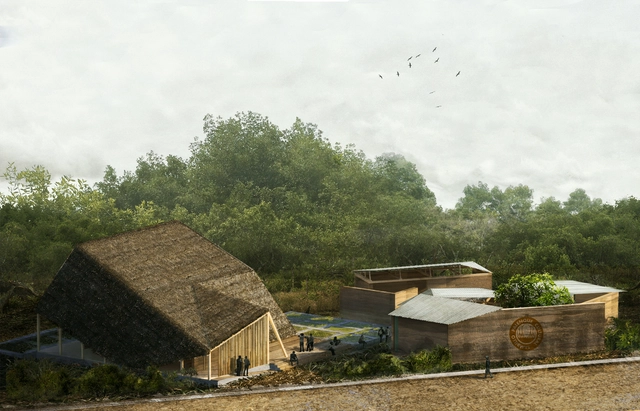
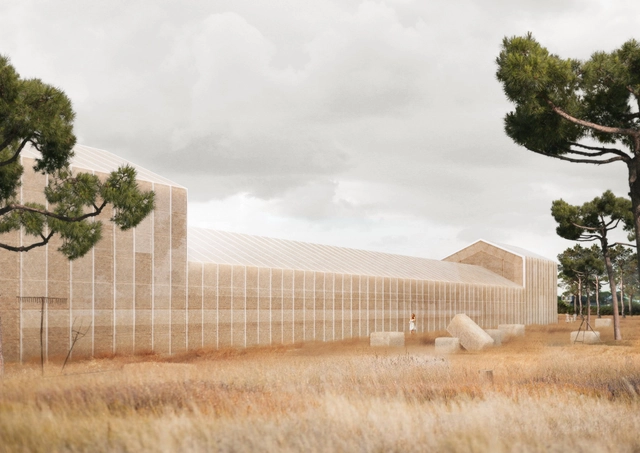
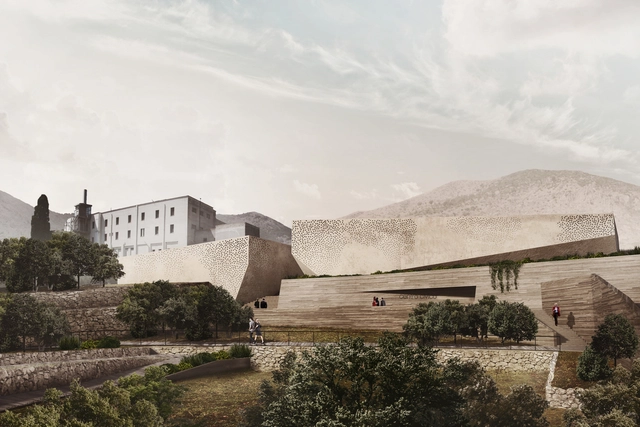
A proposal from George Batzios Architects for the Konaki Averof Cultural Center in Greece uses a cutting edge, sustainable approach to revive a deeply historical site. The design intertwines elements of architecture and agriculture to refit an existing structure with reference to the Thessalian plains on which it lies. The new architecture recreates the existing envelopes with straw cladding, regenerating the "golden environment" which defined the place in the late 19th century.
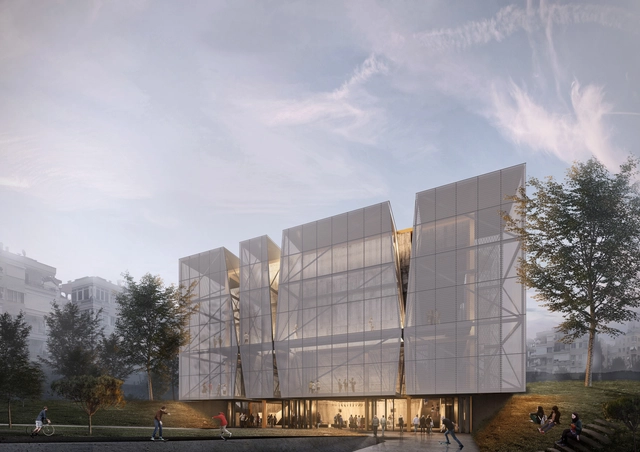
PARKOPERA, a cultural facility designed by Alper Derinboğaz, Salon, is a center of attraction that will be situated between apartment buildings and within a neighborhood park in Antalya, Turkey. Through the development of both the building and the outdoor space around it, the center creates multiple opportunities for the community to come together and enjoy various cultural events.
ArchDaily is continuing our partnership with The Architectural Review, bringing you short introductions to the themes of the magazine’s monthly editions. In this introduction to the January 2016 issue, Editor Christine Murray recounts what we know about gentrification, and how cultural buildings can be planned to encourage - rather than destroy - a neighborhood's cultural vibrancy.
Cultural buildings are the new town halls: more socially inclusive than the pub or the church.
The best cultural projects act as public spaces, schools for continuing education, crucibles for talent, fostering innovation and social happenings, from yoga classes to children’s libraries. When free of entry charge, they are a place you can go to learn, rather than just buy – a triumph of experience over consumerism.
But what we’ve learned from the failure of the icon-building boom is that, for a cultural building to really contribute to a city, it must be part of a social ecosystem, not simply a place for tourists to visit. A cultural hub must be connected into a pre-existing cultural vibrancy, supported by decent infrastructure and a community that actually lives there.
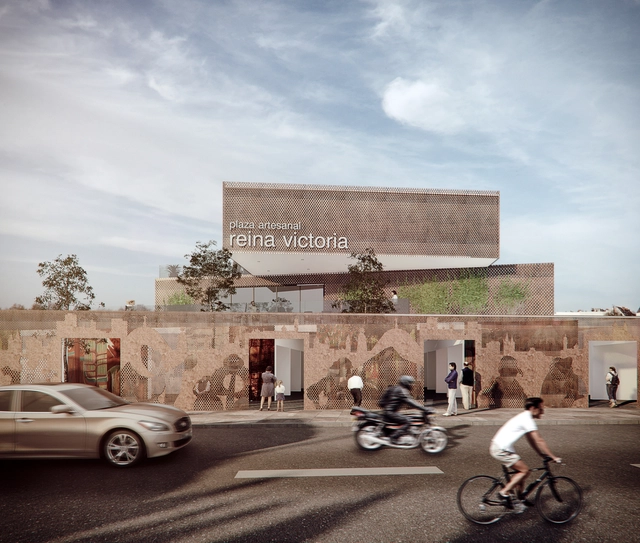
Taller EC (TEC) has released the plans for the Plaza Artesanal Reina Victoria, a cultural project located in the northern, central part of Quito, Ecuador. Situated in front of a traditional artisan’s market, the new proposal consists of a set of autonomous pieces of different sizes connected by an interior plaza.
The new Civic Center by 3TI Progetti in Villacidro, Italy, is sited at an important reference point for the city, due to both its history and natural features. Located in the "historic garden of the Episcopal Palace," the new center re-interprets the surrounding urban elements, redefining the relationships between its urban and natural surroundings. Read more about this project after the break.
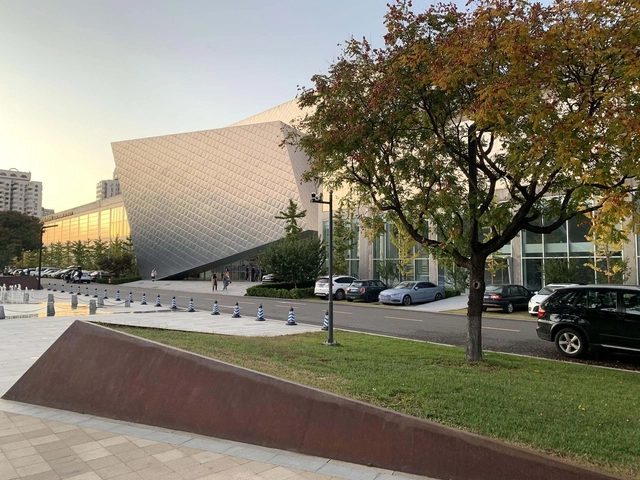
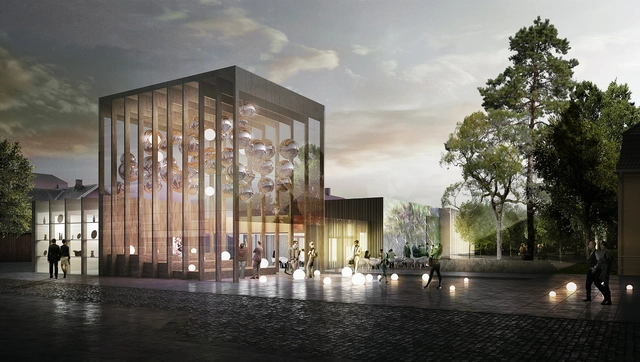
Plans have been revealed for a new Modern Art Center (MAC) in the historic city of Vilnius, Lithuania. The 3100-square-meter "three-dimensional public space," as architect Daniel Libeskind describes it, is designed to be a "cultural gateway" that connects the city's 18th century grid and medieval walled city.
“We wanted to create a museum for the people of Lithuania, and also give this collection a home and an international audience. This collection is about the cultural legacy of the country,” said founder Viktoras Butkus. “Libeskind’s work is expressive, innovative, and, most importantly, has the power to tell the story of the past while connecting to the future of the city,” added Butkus.
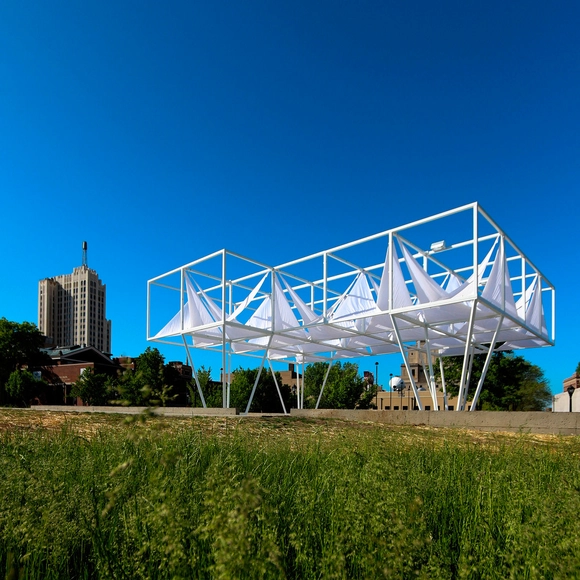
Last year's PXSTL Structure by Freecell Architecture. Image Courtesy of Freecell Architecture
The Pulitzer Arts Foundation and the Sam Fox School of Design & Visual Arts at Washington University in St. Louis are inviting architects, designers and artists to propose a temporary structure in St. Louis, Missouri,for the second cycle of “PXSTL”. The competition aims to transform an under-used lot in the heart of St. Louis’ Arts and Culture district, catalyzing creative intervention and artistic programs. Nominations will be solicited from deans of architecture, art, and design programs; editors of art, architecture, and design publications; distinguished practitioners; and directors and curators of arts institutions. Read more about this competition after the break.











_Studio_Libeskind.jpg?1448392758&format=webp&width=640&height=580)